[…]
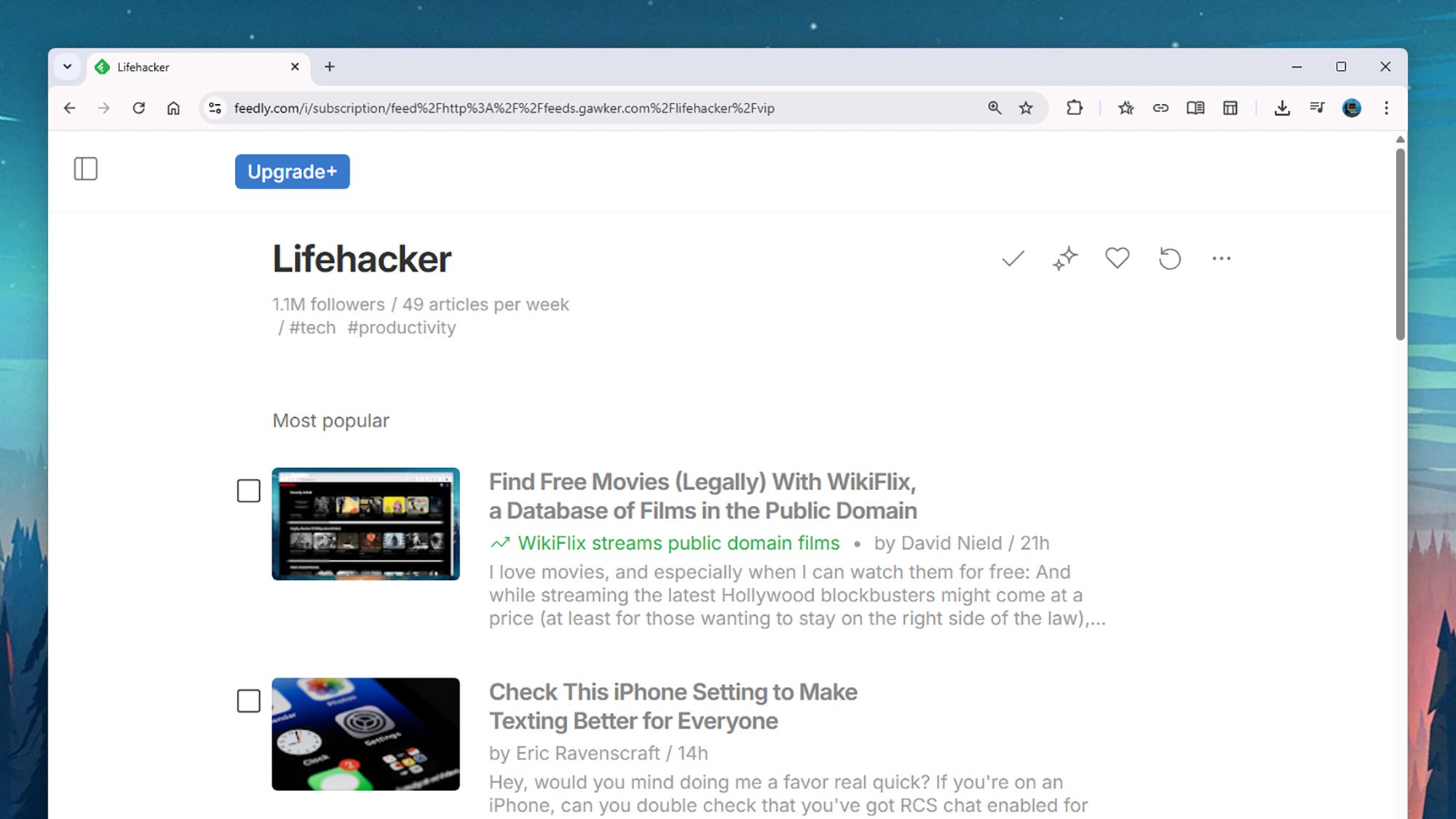
one of the main roles of RSS is to supply directly to you a steady stream of updates from a website. Every new article published on that site is served up in a list that can be interpreted by an RSS reader.
In earlier, simpler internet times, RSS was the way to keep up to date with what was happening on all of your favorite sites. You would open your RSS reader and tap through newly published articles one by one, in chronological order, in the same way you would check your email. It was an easy way to keep tabs on what was new and what was of interest.
Unfortunately, RSS is no longer how most of us consume “content.” (Google famously killed its beloved Google Reader more than a decade ago.) It’s now the norm to check social media or the front pages of many different sites to see what’s new
[…]
The RSS standard actually remains the default way of distributing podcasts, with each new episode—together with the episode title, cover art, and descriptive blurb—appearing as a new entry in the feed of your podcast app of choice. When you subscribe to a new show through Pocket Casts or Apple Podcasts, you’re essentially pointing the app towards the RSS feed for the podcast you want to listen to, and it takes care of serving up each new episode.
In times gone by, websites would prominently display their RSS feed links somewhere on the front page. That’s less common now, but you can often find these feeds if you dig deeper or run a web search for them (incidentally, the Lifehacker RSS feed can be found here). Some sites offer multiple RSS feeds covering different categories of content, such as tech or sports.
Even when a site doesn’t explicitly offer RSS feeds, the best RSS readers can now produce their own approximation of them by watching for new activity on a site, so you can direct the app toward the site you want to keep tabs on
[…]
RSS is clearly useful if you have a selection of favorite websites and you want to skim through everything they publish (or everything they publish in a certain category, if the site has several feeds). No one is choosing what you see but you—you have more control over your news diet, free from any choices made by an algorithm.
Using RSS means you can catch up on everything, methodically and chronologically, even if you’ve been offline for a week (you don’t have to catch up on everything, of course—but you can, if you want, as your feed will operate on an infinite scroll). It’s also a cleaner, less cluttered way of using the internet, as you only need to click through on the specific articles you want to read.
[…]
RSS readers aren’t quite as ubiquitous as they once were, but you can still find quite a few if you take a look around.
Feedly
The best RSS reader currently in operation is arguably Feedly, which offers a bunch of features across free and paid-for plans (starting from $8 per month): It has a clean, clear interface, it can generate RSS feeds for sites that don’t have them, it can sort feeds in a variety of ways, it can incorporate email newsletters, and plenty more besides.
Feeder
Feeder is a good place to start for RSS newbies because it gets you up and running quickly, and offers a straightforward interface. It works seamlessly across all the major platforms, and if you need extra bells and whistles—including a real time dashboard, access to more feeds, and sophisticated filters for your feeds—paid plans start at $9.99 per month.
[…]
Source: Why Everyone Should Still Use an RSS Reader in 2026 | Lifehacker

Robin Edgar
Organisational Structures | Technology and Science | Military, IT and Lifestyle consultancy | Social, Broadcast & Cross Media | Flying aircraft