“Speaking of amazing technology, we successfully used a shipboard laser system, Lockheed Martin’s HELIOS, to knock an incoming UAV [uncrewed aerial vehicle] right out of the sky,” the company’s CEO Jim Taiclet said during a quarterly earnings call last week. “The HELIOS weapon system successfully neutralized four drone threats in a U.S. Navy-operated counter-UAS [uncrewed aerial systems] demonstration at sea, showcasing an opportunity to eliminate drone attacks using lasers, and saving U.S. and allied air defense missiles for more advanced threats.”
[…]
HELIOS, which also carries the designation Mk 5 Mod 0, is a 60-kilowatt-class laser directed energy weapon designed to be powerful enough to destroy or at least damage certain targets, such as drones or small boats. As its name indicates, it has a secondary function as a ‘dazzler’ to blind optical sensors and seekers, which could also be damaged or destroyed in the process. In the past, Lockheed Martin has talked about potentially scaling HELIOS’ power rating up to 150 kilowatts.
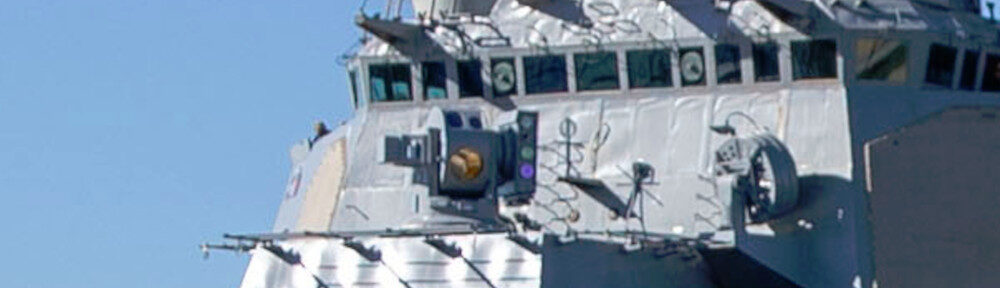
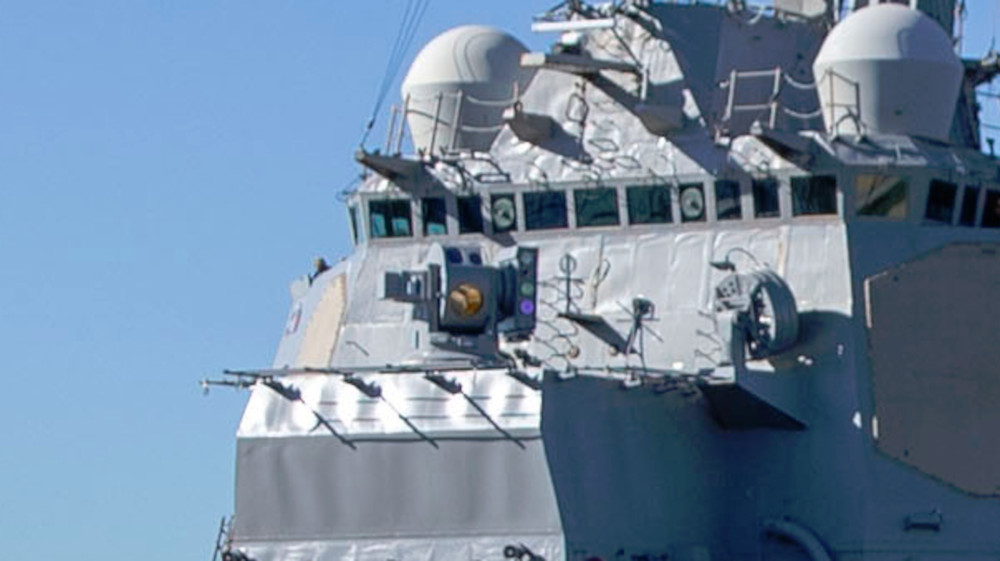
A close-up look at the HELIOS laser installed on the USS Preble. USN
There are still significant questions about the demonstration last fall, including how rapidly the USS Preble was able to shift HELIOS from one target to another and how long it took each one to be effectively neutralized. The proximity of the drones to the ship and what kinds of profiles they were flying are also unknown.
A single laser can only engage one target at once. As the beam gets further away from the source, its power also drops, just as a result of it having to propagate through the atmosphere. This can be further compounded by the weather and other environmental factors like smoke and dust. More power is then needed to produce suitable effects at appreciable distances. Adaptive optics are used to help overcome atmospheric distortion to a degree. Altogether, laser directed energy weapons generally remain relatively short-range systems.
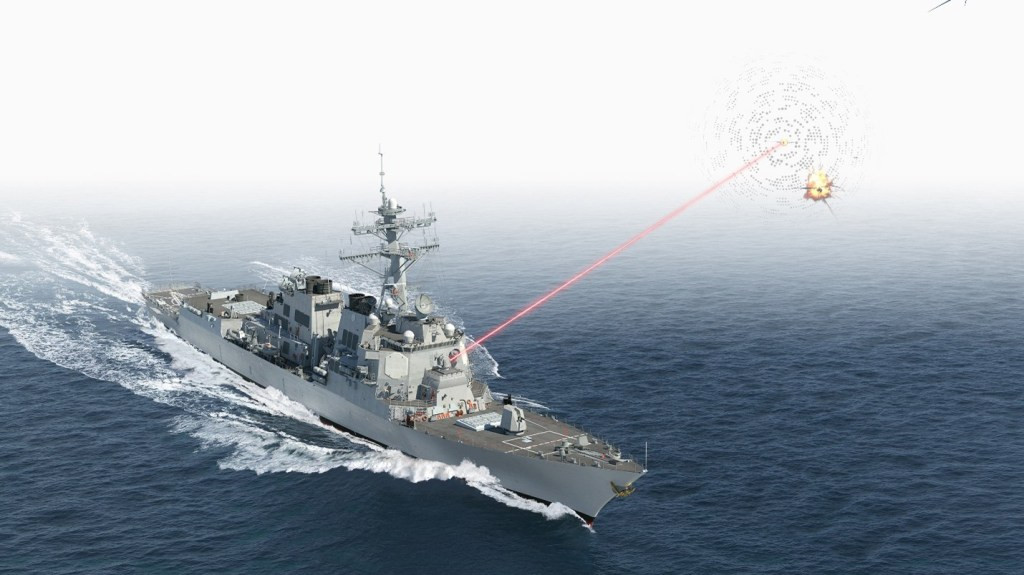
A graphic depicting an Arleigh Burke class destroyer firing a HELIOS laser. Note that the beam would not be visible to the naked eye during a real engagement. Lockheed Martin
In addition, laser directed energy weapons, especially sensitive optics, present inherent reliability challenges for use in real-world military operations. Shipboard use adds rough sea states and saltwater exposure to the equation. There is also the matter of needing to keep everything properly cooled, which creates additional power generation and other demands.
[…]
Challenges to the Navy’s directed energy future clearly still remain. In speaking last month, Caudle was optimistic for the future, but he has been open about difficulties in the past. At the SNA symposium in 2025, the admiral, then head of U.S. Fleet Forces Command, said he was “embarrassed” at the state of his service’s directed energy weapon developments.
“I am not content with the pace of directed energy weapons,” Vice Adm. McLane had also said back in 2024. “We must deliver on this promise that this technology gives us.”