Infosec brainiacs release public dataset to classify new malware using AI

Researchers at Endgame, a cyber-security biz based in Virginia, have published what they believe is the first large open-source dataset for machine learning malware detection known as EMBER.

EMBER contains metadata describing 1.1 million Windows portable executable files: 900,000 training samples evenly split into malicious, benign, and unlabeled categories and 200,000 files of test samples labelled as malicious and benign.

“We’re trying to push the dark arts of infosec research into an open light. EMBER will make AI research more transparent and reproducible,” Hyrum Anderson, co-author of the study to be presented at the RSA conference this week in San Francisco, told The Register.

Progress in AI is driven by data. Researchers compete with one another by building models and training them on benchmark datasets to reach ever increasing accuracies.

Computer vision is flooded with numerous datasets containing millions of annotated pictures for image recognition tasks, and natural language processing has various text-based datasets to test machine reading and comprehension skills. this has helped a lot in building AI image processing.

Although there is a strong interest in using AI for information security – look at DARPA’s Cyber Grand Challenge where academics developed software capable of hunting for security bugs autonomously – it’s an area that doesn’t really have any public datasets.

Source: Infosec brainiacs release public dataset to classify new malware using AI • The Register

Russian State-Sponsored Cyber Actors Targeting Network Infrastructure Devices

On April 19, 2018, an industry partner notified NCCIC and the FBI of malicious cyber activity that aligns with the techniques, tactics, and procedures (TTPs) and network indicators listed in this Alert. Specifically, the industry partner reported the actors redirected DNS queries to their own infrastructure by creating GRE tunnels and obtained sensitive information, which include the configuration files of networked devices.

NCCIC encourages organizations to use the detection and prevention guidelines outlined in this Alert to help defend against this activity. For instance, administrators should inspect the presence of protocol 47 traffic flowing to or from unexpected addresses, or unexplained presence of GRE tunnel creation, modification, or destruction in log files.

[…]

Legacy Protocols and Poor Security Practice

Russian cyber actors leverage a number of legacy or weak protocols and service ports associated with network administration activities. Cyber actors use these weaknesses to

  • identify vulnerable devices;
  • extract device configurations;
  • map internal network architectures;
  • harvest login credentials;
  • masquerade as privileged users;
  • modify
    • device firmware,
    • operating systems,
    • configurations; and
  • copy or redirect victim traffic through Russian cyber-actor-controlled infrastructure.

Additionally, Russian cyber actors could potentially modify or deny traffic traversing through the router.

Russian cyber actors do not need to leverage zero-day vulnerabilities or install malware to exploit these devices. Instead, cyber actors take advantage of the following vulnerabilities:

  • devices with legacy unencrypted protocols or unauthenticated services,
  • devices insufficiently hardened before installation, and
  • devices no longer supported with security patches by manufacturers or vendors (end-of-life devices).

[…]

Solution

Telnet

Review network device logs and netflow data for indications of TCP Telnet-protocol traffic directed at port 23 on all network device hosts. Although Telnet may be directed at other ports (e.g., port 80, HTTP), port 23 is the primary target. Inspect any indication of Telnet sessions (or attempts). Because Telnet is an unencrypted protocol, session traffic will reveal command line interface (CLI) command sequences appropriate for the make and model of the device. CLI strings may reveal login procedures, presentation of user credentials, commands to display boot or running configuration, copying files and creation or destruction of GRE tunnels, etc. See Appendices A and B for CLI strings for Cisco and other vendors’ devices.

SNMP and TFTP

Review network device logs and netflow data for indications of UDP SNMP traffic directed at port 161/162 on all network-device hosts. Because SNMP is a management tool, any such traffic that is not from a trusted management host on an internal network should be investigated. Review the source address of SNMP traffic for indications of addresses that spoof the address space of the network. Review outbound network traffic from the network device for evidence of Internet-destined UDP TFTP traffic. Any correlation of inbound or spoofed SNMP closely followed by outbound TFTP should be cause for alarm and further inspection. See Appendix C for detection of the cyber actors’ SNMP tactics.

Because TFTP is an unencrypted protocol, session traffic will reveal strings associated with configuration data appropriate for the make and model of the device. See Appendices A and B for CLI strings for Cisco and other vendor’s devices.

SMI and TFTP

Review network device logs and netflow data for indications of TCP SMI protocol traffic directed at port 4786 of all network-device hosts. Because SMI is a management feature, any traffic that is not from a trusted management host on an internal network should be investigated. Review outbound network traffic from the network device for evidence of Internet-destined UDP TFTP traffic. Any correlation of inbound SMI closely followed by outbound TFTP should be cause for alarm and further inspection. Of note, between June 29 and July 6, 2017, Russian actors used the SMI protocol to scan for vulnerable network devices. Two Russian cyber actors controlled hosts 91.207.57.69(3) and 176.223.111.160(4), and connected to IPs on several network ranges on port 4786. See Appendix D for detection of the cyber actors’ SMI tactics.

Because TFTP is an unencrypted protocol, session traffic will reveal strings appropriate for the make and model of the device. See Appendices A and B for CLI strings for Cisco and other vendors’ devices.

Determine if SMI is present

  • Examine the output of “show vstack config | inc Role”. The presence of “Role: Client (SmartInstall enabled)” indicates that Smart Install is configured.
  • Examine the output of “show tcp brief all” and look for “*:4786”. The SMI feature listens on tcp/4786.
  • Note: The commands above will indicate whether the feature is enabled on the device but not whether a device has been compromised.

Detect use of SMI

The following signature may be used to detect SMI usage. Flag as suspicious and investigate SMI traffic arriving from outside the network boundary. If SMI is not used inside the network, any SMI traffic arriving on an internal interface should be flagged as suspicious and investigated for the existence of an unauthorized SMI director. If SMI is used inside the network, ensure that the traffic is coming from an authorized SMI director, and not from a bogus director.

  • alert tcp any any -> any 4786 (msg:”Smart Install Protocol”; flow:established,only_stream; content:”|00 00 00 01 00 00 00 01|”; offset:0; depth:8; fast_pattern;)
  • See Cisco recommendations for detecting and mitigating SMI. [9]

Detect use of SIET

The following signatures detect usage of the SIET’s commands change_config, get_config, update_ios, and execute. These signatures are valid based on the SIET tool available as of early September 2017:

  • alert tcp any any -> any 4786 (msg:”SmartInstallExploitationTool_UpdateIos_And_Execute”; flow:established; content:”|00 00 00 01 00 00 00 01 00 00 00 02 00 00 01 c4|”; offset:0; depth:16; fast_pattern; content:”://”;)
  • alert tcp any any -> any 4786 (msg:”SmartInstallExploitationTool_ChangeConfig”; flow:established; content:”|00 00 00 01 00 00 00 01 00 00 00 03 00 00 01 28|”; offset:0; depth:16; fast_pattern; content:”://”;)
  • alert tcp any any -> any 4786 (msg: “SmartInstallExploitationTool_GetConfig”; flow: established; content:”|00 00 00 01 00 00 00 01 00 00 00 08 00 00 04 08|”; offset:0; depth:16; fast_pattern; content:”copy|20|”;)

In general, exploitation attempts with the SIET tool will likely arrive from outside the network boundary. However, before attempting to tune or limit the range of these signatures, i.e. with $EXTERNAL_NET or $HOME_NET, it is recommended that they be deployed with the source and destination address ranges set to “any”. This will allow the possibility of detection of an attack from an unanticipated source, and may allow for coverage of devices outside of the normal scope of what may be defined as the $HOME_NET.

GRE Tunneling

Inspect the presence of protocol 47 traffic flowing to or from unexpected addresses, or unexplained presence of GRE tunnel creation, modification, or destruction in log files.

Mitigation Strategies

There is a significant amount of publically available cybersecurity guidance and best practices from DHS, allied government, vendors, and the private-sector cybersecurity community on mitigation strategies for the exploitation vectors described above. The following are additional mitigations for network device manufacturers, ISPs, and owners or operators.

General Mitigations

All

  • Do not allow unencrypted (i.e., plaintext) management protocols (e.g. Telnet) to enter an organization from the Internet. When encrypted protocols such as SSH, HTTPS, or TLS are not possible, management activities from outside the organization should be done through an encrypted Virtual Private Network (VPN) where both ends are mutually authenticated.
  • Do not allow Internet access to the management interface of any network device. The best practice is to block Internet-sourced access to the device management interface and restrict device management to an internal trusted and whitelisted host or LAN. If access to the management interface cannot be restricted to an internal trusted network, restrict remote management access via encrypted VPN capability where both ends are mutually authenticated. Whitelist the network or host from which the VPN connection is allowed, and deny all others.
  • Disable legacy unencrypted protocols such as Telnet and SNMPv1 or v2c. Where possible, use modern encrypted protocols such as SSH and SNMPv3. Harden the encrypted protocols based on current best security practice. DHS strongly advises owners and operators to retire and replace legacy devices that cannot be configured to use SNMP V3.
  • Immediately change default passwords and enforce a strong password policy. Do not reuse the same password across multiple devices. Each device should have a unique password. Where possible, avoid legacy password-based authentication, and implement two-factor authentication based on public-private keys. See NCCIC/US-CERT TA13-175A – Risks of Default Passwords on the Internet, last revised October 7, 2016.

Manufacturers

  • Do not design products to support legacy or unencrypted protocols. If this is not possible, deliver the products with these legacy or unencrypted protocols disabled by default, and require the customer to enable the protocols after accepting an interactive risk warning. Additionally, restrict these protocols to accept connections only from private addresses (i.e., RFC 1918).
  • Do not design products with unauthenticated services. If this is not possible, deliver the products with these unauthenticated services disabled by default, and require the customer to enable the services after accepting an interactive risk warning. Additionally, these unauthenticated services should be restricted to accept connections only from private address space (i.e., RFC 1918).
  • Design installation procedures or scripts so that the customer is required to change all default passwords. Encourage the use of authentication services that do not depend on passwords, such as RSA-based Public Key Infrastructure (PKI) keys.
  • Because YARA has become a security-industry standard way of describing rules for detecting malicious code on hosts, consider embedding YARA or a YARA-like capability to ingest and use YARA rules on routers, switches, and other network devices.

Security Vendors

  • Produce and publish YARA rules for malware discovered on network devices.

ISPs

  • Do not field equipment in the network core or to customer premises with legacy, unencrypted, or unauthenticated protocols and services. When purchasing equipment from vendors, include this requirement in purchase agreements.
  • Disable legacy, unencrypted, or unauthenticated protocols and services. Use modern encrypted management protocols such as SSH. Harden the encrypted protocols based on current best security practices from the vendor.
  • Initiate a plan to upgrade fielded equipment no longer supported by the vendor with software updates and security patches. The best practice is to field only supported equipment and replace legacy equipment prior to it falling into an unsupported state.
  • Apply software updates and security patches to fielded equipment. When that is not possible, notify customers about software updates and security patches and provide timely instructions on how to apply them.

Owners or operators

  • Specify in contracts that the ISP providing service will only field currently supported network equipment and will replace equipment when it falls into an unsupported state.
  • Specify in contracts that the ISP will regularly apply software updates and security patches to fielded network equipment or will notify and provide the customers the ability to apply them.
  • Block TFTP from leaving the organization destined for Internet-based hosts. Network devices should be configured to send configuration data to a secured host on a trusted segment of the internal management LAN.
  • Verify that the firmware and OS on each network device are from a trusted source and issued by the manufacturer. To validate the integrity of network devices, refer to the vendor’s guidance, tools, and processes. See Cisco’s Security Center for guidance to validate Cisco IOS firmware images.
  • Cisco IOS runs in a variety of network devices under other labels, such as Linksys and SOHO Internet Gateway routers or firewalls as part of an Internet package by ISPs (e.g., Comcast). The indicators in Appendix A may be applicable to your device.

Detailed Mitigations

Refer to the vendor-specific guidance for the make and model of network device in operation.

For information on mitigating SNMP vulnerabilities, see

How to Mitigate SMI Abuse

  • Configure network devices before installing onto a network exposed to the Internet. If SMI must be used during installation, disable SMI with the “no vstack” command before placing the device into operation.
  • Prohibit remote devices attempting to cross a network boundary over TCP port 4786 via SMI.
  • Prohibit outbound network traffic to external devices over UDP port 69 via TFTP.
  • See Cisco recommendations for detecting and mitigating SMI. [10]
  • Cisco IOS runs in a variety of network devices under other labels, such as Linksys and SOHO Internet Gateway routers or firewalls as part of an Internet package by ISPs (e.g., Comcast). Check with your ISP and ensure that they have disabled SMI before or at the time of installation, or obtain instructions on how to disable it.

How to Mitigate GRE Tunneling Abuse:

  • Verify that all routing tables configured in each border device are set to communicate with known and trusted infrastructure.
  • Verify that any GRE tunnels established from border routers are legitimate and are configured to terminate at trusted endpoints.


Source: Russian State-Sponsored Cyber Actors Targeting Network Infrastructure Devices | US-CERT

Facebook admits it does track non-users, for their own good

Facebook’s apology-and-explanation machine grinds on, with The Social Network™ posting detail on one of its most controversial activities – how it tracks people who don’t use Facebook.

The company explained that the post is a partial response to questions CEO Mark Zuckerberg was unable to answer during his senate and Congressional hearings.

It’s no real surprise that someone using their Facebook Login to sign in to other sites is tracked, but the post by product management director David Baser goes into (a little) detail on other tracking activities – some of which have been known to the outside world for some time, occasionally denied by Facebook, and apparently mysteries only to Zuck.

When non-Facebook sites add a “Like” button (a social plugin, in Baser’s terminology), visitors to those sites are tracked: Facebook gets their IP address, browser and OS fingerprint, and visited site.

If that sounds a bit like the datr cookie dating from 2011, you wouldn’t be far wrong.

Facebook denied non-user tracking until 2015, at which time it emphasised that it was only gathering non-users’ interactions with Facebook users. That explanation didn’t satisfy everyone, which was why The Social Network™ was told to quit tracking Belgians who haven’t signed on earlier this year.

Source: Facebook admits it does track non-users, for their own good • The Register

Artificial intelligence can scour code to find accidentally public passwords

researchers at software infrastructure firm Pivotal have taught AI to locate this accidentally public sensitive information in a surprising way: By looking at the code as if it were a picture. Since modern artificial intelligence is arguably better than humans at identifying minute differences in images, telling the difference between a password and normal code for a computer is just like recognizing a dog from a cat.

The best way to check whether private passwords or sensitive information has been left public today is to use hand-coded rules called “regular expressions.” These rules tell a computer to find any string of characters that meets specific criteria, like length and included characters. But passwords are all different, and this method means that the security engineer has to anticipate every kind of private data they want to guard against.

To automate the process, the Pivotal team first turned the text of passwords and code into matrixes, or lists of numbers describing each string of characters. This is the same process used when AI interprets images—similar to how the images reflected into our eyes are turned into electrical signals for the brain, images and text need to be in a simpler form for computers to process.

When the team visualized the matrices, private data looked different from the standard code. Since passwords or keys are often randomized strings of numbers, letters, and symbols—called “high entropy”—they stand out against non-random strings of letters.

Below you can see a GIF of the matrix with 100 characters of simulated secret information.

A matrix with confidential information.

And then here’s another with 100 normal, non-secret code:

Pixel-Art-NO-Secret
(Pivotal)

The two patterns are completely different, with patches of higher-entropy appearing lighter in the top example of “secret” data.

Pivotal then trained a deep learning algorithm typically used for images on the matrixes, and, according to Pivotal chief security officer Justin Smith, the end result performed better than the regular expressions the firm typically uses.

Source: Artificial intelligence can scour code to find accidentally public passwords — Quartz

This AI-Controlled Roach Breeding Site Is a Nightmare Factory

In the city of Xichang, located in the southwestern Sichuan province, there is a massive, artificial intelligence-powered roach breeding farm that is producing more than six billion cockroaches per year.

The facility, which is described by the South China Morning Post as a multi-story building about the size of two sports fields, is being operated by Chengdu-based medicine maker Gooddoctor Pharmaceutical Group. Its existence raises a number of questions like, “Oh god, why?” and “Who asked for this monstrosity?”

Inside the breeding site, the environment is described as “warm, humid, and dark” all-year round. The layout is wide open, allowing the roaches to roam around freely, find food and water, and reproduce whenever and wherever the right mood strikes.

The insect sex pit is managed by what the South China Morning Post describes as a “smart manufacturing system” that is controlled primarily by algorithms. The system is in charge of analyzing more than 80 categories of data collected from throughout the facility. Everything from the temperature to the level of food consumption is monitored by AI, which is programmed to learn from historical data to determine the best conditions for peak roach fornication.

The billions of roaches that pass through the facility each year never get to see the light of day. From their birth inside the building until their death months or years later, they are locked within the walls of the moist coitus cabin.

Each and every one of the insects is eventually fed into machines and crushed up to be used in a “healing potion” manufactured by the pharmaceutical company responsible for the facility.

The potion—which is described as having a tea-like color, a slightly sweet taste, and a fishy smell—sells for about $8 for two 100ml bottles. While it is used primarily as a fix for stomach issues, the medicine can be prescribed by doctors for just about anything.

Source: This AI-Controlled Roach Breeding Site Is a Nightmare Factory

Many Satellites run Windows 95 – and are ripe for hacking

Hundreds of multi-ton liabilities—soaring faster than the speed of sound, miles above the surface of the earth—are operating on Windows-95.They’re satellites, responsible for everything from GPS positioning, to taking weather measurements, to carrying cell signals, to providing television and internet. For the countries that own these satellites, they’re invaluable resources. Even though they’re old, it’s more expensive to take satellites down than it is to just leave them up. So they stay up.Unfortunately, these outdated systems makes old satellites prime targets for cyber attacks.A malicious actor could fake their IP address, which gives information about a user’s computer and its location. This person could then get access to the satellite’s computer system, and manipulate where the satellite goes or what it does. Alternatively, an actor could jam the satellite’s radio transmissions with earth, essentially disabling it.

Source: We don’t know what to do if a satellite gets hacked | The Outline

Hackers Steal Data on 14 Million Users From Ride-Hail App Careem

Careem, a ride-hail startup based in Dubai and operating in 14 countries, announced today that hackers stole data belonging to 14 million riders and drivers.

The company discovered the breach on January 14 but waited to notify its customers because the investigation was ongoing. “Cybercrime investigations are immensely complicated and take time. We wanted to make sure we had the most accurate information before notifying people,” Careem said in a statement, noting it worked with cybersecurity experts and law enforcement to investigate the breach.

The stolen data includes customer names, email addresses, phone numbers, and trip history. Careem said that it discovered no evidence that passwords or credit card information had been breached.

However, the company is recommending that its users change their passwords anyway, especially if they used their Careem password on other websites. Careem also warned its users to watch their bank statements for signs of fraud or suspicious activity.

Source: Hackers Steal Data on 14 Million Users From Ride-Hail App Careem

Forget the Double Helix—Scientists Discovered a New DNA Structure Inside Human Cells

For the first time ever, scientists have identified the existence of a new DNA structure that looks more like a twisted, four-stranded knot than the double helix we all know from high school biology.

The newly identified structure, detailed Monday in the journal Nature Chemistry, could play a crucial role in how DNA is expressed.

Some research had previously suggested the existence of DNA in this tangled form, dubbed an i-motif, but it had never before been detected in living cells outside of the test tube. Researchers at the Garvan Institute of Medical Research in Australia, though, found that not only does the structure exist in living human cells, but it is even quite common.

A rendering of the “twisted knot” DNA structure.
Illustration: Zeraati et al., Nat Chem, 2018

Its existence in living cells indicates that the structure likely plays a significant role in cell biology. In the double helix, nitrogen bases of adenine (A) forms a base pair with thymine (T), and cytosine (C) forms a base pair with guanine (G). Base pairs are stacked on top of one another, with two strands of a sugar-phosphate backbone twisting around them to form an elegant, spiraling ladder. This structure plays an important role in protein synthesis.

The twisted knot structure only occurs in a relatively small region of a genome, like a knot in the helical double strands of DNA. In the twisted knot structure, Cs bind to Cs instead of to Gs.

This phenomenon was first observed in labs in the 1990s, but for a long time it seemed that the structure could only occur under acidic conditions that did not exist inside a living cell. More recent work has shown the knots could also occur in other environments. On a hunch, Garvan Institute researchers developed an antibody that could sniff out i-motifs in the genome and identify them, tagging them with an immunofluorescent glow. This allowed researchers to see how frequently and where these knots of DNA occur. They found that the i-motifs are could fold and unfold depending on the acidity of their surroundings, and that the codes were generally found in areas of the genome involved in whether or not a certain gene gets expressed. This suggests the i-motifs may be some kind of switch that can regulate gene expression.

Source: Forget the Double Helix—Scientists Discovered a New DNA Structure Inside Human Cells

Yahoo! fined! $35m! for! covering! up! massive! IT! security! screwup!

The Disaster Formerly Known as Yahoo! has been fined $35m by US financial watchdog, the SEC, for failing to tell anyone about one of the world’s largest ever computer security breaches.

Now known as Altaba following its long, slow and painful descent in irrelevance, Yahoo! knew that its entire user database – including billions of usernames, email addresses, phone numbers, birthdates, passwords, security questions – had been grabbed by Russian hackers back in December 2014 – just days after the break-in occurred.

Security staff informed senior Yahoo! management and its legal department, who then demonstrated the same kind of business and strategic nous that saw the company fold into itself when they decided to, um, not tell anyone.

It wasn’t until two years later when telco giant Verizon said it wanted to buy the troubled company that Yahoo! finally revealed the massive breach.

The SEC is, understandably, not overly impressed. “Yahoo! failed to properly investigate the circumstances of the breach and to adequately consider whether the breach needed to be disclosed to investors,” it said Tuesday, before the co-director of its enforcement division, Steven Peikin, gave what amounts to a vicious burn in the regulatory world.

“We do not second-guess good faith exercises of judgment about cyber-incident disclosure,” said Peikin. “But we have also cautioned that a company’s response to such an event could be so lacking that an enforcement action would be warranted. This is clearly such a case.”

Another SEC staffer – director of its San Francisco office, Jina Choi, also piled in, noting that: “Yahoo!’s failure to have controls and procedures in place to assess its cyber-disclosure obligations ended up leaving its investors totally in the dark about a massive data breach. Public companies should have controls and procedures in place to properly evaluate cyber incidents and disclose material information to investors.”

So, about that…

Yahoo! should have let investors know about the massive breach in its quarterly and annual reports because of the huge business and legal implications to its business, the SEC said.

But it didn’t of course – probably because it was already desperate to get someone to buy it following years of abortive efforts by CEO Marissa Meyer to turnaround what was once the internet’s poster child.

The SEC also found that Yahoo! did not share information on the breach with either auditors or its outside lawyers. The Canadian who helped the Russians gain access to the data faces eight years in jail.

Source: Yahoo! fined! $35m! for! covering! up! massive! IT! security! screwup! • The Register

McAfee’s Cryptocurrency Leaks Personal Information for Thousands of Investors

On Mar 30, researchers at Kromtech Security identified a database open to the public containing full names, addresses, email addresses, encrypted passwords, wallet information, along with links to scanned passports, driver’s licenses, and other IDs for over 25,000 investors of the newly created Bezop. The information was found within a MongoDB database without any security.

John Mcafee, an adviser on the board for Bezop, described Bezop as “a distributed version of Amazon.com” in a recent Twitter post.  It is that, but it’s also a cryptocurrency.  Bezop is adding, and has in fact already added, it’s own cryptocurrency, which they call “Bezop tokens”, into the stream of transactions.

[…]

It does not seem to be a very good start for a company such as this to place personal information of anyone on the Internet and open to the public, especially it’s early investors.  In fact, it’s a little difficult to grasp how it could happen, even if by mistake.   Given the changes to MongoDB, it would have to have been deliberately configured to be public, a configuration which should not even be risked internally.

Making your investor’s personal information public is obviously not a good practice and a huge mistake to make.  We hope that they ensure that their new product, which uses MongoDB as part of it’s design, and any future bounty programs using the same, will be configured far more securely than this MongoDB instance turned out to be.  Ease of use should never be placed above security, even during the development cycle.

At the time of this report, Bezop has been notified and have made no comment, but they have secured the database.

In our previous research we have learned that it takes about 3 hours for a misconfigured MongoDB server to be compromised.

Source: Cryptocurrency Leaks Personal Information for Thousands of I

But really – who uses MongoDB anymore?!

Gaia creates richest star map of our Galaxy – and beyond / Gaia / Space Science / Our Activities / ESA

ESA’s Gaia mission has produced the richest star catalogue to date, including high-precision measurements of nearly 1.7 billion stars and revealing previously unseen details of our home Galaxy.

A multitude of discoveries are on the horizon after this much awaited release, which is based on 22 months of charting the sky. The new data includes positions, distance indicators and motions of more than one billion stars, along with high-precision measurements of asteroids within our Solar System and stars beyond our own Milky Way Galaxy.

[…]

The new data release, which covers the period between 25 July 2014 and 23 May 2016, pins down the positions of nearly 1.7 billion stars, and with a much greater precision. For some of the brightest stars in the survey, the level of precision equates to Earth-bound observers being able to spot a Euro coin lying on the surface of the Moon.

With these accurate measurements it is possible to separate the parallax of stars – an apparent shift on the sky caused by Earth’s yearly orbit around the Sun – from their true movements through the Galaxy.

The new catalogue lists the parallax and velocity across the sky, or proper motion, for more than 1.3 billion stars. From the most accurate parallax measurements, about ten per cent of the total, astronomers can directly estimate distances to individual stars.

Source: Gaia creates richest star map of our Galaxy – and beyond / Gaia / Space Science / Our Activities / ESA

Researchers are keeping pig brains alive outside the body

In a step that could change the definition of death, researchers have restored circulation to the brains of decapitated pigs and kept the reanimated organs alive for as long as 36 hours.

The feat offers scientists a new way to study intact brains in the lab in stunning detail. But it also inaugurates a bizarre new possibility in life extension, should human brains ever be kept on life support outside the body.

The work was described on March 28 at a meeting held at the National Institutes of Health to investigate ethical issues arising as US neuroscience centers explore the limits of brain science.

During the event, Yale University neuroscientist Nenad Sestan disclosed that a team he leads had experimented on between 100 and 200 pig brains obtained from a slaughterhouse, restoring their circulation using a system of pumps, heaters, and bags of artificial blood warmed to body temperature.

Source: Researchers are keeping pig brains alive outside the body – MIT Technology Review

The World’s First Working Projector Smartwatch Turns Your Arm Into a Big Touchscreen

GIF: Carnegie Mellon University & ASU Tech

Some smartwatches come with powerful processors, lots of storage, and robust software, but have limited capabilities compared to smartphones thanks to their tiny touchscreens. Researchers at Carnegie Mellon University, however, have now created a smartwatch prototype with a built-in projector that turns the wearer’s arm into a smartphone-sized touchscreen.

Despite what you may have seen on crowdfunding sites, the LumiWatch is the first smartwatch to integrate a fully-functional laser projector and sensor array, allowing a screen projected on a user’s skin to be poked, tapped, and swiped just like a traditional touchscreen. It seems like a gadget straight out of science fiction, but don’t reach for your credit card just yet, because it’s going to be a very long time before the technology created for this research project ends up in a consumer-ready device.

Source: The World’s First Working Projector Smartwatch Turns Your Arm Into a Big Touchscreen

The Golden State Killer Suspect’s DNA Was in a Publicly Available Database, and Yours Might Be Too

Plenty of people have voluntarily uploaded their DNA to GEDmatch and other databases, often with real names and contact information. It’s what you do if you’re an adopted kid looking for a long-lost parent, or a genealogy buff curious about whether you have any cousins still living in the old country. GEDmatch requires that you make your DNA data public if you want to use their comparison tools, although you don’t have to attach your real name. And they’re not the only database that has helped law enforcement track people down without their knowledge.

How DNA Databases Help Track People Down

We don’t know exactly what samples or databases were used in the Golden State Killer’s case; the Sacramento County District Attorney’s office gave very little information and hasn’t confirmed any further details. But here are some things that are possible.

Y chromosome data can lead to a good guess at an unknown person’s last name.

Cis men typically have an X and a Y chromosome, and cis women two X’s. That means the Y chromosome is passed down from genetic males to their offspring—for example, from father to son. Since last names are also often handed down the same way, in many families you’ll share a surname with anybody who shares your Y chromosome.

A 2013 Science paper described how a small amount of Y chromosome data should be enough to identify surnames for an estimated 12 percent of white males in the US. (That method would find the wrong surname for 5 percent, and the rest would come back as unknown.) As more people upload their information to public databases, the authors warned, the success rate will only increase.

This is exactly the technique that genealogical consultant Colleen Fitzpatrick used to narrow down a pool of suspects in an Arizona cold case. She seems to have used short tandem repeat (STR) data from the suspect’s Y chromosome to search the Family Tree DNA database, and she saw the name Miller in the results.

The police already had a long list of suspects in the Arizona case, but based on that tip they zeroed in on one with the last name Miller. As with the Golden State Killer case, police confirmed the DNA match by obtaining a fresh DNA sample directly from their subject—the Sacramento office said they got it from something he discarded. (Yes, this is legal, and it can be an item as ordinary as a used drinking straw.)

The authors of the Science paper point out that surname, location, and year of birth are often enough to find an individual in census data.

 SNP files can find family trees.

When you download your “raw data” after mailing in a 23andme or Ancestry test, what you get is a list of locations on your genome (called SNPs, for single nucleotide polymorphisms) and two letters indicating your status for each. For example, at a certain SNP you may have inherited an A from one parent and a G from the other.

Genetic testing sites will have tools to compare your DNA with others in their database, but you can also download your raw data and submit it to other sites, including GEDmatch or Family Tree DNA. (23andme and Ancestry allow you to download your data, but they don’t accept uploads.)

But you don’t have to send a spit sample to one of those companies to get a raw data file. The DNA Doe project describes how they sequenced the whole genome of an unidentified girl from a cold case and used that data to construct a SNP file to upload to GEDmatch. They found someone with enough of the same SNPs that they were probably a close cousin. That cousin also had an account at Ancestry, where they had filled out a family tree with details of their family members. The tree included an entry for a cousin of the same age as the unidentified girl, and whose death date was listed as “missing—presumed dead.” It was her.

Your DNA Is Not Just Yours

When you send in a spit sample, or upload a raw data file, you may only be thinking about your own privacy. I have nothing to hide, you might tell yourself. Who cares if somebody finds out that I have blue eyes or a predisposition to heart disease?

But half of your DNA belongs to your biological mother, and half to your biological father. Another half—cut a different way—belongs to each of your children. On average, you share half your DNA with a sibling, and a quarter with a half-sibling, grandparent, aunt, uncle, niece or nephew. You share about an eighth with a first cousin, and so on. The more of your extended family who are into genealogy, the more likely you are to have your DNA in a public database, already contributed by a relative.

In the cases we mention here, the breakthrough came when DNA was matched, through a public database, to a person’s real name. But your DNA is, in a sense, your most identifying information.

For some cases, it may not matter whether your name is attached. Facebook reportedly spoke with a hospital about exchanging anonymized data. They didn’t need names because they had enough information, and good enough algorithms, that they thought they could identify individuals based on everything else. (Facebook doesn’t currently collect DNA information, thank god. There is a public DNA project that signs people up using a Facebook app, but they say they don’t pass the data to Facebook itself.)

And remember that 2013 study about tracking down people’s surnames? They grabbed whole-genome data from a few high-profile people who had made theirs public, and showed that the DNA files were sometimes enough information to track down an individual’s full name. It may be impossible for DNA to be totally anonymous.

Can You Protect Your Privacy While Using DNA Databases?

If you’re very concerned about privacy, you’re best off not using any of these databases. But you can’t control whether your relatives use them, and you may be looking for a long-lost family member and thus want to be in a database while minimizing the risks.


Source: The Golden State Killer Suspect’s DNA Was in a Publicly Available Database, and Yours Might Be Too

‘Forget the Facebook leak’: China is mining data directly from workers’ brains on an industrial scale

the workers wear caps to monitor their brainwaves, data that management then uses to adjust the pace of production and redesign workflows, according to the company.

The company said it could increase the overall efficiency of the workers by manipulating the frequency and length of break times to reduce mental stress.

Hangzhou Zhongheng Electric is just one example of the large-scale application of brain surveillance devices to monitor people’s emotions and other mental activities in the workplace, according to scientists and companies involved in the government-backed projects.

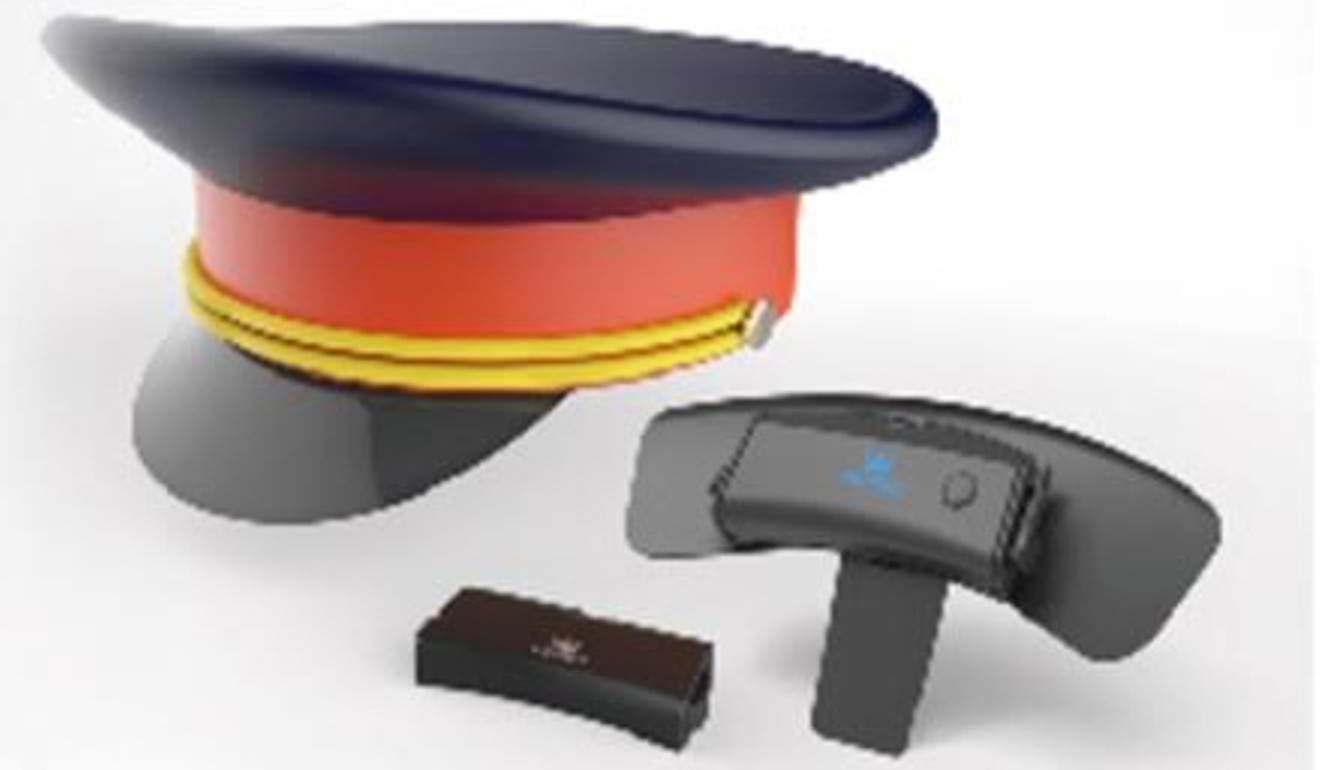
Concealed in regular safety helmets or uniform hats, these lightweight, wireless sensors constantly monitor the wearer’s brainwaves and stream the data to computers that use artificial intelligence algorithms to detect emotional spikes such as depression, anxiety or rage.

The technology is in widespread use around the world but China has applied it on an unprecedented scale in factories, public transport, state-owned companies and the military to increase the competitiveness of its manufacturing industry and to maintain social stability.

It has also raised concerns about the need for regulation to prevent abuses in the workplace.

The technology is also in use at in Hangzhou at State Grid Zhejiang Electric Power, where it has boosted company profits by about 2 billion yuan (US$315 million) since it was rolled out in 2014, according to Cheng Jingzhou, an official overseeing the company’s emotional surveillance programme.

“There is no doubt about its effect,” Cheng said.

Source: ‘Forget the Facebook leak’: China is mining data directly from workers’ brains on an industrial scale | South China Morning Post

Chinese government admits collection of deleted WeChat messages

Chinese authorities revealed over the weekend that they have the capability of retrieving deleted messages from the almost universally used WeChat app. The admission doesn’t come as a surprise to many, but it’s rare for this type of questionable data collection tactic to be acknowledged publicly.As noted by the South China Morning Post, an anti-corruption commission in Hefei province posted Saturday to social media that it has “retrieved a series of deleted WeChat conversations from a subject” as part of an investigation.The post was deleted Sunday, but not before many had seen it and understood the ramifications. Tencent, which operates the WeChat service used by nearly a billion people (including myself), explained in a statement that “WeChat does not store any chat histories — they are only stored on users’ phones and computers.”The technical details of this storage were not disclosed, but it seems clear from the commission’s post that they are accessible in some way to interested authorities, as many have suspected for years. The app does, of course, comply with other government requirements, such as censoring certain topics.There are still plenty of questions, the answers to which would help explain user vulnerability: Are messages effectively encrypted at rest? Does retrieval require the user’s password and login, or can it be forced with a “master key” or backdoor? Can users permanently and totally delete messages on the WeChat platform at all?

Source: Chinese government admits collection of deleted WeChat messages | TechCrunch

AI boffins rebel against closed-access academic journal Nature

Thousands of machine-learning wizards have signed an open statement boycotting a new AI-focused academic journal, disapproving of the paper’s policy of closed-access.Nature Machine Intelligence is a specialized journal concentrating on intelligent systems and robotics research. It’s expected to launch in January next year, and is part of Nature Publishing Group, one of the world’s top academic publishers.The joint statement written by Thomas Dietterich, a professor of computer science at Oregon State University in the US, and signed by more than 2,000 academics and researchers in industry, states that “they will not submit to, review, or edit for this new journal.”He said that free and open access journals speeds up scientific progress since it allows anyone to read the latest research and contribute their own findings. It also helps universities who can’t afford subscription fees or pay for their own papers to be open access.“It is important to note that in the modern scientific journal, virtually all of the work is done by academic researchers. We write the papers, we edit the papers, we typeset the papers, and we review the papers,” he told The Register.

Source: AI boffins rebel against closed-access academic journal that wants to have its cake and eat it • The Register

Revealed: how bookies use AI to keep gamblers hooked | Technology | The Guardian

The gambling industry is increasingly using artificial intelligence to predict consumer habits and personalise promotions to keep gamblers hooked, industry insiders have revealed.Current and former gambling industry employees have described how people’s betting habits are scrutinised and modelled to manipulate their future behaviour.“The industry is using AI to profile customers and predict their behaviour in frightening new ways,” said Asif, a digital marketer who previously worked for a gambling company. “Every click is scrutinised in order to optimise profit, not to enhance a user’s experience.”“I’ve often heard people wonder about how they are targeted so accurately and it’s no wonder because its all hidden in the small print.”Publicly, gambling executives boast of increasingly sophisticated advertising keeping people betting, while privately conceding that some are more susceptible to gambling addiction when bombarded with these type of bespoke ads and incentives.Gamblers’ every click, page view and transaction is scientifically examined so that ads statistically more likely to work can be pushed through Google, Facebook and other platforms.

[…]

Last August, the Guardian revealed the gambling industry uses third-party companies to harvest people’s data, helping bookmakers and online casinos target people on low incomes and those who have stopped gambling.

Despite condemnation from MPs, experts and campaigners, such practices remain an industry norm.

“You can buy email lists with more than 100,000 people’s emails and phone numbers from data warehouses who regularly sell data to help market gambling promotions,” said Brian. “They say it’s all opted in but people haven’t opted in at all.”

In this way, among others, gambling companies and advertisers create detailed customer profiles including masses of information about their interests, earnings, personal details and credit history.

[…]

Elsewhere, there are plans to geolocate customers in order to identify when they arrive at stadiums so they can prompted via texts to bet on the game they are about to watch.

The gambling industry earned£14bn in 2016, £4.5bn of which from online betting, and it is pumping some of that money into making its products more sophisticated and, in effect, addictive.

Source: Revealed: how bookies use AI to keep gamblers hooked | Technology | The Guardian

USB drive that crashes Windows

PoC for a NTFS crash that I discovered, in various Windows versions

Type of issue: denial of service. One can generate blue-screen-of-death using a handcrafted NTFS image. This Denial of Service type of attack, can be driven from user mode, limited user account or Administrator. It can even crash the system if it is in locked state.

Reported to Microsoft on July 2017, they did not want to assign CVE for it nor even to write me when they fixed it.

Affected systems

  1. Windows 7 Enterprise 6.1.7601 SP1, Build 7601 x64
  2. Windows 10 Pro 10.0.15063, Build 15063 x64
  3. Windows 10 Enterprise Evaluation Insider Preview 10.0.16215, Build 16215 x64

Note: these are the only systems I have tested.

Does not seem to reproduce on my current build: 10.0.16299 Build 16299 x64 (didnt have time to see if it’s really fixed)

last email response 🙂

Hey Marius, Your report requires either physical access or social engineering, and as such, does not meet the bar for servicing down-level (issuing a security patch). […]

Your attempt to responsibly disclose a potential security issue is appreciated and we hope you continue to do so.

Regards,

https://github.com/mtivadar/windows10_ntfs_crash_dos

life-saving gravity-powered light

The second generation of a deciwatt gravity-powered lamp designed by the British industrial designers behind the Psion computer keyboard was launched today.

Few innovations we cover can claim to save lives, but this just might be one of them. The $5 Gravity Light, designed by London’s Therefore Inc, offers the world’s poorest a clean alternative to burning kerosene or biomass for lighting or radios.

The clever bit is a winch that unwinds incredibly slowly, but steadily enough to provide a low but usable voltage. The lamp was first featured here in 2012.

The second generation adds solar power and a rechargeable battery. The latter may be surprising – co-designer Jim Reeves said short-lived and costly rechargeable batteries were far from ideal. But things change, and the ability to store the energy is useful.

Source: Grab your lamp, you’ve pulled: Brits punt life-saving gravity-powered light