
The Golden State Killer Suspect’s DNA Was in a Publicly Available Database, and Yours Might Be Too

Plenty of people have voluntarily uploaded their DNA to GEDmatch and other databases, often with real names and contact information. It’s what you do if you’re an adopted kid looking for a long-lost parent, or a genealogy buff curious about whether you have any cousins still living in the old country. GEDmatch requires that you make your DNA data public if you want to use their comparison tools, although you don’t have to attach your real name. And they’re not the only database that has helped law enforcement track people down without their knowledge.

How DNA Databases Help Track People Down

We don’t know exactly what samples or databases were used in the Golden State Killer’s case; the Sacramento County District Attorney’s office gave very little information and hasn’t confirmed any further details. But here are some things that are possible.

Y chromosome data can lead to a good guess at an unknown person’s last name.

Cis men typically have an X and a Y chromosome, and cis women two X’s. That means the Y chromosome is passed down from genetic males to their offspring—for example, from father to son. Since last names are also often handed down the same way, in many families you’ll share a surname with anybody who shares your Y chromosome.

A 2013 Science paper described how a small amount of Y chromosome data should be enough to identify surnames for an estimated 12 percent of white males in the US. (That method would find the wrong surname for 5 percent, and the rest would come back as unknown.) As more people upload their information to public databases, the authors warned, the success rate will only increase.

This is exactly the technique that genealogical consultant Colleen Fitzpatrick used to narrow down a pool of suspects in an Arizona cold case. She seems to have used short tandem repeat (STR) data from the suspect’s Y chromosome to search the Family Tree DNA database, and she saw the name Miller in the results.

The police already had a long list of suspects in the Arizona case, but based on that tip they zeroed in on one with the last name Miller. As with the Golden State Killer case, police confirmed the DNA match by obtaining a fresh DNA sample directly from their subject—the Sacramento office said they got it from something he discarded. (Yes, this is legal, and it can be an item as ordinary as a used drinking straw.)

The authors of the Science paper point out that surname, location, and year of birth are often enough to find an individual in census data.

 SNP files can find family trees.

When you download your “raw data” after mailing in a 23andme or Ancestry test, what you get is a list of locations on your genome (called SNPs, for single nucleotide polymorphisms) and two letters indicating your status for each. For example, at a certain SNP you may have inherited an A from one parent and a G from the other.

Genetic testing sites will have tools to compare your DNA with others in their database, but you can also download your raw data and submit it to other sites, including GEDmatch or Family Tree DNA. (23andme and Ancestry allow you to download your data, but they don’t accept uploads.)

But you don’t have to send a spit sample to one of those companies to get a raw data file. The DNA Doe project describes how they sequenced the whole genome of an unidentified girl from a cold case and used that data to construct a SNP file to upload to GEDmatch. They found someone with enough of the same SNPs that they were probably a close cousin. That cousin also had an account at Ancestry, where they had filled out a family tree with details of their family members. The tree included an entry for a cousin of the same age as the unidentified girl, and whose death date was listed as “missing—presumed dead.” It was her.

Your DNA Is Not Just Yours

When you send in a spit sample, or upload a raw data file, you may only be thinking about your own privacy. I have nothing to hide, you might tell yourself. Who cares if somebody finds out that I have blue eyes or a predisposition to heart disease?

But half of your DNA belongs to your biological mother, and half to your biological father. Another half—cut a different way—belongs to each of your children. On average, you share half your DNA with a sibling, and a quarter with a half-sibling, grandparent, aunt, uncle, niece or nephew. You share about an eighth with a first cousin, and so on. The more of your extended family who are into genealogy, the more likely you are to have your DNA in a public database, already contributed by a relative.

In the cases we mention here, the breakthrough came when DNA was matched, through a public database, to a person’s real name. But your DNA is, in a sense, your most identifying information.

For some cases, it may not matter whether your name is attached. Facebook reportedly spoke with a hospital about exchanging anonymized data. They didn’t need names because they had enough information, and good enough algorithms, that they thought they could identify individuals based on everything else. (Facebook doesn’t currently collect DNA information, thank god. There is a public DNA project that signs people up using a Facebook app, but they say they don’t pass the data to Facebook itself.)

And remember that 2013 study about tracking down people’s surnames? They grabbed whole-genome data from a few high-profile people who had made theirs public, and showed that the DNA files were sometimes enough information to track down an individual’s full name. It may be impossible for DNA to be totally anonymous.

Can You Protect Your Privacy While Using DNA Databases?

If you’re very concerned about privacy, you’re best off not using any of these databases. But you can’t control whether your relatives use them, and you may be looking for a long-lost family member and thus want to be in a database while minimizing the risks.

Source: The Golden State Killer Suspect’s DNA Was in a Publicly Available Database, and Yours Might Be Too
‘Forget the Facebook leak’: China is mining data directly from workers’ brains on an industrial scale

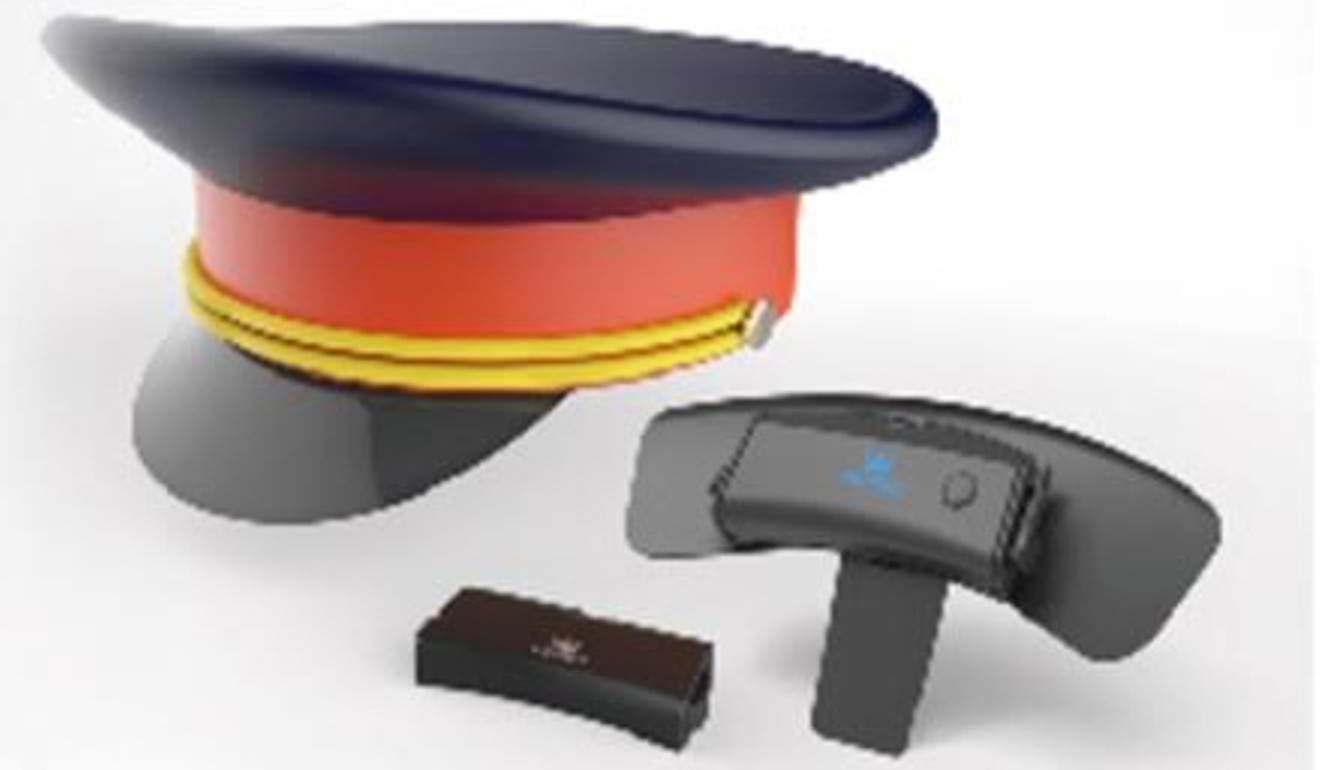
the workers wear caps to monitor their brainwaves, data that management then uses to adjust the pace of production and redesign workflows, according to the company.

The company said it could increase the overall efficiency of the workers by manipulating the frequency and length of break times to reduce mental stress.

Hangzhou Zhongheng Electric is just one example of the large-scale application of brain surveillance devices to monitor people’s emotions and other mental activities in the workplace, according to scientists and companies involved in the government-backed projects.

Concealed in regular safety helmets or uniform hats, these lightweight, wireless sensors constantly monitor the wearer’s brainwaves and stream the data to computers that use artificial intelligence algorithms to detect emotional spikes such as depression, anxiety or rage.

The technology is in widespread use around the world but China has applied it on an unprecedented scale in factories, public transport, state-owned companies and the military to increase the competitiveness of its manufacturing industry and to maintain social stability.

It has also raised concerns about the need for regulation to prevent abuses in the workplace.

The technology is also in use at in Hangzhou at State Grid Zhejiang Electric Power, where it has boosted company profits by about 2 billion yuan (US$315 million) since it was rolled out in 2014, according to Cheng Jingzhou, an official overseeing the company’s emotional surveillance programme.

“There is no doubt about its effect,” Cheng said.

Source: ‘Forget the Facebook leak’: China is mining data directly from workers’ brains on an industrial scale | South China Morning Post

Chinese government admits collection of deleted WeChat messages

Chinese authorities revealed over the weekend that they have the capability of retrieving deleted messages from the almost universally used WeChat app. The admission doesn’t come as a surprise to many, but it’s rare for this type of questionable data collection tactic to be acknowledged publicly.As noted by the South China Morning Post, an anti-corruption commission in Hefei province posted Saturday to social media that it has “retrieved a series of deleted WeChat conversations from a subject” as part of an investigation.The post was deleted Sunday, but not before many had seen it and understood the ramifications. Tencent, which operates the WeChat service used by nearly a billion people (including myself), explained in a statement that “WeChat does not store any chat histories — they are only stored on users’ phones and computers.”The technical details of this storage were not disclosed, but it seems clear from the commission’s post that they are accessible in some way to interested authorities, as many have suspected for years. The app does, of course, comply with other government requirements, such as censoring certain topics.There are still plenty of questions, the answers to which would help explain user vulnerability: Are messages effectively encrypted at rest? Does retrieval require the user’s password and login, or can it be forced with a “master key” or backdoor? Can users permanently and totally delete messages on the WeChat platform at all?

Source: Chinese government admits collection of deleted WeChat messages | TechCrunch

AI boffins rebel against closed-access academic journal Nature

Thousands of machine-learning wizards have signed an open statement boycotting a new AI-focused academic journal, disapproving of the paper’s policy of closed-access.Nature Machine Intelligence is a specialized journal concentrating on intelligent systems and robotics research. It’s expected to launch in January next year, and is part of Nature Publishing Group, one of the world’s top academic publishers.The joint statement written by Thomas Dietterich, a professor of computer science at Oregon State University in the US, and signed by more than 2,000 academics and researchers in industry, states that “they will not submit to, review, or edit for this new journal.”He said that free and open access journals speeds up scientific progress since it allows anyone to read the latest research and contribute their own findings. It also helps universities who can’t afford subscription fees or pay for their own papers to be open access.“It is important to note that in the modern scientific journal, virtually all of the work is done by academic researchers. We write the papers, we edit the papers, we typeset the papers, and we review the papers,” he told The Register.

Source: AI boffins rebel against closed-access academic journal that wants to have its cake and eat it • The Register

Revealed: how bookies use AI to keep gamblers hooked | Technology | The Guardian

The gambling industry is increasingly using artificial intelligence to predict consumer habits and personalise promotions to keep gamblers hooked, industry insiders have revealed.Current and former gambling industry employees have described how people’s betting habits are scrutinised and modelled to manipulate their future behaviour.“The industry is using AI to profile customers and predict their behaviour in frightening new ways,” said Asif, a digital marketer who previously worked for a gambling company. “Every click is scrutinised in order to optimise profit, not to enhance a user’s experience.”“I’ve often heard people wonder about how they are targeted so accurately and it’s no wonder because its all hidden in the small print.”Publicly, gambling executives boast of increasingly sophisticated advertising keeping people betting, while privately conceding that some are more susceptible to gambling addiction when bombarded with these type of bespoke ads and incentives.Gamblers’ every click, page view and transaction is scientifically examined so that ads statistically more likely to work can be pushed through Google, Facebook and other platforms.

[…]

Last August, the Guardian revealed the gambling industry uses third-party companies to harvest people’s data, helping bookmakers and online casinos target people on low incomes and those who have stopped gambling.

Despite condemnation from MPs, experts and campaigners, such practices remain an industry norm.

“You can buy email lists with more than 100,000 people’s emails and phone numbers from data warehouses who regularly sell data to help market gambling promotions,” said Brian. “They say it’s all opted in but people haven’t opted in at all.”

In this way, among others, gambling companies and advertisers create detailed customer profiles including masses of information about their interests, earnings, personal details and credit history.

[…]

Elsewhere, there are plans to geolocate customers in order to identify when they arrive at stadiums so they can prompted via texts to bet on the game they are about to watch.

The gambling industry earned£14bn in 2016, £4.5bn of which from online betting, and it is pumping some of that money into making its products more sophisticated and, in effect, addictive.

Source: Revealed: how bookies use AI to keep gamblers hooked | Technology | The Guardian

USB drive that crashes Windows

PoC for a NTFS crash that I discovered, in various Windows versions

Type of issue: denial of service. One can generate blue-screen-of-death using a handcrafted NTFS image. This Denial of Service type of attack, can be driven from user mode, limited user account or Administrator. It can even crash the system if it is in locked state.

Reported to Microsoft on July 2017, they did not want to assign CVE for it nor even to write me when they fixed it.

Affected systems

  1. Windows 7 Enterprise 6.1.7601 SP1, Build 7601 x64
  2. Windows 10 Pro 10.0.15063, Build 15063 x64
  3. Windows 10 Enterprise Evaluation Insider Preview 10.0.16215, Build 16215 x64

Note: these are the only systems I have tested.

Does not seem to reproduce on my current build: 10.0.16299 Build 16299 x64 (didnt have time to see if it’s really fixed)

last email response 🙂

Hey Marius, Your report requires either physical access or social engineering, and as such, does not meet the bar for servicing down-level (issuing a security patch). […]

Your attempt to responsibly disclose a potential security issue is appreciated and we hope you continue to do so.

Regards,

https://github.com/mtivadar/windows10_ntfs_crash_dos

life-saving gravity-powered light

The second generation of a deciwatt gravity-powered lamp designed by the British industrial designers behind the Psion computer keyboard was launched today.

Few innovations we cover can claim to save lives, but this just might be one of them. The $5 Gravity Light, designed by London’s Therefore Inc, offers the world’s poorest a clean alternative to burning kerosene or biomass for lighting or radios.

The clever bit is a winch that unwinds incredibly slowly, but steadily enough to provide a low but usable voltage. The lamp was first featured here in 2012.

The second generation adds solar power and a rechargeable battery. The latter may be surprising – co-designer Jim Reeves said short-lived and costly rechargeable batteries were far from ideal. But things change, and the ability to store the energy is useful.

Source: Grab your lamp, you’ve pulled: Brits punt life-saving gravity-powered light