Visa and Mastercard are getting overwhelmed by censorship gamer fury

In the wake of storefronts like Steam and itch.io curbing the sale of adult games, irate fans have started an organized campaign against the payment processors that they believe are responsible for the crackdown. While the movement is still in its early stages, people are mobilizing with an eye toward overwhelming communication lines at companies like Visa and Mastercard in a way that will make the concern impossible to ignore.

On social media sites like Reddit and Bluesky, people are urging one another to get into contact with Visa and Mastercard through emails and phone calls. Visa and Mastercard have become the targets of interest because the affected storefronts both say that their decisions around adult games were motivated by the danger of losing the ability to use major payment processors while selling games. These payment processors have their own rules regarding usage, but they are vaguely defined. But losing infrastructure like this could impact audiences well beyond those who care about sex games, spokespeople for Valve and itch.io said.

In a now-deleted post on the Steam subreddit with over 17,000 upvotes, commenters say that customer service representatives for both payment processors seem to already be aware of the problem. Sometimes, the representatives will say that they’ve gotten multiple calls on the subject of adult game censorship, but that they can’t really do anything about it.

The folks applying pressure know that someone at a call center has limited power in a scenario like this one; typically, agents are equipped to handle standard customer issues like payment fraud or credit card loss. But the point isn’t to enact change through a specific phone call: It’s to cause enough disruption that the ruckus theoretically starts costing payment processors money.

“Emails can be ignored, but a very very long queue making it near impossible for other clients to get in will help a lot as well,” reads the top comment on the Reddit thread. In that same thread, people say that they’re hanging onto the call even if the operator says that they’ll experience multi-hour wait times presumably caused by similar calls gunking up the lines. Beyond the stubbornness factor, the tactic is motivated by the knowledge that most customer service systems will put people who opt for call-backs in a lower priority queue, as anyone who opts in likely doesn’t have an emergency going on.

Artwork from the erotic game Forbidden Fantasy, featuring a purple-haired elf character shushing the camera
Image: OppaiMan

“Do both,” one commenter suggests. “Get the call back, to gum up the call back queue. Then call in again and wait to gum up the live queue.”

People are also using email to voice their concerns directly to the executives at both Visa and Mastercard, payment processors that activist group Collective Shout called out by name in their open letter requesting that adult games get pulled. Emails are also getting sent to customer service. In light of the coordinated effort, many people are getting a pre-written response that reads:

Thank you for reaching out and sharing your perspective. As a global company, we follow the laws and regulations everywhere we do business. While we explicitly prohibit illegal activity on our network, we are equally committed to protecting legal commerce. If a transaction is legal, our policy is to process the transaction. We do not make moral judgments on legal purchases made by consumers. Visa does not moderate content sold by merchants, nor do we have visibility into the specific goods or services sold when we process a transaction. When a legally operating merchant faces an elevated risk of illegal activity, we require enhanced safeguards for the banks supporting those merchants. For more information on Visa’s policies, please visit our network integrity page on Visa.com. Thank you for writing.

On platforms like Bluesky, resources are being shared to help people know who to contact and how, including possible scripts for talking to representatives or sending emails. A website has been set up with the explicit purpose of arming concerned onlookers with the tools and knowledge necessary to do their part in the campaign.

Through it all, gamers are telling one another to remain cordial during any interactions with payment processors, especially when dealing with low-level workers who are just trying to do their job. For executives, the purpose of maintaining a considerate tone is to help the people in power take the issue seriously.

The strategy is impressive in its depth and breadth of execution. While some charge in with an activist bent, others say that they’re pretending to be confused customers who want to know why they can’t use Visa or Mastercard to buy their favorite games.

Meanwhile, Collective Shout — the organization who originally complained to Steam, Visa, and Mastercard about adult games featuring non-consensual violence against women — has also recently put out a statement of its own alongside a timeline of events.

“We raised our objection to rape and incest games on Steam for months, and they ignored us for months,” reads a blog post from Collective Shout. “We approached payment processors because Steam did not respond to us.”

Collective Shout claims that it only petitioned itch.io to pull games with sexualized violence or torture against women, but allegedly, the storefront made its own decision to censor NSFW content sitewide. At current, itch.io has deindexed games with adult themes, meaning that these games are not viewable on their search pages. The indie storefront is still in the middle of figuring out and outlining its rules for adult content on the website, but the net has been cast so wide that some games with LGBT themes are being impacted as well.

In another popular Reddit thread, users say that customer service representatives are shifting from confusion to reiterating that their concerns are being “heard.”

“I will be calling them again in a few to days to see if there is any progress on changing the situation,” says the original poster.

Perhaps a different comment in that thread summarizes the ordeal best: “There’s really only 2 things that can unite Gamers: hate campaigns and gooning.”

Source: Visa and Mastercard are getting overwhelmed by censorship gamer fury | Polygon

Automata Dev Warns That Letting Credit Card Companies Censor Internet is an attack on Democracy

As a fight with credit card companies over adult games leads to renewed concerns about censorship on Steam and even on indie platforms like itch.io, a recent warning by Nier: Automata director Yoko Taro calling censorship a “security hole that endangers democracy itself” has become relevant again.

The comments came last November when the Manga Library Z online repository for digital downloads of out-of-print manga was forced to shut down. The group blamed international credit card companies, presumably Visa and Mastercard, who wanted the site to censor certain words from its copies of adult manga.

“Publishing and similar fields have always faced regulations that go beyond the law, but the fact that a payment processor, which is involved in the entire infrastructure of content distribution, can do such things at its own discretion seems to me to be dangerous on a whole new level,” Taro wrote in a thread at the time, according to a translation by Automaton.

He contionued:

It implies that by controlling payment processing companies, you can even censor another country’s free speech. I feel like it’s not just a matter of censoring adult content or jeopardizing freedom of expression, but rather a security hole that endangers democracy itself.

Manga Library Z was eventually able to come back online thanks to a crowdfunding campaign earlier this year, but now video game developers behind adult games with controversial themes are facing similar issues on Steam and itch.io due to recent boycott campaigns. Some artists and fans have been organizing reverse boycotts calling for Visa, Mastercard, and others to end their “moral panic.” One such petition has nearly 100,000 signatures so far.

“Some of the games that have been caught up in the last day’s changes on Itch are games that up-and-coming creators have made about their own experiences in abusive relationships, or dealing with trauma, or coming out of the closet and finding their first romance as an LGBTQ person,” NYU Game Center chair Naomi Clark told 404 Media this week. She mentioned Jenny Jiao Hsia’s autobiographical Consume Me as one example of the type of work that could be censored under the platform’s shifting definitions of what’s acceptable

[…]

Source: Nier: Automata Dev Warned About Credit Card Company Censorship

UK’s Stupid and Dangerous New Age Verification Requirement Thwarted in the Simplest Ways Imaginable

TL;DR – use a VPN or take a picture of yourself in Death Stranding

Earlier this week, the United Kingdom’s age assurance requirement for sites that publish pornographic material went into effect, which has resulted in everything from Pornhub to Reddit and Discord displaying an age verification panel when users attempt to visit. There’s just one little problem. As The Verge notes, all it takes to defeat the age-gating is a VPN, and those aren’t hard to come by these days.

Here’s the deal: Ofcom, the UK’s telecom regulator, requires online platforms to verify the age of their users if they are accessing a site that either publishes or allows users to publish pornographic material. Previously, a simple click of an “I am over 18” button would get you in. Now, platforms are mandated to use a verification method that is “strong” and “highly effective.” A few of those acceptable methods include verifying with a credit card, uploading a photo ID, or submitting to a “facial age estimation” in which you upload a selfie so a machine can determine if you look old enough to pleasure yourself responsibly.

Those options vary from annoying to creepily intrusive, but there’s a little hitch in the plan: Currently, most platforms are determining a user’s location based on IP address. If you have an IP that places you in the UK, you have to verify. But if you don’t, you’re free to browse without interruption. And all you need to change your IP address is a VPN.

Ofcom seems aware of this very simple workaround. According to the BBC, the regulator has rules that make it illegal for platforms to host, share, or allow content that encourages people to use a VPN to bypass the age authentication page. It also encouraged parents to block or control VPN usage by their children to keep them from dodging the age checkers.

It seems that people are aware of this option. Google Trends shows that searches for the term “VPN” have skyrocketed in the UK since the age verification requirement went into effect.

[…]

But the thing about Ofcom’s implementation here is that it’s not just blocking kids from seeing harmful material—it’s exposing everyone to invasive, privacy-violating risks. When the methods for accomplishing the stated goal require people to reveal sensitive data, including their financial information, or give up pictures of their face to be scanned and processed by AI, it’s kinda hard to blame anyone for just wanting to avoid that entirely. Whether they’re horny teens trying to skirt the system or adults, getting a face scan before opening Pornhub kinda kills the mood.

Source: UK’s New Age Verification Requirement Thwarted in the Simplest Way Imaginable

An X user named Dany Sterkhov appears to be the first to discover the hack. On July 25, he posted that he had bypassed Discord’s age verification check using the photo mode in the video game Death Stranding.

[…]

The Verge and PCGamer have both tried Sterkhov’s hack themselves and confirmed it works.

Most of these companies rely on third-party platforms to handle age verification. These services typically give users the option to upload a government-issued photo ID or submit photos of themselves.

Discord uses a platform called k-ID for age verification. According to The Verge’s Tom Warren, all he had to do to pass the check was point his phone’s camera at his monitor to scan the face of Sam Bridges, the protagonist of Death Stranding, using the game’s photo mode. The system did ask him to open and close his mouth—something that is easy enough to do in the game.

Warren was also able to bypass Reddit’s age check, which is handled by Persona, using the same method. However, the trick didn’t work with Bluesky’s system, which uses Yoti for age verification.

[…]

ProtonVPN reported on X that it saw an over 1,400 percent increase in sign-ups in the U.K. after the age verification requirements took effect. VPNs let people browse the web as if they were in a different location, making it easier to bypass the U.K.’s age checks.

In the U.S., laws requiring similar age verification systems for porn sites have passed in nearly half the states. Nine states in the U.S. have also passed laws requiring parental consent or age verification for social media platforms.

Source: ‘Death Stranding’ Is Helping UK Users Bypass Age Verification Laws

The problem is that besides being unenforceable you are leaving a lot of very personal data inside the age verifiers databases. These databases are clear targets and will get hacked.

The Viral ‘Tea’ App Just Had a Second Data Breach, and It’s Even Worse

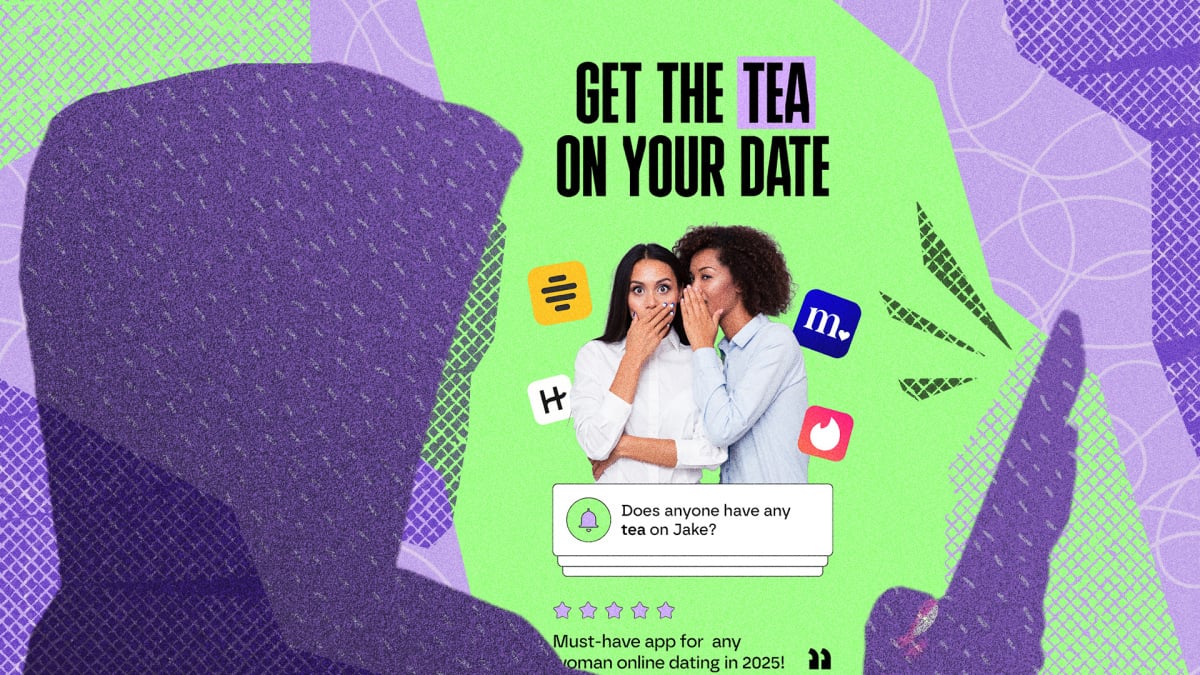
Last week, the two-year-old social media app Tea, which functions as a Yelp-style platform where women can anonymously rate and review real men who cannot access the app nor respond, experienced an intense moment of virality that rocketed it to the top of the most-downloaded list on Apple’s App Store. But within days, it faced a major data breach that leaked years-old user data. And now there are reports of a second breach, and it’s even worse.

Reps for the app said last week that the data that leaked was about two years old, and that no information related to users who joined more recently appeared to be included. But according to a new report from 404 Media, the second incursion leaked direct messages and other data from as recently as last week.

The second data breach included more recent information

According to 404 Media’s report, an independent security researcher named Kasra Rahjerdi reported the second breach, noting “it was possible for hackers to access messages between [Tea] users discussing abortions, cheating partners, and phone numbers they sent to one another.” This breach appears to be of a separate database, not the same one that was at issue last week, and this database stored much more recent information.

In last week’s breach, hackers were able to view and disseminate user verification images—including photos of driver’s licenses—that were submitted when women signed up for the service.

[…]

In its report, 404 Media makes clear that this security issue was noticed and flagged by an independent researcher—but there’s no way of knowing who else may have discovered it and not taken the info to the media. The outlet was able to confirm that the database included private, potentially sensitive information about not only the women who were chatting within the app, but the men they were discussing. Some women shared phone numbers and private details of their interactions with men and made accusations about the men’s conduct. While Tea encourages users to create anonymous usernames, 404 Media reported it wasn’t hard to tie at least a few of the messages back to real-life people.

[…]

I certainly acknowledge that warning women of abusers, violent men, and cheaters is a good, safe thing to do and that anonymously rating people and not having to provide any proof of the accusations you’re publicly making against them is potentially a very bad thing.

And inarguably, the fact that thousands of women’s photos and private messages were stored in such an insecure way by Tea that they have been exposed in multiple data breaches is definitely a very bad thing. No one is winning here.

Source: The Viral ‘Tea’ App Just Had a Second Data Breach, and It’s Even Worse

Cyberattack on Russian airline Aeroflot causes the cancellation of more than 100 flights

A cyberattack on Russian state-owned flagship carrier Aeroflot caused a mass outage to the company’s computer systems on Monday, Russia’s prosecutor’s office said, forcing the airline to cancel more than 100 flights and delay others.

Ukrainian hacker group Silent Crow and Belarusian hacker activist group the Belarus Cyber-Partisans, which opposes the rule of Belarusian President Alexander Lukashenko, claimed responsibility for the cyberattack.

[…]

Kremlin spokesperson Dmitry Peskov called reports of the cyberattack “quite alarming,” adding that “the hacker threat is a threat that remains for all large companies providing services to the general public.”

Silent Crow claimed it had accessed Aeroflot’s corporate network for a year, copying customer and internal data, including audio recordings of phone calls, data from the company’s own surveillance on employees and other intercepted communications.

“All of these resources are now inaccessible or destroyed and restoring them will possibly require tens of millions of dollars. The damage is strategic,” the channel purporting to be the Silent Crow group wrote on Telegram. There was no way to independently verify its claims.

The same channel also shared screenshots that appeared to show Aeroflot’s internal IT systems, and insinuated that Silent Crow could begin sharing the data it had seized in the coming days.

“The personal data of all Russians who have ever flown with Aeroflot have now also gone on a trip — albeit without luggage and to the same destination,” it said.

[…]

Source: Cyberattack on Russian airline Aeroflot causes the cancellation of more than 100 flights – POLITICO

Samsung adds to digital waste problem as it disables custom ROM (OS) support in One UI 8

While the vast majority of Samsung Galaxy device owners don’t tinker with the software on their phones, there’s a community of Android enthusiasts that love rooting devices, unlocking the bootloader to run custom ROMs and kernels.

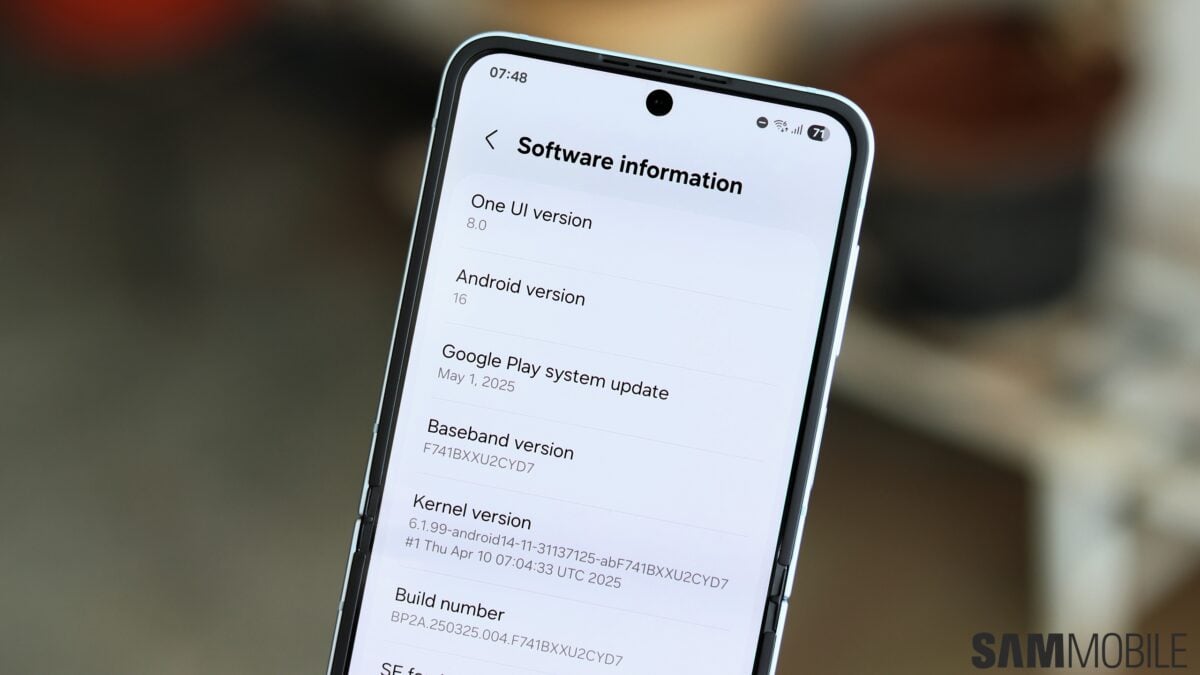
That has so far been possible on Samsung devices outside the United States. However, new evidence has surfaced that reveals One UI 8 has taken away the ability to unlock the bootloader on Samsung devices.

Samsung clamps down on software tinkering

This won’t make much difference to users in the United States. Samsung took away the option there to unlock the bootloader years ago. It was kept open for users in other parts of the world, but that changes with One UI 8.

A new report highlights evidence found in the Galaxy S25 One UI 8 beta builds that the bootloader unlock option has been removed. A similar change has also been confirmed on the Galaxy Z Fold 7 and Z Flip 7 which are running stable versions of One UI 8.

A deep dive into the stable version’s code has also confirmed that regardless of the region, the bootloader unlock option will not be available on devices running One UI 8. The enthusasit community won’t like it.

They won’t be able to use custom ROMs to update devices when the official software support runs out or use custom kernels to extract more performance.

Source: Say goodbye to your custom ROMs as One UI 8 kills bootloader unlock – SamMobile – SamMobile

I still have a Samsung tab S 8.4 (SM-T700) tablet from 2014 with a screen resolution of 2560 x 1600 (which you can hardly find) and is superlight and only has the required version of Android to run what I need it to because Lineage OS (a custom ROM) upgrades the Android version and Samsung won’t. With this change that won’t be possible in future.

‘Boiling frog’ effect makes people oblivious to threat of climate crisis, shows study

Surveys show that the increasing number of extreme climate events, including floods, wildfires and hurricanes, has not raised awareness of the threats posed by climate change. Instead, people change their idea of what they see as normal. This so-called “boiling frog effect” makes gradual change difficult to spot.

Researchers at Carnegie Mellon University in Pennsylvania wondered if climate change could be made more obvious by presenting it in binary terms. Local newspaper archives describing ice skating on Lake Carnegie when it froze in winter inspired a simple experiment.

Some test subjects were shown temperature graphs of a fictional town’s winter conditions; others had a chart showing whether or not a fictional lake froze each year. The result, published in Nature, showed those who receiving the second graphic consistently saw climate change as more real and imminent.

Binary data gives a clearer impression of the “before” and “after”. The disappearing ice is more vivid and dramatic than a temperature trace, even though the underlying data is the same.

“We are literally showing them the same trend, just in different formats,” says Rachit Dubey, a co-author of the study.

These results should help drive more effective ways of communicating the impact of climate change in future by finding simple binary, black-and-white examples of its effects.

Source: ‘Boiling frog’ effect makes people oblivious to threat of climate crisis, shows study | Environment | The Guardian