
Microsoft software reselling dispute heads back to UK court

Microsoft’s tussle with UK-based reseller ValueLicensing over the sale of secondhand licenses returns to the UK’s Competition Appeal Tribunal this week, with the Windows behemoth now claiming that selling pre-owned Office and Windows software is unlawful.

ValueLicensing’s representatives say this week’s trial – due to start tomorrow – will “address whether the entire pre-owned license market was lawful – with Microsoft arguing that it was not lawful to resell pre-owned Office and Windows software at all.”

This stems from a May 2025 agreement that the scope of copyright issues now central to Microsoft’s defense needs to be determined.

The case has the potential to blow a hole in the European reselling market. According to ValueLicensing, “if Microsoft’s argument is correct, it would mean that the entire resale market in Europe should not exist.”

The ValueLicensing case has rumbled on for years, beginning with allegations that Microsoft stifled the supply of pre-owned licenses by offering attractive subscription deals to public and private sector organizations in return for the surrender of perpetual licenses. ValueLicensing (and companies like it) operated a business model based on organizations selling their perpetual licenses and resellers selling them on to customers at a discount.

ValueLicensing alleged that Microsoft added clauses to customer contracts aimed at restricting the resale of perpetual licenses. In return for accepting those contracts, customers were given a discount.

Judging by the case so far [PDF], it appears that this practice was a policy at Microsoft.

According to ValueLicensing, Microsoft’s allegedly anti-competitive antics and attempts to eliminate the secondhand software license market have cost it £270 million in lost profits.

Microsoft’s argument [PDF] is that it owns the copyright to the non-program bits of Office – the graphical user interface, for example – to which rules around software reselling (the European Software Directive) do not apply.

ValueLicensing boss Jonathan Horley noted the timing of the copyright claim. “It’s a remarkable coincidence that their defense against ValueLicensing has changed so dramatically from being a defense of ‘we didn’t do it’ to a defense of ‘the market should never have existed,'” he said.

Microsoft’s contention is not without precedent. The Tom Kabinet judgment drew a line between the secondary market for software programs and e-books. Reselling a software program isn’t a problem, while reselling something like an e-book is. Microsoft’s argument for its software appears to be similar.

The tech giant is facing other actions before the UK’s Competition Appeal Tribunal. Alexander Wolfson has brought a similar claim against Microsoft, potentially worth billions, regarding the purchase of certain licenses for specific products. Dr Maria Luisa Stasi has brought another regarding the cost of running Microsoft software on platforms like AWS and GCP compared to Azure.

Source: Microsoft software reselling dispute heads back to UK court • The Register

So if Microsoft wins, it means you don’t actually own a copy of the software you paid for.
Yes, Google Meet Is Down

If you’re trying to use Google Meet and failing, it’s not your fault. Google is reportedly investigating the outage, and DownDetector has seen tens of thousands or reports about Google Meet not working properly since around 1:25 p.m. ET.

“We are experiencing an issue with Google Meet beginning at Monday, 2025-09-08 10:25 PDT,” Google reported on its Workspace updates page.

“Our engineering team continues to investigate the issue. We will provide an update by Monday, 2025-09-08 11:30 PDT with current details,” the tech giant explained.

There is no reportedly workaround, at least according to the company.

[…]

Source: Yes, Google Meet Is Down

ASML invests €1.3B to become the largest shareholder in Nvidia-backed Mistral AI

Mistral AI, the Paris-based startup rapidly establishing itself as Europe’s leading AI company, has secured a €1.3 billion investment from Dutch semiconductor equipment maker ASML in its ongoing Series C funding round. This round, totalling approximately €1.7 billion, values Mistral at around €14 billion, with ASML emerging as the largest shareholder in the company.

With Google and Amazon funnelling billions into their AI ventures, this move places ASML as a critical player in the global semiconductor industry. Other investors in Mistral include Nvidia, Microsoft, Andreessen Horowitz, and General Catalyst. Mistral’s revenue has surged from €10 million in 2023 to €60 million by 2025, fueled by enterprise adoption and strategic partnerships.

[…]

Source: ASML invests €1.3B to become the largest shareholder in Nvidia-backed Mistral AI — TFN

Smartphone Sensors Unlocked: Turn Your Phone Into A Physics Lab

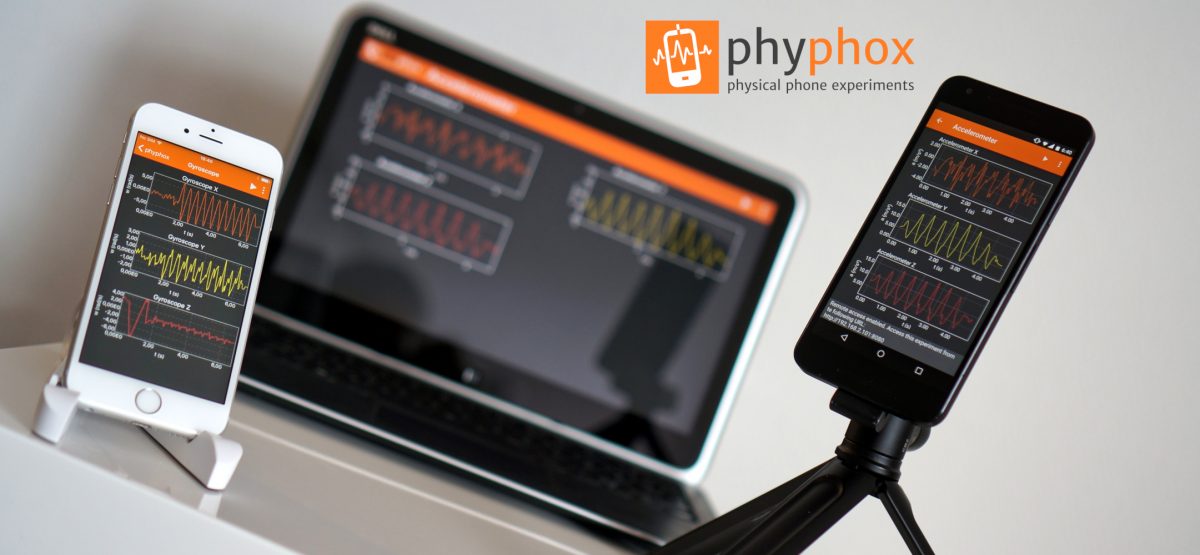
These days, most of us have a smartphone. They are so commonplace that we rarely stop to consider how amazing they truly are. The open-source project Phyphox has provided easy access to your phone’s sensors for over a decade. We featured it years ago, and the Phyphox team continues to update this versatile application.

Phyphox is designed to use your phone as a sensor for physics experiments, offering a list of prebuilt experiments created by others that you can try yourself. But that’s not all—this app provides access to the many sensors built into your phone. Unlike many applications that access these sensors, Phyphox is open-source, with all its code available on its GitHub page.

The available sensors depend on your smartphone, but you can typically access readings from accelerometers, GPS, gyroscopes, magnetometers, barometers, microphones, cameras, and more. The app includes clever prebuilt experiments, like measuring an elevator’s speed using your phone’s barometer or determining a color’s HSV value with the camera. Beyond phone sensors, the Phyphox team has added support for Arduino BLE devices, enabling you to collect and graph telemetry from your Arduino projects in a centralized hub.

Thanks [Alfius] for sharing this versatile application that unlocks a myriad of uses for your phone’s sensors. You can use a phone for so many things. Really.


Source: Smartphone Sensors Unlocked: Turn Your Phone Into A Physics Lab | Hackaday

Russian Drones Repeatedly Crossing into NATO’s Eastern Flank. No reaction from NATO.

Repeated drone incursions into Polish airspace show that Russia and Belarus are testing NATO and EU defenses. These incidents are not isolated but part of a wider hybrid warfare strategy that combines military pressure, information operations, and electronic warfare. The challenge for the Alliance is how to respond effectively without escalating into open conflict.

In recent nights, Polish airspace has been violated twice by unmanned aerial vehicles. Small, cheap, and difficult to detect, drones are ideal tools for hybrid warfare. Moscow and Minsk use them not to strike directly but to probe reactions, overload defense systems, and accustom societies to constant pressure. Each new violation risks becoming „the new normal” on NATO’s eastern border.

These incursions are not random. They are often synchronized with Russian missile barrages against Ukraine, creating a double layer of military and psychological impact. By observing how quickly Poland and NATO allies respond, and how coherent the communication between government and armed forces is, Moscow draws conclusions about the Alliance’s readiness. If the reaction is slow or chaotic, the pressure seems to work. If NATO fighters, such as Dutch F-35s currently stationed in Poland, are deployed, the costs of escalation for Russia increase.

The technical challenge is formidable. Small, low-flying drones evade traditional radars and are too cheap to be countered with expensive missiles like Patriot or CAMM-ER. A saturation scenario—dozens of drones attacking simultaneously—could overload command systems and force difficult prioritization between protecting critical infrastructure and intercepting minor threats. This is why layered defense, from Pilica+ and Piorun to Patriot, must be complemented with cheaper effectors such as programmable ammunition for AG-35 cannons and expanded radar coverage in the east.

[…]

Source: Russian Drones Challenge NATO’s Eastern Flank

Anything that crosses over the border should be intercepted, warned via radio and then shot down. The only language Putin understands is force, as he has shown with his opportunistic invasions time and again.