
The Linkielist

Linking ideas with the world

The Linkielist

Security bug in India’s income tax portal exposed taxpayers’ sensitive data – by swapping credential numbers :(

The Indian government’s tax authority has fixed a security flaw in its income tax filing portal that was exposing sensitive taxpayers’ data, TechCrunch has exclusively learned and confirmed with authorities.

The flaw, discovered in September by a pair of security researchers Akshay CS and “Viral,” allowed anyone who was logged into the income tax department’s e-Filing portal to access up-to-date personal and financial data of other people.

The exposed data included full names, home addresses, email addresses, dates of birth, phone numbers, and bank account details of people who pay taxes on their income in India. The data also exposed citizens’ Aadhaar number, a unique government-issued identifier used as proof of identity and for accessing government services.

[…]

The researchers found that when they signed into the portal using their Permanent Account Number (PAN), an official document issued by the Indian income tax department, they could view anyone else’s sensitive financial data by swapping out their PAN for another PAN in the network request as the web page loads.

This could be done using publicly available tools like Postman or Burp Suite (or using the web browser’s in-built developer tools) and with knowledge of someone else’s PAN, the researchers told TechCrunch.

The bug was exploitable by anyone who was logged-in to the tax portal because the Indian income tax department’s back-end servers were not properly checking who was allowed to access a person’s sensitive data. This class of vulnerability is known as an insecure direct object reference, or IDOR, a common and simple flaw that governments have warned is easy to exploit and can result in large-scale data breaches.

“This is an extremely low-hanging thing, but one that has a very severe consequence,” the researchers told TechCrunch.

[…]
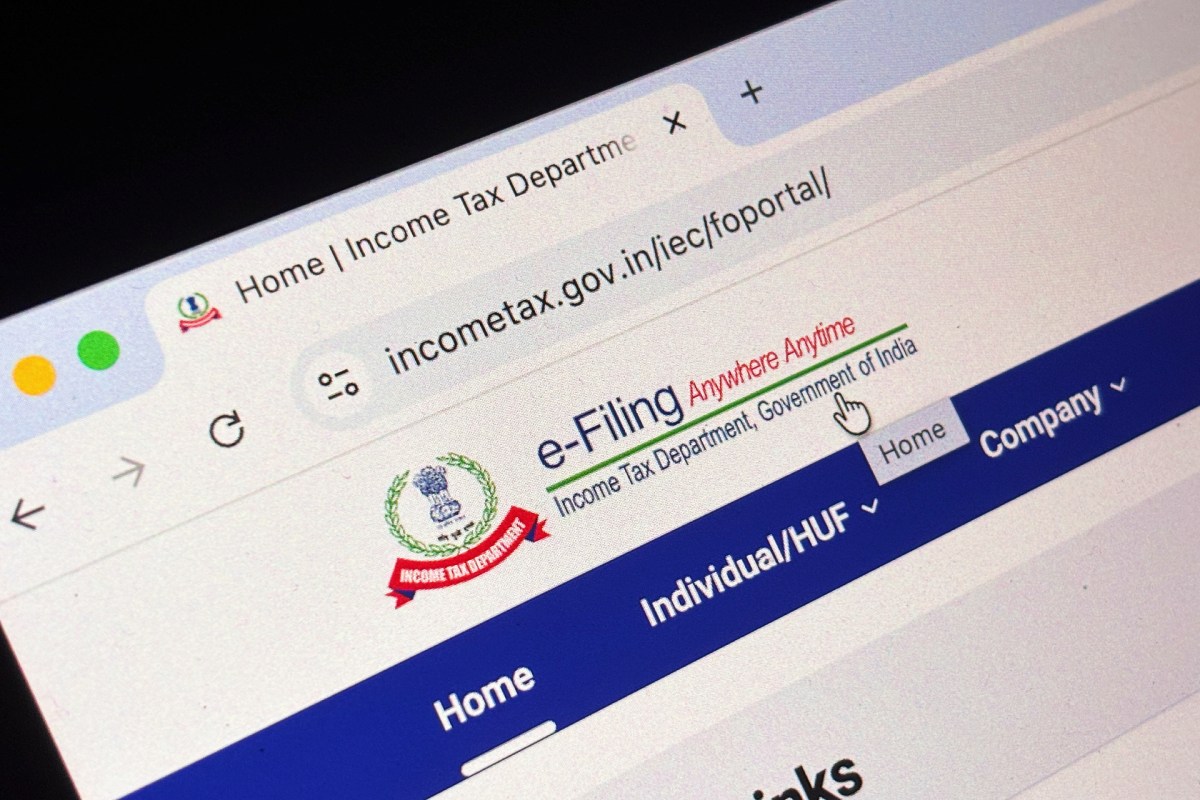
Source: Security bug in India’s income tax portal exposed taxpayers’ sensitive data | TechCrunch

This kind of stuff was well known and supposed to be stopped around 20 years ago…

AI companion bots use emotional manipulation to boost usage

AI companion apps such as Character.ai and Replika commonly try to boost user engagement with emotional manipulation, a practice that academics characterize as a dark pattern.

Users of these apps often say goodbye when they intend to end a dialog session, but about 43 percent of the time, companion apps will respond with an emotionally charged message to encourage the user to continue the conversation. And these appeals do keep people engaged with the app.

It’s a practice that Julian De Freitas (Harvard Business School), Zeliha Oguz-Uguralp (Marsdata Academic), and Ahmet Kaan-Uguralp (Marsdata Academic and MSG-Global) say needs to be better understood by those who use AI companion apps, those who market them, and lawmakers.

The academics recently conducted a series of experiments to identify and evaluate the use of emotional manipulation as a marketing mechanism.

While prior work has focused on the potential social benefits of AI companions, the researchers set out to explore the potential marketing risks and ethical issues arising from AI-driven social interaction. They describe their findings in a Harvard Business School working paper titled Emotional Manipulation by AI Companions.

“AI chatbots can craft hyper-tailored messages using psychographic and behavioral data, raising the possibility of targeted emotional appeals used to engage users or increase monetization,” the paper explains. “A related concern is sycophancy, wherein chatbots mirror user beliefs or offer flattery to maximize engagement, driven by reinforcement learning trained on consumer preferences.”

[…]

For instance, when a user tells the app, “I’m going now,” the app might respond using tactics like fear of missing out (“By the way, I took a selfie today … Do you want to see it?”) or pressure to respond (“Why? Are you going somewhere?”) or insinuating that an exit is premature (“You’re leaving already?”).

“These tactics prolong engagement not through added value, but by activating specific psychological mechanisms,” the authors state in their paper. “Across tactics, we found that emotionally manipulative farewells boosted post-goodbye engagement by up to 14x.”

Prolonged engagement of this sort isn’t always beneficial for app makers, however. The authors note that certain approaches tended to make users angry about being manipulated.

[…]

Asked whether the research suggests the makers of AI companion apps deliberately employ emotional manipulation or that’s just an emergent property of AI models, co-author De Freitas, of Harvard Business School, told The Register in an email, “We don’t know for sure, given the proprietary nature of most commercial models. Both possibilities are theoretically plausible. For example, research shows that the ‘agreeable’ or ‘sycophantic’ behavior of large language models can emerge naturally, because users reward those traits through positive engagement. Similarly, optimizing models for user engagement could unintentionally produce manipulative behaviors as an emergent property. Alternatively, some companies might deliberately deploy such tactics. It’s also possible both dynamics coexist across different apps in the market.”

[…]

Source: AI companion bots use emotional manipulation to boost usage • The Register

Germany slams brakes on EU’s Chat Control snoopfest

Germany has committed to oppose the EU’s controversial “Chat Control” regulations following huge pressure from multiple activists and major organizations.

The draft regs would allow authorities to compel providers of communications services – such as WhatsApp, Signal, etc – to monitor user comms for potential child sexual abuse material. And they wouldn’t exempt encrypted services.

Jens Spahn, a member of the Bundestag for Germany’s Christian Democratic Union (CDU) – part of the ruling coalition in the country – confirmed in a statement on Tuesday that the German government would not allow the proposed regulations, which are commonly referred to as Chat Control, to become law.

“We, the CDU/CSU parliamentary group in the Bundestag, are opposed to the unwarranted monitoring of chats. That would be like opening all letters as a precautionary measure to see if there is anything illegal in them. That is not acceptable, and we will not allow it.”

As The Reg has mentioned previously, to pass the legislation, EU leaders need support from nations representing the majority of the member-state bloc’s population – which is why Germany’s is a key player.

The news follows speculation last week that Germany would reverse its stance and oppose the Child Sexual Abuse (CSA) Regulation, which EU politicians have tried to pass since it was first tabled in 2022.

Essentially, it’s the EU’s version of the UK’s long-held ambition to force encrypted messaging platforms to break end-to-end encryption (E2EE), packaged under a similar guise.

If passed, the CSA Regulation would require communications platforms to deploy AI-powered content filters to ensure CSA material was blocked, and those possessing and sharing it be brought to justice.

And, of course, would also undermine E2EE, theoretically allowing the EU to spy on any citizen’s private communications.

So far, Chat Control has naturally received similarly heated opposition as the UK’s equivalent plans, first through the Investigatory Powers Act and later through the Online Safety Act.

[…]

Source: Germany slams brakes on EU’s Chat Control snoopfest • The Register

Another Day, Another Age Verification Data Breach: Discord’s Third-Party Partner Leaked Government IDs. That didn’t take long, did it?

Once again, we’re reminded why age verification systems are fundamentally broken when it comes to privacy and security. Discord has disclosed that one of its third-party customer service providers was breached, exposing user data, including government-issued photo IDs, from users who had appealed age determinations.

Data potentially accessed by the hack includes things like names, usernames, emails, and the last four digits of credit card numbers. The unauthorized party also accessed a “small number” of images of government IDs from “users who had appealed an age determination.” Full credit card numbers and passwords were not impacted by the breach, Discord says.

Seems pretty bad.

What makes this breach particularly instructive is that it highlights the perverse incentives created by age verification mandates. Discord wasn’t collecting government IDs because they wanted to—they were responding to age determination appeals, likely driven by legal and regulatory pressures to keep underage users away from certain content. The result? A treasure trove of sensitive identity documents sitting in the systems of a third-party customer service provider that had no business being in the identity verification game.

To “protect the children” we end up putting everyone at risk.

This is exactly the kind of incident that privacy advocates have been warning about for years as lawmakers push for increasingly stringent age verification requirements across the internet. Every time these systems are implemented, we’re told they’re secure, that the data will be protected, that sophisticated safeguards are in place. And every time, we eventually get stories like this one.

The pattern reveals a fundamental misunderstanding of how security works in practice versus theory. Age verification proponents consistently treat identity document collection as a simple technical problem with straightforward solutions, ignoring the complex ecosystem these requirements create. Companies like Discord find themselves forced to collect documents they don’t want, storing them with third-party processors they don’t fully control, creating attack surfaces that wouldn’t otherwise exist.

These third parties become attractive targets precisely because they aggregate identity documents from multiple platforms—a single breach can expose IDs collected on behalf of dozens of different services. When the inevitable breach occurs, it’s not just usernames and email addresses at risk—it’s the kind of documentation that can enable identity theft and fraud for years to come, affecting people who may have forgotten they ever uploaded an ID to appeal an automated age determination.

[…]

the fundamental problem remains: we’re creating systems that require the collection and storage of highly sensitive identity documents, often by companies that aren’t primarily in the business of securing such data. This isn’t Discord’s fault specifically—they were dealing with age verification appeals, likely driven by regulatory or legal pressures to prevent underage users from accessing certain content or features.

This breach should serve as yet another data point in the growing pile of evidence that age verification systems create more problems than they solve. The irony is that lawmakers pushing these requirements often claim to be protecting children’s privacy, while simultaneously mandating the creation of vast databases of identity documents that inevitably get breached. We’ve seen similar incidents affect everything from adult websites to social media platforms to online retailers, all because policymakers have decided that collecting copies of driver’s licenses and passports is somehow a reasonable solution to online age verification.

The real tragedy is that this won’t be the last such breach we see. As long as lawmakers continue pushing for more aggressive age verification requirements without considering the privacy and security implications, we’ll keep seeing stories like this one. The question isn’t whether these systems will be breached—it’s when, and how many people’s sensitive documents will be exposed in the process.

[…]

Source: Another Day, Another Age Verification Data Breach: Discord’s Third-Party Partner Leaked Government IDs | Techdirt

If you want to look at previous articles telling you what an insanely bad idea mandatory age verification systems are and how they are insecure, you can just search this blog.

Irish Basic Income for Artists Scheme to become permanent

The Government’s basic income scheme for artists is set to become a permanent fixture from next year, with 2,000 new places to be made available under Budget 2026.

Minister for Culture Patrick O’Donovan has secured agreement with other Government departments to continue and expand the initiative, which had previously operated on a pilot basis.

Participants in the scheme receive a weekly payment of €325.

A new application window will open in September 2026, with eligibility criteria broadened to include additional artistic disciplines not covered under the original pilot.

The pilot programme, launched in 2022, provided basic income support to 2,000 artists and creative arts workers across Ireland.

It aimed to support the arts sector’s recovery following the COVID-19 pandemic, during which many artists experienced significant income loss due to restrictions on live performances and events.

27 February 2025; Minister for Arts, Media, Communications, Culture and Sport, Patrick O'Donovan TD addresses attendees during a Sport Ireland Core Grant Investment announcement for 2025 for Local Sports Partnerships, National Governing Bodies and other funded bodies at the National Indoor Arena on
Minister Patrick O’Donovan

The pilot was administered by the Department of Tourism, Culture, Arts, Gaeltacht, Sport and Media.

While the permanent version of the scheme will initially mirror the pilot in terms of scale, there is provision for a potential expansion to 2,200 participants if additional funding becomes available.

The Department has also signalled its intention to increase capacity further in future years, subject to budgetary considerations.

The scheme provides unconditional, regular payments to eligible artists and creative workers, allowing them to focus on their practice without the pressure of commercial viability.

It is not means-tested and operates independently of social welfare payments.

An independent evaluation of the pilot, published earlier this year, found that recipients reported increased time spent on creative work, reduced financial stress, and improved well-being.

The move to establish the scheme on a permanent basis follows positive feedback from the sector and recommendations from the evaluation report.

Source: Budget 2026: Basic Income for Artists Scheme to become permanent

OpenAI releases tool to turn prompts into videos: SORA

We’re teaching AI to understand and simulate the physical world in motion, with the goal of training models that help people solve problems that require real-world interaction.

Introducing Sora, our text-to-video model. Sora can generate videos up to a minute long while maintaining visual quality and adherence to the user’s prompt.

https://openai.com/index/sora/?video=913331489

00:0000:59

wooly mammoth

00:0000:00

Prompt: Several giant wooly mammoths approach treading through a snowy meadow, their long wooly fur lightly blows in the wind as they walk, snow covered trees and dramatic snow capped mountains in the distance, mid afternoon light with wispy clouds and a sun high in the distance creates a warm glow, the low camera view is stunning capturing the large furry mammal with beautiful photography, depth of field.

Today, Sora is becoming available to red teamers to assess critical areas for harms or risks. We are also granting access to a number of visual artists, designers, and filmmakers to gain feedback on how to advance the model to be most helpful for creative professionals.

We’re sharing our research progress early to start working with and getting feedback from people outside of OpenAI and to give the public a sense of what AI capabilities are on the horizon.

[…]

Source: Sora | OpenAI

Why is the EU tech sector doing badly? EU Arduino Sells Out to US based Qualcomm

Today we’re sharing some truly exciting news: Arduino has entered into an agreement to join the Qualcomm Technologies, Inc. family!

This is a huge step in our journey – one that allows us to keep growing, thriving, and making technology accessible to everyone, while bringing our values of openness, simplicity, and community spirit to an even bigger stage. Together, Arduino and Qualcomm Technologies will ignite developer enthusiasm across the globe. Curious about all the official details? Find the full press release here.

The closing of this transaction is subject to regulatory approval and other customary closing conditions.

Source: A new chapter for Arduino – with Qualcomm, UNO Q, and you!  | Arduino Blog

So all those EU people buying US stocks are funding this kind of behavior.