149M Logins and Passwords Exposed Online Including Financial Accounts, Instagram, Facebook, Roblox, Dating Sites, and More.

Cybersecurity Researcher Jeremiah Fowler uncovered a data leak of 149 million logins and passwords, and shared his findings with ExpressVPN. We are publishing his report to help the public stay informed and protected as part of our ongoing effort to highlight important security risks.

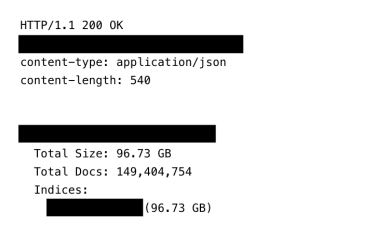
The publicly exposed database was not password-protected or encrypted. It contained 149,404,754 unique logins and passwords, totaling a massive 96 GB of raw credential data. In a limited sampling of the exposed documents, I saw thousands of files that included emails, usernames, passwords, and the URL links to the login or authorization for the accounts. This is not the first dataset of this kind I have discovered and it only highlights the global threat posed by credential-stealing malware. When data is collected, stolen, or harvested it must be stored somewhere and a cloud based repository is usually the best solution. This discovery also shows that even cybercriminals are not immune to data breaches. The database was publicly accessible, allowing anyone who discovered it to potentially access the credentials of millions of individuals.

The exposed records included usernames and passwords collected from victims around the world, spanning a wide range of commonly used online services and about any type of account imaginable. These ranged from social media platforms such as Facebook, Instagram, Tiktok and X (formerly Twitter), as well as dating sites or apps, and OnlyFans accounts indicating login paths of both creators and customers. I also saw a large number of streaming and entertainment accounts, including Netflix, HBOmax, DisneyPlus, Roblox, and more. Financial services accounts, crypto wallets or trading accounts, banking and credit card logins also appeared in the limited sample of records I reviewed.

One serious concern was the presence of credentials associated with .gov domains from numerous countries

[…]

The database had no associated ownership information so I reported it directly to the hosting provider via their online report abuse form. I received a reply several days later stating that they do not host the IP and it is a subsidiary that operates independently while still using the parent organization’s name. It took nearly a month and multiple attempts before action was finally taken and the hosting was suspended and millions of stolen login credentials were no longer accessible. The hosting provider would not disclose any additional information regarding who managed the database, it is not known if the database was used for criminal activity or if this information was gathered for legitimate research purposes or how or why the database was publicly exposed. It is not known how long the database was exposed before I discovered and reported it or others may have gained access to it. One disturbing fact is that the number of records increased from the time I discovered the database until it was restricted and no longer available.

Breakdown of Email Providers (estimated)

  • 48M – Gmail
  • 4M – Yahoo
  • 1.5M – Outlook
  • 900k – iCloud
  • 1.4M – .edu

Other notable accounts included:

  • 17M – FaceBook
  • 6.5M – Instagram
  • 780k – TikTok
  • 3.4M – Netflix
  • 100k – OnlyFans
  • 420k – Binance

149m Infostealer Data Exposed 4This screenshot shows the total count of records and size of the exposed infostealer database.149m Infostealer Data Exposed 1

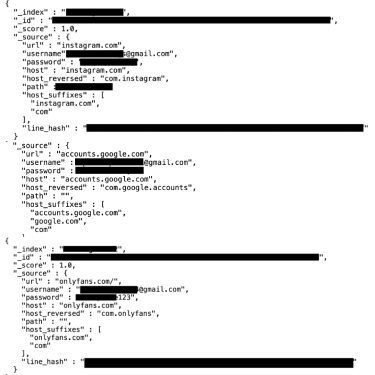
This image shows screenshots of accounts and credentials including Instagram, Google accounts, and OnlyFans.149m Infostealer Data Exposed 2

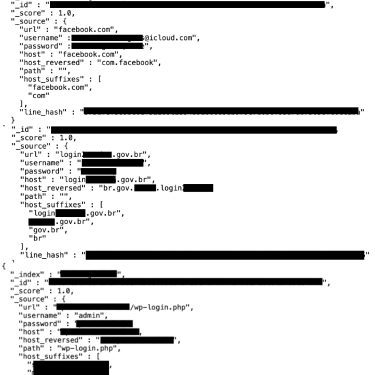
This image shows screenshots of accounts and credentials including Facebook, a government account from Brazil, and a WordPress administrative login.149m Infostealer Data Exposed 3

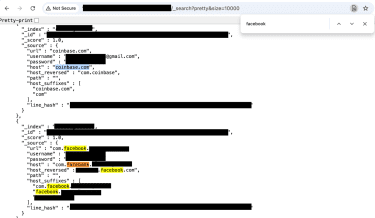
This screenshot shows how the index was searchable using nothing more than a web browser.

The database appeared to store keylogging and “infostealer” malware,

[…]
Source: 149M Logins and Passwords Exposed Online Including Financial Accounts, Instagram, Facebook, Roblox, Dating Sites, and More.

France to ditch US platforms Microsoft Teams, Zoom for ‘sovereign platform’ with unfortunate name amid security concerns

Why they couldn’t fund a French company to contribute to a well working open source platform like Jitsi is beyond me.

France will replace the American platforms Microsoft Teams and Zoom with its own domestically developed video conferencing platform, which will be used in all government departments by 2027, the country announced on Monday.

The move is part of France’s strategy to stop using foreign software vendors, especially those from the United States, and regain control over critical digital infrastructure. It comes at a crucial moment as France, like Europe, reaches a turning point regarding digital sovereignty.

“The aim is to end the use of non-European solutions and guarantee the security and confidentiality of public electronic communications by relying on a powerful and sovereign tool,” said David Amiel, minister for the civil service and state reform.

On Monday, the government announced it will instead be using the French-made videoconference platform Visio. The platform has been in testing for a year and has around 40,000 users.

What is Visio?

Visio is part of France’s Suite Numérique plan, a digital ecosystem of sovereign tools designed to replace the use of US online services such as Gmail and Slack. These tools are for civil servants and not for public or private company use.

The platform also has an artificial intelligence-powered meeting transcript and speaker diarization feature, using the technology of the French start-up Pyannote.

Viso is also hosted on the French company Outscale’s sovereign cloud infrastructure, which is a subsidiary of French software company Dassault Systèmes.

The French government said that switching to Visio could cut licensing costs and save as much as €1 million per year for every 100,000 users.

The move also comes as Europe has questioned its overreliance on US information technology (IT) infrastructure following US cloud outages last year.

“This strategy highlights France’s commitment to digital sovereignty amid rising geopolitical tensions and fears of foreign surveillance or service disruptions,” Amiel said.

Source: France to ditch US platforms Microsoft Teams, Zoom for ‘sovereign platform’ amid security concerns | Euronews

ICE takes aim at data held by advertising and tech firms

Let us not forget that the reason Nazi Germany was so great at exporting Jews from the Netherlands was for a large part because of the great databases the Netherlands kept at that time containing religious and ethnic information on its’ population.

It’s not enough to have its agents in streets and schools; ICE now wants to see what data online ads already collect about you. The US Immigration and Customs Enforcement last week issued a Request for Information (RFI) asking data and ad tech brokers how they could help in its mission.

The RFI is not a solicitation for bids. Rather it represents an attempt to conduct market research into the spectrum of data – personal, financial, location, health, and so on – that ICE investigators can source from technology and advertising companies.

“[T]he Government is seeking to understand the current state of Ad Tech compliant and location data services available to federal investigative and operational entities, considering regulatory constraints and privacy expectations of support investigations activities,” the RFI explains.

Issued on Friday, January 23, 2026, one day prior to the shooting of VA nurse Alex Pretti by a federal immigration agent, two weeks after the shooting of Renée Good, and three weeks after the shooting of Keith Porter Jr, the RFI lands amid growing disapproval of ICE tactics and mounting pressure to withhold funding for the agency.

ICE did not immediately respond to a request to elaborate on how it might use ad tech data and to share whether any companies have responded to its invitation.

The RFI follows a similar solicitation published last October for a contractor capable of providing ICE with open source intelligence and social media information to assist the ICE Enforcement and Removal Operations (ERO) directorate’s Targeting Operations Division – tasked with finding and removing “aliens that pose a threat to public safety or national security.”

[…]

Tom Bowman, policy counsel with the Center for Democracy & Technology’s (CDT) Security & Surveillance Project, told The Register in a phone interview that ICE is attempting to rebrand surveillance as a commercial transaction.

“But that doesn’t make the surveillance any less intrusive or any less constitutionally suspect,” said Bowman. “This inquiry specifically underscores what really is a long-standing problem – that government agencies have been able to sidestep Fourth Amendment protections by purchasing data that would otherwise need a warrant to collect.”

The data derived from ad tech and various technology businesses, said Bowman, can reveal intimate details about people’s lives, including visits to medical facilities and places of worship.

[…]

“Ad tech compliance regimes were never designed to protect people from government surveillance or coercive enforcement,” he said. “Ad tech data is often collected via consent that is meaningless. The data flows are opaque. And then these types of downstream uses are really difficult to control.”

Bowman argues that while there’s been a broad failure to meaningfully regulate data brokers, legislative solutions are possible.

[…]

Source: ICE takes aim at data held by advertising and tech firms • The Register

Looks Like American TikTok’s Problems Are Sending Users Flocking to Alternatives

According to Appfigures, the top five free iPhone apps right now in the U.S. are:

  1. ChatGPT
  2. JumpJumpVPN
  3. V2Box
  4. UpScrolled
  5. Threads

Yesterday, Apple blogger John Gruber of Daring Fireball posted the overall most popular iPhone apps for all of 2025, and the top five were:

  1. ChatGPT
  2. Threads
  3. Google
  4. TikTok
  5. WhatsApp

I’m not the first person to point this out, but it’s not exactly a stretch to infer that the three apps that have suddenly squeezed in between ChatGPT and Threads are on the list due to dissatisfaction with TikTok. Two are VPN apps, which can theoretically be used to access TikTok from a virtual network in a country where the U.S. version of TikTok is unnecessary, and one, UpScrolled, is an Australian video and text sharing app that recently went viral.

To refresh your memory on what’s going on with TikTok, after years of trying to force Chinese-owned ByteDance to relinquish ownership and let a U.S.-friendly buyer take over, a legal entity was created earlier this month that can take ownership of TikTok, with Adam Presser as its new CEO. This allows TikTok to comply with a new U.S. law essentially requiring TikTok to be run by a U.S. company or be banned.

But this entity, a complex joint corporate venture in charge of U.S. operations for TikTok, appears from the outside to be struggling to keep everything in order, amid the handoff from TikTok’s Singapore base of operations (U.S. TikTok data was already largely housed in the U.S., so it’s not clear if this transition actually involves any large, burdensome data transfers).

According to an X post from TikTok, the problem is that there’s been “a major infrastructure issue triggered by a power outage at one of our U.S. data center partner sites,” and there may be various glitches, service slowdowns, failures, and issues with user metrics. Oracle has further clarified that the TikTok issue stems from a weather-related blackout at one of its data centers. Oracle owns 15 percent of the new TikTok U.S. venture.

The issues TikTok is referring to dovetail nicely with the descriptions of problems described by users likw videos that sit in review indefinitely, and posts that get low or zero view counts, often despite high numbers for other engagement metrics like comments or shares. Other general issues that fit with a data center interruption include a possible lack of analytics in TikTok Studio, livestreamers apparently getting random messages saying they need to stop streaming immediately, and irrelevant search results.

[…]

Source: Looks Like American TikTok’s Problems Are Sending Users Flocking to Alternatives

It’s quite bizarre that TikTok has to use an outmoded platform which is not in the  top social networks (X Twitter) to post that it is experiencing problems.