Search the released Epstein files here, along with AI suggested findings.
Source: Jwiki — The Jmail Encyclopedia

Search the released Epstein files here, along with AI suggested findings.
Source: Jwiki — The Jmail Encyclopedia
Slowly but very slowly Europeans are starting to understand that funding the US software companies, creating a dependency on them and giving them their data to grab in (which they do) is not a good idea.
The European Parliament has reportedly turned off AI features on lawmakers’ devices amid concerns about content going where it shouldn’t.
According to Politico, staff were notified that AI features on corporate devices (including tablets) were disabled because the IT department could not guarantee data security.
The bone of contention is that some AI assistants require the use of cloud services to perform tasks including email summarization, and so send the data off the device – a challenge for data protection.
It’s a unfortunate for device vendors that promote on-device processing, but the European Parliament’s tech support desk reportedly stated: “As these features continue to evolve and become available on more devices, the full extent of data shared with service providers is still being assessed. Until this is fully clarified, it is considered safer to keep such features disabled.”
The Register contacted the European Parliament for comment.
Data privacy and AI services have not been the greatest of bedfellows. Studies have shown that employees regularly leak company secrets via assistants, and on-device AI services are a focus of vendors amid concerns about exactly what is being sent to the cloud.
The thought of confidential data being sent to an unknown location in the cloud to generate a helpful summary has clearly worried lawmakers, which is why there is a blanket ban. However, the issue has less relevance if the process occurs on the device itself.
The Politico report noted that day-to-day tools, such as calendar applications, are not affected by the edict. The ban is temporary until the tech boffins can clarify what is being shared and where it is going.
[…]
Source: European Parliament bars lawmakers from AI tools • The Register
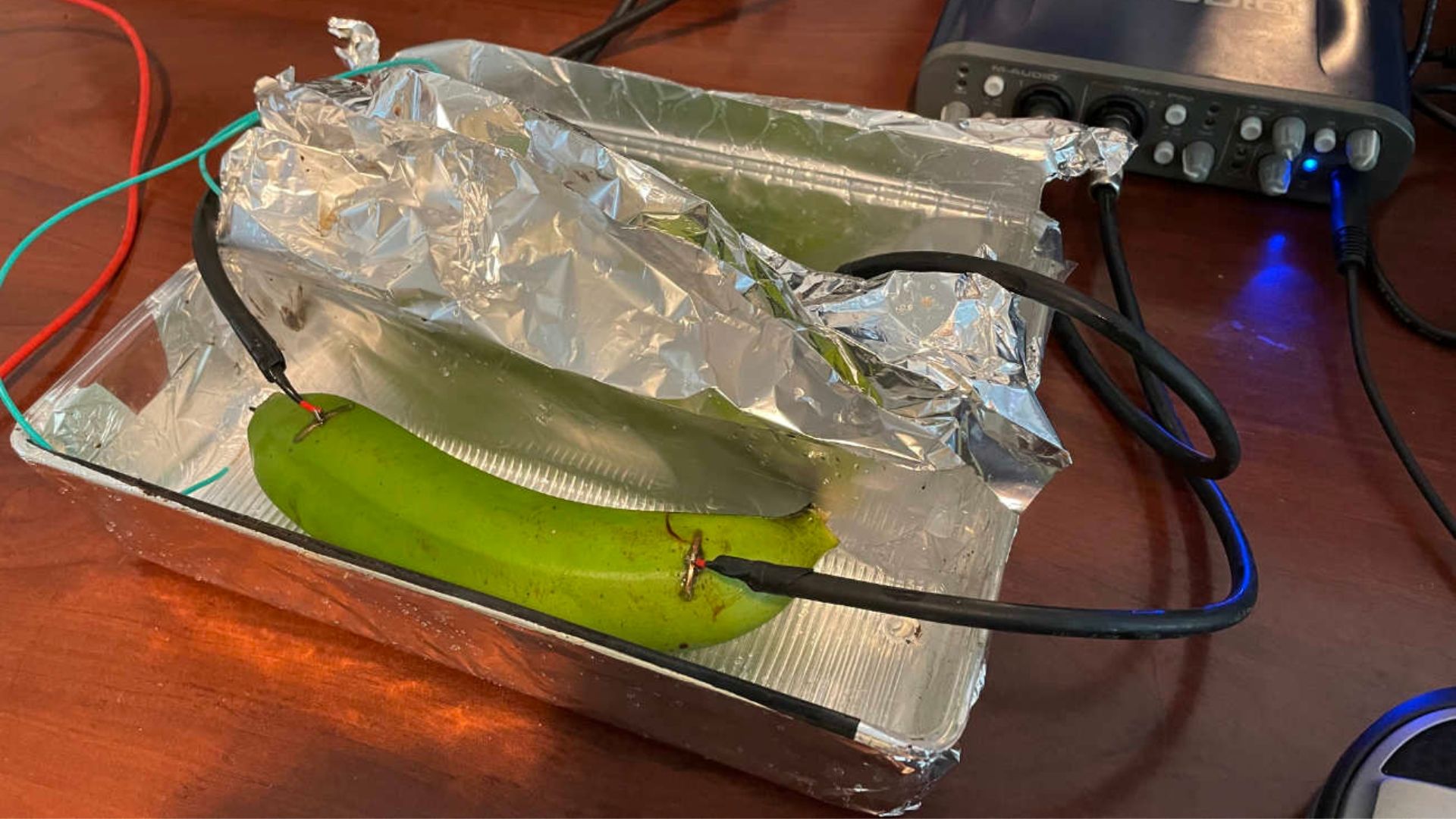
A moderator on diyAudio set up an experiment to determine whether listeners could differentiate between audio run through pro audio copper wire, a banana, and wet mud. Spoiler alert: the results indicated that users were unable to accurately distinguish between these different ‘interfaces.’
Pano, the moderator who built the experiment, invited other members on the forum to listen to various sound clips with four different versions: one taken from the original CD file, with the three others recorded through 180cm of pro audio copper wire, via 20cm of wet mud, through 120cm of old microphone cable soldered to US pennies, and via a 13cm banana, and 120cm of the same setup as earlier.
Initial test results showed that it’s extremely difficult for listeners to correctly pick out which audio track used which wiring setup. “The amazing thing is how much alike these files sound. The mud should sound perfectly awful, but it doesn’t,” Pano said. “All of the re-recordings should be obvious, but they aren’t.”
[…]
Online shopping continues to grow globally, with total e-commerce sales estimated at $6 trillion by 2024 and consumers in Western Europe making nearly 19 online purchases per year. In this rapidly expanding landscape, online retailers are increasingly investing in interactive and contextual product images to capture customer attention. But do these visual strategies actually work? This is what PhD candidate Rowena Summerlin of Tilburg University investigated .
Summerlin concludes that product images—especially interactive versions—can indeed influence consumer purchase intentions, but that this effect is context-dependent. According to her research, interactive images, especially for individual consumers, increase the perception of a product’s higher quality, which can strengthen purchase intentions. However, the impact depends on factors such as product price, customer type, and the platform on which the images are displayed. For business customers, the effect appears to be virtually nonexistent.
Analyses of real marketplace data show that contextual images can increase sales on some websites, but have little effect on other platforms. The researchers point out that this is likely related to the differing norms and customs of different online environments. The strongest effects occurred with more expensive products and during peak shopping periods, when consumers themselves are more uncertain about their choices.
Source: Research: How Product Images Influence Online Purchase Decisions and When They Don’t – Emerce
The AH-64 Apache attack helicopter has evolved into a counter-drone platform in recent years — something we have been following closely. While the Israeli Air Force had pioneered this role for the AH-64 for years, the U.S. Army has now formally codified it and added new capabilities in the process. Now, as we had suggested some time ago, the Apache is getting proximity-fuzed 30mm cannon shells for its chin-mounted M230 cannon that will add to its drone-killing arsenal, giving it a cheaper and more plentiful engagement option than some of the alternatives.
Apaches live-fire tested the 30x113mm XM1225 Aviation Proximity Explosive (APEX) ammo last December, according to a recent Army release. The trials occurred at the service’s sprawling Yuma Proving Ground (YPG) in southern Arizona. Multiple test engagements occurred against various types of drone targets.
The specialized APEX ammunition works by detonating only when it is close to an object, then it explodes in a spray of shrapnel. This is critical to shooting down drones as they are small, independently moving targets, and the Apache’s monocle-targeted chin gun isn’t exactly a sniper rifle in terms of precision. At the same time, the rounds could also be used against targets on the surface — including personnel, soft-skinned vehicles, and small boats, for instance — offering unique area effects compared to the Apache’s standard impact-detonating, high-explosive ammunition.
[…]
Source: AH-64 Apache Is Getting Proximity Fuzed 30mm Cannon Ammo For Swatting Down Drones
The F-35’s ‘computer brain,’ including its cloud-based components, could be cracked to accept third-party software updates, just like ‘jailbreaking‘ a cellphone, according to the Dutch State Secretary for Defense. The statement comes as foreign operators of the jets continue to be pressed on what could happen if the United States were ever to cut off support. President Donald Trump’s administration has pursued a number of policies that have resulted in new diplomatic strains with some long-time allies, especially in Europe.
“If, despite everything, you still want to upgrade, I’m going to say something I should never say, but I will anyway: you can jailbreak an F-35 just like an iPhone,” Gijs Tuinman said during an episode of BNR Nieuwsradio‘s “Boekestijn en de Wijk” podcast posted online yesterday, according to a machine translation.
[…]
As we have explored in detail in the past, the F-35 program imposes unique limits on the ability of operators to make changes to the jet’s software, as well as to associated systems on the ground. Virtually all F-35s in service today see software updates come through a cloud-based network, the original version of which is known as the Autonomic Logistics Information System (ALIS). Persistent issues with ALIS have led to the development of a follow-on Operational Data Integrated Network (ODIN), the transition to which is still ongoing.
The ALIS/ODIN network is designed to handle much more than just software updates and logistical data. It is also the port used to upload mission data packages containing highly sensitive planning information, including details about enemy air defenses and other intelligence, onto F-35s before missions and to download intelligence and other data after a sortie.
To date, Israel is the only country known to have successfully negotiated a deal giving it the right to install domestically-developed software onto its F-35Is, as well as otherwise operate its jets outside of the ALIS/ODIN network. The Israelis also have the ability to conduct entirely independent depot-level maintenance, something we will come back to later.
Issues with ALIS, as well as concerns about the transfer of nationally sensitive information within the network, have led certain operators, including the Netherlands, to firewall off aspects of their software reprogramming activities in the past.
[…]
TWZ previously explored many of these same issues in detail last year, amid a flurry of reports about the possibility that F-35s have some type of discreet ‘kill switch’ built in that U.S. authorities could use to remotely disable the jets. Rumors of this capability are not new and remain completely unsubstantiated.
At that time, we stressed that a ‘kill switch’ would not even be necessary to hobble F-35s in foreign service. At present, the jets are heavily dependent on U.S.-centric maintenance and logistics chains that are subject to American export controls and agreements with manufacturer Lockheed Martin. Just reliably sourcing spare parts has been a huge challenge for the U.S. military itself, as you can learn more about in this past in-depth TWZ feature. F-35s would be quickly grounded without this sustainment support.
[…]
Source: F-35 Software Could Be Jailbreaked Like An iPhone: Dutch Defense Secretary