Perplexity Announces ‘Computer,’ an AI Agent That Assigns Work To Other AI Agent (or OpenClaw clone)

So this is basically an agentic coordinator (which the correct technical term is an orchestrator). The agents are like microservices, or little programs designed to do a specific job – usually by interacting with a tool (eg a weather API). This is part of the puzzle that was missing in Agentic AI, but which an upstart coming from nowhere (OpenClaw) threw out there. Now we are seeing more of these coming out. It looks like people are copying OpenClaw pretty quickly.

Perplexity has introduced “Computer,” a new tool that allows users to assign tasks and see them carried out by a system that coordinates multiple agents running various models. The company claims that Computer, currently available to Perplexity Max subscribers, is “a system that creates and executes entire workflows” and “capable of running for hours or even months.”

The idea is that the user describes a specific outcome — something like “plan and execute a local digital marketing campaign for my restaurant” or “build me an Android app that helps me do a specific kind of research for my job.” Computer then ideates subtasks and assigns them to multiple agents as needed, running the models Perplexity deems best for those tasks. The core reasoning engine currently runs Anthropic’s Claude Opus 4.6, while Gemini is used for deep research, Nano Banana for image generation, Veo 3.1 for video production, Grok for lightweight tasks where speed is a consideration, and ChatGPT 5.2 for “long-context recall and wide search.”

This kind of best-model-for-the-task approach differs from some competing products like Claude Cowork, which only uses Anthropic’s models. All this happens in the cloud, with prebuilt integrations. “Every task runs in an isolated compute environment with access to a real filesystem, a real browser, and real tool integrations,” Perplexity says. The idea is partly that this workflow was what some power users were already doing, and this aims to make that possible for a wider range of people who don’t want to deal with all that setup.

People were already using multiple models and tailoring them to specific tasks based on perceived capabilities, while, for example, using MCP (Model Context Protocol) to give those models access to data and applications on their local machines. Perplexity Computer takes a different approach, but the goal is the same: have AI agents running tailor-picked models to perform tasks involving your own files, services, and applications. Then there is OpenClaw, which you could perceive as the immediate predecessor to this concept.

Source: Perplexity Announces ‘Computer,’ an AI Agent That Assigns Work To Other AI Agent

How Copyright Litigation Over Anne Frank’s Diary Could Impact The Fate Of VPNs In The EU | Techdirt

Link

“The Diary of a Young Girl” is a Dutch language diary written by the young Jewish writer Anne Frank while she was in hiding for two years with her family during the Nazi occupation of the Netherlands. Although the diary and Anne Frank’s death in the Bergen-Belsen concentration camp are well known, few are aware that the text has a complicated copyright history – one that could have important implications for the legal status and use of Virtual Private Networks (VPNs) in the EU. TorrentFreak explains the copyright background:

These copyrights are controlled by the Swiss-based Anne Frank Fonds, which was the sole heir of Anne’s father, Otto Frank. The Fonds states that many print versions of the diary remain protected for decades, and even the manuscripts are not freely available everywhere.

In the Netherlands, for example, certain sections of the manuscripts remain protected by copyright until 2037, even though they have entered the public domain in neighboring countries like Belgium.

A separate foundation, the Netherlands-based Anne Frank Stichting, wanted to publish a scholarly edition of Anne Frank’s writing, at least in those parts of the world where her diary was in the public domain:

To navigate these conflicting laws, the Dutch Anne Frank Stichting published a scholarly edition online using “state-of-the-art” geo-blocking to prevent Dutch residents from accessing the site. Visitors from the Netherlands and other countries where the work is protected are met with a clear message, informing them about these access restrictions.

However, the Anne Frank Fonds was unhappy with this approach, and took legal action. Its argument was that such geo-blocking could be circumvented with VPNs, and so its copyrights in the Netherlands could be infringed upon by those using VPNs. The lower courts in the Netherlands dismissed this argument, and the case is now before the Dutch Supreme Court. Beyond the specifics of the Anne Frank scholarly edition, there are important issues regarding the use of VPNs to get around geo-blocking. Because of the potential knock-on effect the ruling in this case will have on EU law, the Dutch Supreme Court has asked for guidance from the EU’s top court, the Court of Justice of the European Union (CJEU).

The CJEU has yet to rule on the issues raised. But one of the court’s advisors, Advocate General Rantos, has published a preliminary opinion, as is normal in such cases. Although that advice is not binding on the CJEU, it often provides some indication as to how the court may eventually decide. On the main issue of whether the ability of people to circumvent geo-blocking is a problem, Rantos writes:

the fact that users manage to circumvent a geo-blocking measure put in place to restrict access to a protected work does not, in itself, mean that the entity that put the geo-blocking in place communicates that work to the public in a territory where access to it is supposed to be blocked. Such an interpretation would make it impossible to manage copyright on the internet on a territorial basis and would mean that any communication to the public on the internet would be global.

Moreover:

As the [European] Commission pointed out in its written observations, the holder of an exclusive right in a work does not have the right to authorise or prohibit, on the basis of the right granted to it in one Member State, communication to the public in another Member State in which that right has ceased to have effect.

Or, more succinctly: “service providers in the public domain country cannot be subject to unreasonable requirements”. That’s a good, common-sense view. But perhaps just as important is the following comment by Rantos regarding the use of VPNs to circumvent geo-blocking:

as the Commission points out in its observations, VPN services are legally accessible technical services which users may, however, use for unlawful purposes. The mere fact that those or similar services may be used for such purposes is not sufficient to establish that the service providers themselves communicate the protected work to the public. It would be different if those service providers actively encouraged the unlawful use of their services.

That’s an important point at a time when VPNs are under attack from some governments because of concerns about possible copyright infringement by those using them.

The hope has to be that the CJEU will agree with its Advocate General’s sensible and fair analysis, and will rule accordingly. But there is another important aspect to this story. The basic issue is that the Anne Frank Stichting wants to make its scholarly edition of Anne Frank’s diary available as widely as possible. That seems a laudable aim, since it will increase understanding and appreciation of the young woman’s remarkable diary by publishing an academically rigorous version. And yet the Anne Frank Fonds has taken legal action to stop that move, on the grounds that it would represent an infringement of its intellectual monopoly in some parts of Frank’s work, in some parts of the world. The current dispute is another clear example of how copyright has become for some an end in itself, more important than the things that it is supposed to promote.

Source: How Copyright Litigation Over Anne Frank’s Diary Could Impact The Fate Of VPNs In The EU | Techdirt

Freedom of speech? Open University deletes “ancient Palestine” references under Israeli lobby pressure despite historical accuracy

Link

The west is in the midst of the most serious assault on free speech and academic freedom since the heyday of McCarthyism seven decades ago. For years, we were told the danger came from the left: oversensitive students, censorious activists, no-platforming zealots. Yet the most aggressive and successful campaign to police speech in our public institutions is being waged by cheerleaders of a state currently committing genocide.

Consider a recent case. Last December, a pro-Israel lobby group, UK Lawyers for Israel (UKLFI), celebrated another apparent victory. It describes its mission as contributing “generally as lawyers to creating a supportive climate of opinion in the United Kingdom towards Israel”. In practice, this has meant lawfare, directed not only at pro-Palestinian activism, but at the public existence of Palestinian identity itself.

The offence this time? The Open University’s use of the term “ancient Palestine” to describe the birthplace of the Virgin Mary, which UKLFI argued was “historically inaccurate”. More than that, they argued it risked erasing “Jewish historical identity”, potentially breaching the Equality Act 2010 by creating “a hostile or offensive learning environment for Jewish and Israeli students”.

The OU’s Palestine Solidarity Group responded with a freedom of information request to see how their institution had handled the complaint. The reply from the OUwas clear. “Ancient Palestine” was “academically appropriate”. The fifth-century BC Greek historian Herodotus used the term Palestine to describe a region broader than that acknowledged by UKLFI. While the lobby group insisted Mary was born in the “predominantly Jewish region” of Galilee, the university noted that there is no academic consensus that Mary existed at all, still less where she was born.

That should have been the end of the matter. But instead, the OU conceded that “associations of this term with Roman colonial rule and with the contemporary political context require us to think about the meaning of the term to current and future students”. Academics did not “want the use of the term to imply or be read as a comment on the conflict between Israel and Palestine”, it added. In response to the UKLFI complaint, staff accepted that “the term is now problematic in a way that, perhaps, it was not when the materials were written in 2018”.

And so, despite affirming the term’s historical accuracy, the OU agreed to “not use the term ‘ancient Palestine’ in any future course materials”, and to “explain and contextualise its use in existing materials for current learners”. Last month, staff received an internal bulletin confirming the university had “agreed to change references to ‘Ancient Palestine’”, complete with a link to the UKLFI’s triumphant press release: “Open University agrees to change use of ‘ancient Palestine’ following UKLFI intervention.”

Strip away the bureaucratic phrasing and the picture is stark. A university accepted that a historically accurate term would be removed from future teaching because a partisan lobbying organisation objected to its claimed contemporary political resonance. “This is a despicable attempt by political hacks to dictate academic terminology,” says the esteemed historian Rashid Khalidi, author of The Hundred Years’ War on Palestine. “Every reputable history covering periods from ancient history to the present uses the term ‘Palestine,’ including scores of works by distinguished Israeli scholars.”

Enter the Higher Education (Freedom of Speech) Act 2023, introduced by the last Conservative government amid warnings that leftwing activists were strangling academic debate. The act imposes a duty on universities to secure lawful freedom of speech, even where that speech “may be offensive or hurtful to some”.

The OU had landed themselves in a mess. When the Palestine Solidarity Group argued that censoring an academically defensible term on the grounds that it was politically “problematic” violated the 2023 legislation, the vice-chancellor circulated a clarifying note: the university stood by academic freedom. The school would continue using the term, albeit with “an additional contextual note to support students’ understanding of differing perspectives”. His statement failed to say whether this change was a response to the intervention by a partisan lobby group.

[…]

This is just one example of UKLFI’s assault on Palestinian identity, past and present. Months before Israel’s genocide began, Chelsea and Westminster hospital removed a display of artwork by Palestinian children after a complaint by UKLFI claimed it made Jewish patients feel “vulnerable, harassed and victimised”. A pro-Palestinian concert planned at Morley College in London was cancelled after a UKLFI complaint in 2024. The group also sought to cancel the Falastin film festival in Scotland.skip past newsletter promotion

The Solicitors Regulation Authority is now investigating a complaint alleging that eight of UKLFI’s letters “demonstrate a seeming pattern of vexatious and legally baseless correspondence aimed at silencing and intimidating Palestine solidarity efforts”. Whatever the outcome of that investigation, the wider context is impossible to ignore.

[…]

This is the real crisis of free speech in the west. The target is not just protest, but a people. Israel seeks to erase Palestinians as a society. First they are destroyed in the present. Then they are deleted from the past.

Source: Worried about freedom of speech? Then what’s happening at the Open University should terrify you | Owen Jones | The Guardian

U.S. Military Has Used Long-Range Kamikaze Drones In Combat For The First Time

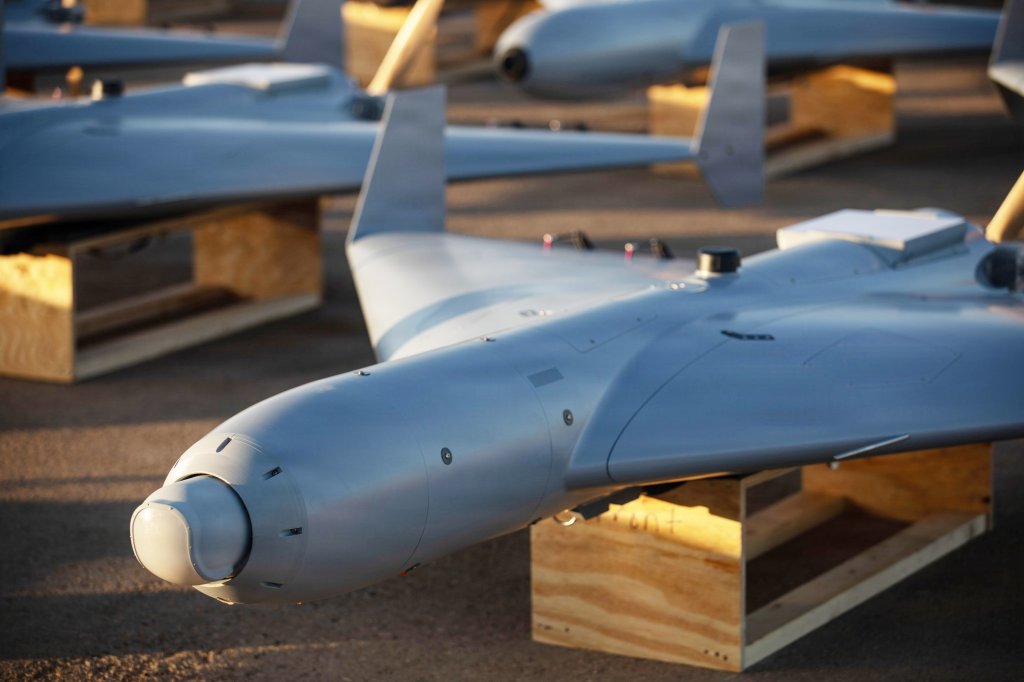
The U.S. has used LUCAS kamikaze drones for the first time in combat, U.S. Central Command acknowledged on Saturday. The drones, based on the Iranian Shahed-136, were launched from the ground by Task Force Scorpion Strike (TFSS). The task force was set up in December “to flip the script on Iran,” a U.S. official told us at the time. The launch of LUCAS drones marks a rare instance when the U.S. adopted Iran’s drone playbook and used it against them.

Today’s strikes were part of Operation Epic Fury, an attack the U.S. launched along with Israel on targets across Iran. You can read more about that in our initial story here.

The War Zone has advocated for the procurement of this exact class of drone by the American military.

The LUCAS drones are designed to be a far less expensive strike weapon than missiles, which not only cost more, but are far more difficult and time-consuming to produce.

“Costing approximately $35,000 per platform, LUCAS is a low-cost, scalable system that provides cutting-edge capabilities at a fraction of the cost of traditional long-range U.S. systems that can deliver similar effects,” Navy Capt. Tim Hawkins, a CENTCOM spokesperson, told TWZ back in December. “The drone system has an extensive range and the ability to operate beyond line of sight, providing significant capability across CENTCOM’s vast operating area.”

In addition, the LUCAS design includes features that allow for “autonomous coordination, making them suitable for swarm tactics and network-centric strikes,” a U.S. official told us. As we have explained in detail in the past, the swarming capabilities combined with some of the drones being equipped with Starlink terminals, means extremely advanced cooperative tactics and dynamic targeting are possible, all while keeping humans in the loop.

The LUCAS drones have “an extensive range and are designed to operate autonomously,” CENTCOM said in a press release announcing the creation of Task Force Scorpion Strike. “They can be launched with different mechanisms to include catapults, rocket-assisted takeoff, and mobile ground and vehicle systems.”

U.S. CENTRAL COMMAND AREA OF RESPONSIBILITY (Nov. 23, 2025) Low-cost Unmanned Combat Attack System (LUCAS) drones are positioned on the tarmac at a base in the U.S. Central Command operating area, Nov. 23. Costing approximately $35,000 per platform, LUCAS drones are providing U.S. forces in the Middle East low-cost, scalable capabilities to strengthen regional security and deterrence. (Courtesy Photo)
Low-cost Unmanned Combat Attack System (LUCAS) drones are positioned on the tarmac at a base in the U.S. Central Command operating area, Nov. 23. Costing approximately $35,000 per platform, LUCAS drones are providing U.S. forces in the Middle East low-cost, scalable capabilities to strengthen regional security and deterrence. (Courtesy Photo)

Though the LUCAS drones fired against Iran were ground-launched, U.S. Navy personnel in the Middle East test-fired one from the Independence class Littoral Combat Ship (LCS) USS Santa Barbara. This came two weeks after the U.S. military announced the formation of Task Force Scorpion Strike.

[…]

Source: U.S. Military Has Used Long-Range Kamikaze Drones In Combat For The First Time | The War Zone

Turning images into QR codes using Stable Diffusion

This is a 2023 post I somehow missed – I miss the days when people were doing strange abstract stuff with AI!

What’s a Stable Diffusion QR Code? #

Images that are generated with Stable Diffusion with QR Codes as ControlNet’s input, making the QR Code data points blend into the artwork while still being scannable by QR Code readers.

Examples from QRBTF.com

The original idea was created by the people behind QRBTF, and was first revealed on this reddit by nhciao.

QRBTF recently launched their online generation service for open beta. As of July 14th, 2023, they haven’t released their model or methodology yet, you can join their Discord server to follow the latest news.

The methods mentioned in this guide are based on community research and experiments.

How to Generate? #

There are a few online services you can try, but this guide will focus on doing it locally on our own. You will need the basic knowledge of Stable Diffusion and ControlNet, a computer with a GPU (or a cloud GPU instance) to start.

[…]

Source: Stable Diffusion QR Code 101

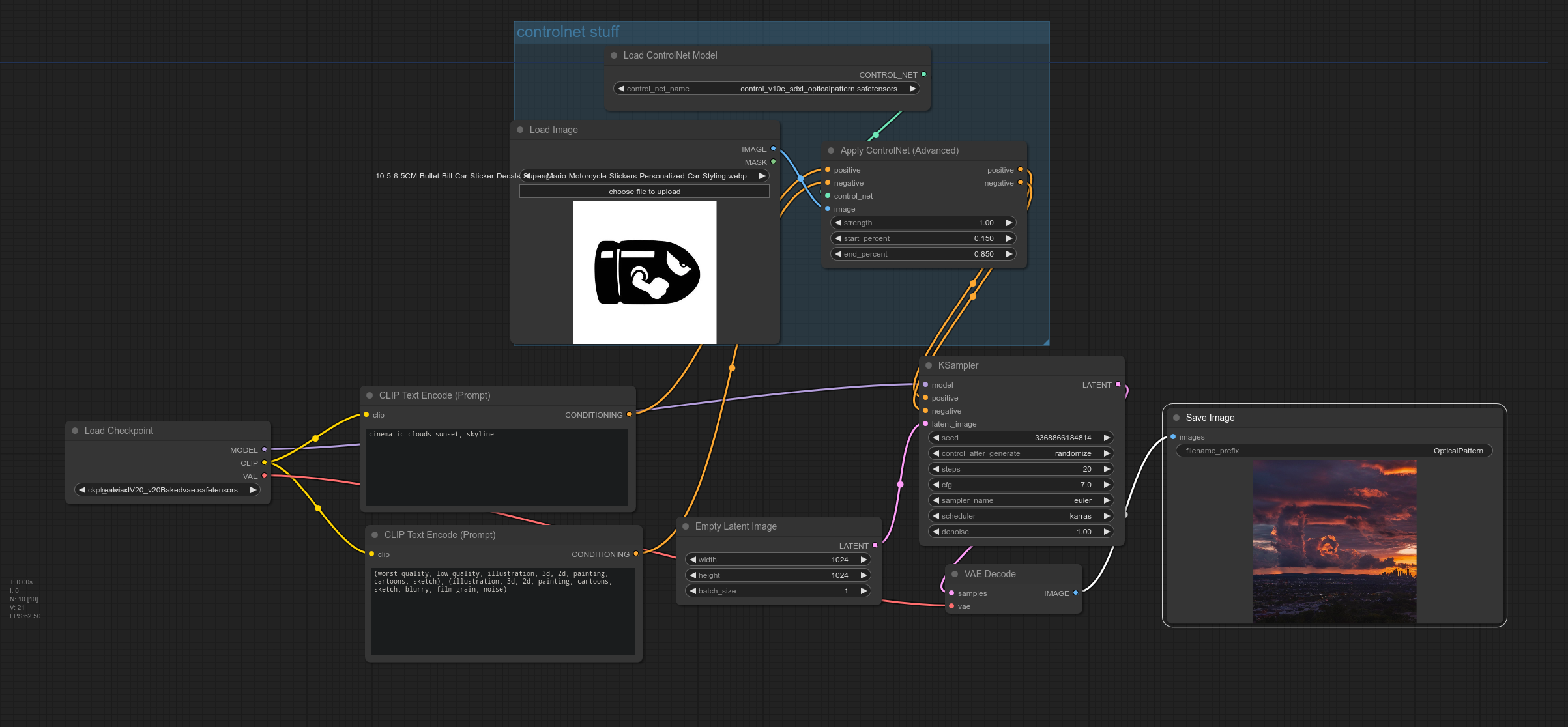
If you want to do it using ComfyUI and a controlnet

https://www.linkielist.com/wp-content/uploads/2026/03/Turning-images-into-QR-codes-using-Stable-Diffusion-2026-6hz2cs.png

Controlnet: https://civitai.com/models/161132/sdxl-controlnet-opticalpattern-optical-illusions

Controlnet for SDXL https://civitai.com/models/197247/qr-code-monster-sdxl

LoRa for Flux2: https://civitai.com/models/2432921?modelVersionId=2735539

A QR Code Generator: https://huggingface.co/spaces/Oysiyl/AI-QR-code-generator

Another QR Code Generator (paid after the 10 free you get in the trial) https://qrbtf.com/en

Motorola’s partners with GrapheneOS

Link

GrapheneOS is a possible alternative to Android, but more open, more secure, more private. Since Google intends to lock down Android by releasing the code once per quarter and not allowing the installation of external apps without developers registering with Google (and paying for this), we need a secure, open OS alternative. With manufacturers partnering with GrapheneOS this is more likely to become a possibility.

Motorola, a Lenovo Company, announced the addition of new consumer and enterprise solutions to its portfolio today at Mobile World Congress. The company unveiled a partnership with the GrapheneOS Foundation, to bring cutting-edge security to everyday users across the globe. In addition, Motorola introduced a new Moto Secure feature and Moto Analytics, to expand Motorola’s B2B ecosystem with advanced security and deeper operational insights for organizations across industries. These announcements reinforce Motorola’s commitment to delivering intelligent, and highly capable technology with enhanced security for customers worldwide.

GrapheneOS Foundation Partnership
Motorola is introducing a new era of smartphone security through a long‑term partnership with the GrapheneOS Foundation, the leading nonprofit in advanced mobile security and creators of a hardened, operating system based on the Android Open Source Project. Together, Motorola and the GrapheneOS Foundation will work to strengthen smartphone security and collaborate on future devices engineered with GrapheneOS compatibility. 

[…]

Source: Motorola News | Motorola’s new partnership with GrapheneOS