149M Logins and Passwords Exposed Online Including Financial Accounts, Instagram, Facebook, Roblox, Dating Sites, and More.

Cybersecurity Researcher Jeremiah Fowler uncovered a data leak of 149 million logins and passwords, and shared his findings with ExpressVPN. We are publishing his report to help the public stay informed and protected as part of our ongoing effort to highlight important security risks.

The publicly exposed database was not password-protected or encrypted. It contained 149,404,754 unique logins and passwords, totaling a massive 96 GB of raw credential data. In a limited sampling of the exposed documents, I saw thousands of files that included emails, usernames, passwords, and the URL links to the login or authorization for the accounts. This is not the first dataset of this kind I have discovered and it only highlights the global threat posed by credential-stealing malware. When data is collected, stolen, or harvested it must be stored somewhere and a cloud based repository is usually the best solution. This discovery also shows that even cybercriminals are not immune to data breaches. The database was publicly accessible, allowing anyone who discovered it to potentially access the credentials of millions of individuals.

The exposed records included usernames and passwords collected from victims around the world, spanning a wide range of commonly used online services and about any type of account imaginable. These ranged from social media platforms such as Facebook, Instagram, Tiktok and X (formerly Twitter), as well as dating sites or apps, and OnlyFans accounts indicating login paths of both creators and customers. I also saw a large number of streaming and entertainment accounts, including Netflix, HBOmax, DisneyPlus, Roblox, and more. Financial services accounts, crypto wallets or trading accounts, banking and credit card logins also appeared in the limited sample of records I reviewed.

One serious concern was the presence of credentials associated with .gov domains from numerous countries

[…]

The database had no associated ownership information so I reported it directly to the hosting provider via their online report abuse form. I received a reply several days later stating that they do not host the IP and it is a subsidiary that operates independently while still using the parent organization’s name. It took nearly a month and multiple attempts before action was finally taken and the hosting was suspended and millions of stolen login credentials were no longer accessible. The hosting provider would not disclose any additional information regarding who managed the database, it is not known if the database was used for criminal activity or if this information was gathered for legitimate research purposes or how or why the database was publicly exposed. It is not known how long the database was exposed before I discovered and reported it or others may have gained access to it. One disturbing fact is that the number of records increased from the time I discovered the database until it was restricted and no longer available.

Breakdown of Email Providers (estimated)

  • 48M – Gmail
  • 4M – Yahoo
  • 1.5M – Outlook
  • 900k – iCloud
  • 1.4M – .edu

Other notable accounts included:

  • 17M – FaceBook
  • 6.5M – Instagram
  • 780k – TikTok
  • 3.4M – Netflix
  • 100k – OnlyFans
  • 420k – Binance

149m Infostealer Data Exposed 4This screenshot shows the total count of records and size of the exposed infostealer database.149m Infostealer Data Exposed 1

This image shows screenshots of accounts and credentials including Instagram, Google accounts, and OnlyFans.149m Infostealer Data Exposed 2

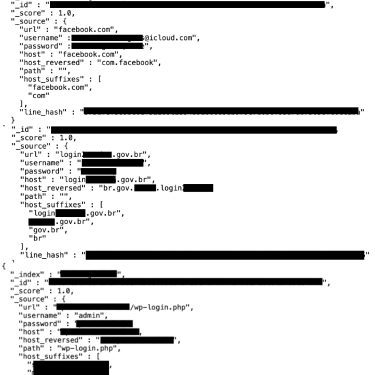
This image shows screenshots of accounts and credentials including Facebook, a government account from Brazil, and a WordPress administrative login.149m Infostealer Data Exposed 3

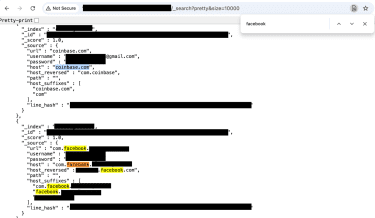
This screenshot shows how the index was searchable using nothing more than a web browser.

The database appeared to store keylogging and “infostealer” malware,

[…]

Source: 149M Logins and Passwords Exposed Online Including Financial Accounts, Instagram, Facebook, Roblox, Dating Sites, and More.

France to ditch US platforms Microsoft Teams, Zoom for ‘sovereign platform’ with unfortunate name amid security concerns

Why they couldn’t fund a French company to contribute to a well working open source platform like Jitsi is beyond me.

France will replace the American platforms Microsoft Teams and Zoom with its own domestically developed video conferencing platform, which will be used in all government departments by 2027, the country announced on Monday.

The move is part of France’s strategy to stop using foreign software vendors, especially those from the United States, and regain control over critical digital infrastructure. It comes at a crucial moment as France, like Europe, reaches a turning point regarding digital sovereignty.

“The aim is to end the use of non-European solutions and guarantee the security and confidentiality of public electronic communications by relying on a powerful and sovereign tool,” said David Amiel, minister for the civil service and state reform.

On Monday, the government announced it will instead be using the French-made videoconference platform Visio. The platform has been in testing for a year and has around 40,000 users.

What is Visio?

Visio is part of France’s Suite Numérique plan, a digital ecosystem of sovereign tools designed to replace the use of US online services such as Gmail and Slack. These tools are for civil servants and not for public or private company use.

The platform also has an artificial intelligence-powered meeting transcript and speaker diarization feature, using the technology of the French start-up Pyannote.

Viso is also hosted on the French company Outscale’s sovereign cloud infrastructure, which is a subsidiary of French software company Dassault Systèmes.

The French government said that switching to Visio could cut licensing costs and save as much as €1 million per year for every 100,000 users.

The move also comes as Europe has questioned its overreliance on US information technology (IT) infrastructure following US cloud outages last year.

“This strategy highlights France’s commitment to digital sovereignty amid rising geopolitical tensions and fears of foreign surveillance or service disruptions,” Amiel said.

Source: France to ditch US platforms Microsoft Teams, Zoom for ‘sovereign platform’ amid security concerns | Euronews

ICE takes aim at data held by advertising and tech firms

Let us not forget that the reason Nazi Germany was so great at exporting Jews from the Netherlands was for a large part because of the great databases the Netherlands kept at that time containing religious and ethnic information on its’ population.

It’s not enough to have its agents in streets and schools; ICE now wants to see what data online ads already collect about you. The US Immigration and Customs Enforcement last week issued a Request for Information (RFI) asking data and ad tech brokers how they could help in its mission.

The RFI is not a solicitation for bids. Rather it represents an attempt to conduct market research into the spectrum of data – personal, financial, location, health, and so on – that ICE investigators can source from technology and advertising companies.

“[T]he Government is seeking to understand the current state of Ad Tech compliant and location data services available to federal investigative and operational entities, considering regulatory constraints and privacy expectations of support investigations activities,” the RFI explains.

Issued on Friday, January 23, 2026, one day prior to the shooting of VA nurse Alex Pretti by a federal immigration agent, two weeks after the shooting of Renée Good, and three weeks after the shooting of Keith Porter Jr, the RFI lands amid growing disapproval of ICE tactics and mounting pressure to withhold funding for the agency.

ICE did not immediately respond to a request to elaborate on how it might use ad tech data and to share whether any companies have responded to its invitation.

The RFI follows a similar solicitation published last October for a contractor capable of providing ICE with open source intelligence and social media information to assist the ICE Enforcement and Removal Operations (ERO) directorate’s Targeting Operations Division – tasked with finding and removing “aliens that pose a threat to public safety or national security.”

[…]

Tom Bowman, policy counsel with the Center for Democracy & Technology’s (CDT) Security & Surveillance Project, told The Register in a phone interview that ICE is attempting to rebrand surveillance as a commercial transaction.

“But that doesn’t make the surveillance any less intrusive or any less constitutionally suspect,” said Bowman. “This inquiry specifically underscores what really is a long-standing problem – that government agencies have been able to sidestep Fourth Amendment protections by purchasing data that would otherwise need a warrant to collect.”

The data derived from ad tech and various technology businesses, said Bowman, can reveal intimate details about people’s lives, including visits to medical facilities and places of worship.

[…]

“Ad tech compliance regimes were never designed to protect people from government surveillance or coercive enforcement,” he said. “Ad tech data is often collected via consent that is meaningless. The data flows are opaque. And then these types of downstream uses are really difficult to control.”

Bowman argues that while there’s been a broad failure to meaningfully regulate data brokers, legislative solutions are possible.

[…]

Source: ICE takes aim at data held by advertising and tech firms • The Register

Looks Like American TikTok’s Problems Are Sending Users Flocking to Alternatives

According to Appfigures, the top five free iPhone apps right now in the U.S. are:

  1. ChatGPT
  2. JumpJumpVPN
  3. V2Box
  4. UpScrolled
  5. Threads

Yesterday, Apple blogger John Gruber of Daring Fireball posted the overall most popular iPhone apps for all of 2025, and the top five were:

  1. ChatGPT
  2. Threads
  3. Google
  4. TikTok
  5. WhatsApp

I’m not the first person to point this out, but it’s not exactly a stretch to infer that the three apps that have suddenly squeezed in between ChatGPT and Threads are on the list due to dissatisfaction with TikTok. Two are VPN apps, which can theoretically be used to access TikTok from a virtual network in a country where the U.S. version of TikTok is unnecessary, and one, UpScrolled, is an Australian video and text sharing app that recently went viral.

To refresh your memory on what’s going on with TikTok, after years of trying to force Chinese-owned ByteDance to relinquish ownership and let a U.S.-friendly buyer take over, a legal entity was created earlier this month that can take ownership of TikTok, with Adam Presser as its new CEO. This allows TikTok to comply with a new U.S. law essentially requiring TikTok to be run by a U.S. company or be banned.

But this entity, a complex joint corporate venture in charge of U.S. operations for TikTok, appears from the outside to be struggling to keep everything in order, amid the handoff from TikTok’s Singapore base of operations (U.S. TikTok data was already largely housed in the U.S., so it’s not clear if this transition actually involves any large, burdensome data transfers).

According to an X post from TikTok, the problem is that there’s been “a major infrastructure issue triggered by a power outage at one of our U.S. data center partner sites,” and there may be various glitches, service slowdowns, failures, and issues with user metrics. Oracle has further clarified that the TikTok issue stems from a weather-related blackout at one of its data centers. Oracle owns 15 percent of the new TikTok U.S. venture.

The issues TikTok is referring to dovetail nicely with the descriptions of problems described by users likw videos that sit in review indefinitely, and posts that get low or zero view counts, often despite high numbers for other engagement metrics like comments or shares. Other general issues that fit with a data center interruption include a possible lack of analytics in TikTok Studio, livestreamers apparently getting random messages saying they need to stop streaming immediately, and irrelevant search results.

[…]

Source: Looks Like American TikTok’s Problems Are Sending Users Flocking to Alternatives

It’s quite bizarre that TikTok has to use an outmoded platform which is not in the  top social networks (X Twitter) to post that it is experiencing problems.

Following Apple, now Google to pay $68m to settle lawsuit claiming it recorded and sold private conversations

Google has agreed to pay $68m (£51m) to settle a lawsuit claiming it secretly listened to people’s private conversations through their phones.

Users accused Google Assistant – a virtual assistant present on many Android devices – of recording private conversations after it was inadvertently triggered on their devices.

They claimed the recordings were then shared with advertisers in order to send them targeted advertising.

The BBC has contacted Google for comment. But in a filing seeking to settle the case, it denied wrongdoing and said it was seeking to avoid litigation.

Google Assistant is designed to wait in standby mode until it hears a particular phrase – typically “Hey Google” – which activates it.

The phone then records what it hears and sends the recording to Google’s servers where it can be analysed.

[…]

The claim has been brought as a class action lawsuit rather than an individual case – meaning if it is approved, the money will be paid out across many different claimants.

Those eligible for a payout will have owned Google devices dating back to May 2016.

But lawyers for the plaintiffs may ask for up to one-third of the settlement – amounting to about $22m in legal fees.

It follows a similar case in January where Apple agreed to pay $95m to settle a case alleging some of its devices were listening to people through its voice-activated assistant Siri without their permission.

The tech firm also denied any wrongdoing, as well as claims that it “recorded, disclosed to third parties, or failed to delete, conversations recorded as the result of a Siri activation” without consent.

Source: Google to pay $68m to settle lawsuit claiming it recorded private conversations

Digital Advertising lost $63 Billion To Invalid Traffic In 2025

A recent report released by Lunio, a platform specializing in invalid traffic (IVT) detection and prevention, reveals that a staggering $63 billion (€53.6 billion) is wasted annually on digital advertising due to bot traffic and ad fraud. This finding underscores a significant issue plaguing the advertising industry.

The 2026 Global Invalid Traffic Report released by Lunio analyzes over 2.7 billion paid ad clicks across major platforms such as Google, Meta, TikTok, LinkedIn, and Bing, covering the period from August 2024 to August 2025. The results paint a rather grim picture of the challenges faced by advertisers in ensuring genuine user engagement.

The Hidden Costs of Invalid Traffic

Invalid traffic, or IVT, encompasses clicks, impressions, or conversions that originate from users lacking genuine intent. This can range from coordinated bot activities and automated scraping to malicious competitor behavior or accidental clicks. While some invalid traffic may not be intentionally harmful, it invariably drains advertising budgets and distorts analytics, which, in turn, misguides automated targeting algorithms.

According to Lunio’s analysis, 8.51% of all paid traffic is classified as invalid, resulting in a silent yet substantial burden on return on ad spend (ROAS). For advertisers aiming for a 3-4x ROAS, even a small IVT rate could mean millions in potential lost revenue, as marketing budgets are wasted on traffic that fails to convert.

TikTok and Social Platforms Suffer the Most

The report highlights distinctive differences in IVT rates across ad platforms, with TikTok exhibiting the highest average IVT rate at 24.2%. This alarming statistic indicates that nearly one in four paid ad clicks on the site is associated with non-human or invalid activity. The rapid growth of TikTok, combined with high levels of automated engagement, has made the platform particularly susceptible to fraud.

Other social platforms are also grappling with high IVT exposure, with LinkedIn and X/Twitter recording rates of 19.88% and 12.79%, respectively. Conversely, Meta has managed to achieve an average IVT of 8.2%, thanks in part to extensive investments in bot detection and fraud prevention, bolstering advertiser confidence in their platform.

Google’s Strengths and Weaknesses

Among major search platforms, Google continues to outperform Bing and Microsoft in terms of managing invalid traffic. Lunio’s data shows that Google Ads boasts an average IVT rate of 7.57%, compared to Bing’s 10.32%. However, the report also identifies weaknesses within Google’s extensive advertising ecosystem. While search campaigns remain the cleanest format, with an average IVT rate of 5.21%, this rate escalates significantly when moving to automated inventory. Display and video campaigns, for instance, recorded IVT rates of 12.02% and 20.62%, respectively.

As Google shifts towards more automated solutions, visibility over traffic quality becomes increasingly essential to prevent wasted budgets from extending alongside performance gains. The findings indicate that while Google’s search platform may be a robust option, the rising automation across its ecosystem presents a duality of risk.

Industry Impact and Future Challenges

Industries such as financial services, education, and telecommunications are disproportionately affected by invalid traffic, with lead generation campaigns encountering 32% higher rates compared to eCommerce models. Gaming and iGaming take the lead, averaging an astonishing IVT rate of 18.49% largely due to aggressive competition and the prevalence of sophisticated fraud.

Moreover, the emergence of “agentic AI,” autonomous systems interacting with ads on behalf of users, presents an evolving challenge for marketers. While not inherently malicious, this new category complicates the distinction between genuine engagement and synthetic interaction. According to Simran Cashyap, CPTO of Lunio, this technological advancement may disrupt conventional understandings of “real” traffic, urging advertisers to seek stronger tools and protections to ensure that their optimization processes remain grounded in reality.

As automation reshapes the digital advertising landscape, gaining visibility into traffic quality is not merely a defensive strategy but a competitive advantage. The industry faces the complex task of evolving alongside faster technological advancements in order to maintain integrity in performance metrics. The full report can be accessed at Advanced Television.

Source: Digital Advertising Faces $63 Billion Loss To Invalid Traffic By 2025, New Report Reveals – Biz Brief

The EU tells Google to give external AI assistants the same access to Android as Gemini has

The European Commission has started proceedings to ensure Google complies with the Digital Markets Act (DMA) in certain ways. Specifically, the European Union’s executive arm has told Google to grant third-party AI services the same level of access to Android that Gemini has. “The aim is to ensure that third-party providers have an equal opportunity to innovate and compete in the rapidly evolving AI landscape on smart mobile devices,” the Commission said in a statement.

The company will also have to hand over “anonymized ranking, query, click and view data held by Google Search” to rival search engines. The Commission says this will help competing companies to optimize their services and offer more viable alternatives to Google Search.

[…]

Google was already in hot water with the EU for allegedly favoring its own services — such as travel, finance and shopping — over those from rivals and stopping Google Play app developers from easily directing consumers to alternative, cheaper ways to pay for digital goods and services. The bloc charged Google with DMA violations related to those issues last March.

In November, the EU opened an investigation into Google’s alleged demotion of commercial content on news websites in search results. The following month, it commenced a probe into Google’s AI practices, including whether the company used online publishers’ material for AI Overviews and AI Mode without “appropriate compensation” or offering the ability to opt out.

Source: The EU tells Google to give external AI assistants the same access to Android as Gemini has

New whitening powder activates with your electric toothbrush

Whitening your teeth often comes at a financial and physical cost. Many of today’s most popular products including gels, strips, and rinses rely on peroxide-based bleaching solutions. While effective, the chemical processes generate reactive oxygen species (ROS) compounds that not only destroy staining molecules—they can eventually erode tooth enamel. Over time, this can actually make it easier to stain again or cause long-term dental health problems.

According to a study published in the journal ACS Nano, researchers at the Chinese Academy of Sciences have developed an alternative solution that not only whitens teeth, but repairs them, too. Instead of harsh chemicals, the new method relies on vibrations.

The team swapped peroxide for their new ceramic powder creation called BSCT. To make it, they heated a solution of strontium and calcium ions as well as barium titanate. If shaken quickly enough (such as with an electric toothbrush), the mixture generates a tiny electric field through what’s called the piezoelectric effect. While commonly associated with guitar amplification and electric cigarette lighters, piezoelectricity also creates ROS chemical reactions that are similar to peroxide bleach.

After artificially staining human teeth with coffee and tea, researchers applied BSCT and saw visible whitening after four hours of utilizing an electric toothbrush. By 12 hours of brushing, the teeth were nearly 50 percent whiter than control teeth brushed with saline. Not only that, but BSCT actually regenerated damaged dentin and enamel thanks to healing deposits of barium, calcium, and strontium layered atop the teeth.

A second experiment involved rats fed with high-sugar diets. Researchers brushed the rodents’ teeth for one minute per day over four weeks, then measured their oral microbiomes. They discovered the BSCT powder killed common mouth bacteria such as Porphyromonas gingivalis and Staphylococcus aureus while also reducing inflammation.

The team hasn’t incorporated BSCT powder into an actual toothpaste yet, but hope to experiment with combinations in the future. In the meantime, they believe their alternative to harsh whitening products may soon find their way into dentist offices and stores.

Source: New whitening powder activates with your electric toothbrush | Popular Science

Why some messages are more convincing than others

[…]

Confidence—not just agreement—shapes how persuasive a message is

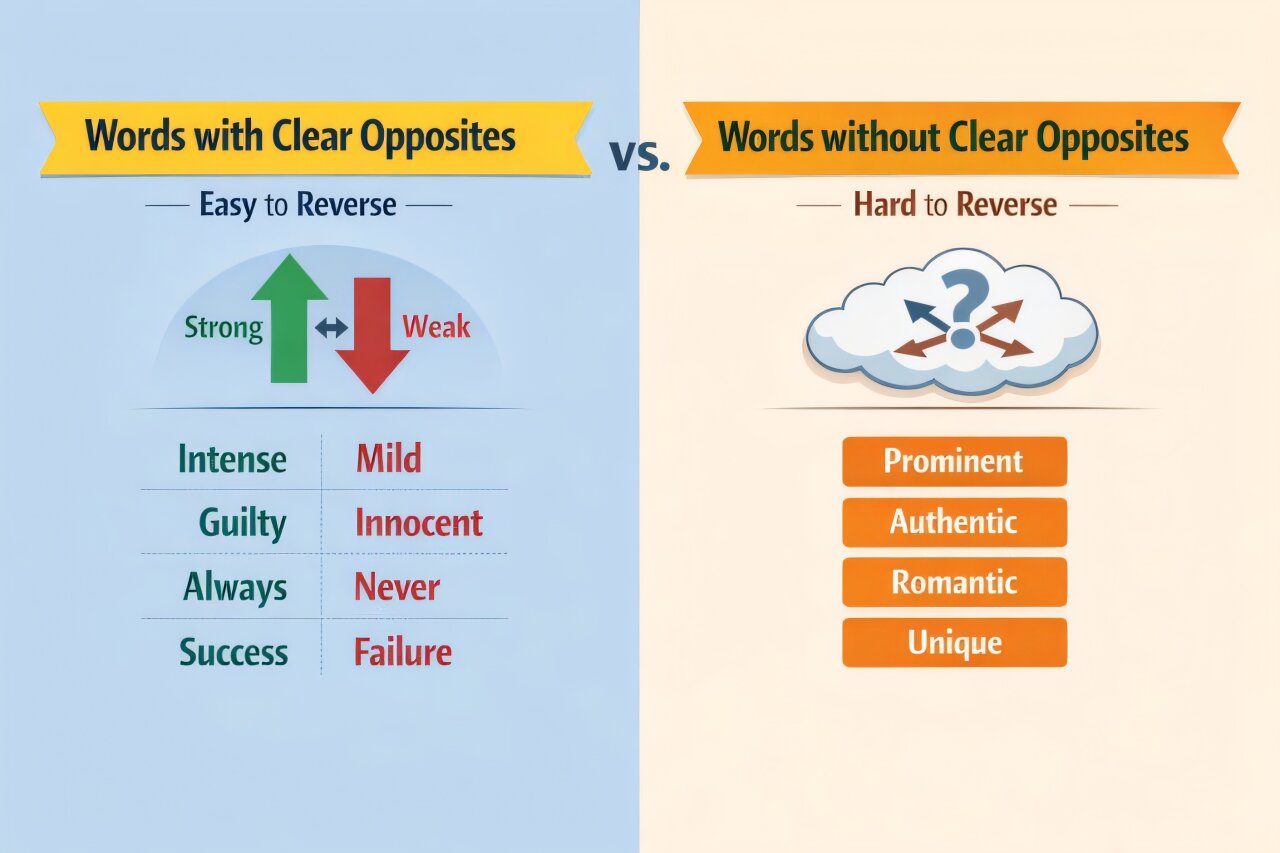
The study, in the Journal of the Association for Consumer Research, reveals that the persuasiveness of a message can hinge on the type of words it uses—specifically, whether those words have clear opposites. The research shows that when companies frame a message with words that are “reversible,” meaning they have an easily retrievable opposite (such as intense/mild or guilty/innocent), people who disagree with the claim tend to mentally flip it to the opposite meaning (for example, “The scent is intense” becomes “The scent is mild”).

Why words with clear opposites are processed differently

The study shows that this difference matters because people handle disagreement in different ways. When a message uses a word with a clear opposite, rejecting the claim requires an extra step retrieving and substituting the opposite word which makes people feel less certain about their opposing belief.

But when a word doesn’t have a clear opposite, people tend to negate them by simply adding “not” to the original word (for example, “not prominent” or “not romantic”). In those cases, the study finds that skeptics tend to feel more confident in their counter-belief, making those messages less effective overall.

A strategic advantage for marketers

“For marketers, this creates a powerful advantage: by using easily reversible words in a positive affirmation—such as ‘the scent is intense’—companies can maximize certainty among those who accept the claim while minimizing certainty among people who reject the message, because they tend to feel less strongly about their opposing belief,” said Maimone, who is now a postdoctoral scholar in marketing at the University of Florida.

“Our study highlights a subtle but influential linguistic mechanism that helps explain why some marketing and political messages are more effective than others.”

That’s why this matters for marketing. If a company uses a simple, positive claim with an easily reversible word—like “the scent is intense”—most consumers who believe it feel confident in that belief. But even the consumers who disagree tend to feel less sure about their own negative conclusion because flipping the message to the opposite (“it’s mild”) takes extra mental work.

[…]

Source: Why some messages are more convincing than others

Microsoft will give the FBI your BitLocker keys if asked. Can do so because of cloud accounts.

Great target for hackers then, the server with unencrypted bitlocker keys on it.

Microsoft has confirmed in a statement to Forbes that the company will provide the FBI access to BitLocker encryption keys if a valid legal order is requested. These keys enable the ability to decrypt and access the data on a computer running Windows, giving law enforcement the means to break into a device and access its data.

The news comes as Forbes reports that Microsoft gave the FBI the BitLocker encryption keys to access a device in Guam that law enforcement believed to have “evidence that would help prove individuals handling the island’s Covid unemployment assistance program were part of a plot to steal funds” in early 2025.

Source: Microsoft gave FBI BitLocker keys, raising privacy fears | Windows Central

It’s Not Just You, Microsoft 365 Is Down

Heads up, workers of the world: Microsoft 365 is currently down. Microsoft’s flagship work suite, which includes tools like Microsoft Teams and Microsoft Outlook, is currently experiencing issues impacting users. It’s not yet clear exactly why these problems are occurring, but according to Downdetector (owned by Lifehacker parent company Ziff Davis) thousands of users are reporting issues.

There are any number of causes that could trigger a widespread outage like this, and in all likelihood, Microsoft will have the issue isolated and fixed soon—especially considering how many companies and users rely on Microsoft 365 to function. But it does follow a number of high-profile outages this week. Just this morning, Yahoo! and AOL were both down. Last week, X experienced an outage, as did Verizon—quite famously, I might add.

[…]

Source: It’s Not Just You, Microsoft 365 Is Down | Lifehacker

Stanford scientists found a way to regrow cartilage and stop arthritis

A study led by Stanford Medicine researchers has found that an injection blocking a protein linked to aging can reverse the natural loss of knee cartilage in older mice. The same treatment also stopped arthritis from developing after knee injuries that resemble ACL tears, which are common among athletes and recreational exercisers. Researchers note that an oral version of the treatment is already being tested in clinical trials aimed at treating age-related muscle weakness.

Human cartilage samples taken from knee replacement surgeries also responded positively. These samples included both the supportive extracellular matrix of the joint and cartilage-producing chondrocyte cells. When treated, the tissue began forming new, functional cartilage.

Together, the findings suggest that cartilage lost due to aging or arthritis may one day be restored using either a pill or a targeted injection. If successful in people, such treatments could reduce or even eliminate the need for knee and hip replacement surgery.

A Direct Attack on Osteoarthritis

Osteoarthritis is a degenerative joint disease that affects about one in five adults in the United States and generates an estimated $65 billion each year in direct health care costs. Current treatments focus on managing pain or replacing damaged joints surgically. There are no approved drugs that can slow or reverse the underlying cartilage damage.

The new approach targets the root cause of the disease rather than its symptoms, offering a potential shift in how osteoarthritis is treated.

The Role of a Master Aging Enzyme

The protein at the center of the study is called 15-PGDH. Researchers refer to it as a gerozyme because its levels increase as the body ages. Gerozymes were identified by the same research team in 2023 and are known to drive the gradual loss of tissue function.

[…]

In most of these tissues, repair happens through the activation and specialization of stem cells. Cartilage appears to be different. In this case, chondrocytes change how their genes behave, shifting into a more youthful state without relying on stem cells.

[…]

Earlier research from Blau’s lab showed that prostaglandin E2 is essential for muscle stem cell function. The enzyme 15-PGDH breaks down prostaglandin E2. By blocking 15-PGDH or increasing prostaglandin E2 levels, researchers previously supported the repair of damaged muscle, nerve, bone, colon, liver, and blood cells in young mice.

This led the team to question whether the same pathway might be involved in cartilage aging and joint damage. When they compared knee cartilage from young and old mice, they found that 15-PGDH levels roughly doubled with age.

Regrowing Cartilage in Aging Knees

Researchers then injected older mice with a small molecule that inhibits 15-PGDH. They first administered the drug into the abdomen to affect the entire body, and later injected it directly into the knee joint. In both cases, cartilage that had become thin and dysfunctional with age thickened across the joint surface.

Additional tests confirmed that the regenerated tissue was hyaline cartilage rather than the less functional fibrocartilage.

“Cartilage regeneration to such an extent in aged mice took us by surprise,” Bhutani said. “The effect was remarkable.”

[…]

The researchers also tested cartilage taken from patients undergoing total knee replacement for osteoarthritis. After one week of treatment with the 15-PGDH inhibitor, the tissue showed fewer 15-PGDH-producing chondrocytes, reduced expression of cartilage degradation and fibrocartilage genes, and early signs of articular cartilage regeneration.

“The mechanism is quite striking and really shifted our perspective about how tissue regeneration can occur,” Bhutani said. “It’s clear that a large pool of already existing cells in cartilage are changing their gene expression patterns. And by targeting these cells for regeneration, we may have an opportunity to have a bigger overall impact clinically.”

Looking Toward Human Trials

Blau added, “Phase 1 clinical trials of a 15-PGDH inhibitor for muscle weakness have shown that it is safe and active in healthy volunteers. Our hope is that a similar trial will be launched soon to test its effect in cartilage regeneration. We are very excited about this potential breakthrough. Imagine regrowing existing cartilage and avoiding joint replacement.”

[…]

Source: Stanford scientists found a way to regrow cartilage and stop arthritis | ScienceDaily

Outlook might freeze when saving files to OneDrive

Microsoft’s January Windows update has delivered another blow for unsuspecting users – apps including Outlook might freeze when saving files to cloud storage services such as OneDrive or Dropbox.

The megacorp acknowledged the latest issue days after releasing an emergency out-of-band update to deal with connection and authentication failures in the Windows App. Yet another fault in the update caused some Windows 11 23H2 PCs to refuse to shut down or hibernate.

According to Microsoft, after installing the January 13 update, “some applications might become unresponsive or experience unexpected errors when opening files from or saving files to cloud-backed storage, such as OneDrive or Dropbox.”

One application is Outlook, which, when combined with a PST (Personal Storage Table) file on OneDrive, “might become unresponsive and fail to reopen unless its process is terminated in Task Manager, or the system is restarted.” Sent emails might also fail to appear.

The workaround for Outlook is to move the PST file out of OneDrive. Putting a PST file in OneDrive is generally not recommended except for backup purposes, though there are plenty of scenarios where users or administrators do so, and changing a workflow due to a bug introduced by an update is not ideal.

[…]

Source: Outlook might freeze when saving files to OneDrive • The Register

Why Everyone Should Still Use an RSS Reader in 2026

[…]

one of the main roles of RSS is to supply directly to you a steady stream of updates from a website. Every new article published on that site is served up in a list that can be interpreted by an RSS reader.

In earlier, simpler internet times, RSS was the way to keep up to date with what was happening on all of your favorite sites. You would open your RSS reader and tap through newly published articles one by one, in chronological order, in the same way you would check your email. It was an easy way to keep tabs on what was new and what was of interest.

Unfortunately, RSS is no longer how most of us consume “content.” (Google famously killed its beloved Google Reader more than a decade ago.) It’s now the norm to check social media or the front pages of many different sites to see what’s new

[…]

The RSS standard actually remains the default way of distributing podcasts, with each new episode—together with the episode title, cover art, and descriptive blurb—appearing as a new entry in the feed of your podcast app of choice. When you subscribe to a new show through Pocket Casts or Apple Podcasts, you’re essentially pointing the app towards the RSS feed for the podcast you want to listen to, and it takes care of serving up each new episode.

In times gone by, websites would prominently display their RSS feed links somewhere on the front page. That’s less common now, but you can often find these feeds if you dig deeper or run a web search for them (incidentally, the Lifehacker RSS feed can be found here). Some sites offer multiple RSS feeds covering different categories of content, such as tech or sports.

Even when a site doesn’t explicitly offer RSS feeds, the best RSS readers can now produce their own approximation of them by watching for new activity on a site, so you can direct the app toward the site you want to keep tabs on

[…]

RSS is clearly useful if you have a selection of favorite websites and you want to skim through everything they publish (or everything they publish in a certain category, if the site has several feeds). No one is choosing what you see but you—you have more control over your news diet, free from any choices made by an algorithm.

Using RSS means you can catch up on everything, methodically and chronologically, even if you’ve been offline for a week (you don’t have to catch up on everything, of course—but you can, if you want, as your feed will operate on an infinite scroll). It’s also a cleaner, less cluttered way of using the internet, as you only need to click through on the specific articles you want to read.

[…]

RSS readers aren’t quite as ubiquitous as they once were, but you can still find quite a few if you take a look around.

Feedly

The best RSS reader currently in operation is arguably Feedly, which offers a bunch of features across free and paid-for plans (starting from $8 per month): It has a clean, clear interface, it can generate RSS feeds for sites that don’t have them, it can sort feeds in a variety of ways, it can incorporate email newsletters, and plenty more besides.

Feeder

Feeder is a good place to start for RSS newbies because it gets you up and running quickly, and offers a straightforward interface. It works seamlessly across all the major platforms, and if you need extra bells and whistles—including a real time dashboard, access to more feeds, and sophisticated filters for your feeds—paid plans start at $9.99 per month.

[…]

Source: Why Everyone Should Still Use an RSS Reader in 2026 | Lifehacker

Threads Is Now Clearly More Popular Than X in Mobile App Form

Matt Damon has claimed that Netflix pushes directors to reiterate the plot for viewers who are watching while on their phones.

The actor has just released new action film The Rip on the streaming platform, which sees him reunite with frequent collaborator Ben Affleck.

During an appearance on the Joe Rogan Experience podcast alongside his co-star, Damon spoke about collaborating with Netflix, saying they want bigger action earlier in such films, and push for the plot to be repeated to accommodate attention spans.

“The standard way to make an action movie that we learned was, you usually have three set pieces,” he said. “One in the first act, one in the second, one in the third… You spend most of your money on that one in the third act. That’s your finale.

“And now they’re like, ‘Can we get a big one in the first five minutes? We want people to stay tuned in. And it wouldn’t be terrible if you reiterated the plot three or four times in the dialogue because people are on their phones while they’re watching.’”

Affleck went on to praise Netflix series Adolescence, which became a huge success last year, and the fact that it “didn’t do any of that shit”.

[…]

Source: Threads Is Now Clearly More Popular Than X (in Mobile App Form), Report Says

Insane that people are still on X. Numbers for both platforms will be inflated due to embeds on web.

Netflix tells directors to repeat plot 3 times for people using phones while watching. Bore people who aren’t using phones, make them use their phones.

Matt Damon has claimed that Netflix pushes directors to reiterate the plot for viewers who are watching while on their phones.

The actor has just released new action film The Rip on the streaming platform, which sees him reunite with frequent collaborator Ben Affleck.

During an appearance on the Joe Rogan Experience podcast alongside his co-star, Damon spoke about collaborating with Netflix, saying they want bigger action earlier in such films, and push for the plot to be repeated to accommodate attention spans.

“The standard way to make an action movie that we learned was, you usually have three set pieces,” he said. “One in the first act, one in the second, one in the third… You spend most of your money on that one in the third act. That’s your finale.

“And now they’re like, ‘Can we get a big one in the first five minutes? We want people to stay tuned in. And it wouldn’t be terrible if you reiterated the plot three or four times in the dialogue because people are on their phones while they’re watching.’”

Affleck went on to praise Netflix series Adolescence, which became a huge success last year, and the fact that it “didn’t do any of that shit”.

[…]

Source: Netflix tells directors to repeat plot for people using phones while watching, says Matt Damon

Posted in Art

Invitation Is All You Need! Promptware Attacks Against LLM-Powered Assistants in Production Are Practical and Dangerous

The growing integration of LLMs into applications has introduced new security risks, notably known as Promptware – maliciously engineered prompts designed to manipulate LLMs to compromise the CIA triad of these applications. While prior research warned about a potential shift in the threat landscape for LLM-powered applications, the risk posed by Promptware is frequently perceived as low. In this paper, we investigate the risk Promptware poses to users of Gemini-powered assistants (web application, mobile application, and Google Assistant). We propose a novel Threat Analysis and Risk Assessment (TARA) framework to assess Promptware risks for end users. Our analysis focuses on a new variant of Promptware called Targeted Promptware Attacks, which leverage indirect prompt injection via common user interactions such as emails, calendar invitations, and shared documents. We demonstrate 14 attack scenarios applied against Gemini-powered assistants across five identified threat classes: Short-term Context Poisoning, Permanent Memory Poisoning, Tool Misuse, Automatic Agent Invocation, and Automatic App Invocation. These attacks highlight both digital and physical consequences, including spamming, phishing, disinformation campaigns, data exfiltration, unapproved user video streaming, and control of home automation devices. We reveal Promptware’s potential for on-device lateral movement, escaping the boundaries of the LLM-powered application, to trigger malicious actions using a device’s applications. Our TARA reveals that 73% of the analyzed threats pose High-Critical risk to end users. We discuss mitigations and reassess the risk (in response to deployed mitigations) and show that the risk could be reduced significantly to Very Low-Medium. We disclosed our findings to Google, which deployed dedicated mitigations.

Source: [2508.12175] Invitation Is All You Need! Promptware Attacks Against LLM-Powered Assistants in Production Are Practical and Dangerous

AI & Humans: Making the Relationship Work

Leaders of many organizations are urging their teams to adopt agentic AI to improve efficiency, but are finding it hard to achieve any benefit. Managers attempting to add AI agents to existing human teams may find that bots fail to faithfully follow their instructions, return pointless or obvious results or burn precious time and resources spinning on tasks that older, simpler systems could have accomplished just as well.

The technical innovators getting the most out of AI are finding that the technology can be remarkably human in its behavior. And the more groups of AI agents are given tasks that require cooperation and collaboration, the more those human-like dynamics emerge.

Our research suggests that, because of how directly they seem to apply to hybrid teams of human and digital workers, the most effective leaders in the coming years may still be those who excel at understanding the timeworn principles of human management.

We have spent years studying the risks and opportunities for organizations adopting AI. Our 2025 book, Rewiring Democracy, examines lessons from AI adoption in government institutions and civil society worldwide. In it, we identify where the technology has made the biggest impact and where it fails to make a difference. Today, we see many of the organizations we’ve studied taking another shot at AI adoption—this time, with agentic tools. While generative AI generates, agentic AI acts and achieves goals such as automating supply chain processes, making data-driven investment decisions or managing complex project workflows. The cutting edge of AI development research is starting to reveal what works best in this new paradigm.

[…]

Key Takeaways

Managers of hybrid teams can apply these ideas to design their own complex systems of human and digital workers:

DELEGATE.

Analyze the tasks in your workflows so that you can design a division of labour that plays to the strength of each of your resources. Entrust your most experienced humans with the roles that require context and judgment and entrust AI models with the tasks that need to be done quickly or benefit from extreme parallelization.

If you’re building a hybrid customer service organization, let AIs handle tasks like eliciting pertinent information from customers and suggesting common solutions. But always escalate to human representatives to resolve unique situations and offer accommodations, especially when doing so can carry legal obligations and financial ramifications. To help them work together well, task the AI agents with preparing concise briefs compiling the case history and potential resolutions to help humans jump into the conversation.

ITERATE.

AIs will likely underperform your top human team members when it comes to solving novel problems in the fields in which they are expert. But AI agents’ speed and parallelization still make them valuable partners. Look for ways to augment human-led explorations of new territory with agentic AI scouting teams that can explore many paths for them in advance.

Hybrid software development teams will especially benefit from this strategy. Agentic coding AI systems are capable of building apps, autonomously making improvements to and bug-fixing their code to meet a spec. But without humans in the loop, they can fall into rabbit holes. Examples abound of AI-generated code that might appear to satisfy specified requirements, but diverges from products that meet organizational requirements for security, integration or user experiences that humans would truly desire. Take advantage of the fast iteration of AI programmers to test different solutions, but make sure your human team is checking its work and redirecting the AI when needed.

SHARE.

Make sure each of your hybrid team’s outputs are accessible to each other so that they can benefit from each others’ work products. Make sure workers doing hand-offs write down clear instructions with enough context that either a human colleague or AI model could follow. Anthropic found that AI teams benefited from clearly communicating their work to each other, and the same will be true of communication between humans and AI in hybrid teams.

MEASURE AND IMPROVE.

Organizations should always strive to grow the capabilities of their human team members over time. Assume that the capabilities and behaviors of your AI team members will change over time, too, but at a much faster rate. So will the ways the humans and AIs interact together. Make sure to understand how they are performing individually and together at the task level, and plan to experiment with the roles you ask AI workers to take on as the technology evolves.

An important example of this comes from medical imaging. Harvard Medical School researchers have found that hybrid AI-physician teams have wildly varying performance as diagnosticians. The problem wasn’t necessarily that the AI has poor or inconsistent performance; what mattered was the interaction between person and machine. Different doctors’ diagnostic performance benefited—or suffered—at different levels when they used AI tools. Being able to measure and optimize those interactions, perhaps at the individual level, will be critical to hybrid organizations.

In Closing

We are in a phase of AI technology where the best performance is going to come from mixed teams of humans and AIs working together. Managing those teams is not going to be the same as we’ve grown used to, but the hard-won lessons of decades past still have a lot to offer.

This essay was written with Nathan E. Sanders, and originally appeared in Rotman Management Magazine.

Source: AI & Humans: Making the Relationship Work – Schneier on Security

phonon laser created for tiny surface wave acoustic sensors (SAWS)

Engineers have taken a major step toward producing the smallest earthquakes ever created, shrinking seismic-style vibrations down to the scale of a microchip.

The breakthrough centers on a device called a surface acoustic wave phonon laser. The technology could eventually enable more advanced chips for smartphones and other wireless electronics, helping make them smaller, faster, and more energy efficient.

The research was led by Matt Eichenfield, an incoming faculty member at the University of Colorado Boulder, along with scientists from the University of Arizona and Sandia National Laboratories. Their findings were published Jan. 14 in the journal Nature.

What Are Surface Acoustic Waves?

The new device relies on surface acoustic waves, commonly known as SAWs. These waves behave somewhat like sound waves, but instead of traveling through the air or deep inside a material, they move only along its surface.

[…]

“SAWs devices are critical to the many of the world’s most important technologies,” said Eichenfield, senior author of the new study and Gustafson Endowed Chair in Quantum Engineering at CU Boulder. “They’re in all modern cell phones, key fobs, garage door openers, most GPS receivers, many radar systems and more.”

[…]

Most existing SAW systems require two separate chips and an external power source. The new design combines everything into a single chip and could operate using just a battery while reaching much higher frequencies

[…]

the team built a bar-shaped device about half a millimeter long.

A Stack of Specialized Materials

The device consists of several layered materials. At its base is silicon, the same material used in most computer chips. Above that sits a thin layer of lithium niobate, a piezoelectric material. When lithium niobate vibrates, it produces oscillating electric fields, and those electric fields can also trigger vibrations.

The final layer is an extremely thin sheet of indium gallium arsenide. This material has unusual electronic properties and can accelerate electrons to very high speeds even under weak electric fields.

Together, these layers allow vibrations traveling along the lithium niobate surface to interact directly with fast-moving electrons in the indium gallium arsenide.

Making Waves Build Like a Laser

The researchers describe the device as working similarly to a wave pool.

When electric current flows through the indium gallium arsenide, surface waves form in the lithium niobate layer. These waves travel forward, strike a reflector, and then move backward, much like light reflecting between mirrors in a laser. Each forward pass strengthens the wave, while each backward pass weakens it.

“It loses almost 99% of its power when it’s moving backward, so we designed it to get a substantial amount of gain moving forward to beat that,” Wendt said.

After repeated passes, the vibrations grow strong enough that a portion escapes from one side of the device, similar to how laser light eventually exits its cavity.

Faster Waves, Smaller Devices

Using this approach, the team generated surface acoustic waves vibrating at about 1 gigahertz, meaning billions of oscillations per second. The researchers believe the same design could be pushed into tens or even hundreds of gigahertz.

Traditional SAW devices typically max out at around 4 gigahertz, making the new system far faster.

[…]

Source: Engineers just created a “phonon laser” that could shrink your next smartphone | ScienceDaily

To find out what SAWS are used for and how they work, check out: Trends and Applications of Surface and Bulk Acoustic Wave Devices: A Review

A lot of the applications are in MEMS (Micro-Electro-Mechanical Systems) chips and signal filtering.

It seems to me that the biggest innovation must be that they reduced the spacial periodicity, allowing for a much higher frequency (see formula 1 in the above link)

[…] acoustic devices, especially FBARs, represent a broad market as RF filters, compared with conventional electromagnetic devices, thanks to much slower propagation velocity allowing for shorter wavelength and, thus, easy miniaturization and integration into circuits. We then presented another important field of applications of SAW and BAW/FBARs, namely as sensors and actuators. A section was dedicated for their application as physical sensors. Examples of their use for magnetic field, pressure, and temperature monitoring and detection were illustrated. In addition, their application in other fields such as mechanical (in automotive) and orientation measurements were presented. Some examples of SAW-based motors and actuators were also introduced. We then focused on SAW/BAW-based biochemical sensors, which are receiving increasing attention in the research field. Indeed, because of their performances, among them a high sensitivity, a versatile feature that makes them easily functionalized for selectivity, and low cost, they are widely used for gas, liquid, bio-sensing, etc. The sensing applications are still under development, with a rising demand especially for biosensors, since health concerns are more than ever a major topic. As of now, SAW and FBAR devices show a very good capacity for sensing DNA, RNA, proteins, and a wide variety of other bio-compounds. With the COVID-19 pandemic, several biosensors based on SAW and FBAR devices are also reported for the detection of SARS-CoV-2 virus and application for living-matter monitoring is under development, which could be helpful for fast screening of therapeutic nanodrugs, for example. Lastly, we presented current trends related to quantum acoustics, which studies the behavior of phonons and their interactions, as opportunities for new schemes to control quantum information and explore atomic physics beyond photonic systems[…]

Partly AI-generated folk-pop hit barred from Sweden’s official charts

 A hit song has been excluded from Sweden’s official chart after it emerged the “artist” behind it was an AI creation.

I Know, You’re Not Mine – or Jag Vet, Du Är Inte Min in Swedish – by a singer called Jacub has been a streaming success in Sweden, topping the Spotify rankings.

However, the Swedish music trade body has excluded the song from the official chart after learning it was AI-generated.

Spotify Wrapped is taking over our feeds, but you don’t have outsource your relationship with music to AI | Liz Pelly
Read more

“Jacub’s track has been excluded from Sweden’s official chart, Sverigetopplistan, which is compiled by IFPI Sweden. While the song appears on Spotify’s own charts, it does not qualify for inclusion on the official chart under the current rules,” said an IFPI Sweden spokesperson.

Ludvig Werber, IFPI Sweden’s chief executive, said: “Our rule is that if it is a song that is mainly AI-generated, it does not have the right to be on the top list.”

[…]

IFPI Sweden acted after an investigative journalist, Emanuel Karlsten, revealed the song was registered to a Danish music publisher called Stellar and that two of the credited rights holders worked in the company’s AI department.

“What emerges is a picture of a music publisher that wants to experiment with new music and new kinds of artists. Who likes to push the limits of the audience’s tolerance threshold for artificial music and artificial artists,” wrote Karlsten.

In a statement, Stellar said: “The artist Jacub’s voice and parts of the music are generated with the help of AI as a tool in our creative process.”

[…]

Spotify does not require music to be labelled as AI-generated, but has been cracking down on AI-made spam tracks as every play more than 30 seconds long generates a royalty for the scammer behind it – and dilutes payments to legitimate artists.

Jacub is not the first AI artist to score a hit with audiences. A “band” called the Velvet Sundown amassed more than 1m streams on Spotify last year before it emerged the group was AI-generated, including its promotional images and backstory as well as the music. Its most popular song has now accumulated 4m streams on the platform.

[…]

Source: Partly AI-generated folk-pop hit barred from Sweden’s official charts | AI (artificial intelligence) | The Guardian

In other news, they have banned the use of synthesisers, DJs and autotune from the IFPI charts as well. Oh no, they didn’t. It will just take them a few decades to catch up again.

What Happened After Security Researchers Found 60 Flock Cameras Livestreaming to the Internet

A couple months ago, YouTuber Benn Jordan “found vulnerabilities in some of Flock’s license plate reader cameras,” reports 404 Media’s Jason Koebler. “He reached out to me to tell me he had learned that some of Flock’s Condor cameras were left live-streaming to the open internet.”

This led to a remarkable article where Koebler confirmed the breach by visiting a Flock surveillance camera mounted on a California traffic signal. (“On my phone, I am watching myself in real time as the camera records and livestreams me — without any password or login — to the open internet… Hundreds of miles away, my colleagues are remotely watching me too through the exposed feed.”) Flock left livestreams and administrator control panels for at least 60 of its AI-enabled Condor cameras around the country exposed to the open internet, where anyone could watch them, download 30 days worth of video archive, and change settings, see log files, and run diagnostics. Unlike many of Flock’s cameras, which are designed to capture license plates as people drive by, Flock’s Condor cameras are pan-tilt-zoom (PTZ) cameras designed to record and track people, not vehicles. Condor cameras can be set to automatically zoom in on people’s faces… The exposure was initially discovered by YouTuber and technologist Benn Jordan and was shared with security researcher Jon “GainSec” Gaines, who recently found numerous vulnerabilities in several other models of Flock’s automated license plate reader (ALPR) cameras.
Jordan appeared this week as a guest on Koebler’s own YouTube channel, while Jordan released a video of his own about the experience. titled “We Hacked Flock Safety Cameras in under 30 Seconds.” (Thanks to Slashdot reader beadon for sharing the link.) But together Jordan and 404 Media also created another video three weeks ago titled “The Flock Camera Leak is Like Netflix for Stalkers” which includes footage he says was “completely accessible at the time Flock Safety was telling cities that the devices are secure after they’re deployed.”

The video decries cities “too lazy to conduct their own security audit or research the efficacy versus risk,” but also calls weak security “an industry-wide problem.” Jordan explains in the video how he “very easily found the administration interfaces for dozens of Flock safety cameras…” — but also what happened next: None of the data or video footage was encrypted. There was no username or password required. These were all completely public-facing, for the world to see…. Making any modification to the cameras is illegal, so I didn’t do this. But I had the ability to delete any of the video footage or evidence by simply pressing a button. I could see the paths where all of the evidence files were located on the file system…

During and after the process of conducting that research and making that video, I was visited by the police and had what I believed to be private investigators outside my home photographing me and my property and bothering my neighbors. John Gaines or GainSec, the brains behind most of this research, lost employment within 48 hours of the video being released. And the sad reality is that I don’t view these things as consequences or punishment for researching security vulnerabilities. I view these as consequences and punishment for doing it ethically and transparently.

I’ve been contacted by people on or communicating with civic councils who found my videos concerning, and they shared Flock Safety’s response with me. The company claimed that the devices in my video did not reflect the security standards of the ones being publicly deployed. The CEO even posted on LinkedIn and boasted about Flock Safety’s security policies. So, I formally and publicly offered to personally fund security research into Flock Safety’s deployed ecosystem. But the law prevents me from touching their live devices. So, all I needed was their permission so I wouldn’t get arrested. And I was even willing to let them supervise this research.

I got no response.

So instead, he read Flock’s official response to a security/surveillance industry research group — while standing in front of one of their security cameras, streaming his reading to the public internet.

“Might as well. It’s my tax dollars that paid for it.”

” ‘Flock is committed to continuously improving security…'”

Source: What Happened After Security Researchers Found 60 Flock Cameras Livestreaming to the Internet | Slashdot

For more on why Flock cameras are problematic, read here

CD Project Takes down VR Mod for Cyberpunk – because it was paid

Yes, the TOS don’t allow commercial mods, which has plusses and minusses. So, yes, technically CD Project Red is in the right. However, it takes a lot of work and time to do some of these mods and if you want to get paid for it that is your right. Just as much as it is your right to not buy it if you don’t like it. Whatever.

There are loads of paid external services that run on top of Amazon, Paypal, Ebay, Discord, most AI products are built on top of OpenAI, etc. It’s a valid (if risky, due to the dependency) way to create value for people.

It seems to me that the TOS are overextended though. How can you legally determine what someone will do with a product they bought? US law is pretty bizarre in that respect, just as companies can get away with not allowing reverse engineering and lock people into buying hugely overpriced repairs and replacement parts only from them. Maybe look at China to see how this kind of law kills innovation and look at monopolies to see how this drives costs up and removes choice for consumers.

[…] Now that the dust has settled, I’m even more sorry to announce that we are leaving behind an adventure that so many of you deeply loved and enjoyed. CD PROJEKT S.A. decided that they would follow in Take-Two Interactive Software’s steps and issued a DMCA notice against me for the removal of the Cyberpunk 2077 VR mod.

At least they were a little more open about it, and I could get a reply both from their legal department and from the VP of business development. But in the end it amounted to the same iron-clad corpo logic: every little action that a company takes is in the name of money, but everything that modders do must be absolutely for free.

As usual they stretch the concept of “derivative work” until it’s paper-thin, as though a system that allows visualizing 40+ games in fully immersive 3D VR was somehow built making use of their intellectual property. And as usual they give absolutely zero f***s about how playing their game in VR made people happy, and they cannot just be grateful about the extra copies of the title they sold because of that—without ever having to pour money into producing an official conversion (no, they’re not planning to release their own VR port, in case you were wondering). […]

Source: Another one bites the dust | Patreon

Setapp Mobile shuts down alternative iOS app marketplace due to Apple’s crazy way of interpreting EU law

Setapp Mobile, MacPaw’s ambitious alternative iOS app store for European Union users, will close its doors in February after just over a year of operation, the service said Thursday.

On a support page, MacPaw cited Apple’s “still-evolving and complex business terms that don’t fit Setapp’s current business model” as the reason.

Setapp Mobile shuts down, blaming Apple’s complex EU marketplace terms

The Ukraine-based developer’s message appeared to suggest the widely criticized marketplace model resulting from the Digital Markets Act (DMA) is not financially sustainable under current conditions. The shutdown affects only the iOS version of Setapp in the EU. The company’s established Mac subscription service will continue operating normally.

Setapp Mobile launched in open beta in September 2024 as an early responder to EU legislation forcing Apple to allow alternative app stores within EU borders. The service shuts down February 16, 2026. It marks an early setback for third-party app distribution on iOS in the EU.

What Setapp Mobile offered, and what users should do

Setapp Mobile provided EU-based iPhone users with a unique value proposition. They could access more than 50 premium iOS apps through a single monthly subscription, with no in-app purchases or advertisements. The service offered a simplified alternative to traditional app purchasing, bundling multiple paid applications into one payment.

[…]

Setapp Mobile’s closure highlights the hurdles facing alternative app marketplaces in the EU, despite the Digital Markets Act requiring Apple to permit third-party distribution channels. The most prominent challenge appears to be Apple’s Core Technology Fee and associated business terms, which critics argue make it difficult for competing stores to achieve profitability.

Epic Games, which operates the most well-known alternative marketplace on iOS, absorbs the fees that EU developers would otherwise pay when distributing through the Epic Games Store. However, Epic CEO Tim Sweeney has publicly stated this approach is “not financially viable” long-term.

Sweeney characterized Apple’s fee structure as “ruinous for any hopes of a competing store getting a foothold.” And that prediction seems to hold true with Setapp Mobile’s closure.

[…]

Source: Setapp Mobile shuts down EU iOS app marketplace | Cult of Mac

For more on how Apple is like a tiny baby screaming it’s head off in the EU about wanting to stay a monopoly, read this and the links in the bottom

Turns Out Games Workshop Are Luddites, Bans Staff From Using AI in Its Content or Designs

Warhammer maker Games Workshop has banned the use of AI in its content production and its design process, insisting that none of its senior managers are currently excited about the technology.

Delivering the UK company’s impressive financial results, CEO Kevin Rountree addressed the issue of AI and how Games Workshop is handling it. He said GW staff are barred from using it to actually produce anything, but admitted a “few” senior managers are experimenting with it.

Rountree said AI was “a very broad topic and to be honest I’m not an expert on it,” then went on to lay down the company line:

“We do have a few senior managers that are [experts on AI]: none are that excited about it yet. We have agreed an internal policy to guide us all, which is currently very cautious e.g. we do not allow AI generated content or AI to be used in our design processes or its unauthorised use outside of GW including in any of our competitions. We also have to monitor and protect ourselves from a data compliance, security and governance perspective, the AI or machine learning engines seem to be automatically included on our phones or laptops whether we like it or not.

“We are allowing those few senior managers to continue to be inquisitive about the technology. We have also agreed we will be maintaining a strong commitment to protect our intellectual property and respect our human creators. In the period reported, we continued to invest in our Warhammer Studio — hiring more creatives in multiple disciplines from concepting and art to writing and sculpting. Talented and passionate individuals that make Warhammer the rich, evocative IP that our hobbyists and we all love.”

[…]

Source: Warhammer Maker Games Workshop Bans Its Staff From Using AI in Its Content or Designs, Says None of Its Senior Managers Are Currently Excited About the Tech – IGN

A bit sad that they have to go and ban it. You wonder if they are able to use a computer at all, or do they give hand painted stuff to the new fangled thing they call a printers?

Windows App breaks logins with first 2026 security patch

Microsoft has kicked off 2026 with another faulty Windows update. This time, it is connection and authentication failures in Azure Virtual Desktop and Windows 365 related to the Windows App.

The January 2026 security update, released on January 13, is the culprit. According to Microsoft, the update can result in credential prompt failures “during Remote Desktop connections using the Windows App on Windows client devices, impacting Azure Virtual Desktop and Windows 365.”

The upshot is that connecting to Windows 365 or Azure Virtual Desktop from the Windows App could be borked due to credential problems. Microsoft posted: “Investigation and debugging are ongoing, with coordination between Azure Virtual Desktop and Windows Update teams.”

The problem is widespread and appears to affect every supported version of Windows, from Windows 10 Enterprise LTSC 2016, right up to Windows 11 25H2. Windows Servers 2019 to 2025 are also affected.

Other than a swift uninstall of the update (which means losing important security fixes), Microsoft’s advice is to use the Remote Desktop Client to connect to Azure Virtual Desktop, or to use the Windows App web client.

Neither is an ideal solution. Microsoft said: “We are actively working on a resolution and plan to release an out-of-band (OOB) update in the coming days. Additional details will be shared as soon as they become available.”

Of the suggestion to use the Remote Desktop Client, one user wrote: “Thanks Microsoft, glad we spent ages migrating everyone over to Windows App.”

The Windows App is Microsoft’s one-stop shop for everything Windows launched via a rebranding exercise in 2024. According to Microsoft at the time, it “serves as your secure gateway to connect to Windows across Windows 365, Azure Virtual Desktop, Remote Desktop, Remote Desktop Services, Microsoft Dev Box, and more.” Until, of course, it doesn’t.

Another user reported: “It throws an ‘Unable to Authenticate’ error every time you try to click the ‘Connect’ button from Windows App. It instantly fails with the ‘Unable to Authenticate’ error.”

[…]

Source: Windows App breaks logins with first 2026 security patch • The Register