This means it can’t be installed on your new PC, when you replace your old one. It’s unknown what will happen when you upgrade components in your PC.
Does your copy of Office 2013 die with your computer?.


This means it can’t be installed on your new PC, when you replace your old one. It’s unknown what will happen when you upgrade components in your PC.
Does your copy of Office 2013 die with your computer?.
This Satechi mini router is tiny, portable and offers a whole lot of functionalities. The price is $49,99 normally, but it’s being offered for $39,99 now.
Wireless Multifunction Mini Router / Repeater / Access Point / Client / Bridge.
Zapping your forearm using electrical muscle stimulation (EMS) makes your muscle contract, meaning you have to use another muscle to counteract it, resulting in a force feedback feeling. Because the system uses just 2 wires, it can easily be miniturised and fitted to smartphones for haptic gaming.
Muscle-zapper forces gamers' own hands against them – tech – 31 January 2013 – New Scientist.
The researchers use a timing attack to break SSL
Lucky Thirteen: Breaking the TLS and DTLS Record Protocols.
This is supposed to work in almost any application on OSX. Oops.
rdar://13128709: OSX apps (TextEdit) crashing in spell-checker (I think)..
Apparently he invented tiny incremental improvements on paper and used a trick to delay the patent submitting process so that he could incorporate existing technologies into patents filed ages ago. He also made the patents huge, vague and filed them again and again after refusal. Then he started to sue and sue and sue.
It looks like something from the movie “Firefox”.

Iran's new Qaher-313 stealth fighter: No, it's not April fools day – The DEW Line.
Hola unblocker is a Firefox / Chrome extension that unblocks access to sites, such as BBC iplayer. What’s special about it, is it doesn’t work like a VPN solution and it doesn’t slow down the browsing experience.
Researchers in Canada have found a correlation between air pollution and people’s happiness. Their deep analysis, reported in the latest issue of the International Journal of Green Economics, suggests that air pollution may lead to unhappiness while the converse is also true, the unhappier the citizens of a country the more air pollution.
via Pollution makes Europeans unhappy.
I’m a big fan of roundabouts, they’ve allways seemed to me to improve traffic flow no end and reduce driver frustration. It turns out I was right!
Transportation research finds roundabouts are the way to go for drivers of any age.
Oracle has lost a court case, where the Dutch government asked specifically for SAP software in their tender. The judge ruled that as the Dutch .gov allready uses SAP, they can ask for it and rule out other vendors if they want. Oracle won’t dispute the ruling, as it works out well for them: the NL .gov can also specifically ask for Oracle products.
This is bad news for smaller software vendors who may want to develop alternatives, but won’t be able to get in because they don’t allready supply NL .gov. The tendering laws were implemented specifically to suppres this and give small and upcoming companies a chance. Well done Judge.
'Vonnis tegen Oracle moedigt vendor lock-in aan' | Webwereld.
There are loads of alternatives out there, this page gives you a good list per product.
Build Your Own Adobe Creative Suite with Free and Cheap Software.
A case story of a programmer employee who’d outsourced his job to China for 1/5th of his wages, allowing him to surf the web and chill out all day for at least 6 months before his employers discovered that there were regular VPN sessions coming in from Shenyang, China.
Swissotel hotels and restaurants has put this online. Useful!
The Ultimate Guide to Worldwide Etiquette.
During the past five years, a high-level cyber-espionage campaign has successfully infiltrated computer networks at diplomatic, governmental and scientific research organizations, gathering data and intelligence from mobile devices, computer systems and network equipment.
Kaspersky Lab’s researchers have spent several months analyzing this malware, which targets specific organizations mostly in Eastern Europe, former USSR members and countries in Central Asia, but also in Western Europe and North America.

It doesn’t seem to be a governmental attack, allthough the base code seems to be written by Chinese people and plugins by Russians. Someone out there has an awesome intelligence gathering capability!
This is an annual publication in Dutch concerning the armed forces. The main tasks are covered, as well as the ministry, materiel, locations, personnel and finances.
Kerngegevens Defensie | Brochure | Rijksoverheid.nl.
The Global Atlas is the comprehensive information platform on the potential of renewable energy. It provides resource maps from leading technical institutes worldwide and tools for evaluating the technical potential of renewable energies. It can function as a catalyst for policy development and energy planning, and can support investors in entering renewable energy markets.
via IRENA – Global Atlas for Solar & Wind.
The gun is coupled with it’s own ammunition, which is manufactured to tight tolerances. It then feeds video into a recitcle or ipad app with HUD information on it. You point a laser at the target and move the gun aimer to cover the pip. Once it does, the gun fires. This makes it extremely accurate.
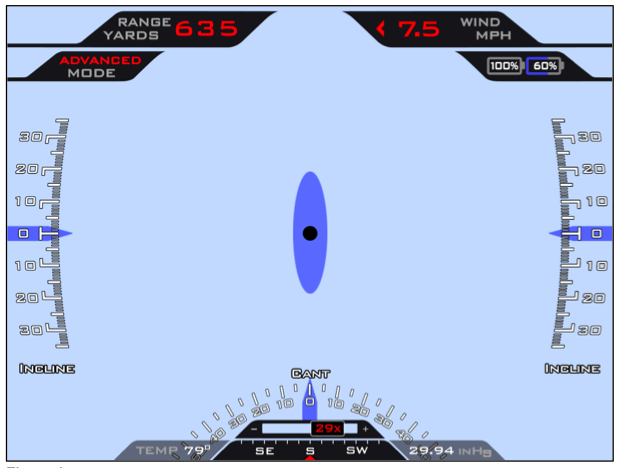

$17,000 Linux-powered rifle brings “auto-aim” to the real world | Ars Technica.

Two laser modules mounted onto Revolver Gun air defense turrets made by Oerlikon and attached to additional power modules. The laser modules are 30 kW and 20 kW, but a Beam Superimposing Technology (BST) combines two lasers to focus in a “superimposed, cumulative manner” that wreaks havoc on its targets.
First, the system sliced through a 15mm- (~0.6 inches) thick steel girder from a kilometer away. Then, from a distance of two kilometers, it shot down a handful of drones as they nose-dived toward the surface at 50 meters per second. The laser’s radar, a widely used system called Skyguard, was capable of tracking the drones through their descent up to three kilometers away.
After successfully testing their 50kW laser system, Rheinmetall Defense has its sights on a truck-mounted mobile system with 100kW of metal-slicing power.
For its finale, the laser’s ability to track a very small ballistic target was demonstrated. It honed in on and destroyed a steel ball 82mm in diameter traveling at 50 meters per second. The small ball was meant to simulate an incoming mortar round.
German Military Laser Destroys Targets Over 1Km Away | Singularity Hub.
Breathing sensors built into romper suits could help prevent sudden cot deaths in the future. The basis for this is a stretchable printed circuit board that fits to the contours of the body and can be manufactured using routine industrial processes.
Read more at: http://phys.org/news/2013-01-romper-sudden-infant-death.html#jCp
Romper suit to protect against sudden infant death.
Counterterrorism officials wanted to create a government dragnet, sweeping up millions of records about U.S. citizens—even people suspected of no crime.
Not everyone was on board. “This is a sea change in the way that the government interacts with the general public,” Mary Ellen Callahan, chief privacy officer of the Department of Homeland Security, argued in the meeting, according to people familiar with the discussions.
A week later, the attorney general signed the changes into effect.
Wow. They seem to have no oversight at all!
Video – U.S. Terrorism Agency Granted Unprecedented Access to Citizens' Files – WSJ.com.
Especially for entering passwords using your mouse this is a problem. 2 advertisers are known to use the expoit.
Internet Explorer tracks cursor even when minimised • The Register.
Today, when you enter a search term into Google, the company kicks off two separate but parallel searches. One runs against the traditional keyword-based Web index, bringing back matches that are ranked by statistical relevance—the familiar “ten blue links.” The other search runs against a much newer database of named entities and relationships.
This second brain is called the Knowledge Graph.
It’s based on Freebase. It’s a collaborative database—technically, a semantic graph—that grows through the contributions of volunteers, who carefully specify the properties of each new entity and how it fits into existing knowledge categories. (For example, Freebase knows that Jupiter is an entity of type Planet, that it has properties such as a mean radius of 69,911 km, and that it is the fictional setting of two Arthur C. Clarke novels.) While Freebase now hosted by Google, it’s still open to submissions from anyone, and the information in it can be freely reused under a Creative Commons license.
Metaweb had to break away from the classic relational-database model, in which data is stored in orderly tables of rows and columns, and build its own proprietary graph database. In a semantic graph, there are no rows and columns, only “nodes” and “edges,” that is, entities and relationships between them. Because it’s impossible to specify in advance what set of properties and relationships you might want to assign to a real-world entity (what’s known in database lingo as the “schema”), graph databases are far better than relational databases for representing practical knowledge.
Fascinating stuff on the future of Google Search.
Google Gets A Second Brain, Changing Everything About Search | Xconomy.
Very worth reading are the a few reviews bottom right column under: “They have spoken” from big name game blogs. They all treat it very intellectually. The history of what the game is and how it was built are very interesting also.
Very bizarre.
You can download it for free
The other games the author has made are equally bizarre and equally praised…
Have fun!
Polymorphous Perversity: Game.