Uber Doesn’t Want You to See This Document About Its Vast Data Surveillance System

The ever-expanding operations of Uber are defined by two interlocking and zealously guarded sets of information: the things the world-dominating ride-hailing company knows about you, and the things it doesn’t want you to know about it. Both kinds of secrets have been in play in the Superior Court of California in San Francisco, as Ward Spangenberg, a former forensic investigator for Uber, has pursued a wrongful-termination lawsuit against the company.

Source: Uber Doesn’t Want You to See This Document About Its Vast Data Surveillance System

It’s a good rundown on the Uber stories and privacy invasions that have been happening recently.

Font sharing site DaFont has been hacked, exposing 699,464 accounts

A popular font sharing site DaFont.com has been hacked, exposing the site’s entire database of user accounts.Usernames, email addresses, and hashed passwords of 699,464 user accounts were stolen in the breach, carried out earlier this month, by a hacker who would not divulge his nameA popular font sharing site DaFont.com has been hacked, exposing the site’s entire database of user accounts.

Usernames, email addresses, and hashed passwords of 699,464 user accounts were stolen in the breach, carried out earlier this month, by a hacker who would not divulge his name.

The passwords were scrambled with the deprecated MD5 algorithm, which nowadays is easy to crack. As such, the hacker unscrambled over 98 percent of the passwords into plain text. The site’s main database also contains the site’s forum data, including private messages, among other site information. At the time of writing, there were over half-a-million posts on the site’s forums.

The hacker told ZDNet that he carried out his attack after he saw that others had also purportedly stolen the site’s database.

“I heard the database was getting traded around so I decided to dump it myself — like I always do,” the hacker told me. Asked about his motivations, he said it was “mainly just for the challenge [and] training my pentest skills.” He told me that he exploited a union-based SQL injection vulnerability in the site’s software, a flaw he said was “easy to find.

Source: Font sharing site DaFont has been hacked, exposing thousands of accounts | ZDNet

And why is it not mandatory to show what encryption scheme will be used to store your account details?!

Ubuntu: Guest session processes are not confined in 16.10

Processes launched under a lightdm guest session are not confined by the /usr/lib/lightdm/lightdm-guest-session AppArmor profile in Ubuntu 16.10, Ubuntu 17.04, and Ubuntu Artful (current dev release). The processes are unconfined.

The simple test case is to log into a guest session, launch a terminal with ctrl-alt-t, and run the following command:

$ cat /proc/self/attr/current

Expected output, as seen in Ubuntu 16.04 LTS, is:

/usr/lib/lightdm/lightdm-guest-session (enforce)

Running the command inside of an Ubuntu 16.10 and newer guest session results in:

unconfined

Source: Bug #1663157 “Guest session processes are not confined in 16.10 …” : Bugs : lightdm package : Ubuntu

World’s thinnest hologram paves path to new 3D world – RMIT University

Now a pioneering team led by RMIT University’s Distinguished Professor Min Gu has designed a nano-hologram that is simple to make, can be seen without 3D goggles and is 1000 times thinner than a human hair.

“Conventional computer-generated holograms are too big for electronic devices but our ultrathin hologram overcomes those size barriers,” Gu said.

“Our nano-hologram is also fabricated using a simple and fast direct laser writing system, which makes our design suitable for large-scale uses and mass manufacture.

“Integrating holography into everyday electronics would make screen size irrelevant – a pop-up 3D hologram can display a wealth of data that doesn’t neatly fit on a phone or watch.
[…]
Dr Zengji Yue, who co-authored the paper with BIT’s Gaolei Xue, said: “The next stage for this research will be developing a rigid thin film that could be laid onto an LCD screen to enable 3D holographic display.

“This involves shrinking our nano-hologram’s pixel size, making it at least 10 times smaller.

“But beyond that, we are looking to create flexible and elastic thin films that could be used on a whole range of surfaces, opening up the horizons of holographic applications.”

Source: World’s thinnest hologram paves path to new 3D world – RMIT University

Wells Fargo fake accounts scandal appears far bigger than previously thought, attorneys say, may have opened 3.5 million accounts without customer consent

AN FRANCISCO — Wells Fargo may have opened as many as 3.5 million bogus bank accounts without its customers’ permission, attorneys for customers suing the bank have alleged in a court filing, suggesting the bank may have created far more fake accounts than previously indicated.

The plaintiffs’ new estimate of bogus bank accounts is about 1.4 million, or 67 percent, higher than the original estimate — disclosed last year as part of a settlement with regulators — that up to 2.1 million accounts were opened without customers’ permission.

In estimating the higher number of fake accounts, the plaintiffs’ attorneys examined a much longer time period than regulators and the bank had previously addressed, they said in court documents. The attorneys covered a period from 2002 to 2017, rather than the previously scrutinized five-year stretch from 2011 to some time in 2016 in which the bank acknowledged setting up unauthorized accounts. Scrutiny of bank employees’ activity during that five-year period led to the settlement last September, which required the bank to pay $185 million in fines.

Source: Wells Fargo fake accounts scandal appears far bigger than previously thought, attorneys say

What a world we live in – and the banks were too big to fail? Too corrupt to, I think.

Huge Trove of Confidential Medical Records Discovered on Unsecured Server Accessible to Anyone

At least tens of thousands, if not millions of medical records of New York patients were until recently readily accessible online to just about anyone who knew how to look.

Patient demographic information, social security numbers, records of medical diagnoses and treatments, along with a plethora of other highly-sensitive records were left completely undefended by a medical IT company based in Louisville, Kentucky. The files, which belong to at least tens of thousands of patients, originate from Bronx-Lebanon Hospital Center in New York.

In a statement provided to Gizmodo—and published by NBC News Wednesday night—Bronx Lebanon said that a server containing its patients’ data had been the “target of an unauthorized hack by a third party,” attributing that assessment to the hospital’s vendor, iHealth Solutions. The hospital added that iHealth had taken immediate steps to protect the data, and that both parties were “cooperating fully with law enforcement agents.” iHealth Solutions did not respond to request for comment.

However, according to Kromtech Security Center, a German security software development firm, the leak was not the result of a malicious hacker infiltrating the Bronx Lebanon server. Instead, the firm’s analysis showed that the data was left unprotected on a backup storage device, without a password, accessible to anyone online. It also appears likely that the data was not protected by an active firewall, exposing an untold number of patients to crimes such identity theft and blackmail.
[…]
In March, Kromtech reported that more than 400,000 audio recordings of telemarketing calls had been exposed online, including many in which customers provided sensitive information, such as credit card details. A month before, the researchers helped secure the personal data of nearly 25,000 California sheet metal workers. Before that, it was a Missouri sheriff’s office, which had inadvertently leaked audio recordings of police informants of victims involved in crimes as serious as child molestation.

Source: Huge Trove of Confidential Medical Records Discovered on Unsecured Server Accessible to Anyone

Secure rsync, people!

For now, GNU GPL is an enforceable contract, says US federal judge • The Register

A question mark over whether the GNU GPL – the widely used free-software license – is enforceable as a contract may have been resolved by a US federal judge.

In a California district court, Judge Jacqueline Scott Corley refused [PDF] to accept what has been an uncomfortable legal precedent for the past decade. She ruled that the GNU General Public License – the GNU GPL – is an enforceable legal contract even though it is not actually signed.

Source: For now, GNU GPL is an enforceable contract, says US federal judge • The Register

‘Accidental Hero’ Finds Kill Switch To Stop Wana Decrypt0r Ransomware

“An ‘accidental hero’ has halted the global spread of the WannaCry ransomware that has wreaked havoc on organizations…” writes The Guardian. An anonymous reader quotes their report:
A cybersecurity researcher tweeting as @malwaretechblog, with the help of Darien Huss from security firm Proofpoint, found and implemented a “kill switch” in the malicious software that was based on a cyber-weapon stolen from the NSA. The kill switch was hardcoded into the malware in case the creator wanted to stop it from spreading. This involved a very long nonsensical domain name that the malware makes a request to — just as if it was looking up any website — and if the request comes back and shows that the domain is live, the kill switch takes effect and the malware stops spreading. Of course, this relies on the creator of the malware registering the specific domain. In this case, the creator failed to do this. And @malwaretechblog did early Friday morning (Pacific Time), stopping the rapid proliferation of the ransomware.

You can read their first-person account of the discovery here, which insists that registering the domain “was not a whim. My job is to look for ways we can track and potentially stop botnets…” Friday they also tweeted a map from the New York Times showing that registering that domain provided more time for U.S. sites to patch their systems. And Friday night they added “IP addresses from our [DNS] sinkhole have been sent to FBI and ShadowServer so affected organizations should get a notification soon. Patch ASAP.”

UPDATE: Slashdot reader Lauren Weinstein says some antivirus services (and firewalls incorporating their rules) are mistakenly blocking that site as a ‘bad domain’, which allows the malware to continue spreading. “Your systems MUST be able to access the domain above if this malware blocking trigger is to be effective, according to the current reports that I’m receiving!”

slashdot

Keylogger Found in Audio Driver of HP Laptops

The audio driver installed on some HP laptops includes a feature that could best be described as a keylogger, which records all the user’s keystrokes and saves the information to a local file, accessible to anyone or any third-party software or malware that knows where to look.

Swiss cyber-security firm modzero discovered the keylogger on April 28 and made its findings public today.
Keylogger found in preinstalled audio driver

According to researchers, the keylogger feature was discovered in the Conexant HD Audio Driver Package version 1.0.0.46 and earlier.

This is an audio driver that is preinstalled on HP laptops. One of the files of this audio driver is MicTray64.exe (C:\windows\system32\mictray64.exe).

This file is registered to start via a Scheduled Task every time the user logs into his computer. According to modzero researchers, the file “monitors all keystrokes made by the user to capture and react to functions such as microphone mute/unmute keys/hotkeys.”

This behavior, by itself, is not a problem, as many other apps work this way. The problem is that this file writes all keystrokes to a local file at:

C:\users\public\MicTray.log

Audio driver also exposes keystrokes in real-time via local API

If the file doesn’t exist or a registry key containing this file’s path does not exist or was corrupted, the audio driver will pass all keystrokes to a local API, named the OutputDebugString API.

Source: Keylogger Found in Audio Driver of HP Laptops

Cloudflare goes berserk on next-gen patent troll Blackbird, vows to utterly destroy it using prior-art bounties

Rather than a corporation that hires outside lawyers to pursue infringement claims, Blackbird is a small law firm strapped to a war chest of patents. It is an all-in-one form-filling, claim-filing robot. It has no extra baggage and no expensive legal bills to pay, making it a rather lean and mean machine.

“In the past, patent trolls had to hire lawyers and law firms,” Prince said. “These guys do away with it entirely and have the owner be a law firm themselves.”

Because Blackbird is owned by the attorneys who pursue its cases, Prince explained, they are able to file lawsuits without having to worry about lawyer fees. This, he said, allows them to scoop up patents on the cheap and fire off multiple “lottery ticket” infringement claims for nothing more than the court filing fees. It allows for a machine-gun attack on companies, with patent infringement claims the bullets.

“This is a unique case. They pose an amplified risk to innovative companies everywhere,” Prince said. “You can see by the volume of the lawsuits they filed, they have optimized patent trolling to a level that can inflict maximum damage.”

Now, instead of just fighting to invalidate the single patent in their case, Cloudflare is backing a campaign to have all of Blackbird’s patent holdings – roughly 70 of them – declared invalid for future litigation.

To achieve this, Cloudflare has ring-fenced $50,000 in bounties for prior-art proof to challenge Blackbird’s holdings. Of that prize pot, $20,000 will pay those who find prior art on the ‘335 patent, and $30,000 for other patents.

In addition, Prince says Cloudflare plans to file with the state bar associations in Illinois and Massachusetts, where Blackbird’s principal attorneys reside, alleging that by owning the patents they litigate, Blackbird lawyers are committing clear ethical violations

Source: Cloudflare goes berserk on next-gen patent troll, vows to utterly destroy it using prior-art bounties

DEATH TO PATENTS!

Avast blocks the entire internet – again

“Non tech savvy users will have issues reporting or getting the problem fixed,” he explained. “To regain web access you have to disable Web Shield or disable Avast or uninstall Avast. To fix the issue you have to do a clean install of the latest version of software.”

It’s unclear how widespread the problem is. Avast’s PR reps have acknowledged our requests for comment but are yet to supply a substantive response.

All HTTP requests are blocked from all applications including Windows Update. “TCP connections are established but no HTTP request is sent,” according to Michael S.

Source: Avast blocks the entire internet – again

Another IoT botnet has been found feasting on 120k vulnerable IP cameras

Persirai targets more than a thousand different internet protocol camera models. Researchers at Trend Micro warn that 120,000 web-connected cameras are vulnerable to the malware.

Consumers would, in most cases, be unaware that their devices are even exposed to the internet much less at risk of compromise. Hackers are using a known but seldom patched vulnerability to hack the cameras.

Source: Another IoT botnet has been found feasting on vulnerable IP cameras

Macron defeats Russian hackers and puts leakers at a disadvantage

Emmanuel Macron’s digital team responded to cyberattacks with a “cyber-blurring” strategy that involved fake email accounts loaded with false documents.
[…]
“We created false accounts, with false content, as traps. We did this massively, to create the obligation for them to verify, to determine whether it was a real account,” Mr. Mahjoubi said. “I don’t think we prevented them. We just slowed them down,” he said. “Even if it made them lose one minute, we’re happy,” he said.
[…]
But he did note that in the mishmash that constituted the Friday dump, there were some authentic documents, some phony documents of the hackers’ own manufacture, some stolen documents from various companies, and some false emails created by the campaign.

Source: Hackers Came, but the French Were Prepared

What this does – which is more important – is it puts the onus on the leakers / hackers to verify the contents of their data, which is a big deal, as this is hard to do and time consuming. As soon as any doubt is seeded on the authenticity on even one of the documents in a leaked trove, the whole of the trove massively loses value.

Well this is awkward. As Microsoft was bragging about Office at Build, Office 365 went down

TITSUP: Total Inability To Stand Up Products

Loads of people reported that, at around 1245 PT, access to the service went out. Microsoft confirmed shortly after it was having problems, and said it was looking into the matter. Subscribers in New York, Denver, Texas, and Portland, in the US, were, for example, unable to access the service.

We are investigating a problem affecting access to Office 365, and we will post an update as soon as we have more info.
— Office 365 Status (@Office365Status) May 10, 2017

Monitoring site Downdetector was crammed with reports of outages from both coasts of the US and major cities as users reported the cloud-connected Office service to be inaccessible.
[…]
we notice they tweeted that as of 1338 PT, sign-in issues are being resolved

Source: Well this is awkward. As Microsoft was bragging about Office at Build, Office 365 went down

The problem with the Cloud

Debenhams Flowers shoppers stung by bank card-stealing tech pest

Malware has infected backend systems used by Brit high street chain Debenhams – and swiped 26,000 people’s personal information in the process.

The cyber-break-in targeted the online portal for the retailer’s florist arm, Debenhams Flowers. Miscreants had access to the internal systems at Ecomnova, the biz that runs the Debenhams Flowers business, for more than six weeks.

Customer payment details, names and addresses from between February 24 and April 11 were all potentially exposed as a result of the breach, reports ex-Register vulture Alex J Martin, who just flew off to Sky News. Affected customers have all reportedly been notified.

El Reg asked Debenhams for confirmation of the scope of the breach but we’re yet to hear back at the time of writing.

Security tech slingers said the snafu shows how brands can be exposed through the infosec shortcomings of third-party suppliers.

“The hackers allegedly gained access to site operator Economova’s systems using malicious software to access customers’ personal and financial information,” said Dr Jamie Graves, chief exec at ZoneFox. “The Debenhams hack is a key reminder to businesses that the third-party vendors you partner should be properly vetted to ensure they have secure systems in place.”

Source: Debenhams Flowers shoppers stung by bank card-stealing tech pest

Intel chip remote auth fail worse than thought – authentication doesn’t work at all!

A remote hijacking flaw that lurked in Intel chips for seven years was more severe than many people imagined, because it allowed hackers to remotely gain administrative control over huge fleets of computers without entering a password. This is according to technical analyses published Friday… AMT makes it possible to log into a computer and exercise the same control enjoyed by administrators with physical access [and] was set up to require a password before it could be remotely accessed over a Web browser interface. But, remarkably, that authentication mechanism can be bypassed by entering any text string — or no text at all…

“Authentication still worked” even when the wrong hash was entered, Tenable Director of Reverse Engineering Carlos Perez wrote. “We had discovered a complete bypass of the authentication scheme.” A separate technical analysis from Embedi, the security firm Intel credited with first disclosing the vulnerability, arrived at the same conclusion… Making matters worse, unauthorized accesses typically aren’t logged by the PC because AMT has direct access to the computer’s network hardware… The packets bypass the OS completely.

Slashdot

WikiLeaks Reveals CIA Man-in-the-Middle LAN Hacking Tool Archimedes

WikiLeaks isn’t done exposing the CIA’s arsenal of hacking tools used to infiltrate computer systems around the globe. Last month, we told you about Weeping Angel, which targeted select Samsung Smart TVs for surveillance purposes. Today, we’re learning about Archimedes, which attacks computers attached to a Local Area Network (LAN).

Although we have no way of knowing whether Archimedes is still in use by the CIA, the details of how it is unleashed on unsuspecting parties has been revealed in full. In its teaser announcing the exploit, WikiLeaks writes, “It allows the re-directing of traffic from the target computer inside the LAN through a computer infected with this malware and controlled by the CIA.
[…]
Fulcrum uses ARP spoofing to get in the middle of the target machine and the default gateway on the LAN so that it can monitor all traffic leaving the target machine. It is important to note that Fulcrum only establishes itself in the middle on one side of the two­-way communication channel between the target machine and the default gateway. Once Fulcrum is in the middle, it forwards all requests from the target machine to the real gateway.

Archimedes can be deployed on machines running Windows XP (32-bit), Windows Vista (64-bit) and Windows 7 (64-bit) operating systems. The CIA documentation also says that the binaries required for Archimedes/Fulcrum will “run on any reasonably modern x86-compatible hardware”.

Source: WikiLeaks Reveals CIA Man-in-the-Middle LAN Hacking Tool Archimedes

Jean-Claude Juncker: ‘English is losing importance’ – so only the French get to hear his views on the EU

Juncker said he was opting for French because “slowly but surely English is losing importance in Europe and France has elections this Sunday and I want the French people to understand what I am saying about the importance of the EU.”

The Commission president tackled the row that erupted over a private meeting he had with U.K. Prime Minister Theresa May last week. Following the meeting Juncker reportedly said: “I leave Downing Street 10 times more skeptical than I was before.” May gave a speech on the steps of Downing Street on Thursday in which she said some in Europe were trying influence the British election.

In Florence, Juncker said, “[Brexit] is no small event. Of course we will negotiate with our British friends in full transparency. But there should be no doubt whatsoever about the idea that it is the EU that is abandoning the U.K. It is the opposite in fact. It is the U.K. that is abandoning the EU.”

Source: Jean-Claude Juncker: ‘English is losing importance’

I find this highly surprising as English is the only unifying language in the EU. Globally no-one speaks French, so using French is sending a message to only a very small part of the EU population. Are they somehow better? If it had been about the coming French presidential elections I could have understood, but combined with a comment about English losing importance I am confused. Is this fake news?

Cop fakes body cam footage through re-enactment, prosecutors drop drug charges

Prosecutors in Pueblo, Colorado are dropping felony drug and weapon-possession charges after an officer involved in the case said he staged body cam footage so he could walk “the courts through” the vehicle search that led to the arrest.

The development means that defendant Joseph Cajar, 36, won’t be prosecuted on allegations of heroin possession and of unlawful possession of a handgun. The evidence of the contraband was allegedly found during a search of Cajar’s vehicle, which was towed after he couldn’t provide an officer registration or insurance during a traffic stop. Officer Seth Jensen said he found about seven grams of heroin and a .357 Magnum in the vehicle at the tow yard. But the actual footage of the search that he produced in court was a reenactment of the search, the officer told prosecutors.

Cajar’s attorney said the development, which comes as more and more police agencies are deploying body cams, is a disturbing use of technology.

“Everyone who looked at the video believed it was in-time documentation of what actually happened,” lawyer Joe Koncilja told Ars. The video, he said, shows the officer is “surprised by the fact that he found the gun. It’s tampering with evidence.” The video was shown in court during a March preliminary hearing where a judge found sufficient evidence to prosecute Cajar.

Source: Cop fakes body cam footage, prosecutors drop drug charges

On the plus side, the officer did mention it was a re-enactment. Dropping the charges sounds strange though, because it’s still the word of 2 cops vs 1 crim and that alone should carry enough weight. If it doesn’t, where’s the trust in law enforcement? Especially as the cop mentions it’s a re-enactment.

Leaked: The UK’s secret blueprint with telcos for mass spying on internet, phones – and backdoors

The UK government has secretly drawn up more details of its new bulk surveillance powers – awarding itself the ability to monitor Brits’ live communications, and insert encryption backdoors by the backdoor.

In its draft technical capability notices paper [PDF], all communications companies – including phone networks and ISPs – will be obliged to provide real-time access to the full content of any named individual within one working day, as well as any “secondary data” relating to that person.

That includes encrypted content – which means that UK organizations will not be allowed to introduce true end-to-end encryption of their users’ data but will be legally required to introduce a backdoor to their systems so the authorities can read any and all communications.
[…]
This act of stripping away safeguards on people’s private data is also fantastic news for hackers, criminals, and anyone else who wants to snoop on Brits. The seals are finally coming off.

“This lays bare the extreme mass surveillance this Conservative government is planning after the election,” Liberal Democrat President Sal Brinton told us in a statement.

“It is a full frontal assault on civil liberties and people’s privacy. The security services need to be able to keep people safe. But these disproportionate powers are straight out of an Orwellian nightmare and have no place in a democratic society.”

Source: Leaked: The UK’s secret blueprint with telcos for mass spying on internet, phones – and backdoors

First test flight of stratospheric solar plane

A group of Swiss adventurers say they have completed the first test flight of a new solar-powered airplane they hope will eventually reach the edge of space.

The team says pilot Damian Hirschier performed a seven-minute flight at low altitude with the SolarStratos plane in “ideal” conditions early Friday.

The maiden flight took place at the Payerne airfield in western Switzerland where another experimental plane, Solar Impulse, performed many of its test flights before successfully circumnavigating the globe last year.

SolarStratos project head Raphael Domjan circled the globe in a solar-powered catamaran in 2012. He aims to take the 82-foot (25-meter) wide two-seater plane covered in solar panels to an altitude of over 80,000 feet (24,384 meters) by 2019.

Source: First test flight of stratospheric solar plane (Update)

Congressmen taking huge wads of $$$ to vote for tracking US web history named and shamed on billboards

When Congress voted in March to block FCC privacy rules and let internet service providers sell users’ personal data, it was a coup for the telecom industry. Now, the nonprofit, pro-privacy group Fight for the Future is publicizing just how much the industry paid in an attempt to sway those votes.

The group unveiled four billboards, targeting Reps. Marsha Blackburn and John Rutherford, as well as Sens. Jeff Flake and Dean Heller. All four billboards, which were paid for through donations, were placed in the lawmakers’ districts. “Congress voting to gut Internet privacy was one of the most blatant displays of corruption in recent history,” Fight for the Future co-founder Tiffiniy Cheng said in a statement on the project.

The billboards accuse the lawmakers of betraying their constituents, and encourage passersby to call their offices.

The Verge

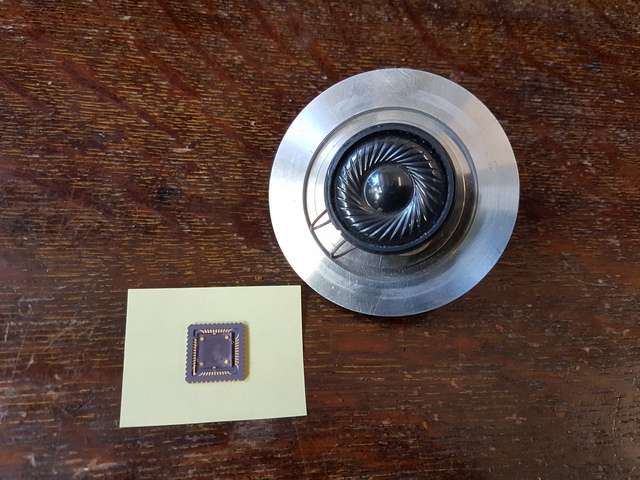
Good vibrations no longer needed for speakers as research encourages graphene to talk

A pioneering new technique that encourages the wonder material graphene to “talk” could revolutionise the global audio and telecommunications industries.

Researchers from the University of Exeter have devised a ground-breaking method to use graphene to generate complex and controllable sound signals. In essence, it combines speaker, amplifier and graphic equaliser into a chip the size of a thumbnail.

Traditional speakers mechanically vibrate to produce sound, with a moving coil or membrane pushing the air around it back and forth. It is a bulky technology that has hardly changed in more than a century.

This innovative new technique involves no moving parts. A layer of the atomically thin material graphene is rapidly heated and cooled by an alternating electric current, and transfer of this thermal variation to the air causes it to expand and contract, thereby generating sound waves.

Though the conversion of heat into sound is not new, the Exeter team are the first to show that this simple process allows sound frequencies to be mixed together, amplified and equalised – all within the same millimetre-sized device. With graphene being almost completely transparent, the ability to produce complex sounds without physical movement could open up a new golden generation of audio-visual technologies, including mobile phone screens that transmit both pictures and sound.

Source: Good vibrations no longer needed for speakers as research encourages graphene to talk

234 Android Applications Are Currently Using Ultrasonic Beacons to Track Users

uXDT is the practice of advertisers hiding ultrasounds in their ads. When the ad plays on a TV or radio, or some ad code runs on a mobile or computer, it emits ultrasounds that are picked up by the microphone of nearby laptops, desktops, tablets or smartphones.

SDKs embedded in apps installed on those devices relay the beacon back to the online advertiser, who then knows that the user of TV “x” is also the owner of smartphone “Y” and links their two previous advertising profiles together, creating a broader picture of the user’s interests, device portfolio, home, and even family members.
[…]
Their results revealed Shopkick ultrasonic beacons at 4 of 35 stores in two European cities. The situation isn’t that worrisome, as users have to open an app with the Shopkick SDK for the beacon to be picked up.

Source: 234 Android Applications Are Currently Using Ultrasonic Beacons to Track Users

The Burger King Hello Google ad is an example of this, except without advertiser feedback. Creepy.

China makes much fastest quantum computer

Researchers at the University of Science and Technology of China created a quantum device, called a boson sampling machine, that can now carry out calculations for five photons, but at a speed 24,000 times faster than previous experiments. Pan Jianwei, the lead scientist on the project, said that though their device was already (only) 10 to 11 times faster at carrying out the calculations than the first electronic digital computer, ENIAC, and the first transistor computer, TRADIC, in running the classical algorithm, their machine would eclipse all of the world’s supercomputers in a few years. “Our architecture is feasible to be scaled up to a larger number of photons and with a higher rate to race against increasingly advanced classical computers,” they said in the research paper published in Nature Photonics. This device is said to be the first quantum computer beating a real electronic classical computer in practice. Scientists estimate that the current faster supercomputers would struggle to estimate the behavior of 20 photons.