How the father of the World Wide Web is trying to decentralise it.

Facebook, Google, eBay, and others own vast swaths of Web activity and have unprecedented power over us, inspiring an effort to re-decentralize the Web.[…]
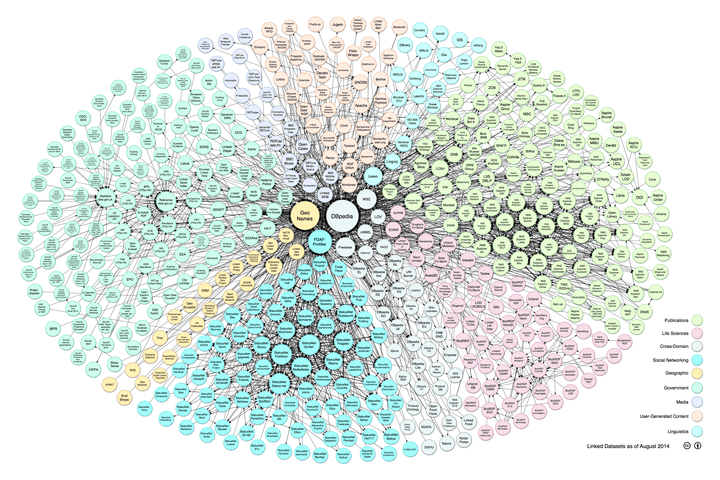
Berners-Lee’s new project, underway at his MIT lab, is called Solid (“social linked data”), a way for you to own your own data while making it available to the applications that you want to be able to use it.

With Solid, you store your data in “pods” (personal online data stores) that are hosted wherever you would like. But Solid isn’t just a storage system: It lets other applications ask for data. If Solid authenticates the apps and — importantly — if you’ve given permission for them to access that data, Solid delivers it.
[…]

[…]
The InterPlanetary File System (IPFS) takes a different approach. It starts from the conviction that even having web pages identified by a pointer to the server that stores them is too centralized. Why not instead go the way of BitTorrent and let multiple computers supply parts of a page all at the same time? That way, if a web server goes down, it won’t take all of the pages on it with it. IPFS should make the web more resilient, and less subject to censorship.
Source: How the father of the World Wide Web plans to reclaim it from Facebook and Google


MS Secureboot has a golden key – which has been hacked.

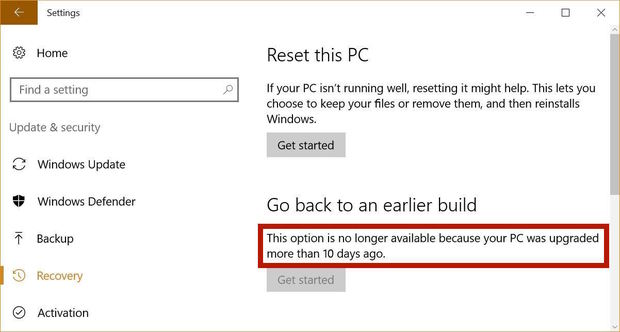
secureboot is a part of the uefi firmware, when enabled, it only lets stuff run that’s signed by a cert in db, and whose hash is not in dbx (revoked). As you probably also know, there are devices where secure boot can NOT be disabled by the user (Windows RT, HoloLens, Windows Phone, maybe Surface Hub, and maybe some IoTCore devices if such things actually exist — not talking about the boards themselves which are not locked down at all by default, but end devices sold that may have secureboot locked on). But in some cases, the “shape” of secure boot needs to change a bit. For example in development, engineering, refurbishment, running flightsigned stuff (as of win10) etc. How to do that, with devices where secure boot is locked on?

Source: Secure Golden Key Boot: (MS16-094 / CVE-2016-3287, and MS16-100 / CVE-2016-3320)

This kind of golden key is what the FBI is pushing for. Now the cat is out of the bag, we can’t put it back in, though.

Failed HUD Helmet Maker Skully Spent Funding On Strippers And Exotic Cars: Lawsuit

In 2014, San Francisco tech startup Skully raised hype and money to build a Tony Stark-style digitally augmented motorcycle helmet. Almost $2.5 million later, the company’s shutting down. Now a lawsuit from within the company gives us some hints as to why: founders allegedly blew the R&D money on lap dances and fast cars.

Source: Failed HUD Helmet Maker Skully Spent Funding On Strippers And Exotic Cars: Lawsuit

Thieves can wirelessly unlock up to 100 million Volkswagens (and other brands by VW), each at the press of a button

The hack can be used by thieves to wirelessly unlock as many as 100 million VW cars, each at the press of a button. Almost every vehicle the Volkswagen group has sold for the past 20 years – including cars badged under the Audi and Skoda brands – is potentially vulnerable, say the researchers. The problem stems from VW’s reliance on a “few, global master keys.”

Source: Thieves can wirelessly unlock up to 100 million Volkswagens, each at the press of a button

Thailand plans to track non-citizens with their mobile phones

the plan’s not in action yet but has been agreed in principle. It’s hoped the scheme will be up and running in about six months, by which time you’ll only be able to buy trackable SIMs when you visit.

The good news is that if your phone roams, you’ll be exempt. And with roaming plans now catering to travellers there’s a good chance you can bring your phone to Phuket without taking a bath on roaming charges.

Resident aliens will be moved to the trackable SIMs. Many such folk move to Thailand to invest or bring expertise to the nation and are unlikely to be happy that their every move is observed. One small upside is that the nation’s telecoms regulators aren’t entirely sure how to make the tracking work, with cell connection data and GPS both under consideration.

Source: Thailand plans to track non-citizens with their mobile phones

It turns out that anonymity decreases online posting agression!

This article introduces social norm theory to understand online aggression in a social-political online setting, challenging the popular assumption that online anonymity is one of the principle factors that promotes aggression. We underpin this social norm view by analyzing a major social media platform concerned with public affairs over a period of three years entailing 532,197 comments on 1,612 online petitions. Results show that in the context of online firestorms, non-anonymous individuals are more aggressive compared to anonymous individuals. This effect is reinforced if selective incentives are present and if aggressors are intrinsically motivated.

Source: Digital Social Norm Enforcement: Online Firestorms in Social Media

Dutch Olympians not allowed to drink? Are they reformed religious fanatics?


Yuri van Gelder, Dutch gymnast, went out for a few to celebrate making the final. Apparently he got carried away and had some alcohol (shock! horror!) and came home at some time in the morning. So the Dutch team have sent him home, without allowing him to participate in the final. His behaviour sounds slightly irresponsible for an athlete in the Olympic final, but then again, if he got there and he’s good enough to perform drinking alcohol that’s his business. It’s not like he was doing anything illegal. And I can understand the urge to celebrate as well. this performance by the Dutch Olympic Sports Bond sounds like a reformed church Christian religious fanatic throwback.

Source: Van Gelder misdraagt zich in Rio en moet naar huis – Olympische Spelen 2016 | NOS

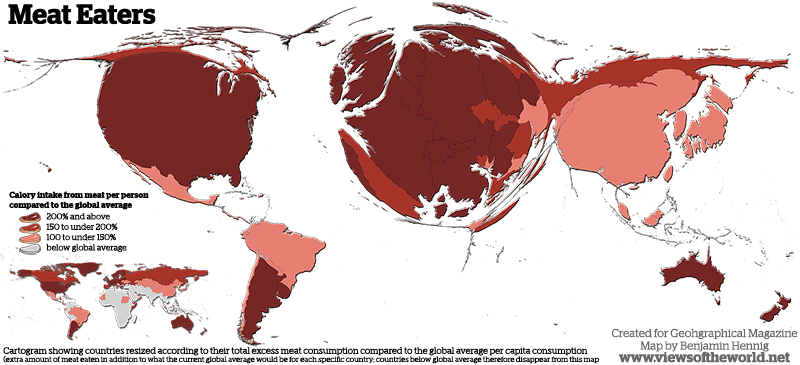
Meat Eaters mapped

When the world’s population passed seven billion people in 2011 we humans weighed, in total, 350 million tonnes. That weight is rising rapidly as our numbers are still growing and we are getting heavier. Back in 2011 each of us weighed, on average, just under eight stone. Around two billion of us were children then, and there were more people underweight than overweight worldwide. Since then, the number that are overweight has risen dramatically. The proportion of the population who are children has been falling, as fertility itself has fallen. Peak baby was in 1990, but the human population continues to rise because of ageing. Most of the growth in human population predicted in the next few decades will be as a result of that ageing.

The heaviest animals on the planet are the ones we farm for their meat. This includes some 1.4 billion cattle that weigh 520 million tonnes at any one time. After that there are the 1.1 billion sheep making up 65 million tonnes in total planetary sheep weight.

Then there are the 18.6 billion chickens weighing 40 million tonnes worldwide, being by far the most populous birds on the planet today. If we ignore fish in the oceans and insects, then the vast majority of animal life on Earth by weight is either us, or what we farm to eat. We have taken over the planet.→

Source: Meat Eaters – Views of the World

Edit 14/1/25: It has been pointed out to me that there were in fact 26.56 billion chickens on this earth in 2022. Source: How Many Chickens Are In The World – For All Those Who Are Lovin’ It! – WorldAnimalFoundation.org

Public Wi-Fi hotspots and you: Busting the many legal myths in the UK

Ars investigates legal advice for hotspot operators—most are ill-informed; the rest invented.
[…]
According to the experts we consulted, anyone attempting to follow the recommendations could in practice be creating data protection liabilities that they’re ill-equipped to discharge. Others may be put off altogether by dire warnings about legal risks that simply don’t exist.

Source: Public Wi-Fi hotspots and you: Busting the many legal myths

More than 30 states offer online voting, but experts warn it isn’t secure

“We believe that online voting, especially online voting in large scale, introduces great risk into the election system by threatening voters’ expectations of confidentiality, accountability and security of their votes and provides an avenue for malicious actors to manipulate the voting results,” Neil Jenkins, an official in the Office of Cybersecurity and Communications at the Department of Homeland Security, said at a conference of the Election Verification Network this spring.

Thirty-two states have some form of electronic transmission of ballots over the Internet, compared with no states with online voting in 2000. In Alaska, for example, all voters can submit an absentee elections ballot online from computers in their own homes.

Missouri offers electronic ballots for members of the military who are serving in a “hostile zone” overseas. North Dakota permits overseas citizens or military members deployed overseas to vote online. And in 20 other states and the District of Columbia, certain voters living abroad will be allowed to return their absentee ballots via email or fax in the upcoming presidential election.

Source: More than 30 states offer online voting, but experts warn it isn’t secure – The Washington Post

Well, it isn’t secure and it can’t be made to be. However, is showing up to vote that secure? Is handcounting that secure? In the US, Florida has consistently shown that the current process is corrupt and unreliable. How do the risks weigh up?

7(!) remote vulnerabilities (RCE, bof) in Nuuo NVR and NETGEAR Surveillance products

The web interface contains a number of critical vulnerabilities that can be abused by unauthenticated attackers. These consist of monitoring backdoors left in the PHP files that are supposed to be used by NUUO’s engineers, hardcoded credentials, poorly sanitised input and a buffer overflow which can be abused to achieve code execution on NUUO’s devices as root, and on NETGEAR as the admin user.

Source: Full Disclosure: Multiple remote vulnerabilities (RCE, bof) in Nuuo NVR and NETGEAR Surveillance

That’s a disaster! And the manufacturers are not responding!

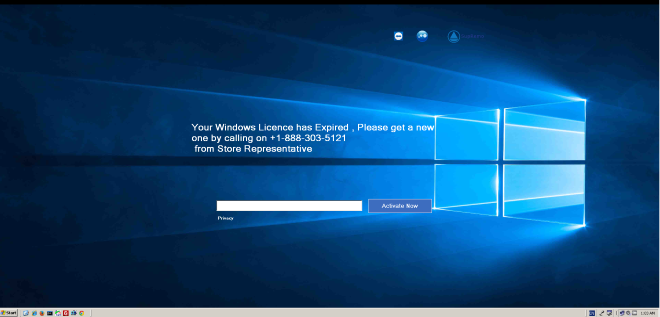
New ransomware mimics Microsoft activation window

A new ransomlock variant, which mainly affects the US, tricks users into calling a toll-free number to reactivate their Windows computer.
[…]
Victims of this threat can unlock their computer using the code: 8716098676542789

Source: New ransomware mimics Microsoft activation window | Symantec Connect Community

It also turns out that calling the support number on the screen no longer has people picking up.

White hat Hackers Make the First-Ever Ransomware for Smart Thermostats

The thermostat in question has a large LCD display, runs the operating system Linux, and has an SD card that allows users to load custom settings or wallpapers. The researchers found that the thermostat didn’t really check what kind of files it was running and executing. In theory, this would allow a malicious hacker to hide malware into an application or what looks like a picture and trick users to transfer it on the thermostat, making it run automatically.

Source: Hackers Make the First-Ever Ransomware for Smart Thermostats

UK copyright extension on designed objects is “direct assault” on 3D printing. Also, how much money was UK gov paid to extend it 70+ years?

A recent extension of UK copyright for industrially manufactured artistic works represents “a direct assault on the 3D printing revolution,” says Pirate Party founder Rick Falkvinge. The UK government last month extended copyright for designs from 25 years to the life of the designer plus 70 years. In practice, this is likely to mean a copyright term of over 100 years for furniture and other designed objects.
[…]
Falkvinge points out a crucial difference between the previous UK protection for designs, which was based on what are called “design rights” plus a short copyright term, and the situation now, which involves design rights and a much-longer copyright term. With design rights, “you’re absolutely and one hundred percent free to make copies of it for your own use with your own tools and materials,” Falkvinge writes. “When something is under copyright, you are not. Therefore, this move is a direct assault on the 3D printing revolution.”
[…]
“Moving furniture design from a [design right] to copyright law means that people can and will indeed be prosecuted for manufacturing their own furniture using their own tools,” Falkvinge claims.

Source: UK copyright extension on designed objects is “direct assault” on 3D printing

So aside from the (possibly) unintended consequences, who thought it would be a good idea to belly up before big business and extend copyright for such unearthly amounts of time? Why should copyright holders be able to stop working once they hold a successful copyright? Why should humanity have to kowtow to the whims of a copyright holder for years on end, when we could be advancing by building on existing designs?

Scientists discover light could exist in a previously unknown form

New research suggests that it is possible to create a new form of light by binding light to a single electron, combining the properties of both.
[…]
by using theoretical physics to model the behaviour of light and a recently-discovered class of materials known as topological insulators, Imperial researchers have found that it could interact with just one electron on the surface.

This would create a coupling that merges some of the properties of the light and the electron. Normally, light travels in a straight line, but when bound to the electron it would instead follow its path, tracing the surface of the material.
[…]
Their models showed that as well as the light taking the property of the electron and circulating the particle, the electron would also take on some of the properties of the light.

Normally, as electrons are travelling along materials, such as electrical circuits, they will stop when faced with a defect. However, Dr Giannini’s team discovered that even if there were imperfections in the surface of the nanoparticle, the electron would still be able to travel onwards with the aid of the light.

If this could be adapted into photonic circuits, they would be more robust and less vulnerable to disruption and physical imperfections

Source: Scientists discover light could exist in a previously unknown form

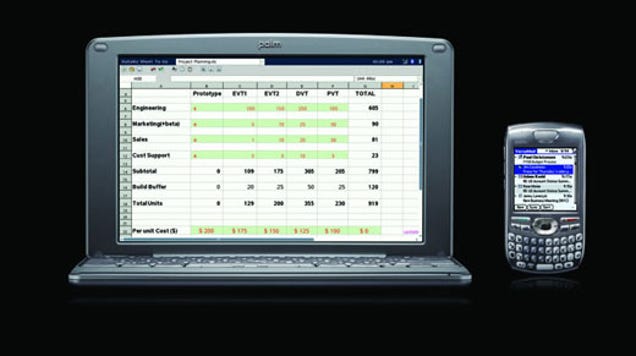
The Superbook: Turn your smartphone into a laptop for $99 by Andromium Inc.: The Palm Foleo resurrected!

The Kickstarter project allready has $1.5m of the $50k goal invested.

https://www.kickstarter.com/projects/andromium/the-superbook-turn-your-smartphone-into-a-laptop-f

At the time most people didn’t ‘get’ the Palm Foleo – this has always been a bit of a problem for Palm: they were always too far ahead of the curve, allowing companies like Apple to steal their brilliant ideas and polish them up a little (well, ok, a lot!).

Anyway, the Foleo
some info here

No more rats: New Zealand to exterminate all introduced predators

The New Zealand government has announced a “world-first” project to make the nation predator free by 2050.

The prime minister, John Key, said on Monday it would undertake a radical pest extermination programme – which if successful would be a global first – aiming to wipe out the introduced species of rats, stoats and possums nation-wide in a mere 34 years.

According to the government, introduced species kill 25m native New Zealand birds a year including the iconic ground-dwelling, flightless Kiwi, which die at a rate of 20 a week, and now number fewer than 70,000.

The government estimates the cost of introduced species to the New Zealand economy and primary sector to be NZ$3.3bn (£1.76bn) a year.

Source: No more rats: New Zealand to exterminate all introduced predators | World news | The Guardian

3D print biz Shapeways hacked, home and email addresses swiped

Shapeways. In a statement, it said that some email addresses, usernames, and shipping addresses were exposed, but that the hackers didn’t get a full run of their servers and no 3D printing plans were stolen.

“The intruders did not access credit card information because Shapeways does not store such information on their systems,” said a spokeswoman.

Source: 3D print biz Shapeways hacked, home and email addresses swiped

The passwords were hashed. So not much useful stuff got taken. They are recommending customers change their passwords anyway. Shapeways apparently takes security seriously. Not often you see that everything is being done properlyh.

‘Sister Clones’ Of Dolly The Sheep Are Alive And Kicking

The sheep are just four of 13 clones that Sinclair shepherds, but they’re the most famous because of their relation to Dolly, the sheep that made headlines two decades ago as the first successfully cloned mammal.

” ‘Sister clones’ probably best describes them,” Sinclair says. “They actually come from the exactly the same batch of cells that Dolly came from.”
[…]
Dolly’s life did not turn out as scientists in the cloning field hoped it would. She died young — 6 1/2 — with a nasty lung virus. “That was really just bad luck,” Sinclair says, and had “nothing to do” with the fact that Dolly was a clone.

But she also had osteoarthritis in her knees and rear hip at a surprisingly early age and the tips of her chromosomes were short — both signs that she’d aged more quickly than a normal sheep.

“That sort of threw fuel to the fire and strengthened concerns that clones might be aging prematurely,” says Sinclair. Because clones like Dolly were derived from the cell of an adult animal, the thinking went, her body might be set to an older clock from the start.
[…]
But, the good health of the 13 clones in the Nottingham herd suggest better prospects for the procedure. Sinclair and his colleagues evaluated the animals’ blood pressure, metabolism, heart function, muscles and joints, looking for signs of premature aging. They even fattened them up (since obesity is a risk factor for metabolic problems including diabetes) and gave them the standard tests to gauge how their bodies would handle glucose and insulin.

The results? Normal, normal, normal.

“There is nothing to suggest that these animals were anything other than perfectly normal,” says Sinclair. They had slight signs of arthritis (Debbie in particular), but not enough to cause problems. “If I put them in with a bunch of other sheep, you would never be able to identify them,” he says.

Source: ‘Sister Clones’ Of Dolly The Sheep Are Alive And Kicking

Hackers Steal $72 Million in Bitcoin From Hong Kong Exchange Bitfinex

Hong Kong bitcoin exchange Bitfinex reported yesterday that hackers had stolen 119,756 bitcoin, which is worth as much as $72 million dollars (with some reports going even higher). News of the hack sent bitcoin tumbling 23 percent, with its current value hovering around $556. Bitfinex confirmed that no other digital currency except bitcoin was targeted in the hack.

Source: Hackers Steal $72 Million in Bitcoin From Hong Kong Exchange

Your battery status is being used to track you online

A little-known web standard that lets site owners tell how much battery life a mobile device has left has been found to enable tracking online, a year after privacy researchers warned that it had the potential to do just that.

The battery status API was introduced in HTML5, the fifth version of the code used to lay out the majority of the web, and had already shipped in Firefox, Opera and Chrome by August 2015. It allows site owners to see the percentage of battery life left in a device, as well as the time it will take to discharge or the time it will take to charge, if connected to a power source.

Intended to allow site owners to serve low-power versions of sites and web apps to users with little battery capacity left, soon after it was introduced, privacy researchers pointed out that it could also be used to spy on users. The combination of battery life as a percentage and battery life in seconds provides offers 14m combinations, providing a pseudo-unique identifier for each device.
[…]
Now, two security researchers from Princeton University have shown that the battery status indicator really is being used in the wild to track users. By running a specially modified browser, Steve Engelhard and Arvind Narayanan found two tracking scripts that used the API to “fingerprint” a specific device, allowing them to continuously identify it across multiple contexts.

Source: Your battery status is being used to track you online | Technology | The Guardian

Report: Operating Systems Should Actively Block Pirated Downloads – TorrentFreak

While most of the media attention focused on the role of ISPs, there is an even more controversial proposal that has been largely overlooked. According to the report, pirated content should be banned on the operating system level.

“Other players that possess the potential ability to limit piracy are the companies that own the major operating systems which control computers and mobile devices such as Apple, Google and Microsoft,” one of the main conclusions reads.

“The producers of operating systems should be encouraged, or regulated, for example, to block downloads of copyright infringing material,” the report adds.

The report references last year’s Windows 10 controversy, noting that these concerns were great enough for some torrent sites to block users with the new operating system.

Source: Report: Operating Systems Should Actively Block Pirated Downloads – TorrentFreak

Really? Just like cassette and DVD players make decisions on what content to play? Oh wait they don’t. Is this a money making scam, forcing people to pay someone to certify their content or else the OS won’t download it? This is not a decision the OS should be making.

Simply not credible: The extraordinary verdict against ICANN – the body that hopes to run the internet

In an extraordinary judgment, the organization that hopes to take over running the top level of the internet later this year has been slammed by an independent review as at best incompetent and at worst deliberately mendacious.

The decision [PDF] by ICANN’s Independent Review Panel (IRP) over the organization’s decision to refuse “community” status for three applications covering business suffixes has exposed a level of double-dealing that many suspected occurred in the non-profit organization but has been difficult to prove.

Source: Simply not credible: The extraordinary verdict against the body that hopes to run the internet

This is an incredible story of lawyers who feel they are above the law, insider dealing and nepotism. What a mess at ICANN