PrintScreen: print touch screens on anything, including paper

PrintScreen is an enabling technology for digital fabrication of customized flexible displays using thin-film electroluminescence (TFEL). It enables inexpensive and rapid fabrication of highly customized displays in low volume, in a simple lab environment, print shop or even at home. We show how to print ultra-thin (120 um) segmented and passive matrix displays in greyscale or multi-color on a variety of deformable and rigid substrate materials

via PrintScreen: Digital Fabrication of Thin-Film Displays | Embodied Interaction.

Not on a Social Network? You’ve Still Got a Privacy Problem

They found that if Friendster had used certain state-of-the-art prediction algorithms, it could have divined sensitive information about non-members, including their sexual orientation. “At the time, it was possible for Friendster to predict the sexual orientation of people who did not have an account on Friendster,”
[….]
The problem Garcia identifies lies in something called “shadow profiles,” and as a consequence, we all could be intimately profiled by the Facebooks and Googles and LinkedIns of the world—whether we agree to it or not.

Garcia says this kind of statistical analysis—essentially using machine learning to study the known tastes and relationships of one person’s contacts, and making a guess about who they are likely to be—could be used to build disturbingly detailed profiles of people who do not even use the social network
[…]
We learned about shadow profiles last year when security researchers at a company called Packetstorm discovered Facebook was maintaining its own files on users’ contacts. For example, if Facebook found two users were connected to a non-member—say, bob@wired.com—it would pool other information—different phone numbers, for example—into one master dossier.

via Not on a Social Network? You've Still Got a Privacy Problem | WIRED.

Adobe spies on readers: EVERY page you turn, EVERY book you own leaked back to base

Adobe’s Digital Editions 4 ebook reader software is collecting detailed information about the reading habits of its users – and sending it back to the company in a format that’s easy for others to slurp.

An investigation by Nate Hoffelder of The Digital Reader blog showed that ADE 4 was collecting telemetry on which pages of ebooks were being read, and in which order. This included the title, publisher, and other metadata, which was then sent to the company’s mothership – a server called adelogs, no less – in plain text over the internet.

via Adobe spies on readers: EVERY page you turn, EVERY book you own leaked back to base • The Register.

So… In the last year, Adobe has lost account details to some 50 million users, has lost its’ source codes to hackers and still doesn’t understand the need for security and privacy?!

Using the Windows 10 Technical Preview? Microsoft might be watching your every move to “help with feedback”

Microsoft collects information about you, your devices, applications and networks, and your use of those devices, applications and networks. Examples of data we collect include your name, email address, preferences and interests; browsing, search and file history; phone call and SMS data; device configuration and sensor data; and application usage.

This isn’t the only thing Microsoft is collecting from Insider Program participants. According to the Privacy Policy, the company is collecting things like text inputted into the operating system, the details of any/all files on your system, voice input and program information.

via Using the Windows 10 Technical Preview? Microsoft might be watching your every move to help with feedback.

UK Conservatives want to get rid of pesky EU Human Rights

Conservative policy towards the Human Rights Act has serious consequences for privacy and freedom of expressionAccording to most of the broadsheets, if there is a Conservative Government after the next General Election, the European Court of Human Rights will no longer be able to overrule British courts.

via Conservative policy towards the Human Rights Act has serious consequences for privacy and freedom of expression – Hawktalk.

This way they can do things like keep DNA of innocent people on file forever, force journalists into revealing their laws, invade your privacy at will.

Another step towards totalitarianism.

fernapp – libreoffice in the browser

Are you looking for an easy way to access Linux desktop applications LibreOffice, Evolution etc remotely?fernapp makes it possible to run a GUI application on a Linux server and access it from anywhere via web browser!It’s not an ordinary remote desktop. It focuses on the application windows and integrates them nicely.

via fernapp.

In the age of BYOD this open source proggie is very useful.

Of course, Beginning with Version 3.5 LibreOffice can be launched as a web server. This allows using LibreOffice online within a web browser.

‘Cloaking’ device uses ordinary lenses to hide objects across range of angles

To build your own device

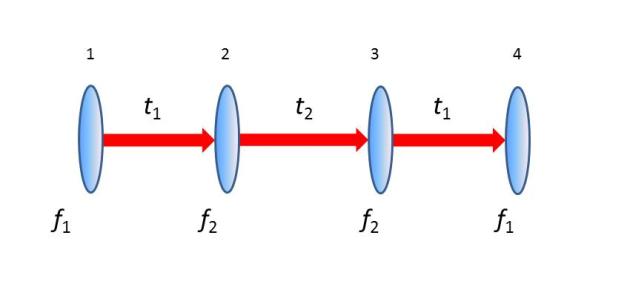
Purchase 2 sets of 2 lenses with different focal lengths f1 and f2 (4 lenses total, 2 with f1 focal length, and 2 with f2 focal length)
Separate the first 2 lenses by the sum of their focal lengths (So f1 lens is the first lens, f2 is the 2nd lens, and they are separated by t1= f1+ f2).
Do the same in Step 2 for the other two lenses.
Separate the two sets by t2=2 f2 (f1+ f2) / (f1— f2) apart, so that the two f2 lenses are t2 apart.

‘Cloaking’ device uses ordinary lenses to hide objects across range of angles : NewsCenter.

Tiny Humanoid Robot Learning to Fly Real Airplanes

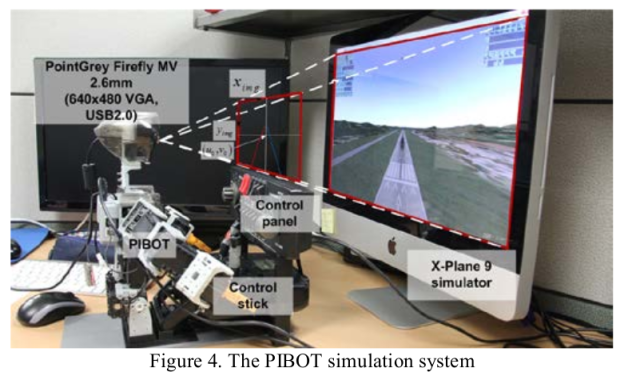
The little robot in the picture above is a PIBOT, a small, very low-cost humanoid (actually a Bioloid Premium from Robotis). It’s been slightly modified to be able to work the controls of a scaled-down, simulated aircraft cockpit, as in the pic above. PIBOT is able to identify and use all of the buttons and switches and stuff that you’d find in the cockpit of a normal light aircraft designed for humans

via Tiny Humanoid Robot Learning to Fly Real Airplanes – IEEE Spectrum.

Gauntlet 2014 released!

Four Heroes Search the Deadly Gauntlet For Untold Riches

WILL THEY MAKE IT OUT ALIVE?

For ages, fool-hardy adventurers have been lured by promises of countless treasures in the depths of the Gauntlet, yet none have ever made it out alive. The corrupt wizard Morak conjures minions and devious traps against would-be champions and taunts them all along the way. But a new group of heroes looks to succeed where all others have failed.

via Gauntlet | Invade the Darkness this September on PC!.

Hope it’s as much fun as the original!

Terror laws clear Senate, enabling entire Australian web to be monitored and whistleblowers to be jailed

Australian spies will soon have the power to monitor the entire Australian internet with just one warrant, and journalists and whistleblowers will face up to 10 years’ jail for disclosing classified information.

via Terror laws clear Senate, enabling entire Australian web to be monitored and whistleblowers to be jailed.

Bash broken – ShellShock

GNU Bash through 4.3 processes trailing strings after function definitions in the values of environment variables, which allows remote attackers to execute arbitrary code via a crafted environment, as demonstrated by vectors involving the ForceCommand feature in OpenSSH sshd, the mod_cgi and mod_cgid modules in the Apache HTTP Server, scripts executed by unspecified DHCP clients, and other situations in which setting the environment occurs across a privilege boundary from Bash execution, aka "ShellShock." NOTE: the original fix for this issue was incorrect; CVE-2014-7169 has been assigned to cover the vulnerability that is still present after the incorrect fix

via NVD – Detail.

Antidepressants rapidly alter brain architecture

A single dose of a popular class of psychiatric drug used to treat depression can alter the brain’s architecture within hours, even though most patients usually don’t report improvement for weeks, a new study suggests.

More than 1 in 10 adults in the U.S. use these drugs, which adjust the availability of a chemical transmitter in the brain, serotonin, by blocking the way it is reabsorbed. The so-called Selective Serotonin Reuptake Inhibitors, or SSRIs, include Prozac, Lexapro, Celexa, Paxil and Zoloft.

via Antidepressants rapidly alter brain architecture, study finds – LA Times.