
Another AI attack, this time against ‘black box’ machine learning

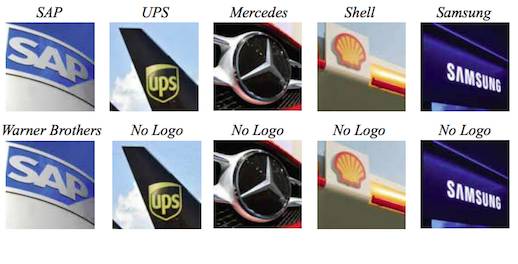
Unlike adversarial models that attack AIs “from the inside”, attacks developed for black boxes could be used against closed system like autonomous cars, security (facial recognition, for example), or speech recognition (Alexa or Cortana).The tool, called Foolbox, is currently under review for presentation at next year’s International Conference on Learning Representations (kicking off at the end of April).Wieland Brendel, Jonas Rauber and Matthias Bethge of the Eberhard Karls University Tubingen, Germany explained at arXiv that Foolbox is a “decision-based” attack called a boundary attack which “starts from a large adversarial perturbation and then seeks to reduce the perturbation while staying adversarial”.

“Its basic operating principle – starting from a large perturbation and successively reducing it – inverts the logic of essentially all previous adversarial attacks. Besides being surprisingly simple, the boundary attack is also extremely flexible”, they wrote.

For example, “transfer-based attacks” have to be tested against the same training data as the models they’re attacking, and need “cumbersome substitute models”.

Gradient-based attacks, the paper claimed, also need detailed knowledge about the target model, while score-based attacks need access to the target model’s confidence scores.

The boundary attack, the paper said, only needs to see the final decision of a machine learning model – the class label it applies to an input, for example, or in a speech recognition model, the transcribed sentence.
Source: Another AI attack, this time against ‘black box’ machine learning • The Register
Older Adults’ Forgetfulness Tied To non syncing Brain Rhythms In Sleep

During deep sleep, older people have less coordination between two brain waves that are important to saving new memories, a team reports in the journal Neuron.

To find out, Walker and a team of scientists had 20 young adults learn 120 pairs of words. “Then we put electrodes on their head and we had them sleep,” he says.

The electrodes let researchers monitor the electrical waves produced by the brain during deep sleep. They focused on the interaction between slow waves, which occur every second or so, and faster waves called sleep spindles, which occur more than 12 times a second.

The next morning the volunteers took a test to see how many word pairs they could still remember. And it turned out their performance was determined by how well their slow waves and spindles had synchronized during deep sleep.

Next, the team repeated the experiment with 32 people in their 60s and 70s. Their brain waves were less synchronized during deep sleep. They also remembered fewer word pairs the next morning.

And, just like with young people, performance on the memory test was determined by how well their brain waves kept the beat, says Randolph Helfrich, an author of the new study and a postdoctoral fellow at UC Berkeley.

The team also found a likely reason for the lack of coordination associated with aging: atrophy of an area of the brain involved in producing deep sleep. People with more atrophy had less rhythm in the brain, Walker says.

But the study also suggests that it’s possible to improve an impaired memory by re-synchronizing brain rhythms during sleep.

One way to do this would be by applying electrical or magnetic pulses through the scalp. “The idea is to boost those brain waves and bring them back together,” Helfrich says.

Walker already has plans to test this approach to synchronizing brain waves.

Source: Older Adults’ Forgetfulness Tied To Faulty Brain Rhythms In Sleep : Shots – Health News : NPR

Seagate’s lightbulb moment: Make read-write heads operate independently

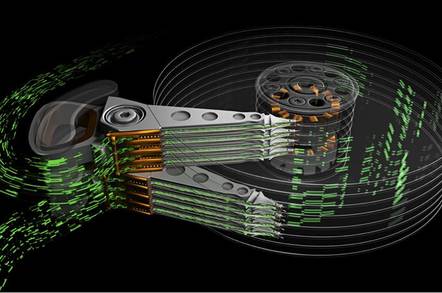
Seagate is increasing IO performance in disk drives by separating read-write heads into two separate sets which can operate independently and in parallel.The heads are positioned at one end of actuator arms which rotate around a post at their other end to move the heads across the platter surfaces. Thus, with an eight-platter drive, each read-write head is positioned above the same cylindrical track on each platter and reads or writes to and from the same disk blocks on each platter’s surface.Seagate’s Multi Actuator technology divides these eight heads into two sets of four, and they can move independently of each other. An animated graphic here shows them in operation.

Source: Seagate’s lightbulb moment: Make read-write heads operate independently • The Register

KLM uses AI to answer questions on social media

olgens KLM worden wekelijks 30.000 gesprekken gevoerd door de 250 socialmediamedewerkers. De luchtvaartmaatschappij wordt wekelijks ruim 130.000 keer genoemd op social media. Gemiddeld bestaat een gesprek tussen KLM en een klant uit vijf tot zes vragen en antwoorden. De veelgestelde vragen die met behulp van kunstmatige intelligentie automatisch kunnen worden beantwoord, worden meestal aan het begin van het gesprek gesteld.

Source: KLM laat kunstmatige intelligentie direct vragen beantwoorden op social – Emerce