European Union passes landmark laws to rein in big tech, but worres about enforcement

[…]

the European Union has passed a pair of landmark bills designed to rein in Big Tech’s power. The Digital Markets Act and Digital Services Act are intended to promote fairer competition, improve privacy protection, as well as banning both the use of some of the more egregious forms of targeted advertising and misleading practices.

The Digital Services Act, for instance, focuses on online platforms like Facebook, Amazon and Google. They will be tasked with being more proactive both with content moderation and also to prevent the sale of illegal or unsafe goods being sold on their platforms. Users will also be able to learn how and why an algorithm recommended them a certain piece of content, and to challenge any moderation decision that was made algorithmically. Finally, companies will no longer be able to use sensitive personal data for ad-targeting, sell ads to children, or use dark patterns — deceptive page design that can manipulate you into saying yes to something even when you’d much rather say no, such as joining a service or preventing you from leaving one you no longer wish to use.

These obligations operate on a sliding scale, and so the largest platforms will have the greatest obligations placed upon them. Platforms with 45 million or more monthly users will be subject to independent auditing to ensure they are preventing fake news and illegal content. Those platforms will also have to open up their algorithms and data to (approved) researchers to enable them to study the effects, and potential harm, the systems can cause.

The Digital Markets Act, meanwhile, is more focused on preventing dominant platform holders, like Google, Microsoft and Apple, from abusing their scale. This includes offering better interoperability with smaller, rival services, ensuring files can be sent between systems. There is also a large carve-out for app storefronts, with developers now entitled to contact their customers about deals without going via the platform holder in question. And platform holders will no longer be able to give their systems favorable treatment, such as when Google promoted its own shopping service over that of rivals.

The EU has given both bills plenty of teeth, and can dole out a maximum penalty of 10 percent of its total worldwide turnover from the previous year, should regulators find non-compliance. This figure will, however, jump to 20 percent of worldwide turnover if officials find “repeated non-compliance.” That’s a hefty figure big enough that not even Apple would be able to stomach losing on a regular basis. Although, as with GDPR regulation, the EU still has questions to answer about how much effort, time and money it’s prepared to put behind a body to monitor big tech.

Now that they have been passed, the Digital Services Act will come into force by 1st January 2024 (unless some procedural stuff delays it) while the Digital Markets Act will come into force at some point soon after, and major platforms — dubbed “Gatekeepers” will have a further six months to get their houses in order before the new rules apply to them.

Source: European Union passes landmark laws to rein in big tech | Engadget

The European Commission has set up a taskforce, with about 80 officials expected to join up, which critics say is inadequate. Last month it put out a 12 million euro ($12.3 million) tender for experts to help in investigations and compliance enforcement over a four-year period.

EU industry chief Thierry Breton sought to address enforcement concerns, saying various teams would focus on different issues such as risk assessments, interoperability of messenger services and data access during implementation of the rules.

Regulators will also set up a European Centre for Algorithmic Transparency to attract data science and algorithm scientists to help with enforcement.

“We have started to gear the internal organisation to this new role, including by shifting existing resources, and we also expect to ramp up recruitment next year and in 2024 to staff the dedicated DG CONNECT team with over 100 full time staff,” Breton said in a blogpost.

[…]

“We raised the alarm last week with other civil society groups that if the Commission does not hire the experts it needs to monitor Big Tech’s practices in the market, the legislation could be hamstrung by ineffective enforcement,” BEUC Deputy Director General Ursula Pachl said in a statement.

The DMA is set to force changes in companies’ businesses, requiring them to make their messaging services interoperable and provide business users access to their data.

Business users would be able to promote competing products and services on a platform and reach deals with customers off the platforms.

Companies will not be allow to favour their own services over rivals’ or prevent users from removing pre-installed software or apps, two rules that will hit Google and Apple hard.

The DSA bans targeted advertising aimed at children or based on sensitive data such as religion, gender, race and political opinions. Dark patterns, which are tactics that mislead people into giving personal data to companies online, will also be prohibited

Source: EU lawmakers pass landmark tech rules, but enforcement a worry

Scaling the cost of government programs using a cost-per-person price tag improves comprehension by the general public

Government policies often are presented with hefty price tags, but people often zone out as more zeros are added to the total cost. A new study from Carnegie Mellon University suggests that rescaling the cost of programs can increase a person’s understanding of funding choices, which may improve how people participate in the policy debate. The results are available in the July issue of the journal Proceedings of the National Academy of Sciences.

[…]

In the first study, 392 participants evaluated four statements about possible U.S. COVID-19 relief packages. The participants evaluated content presented on a total price-per-program ($100 billion versus $2 trillion) or as price-per-person ($1,200 versus $24,000). Both pairs of statements were scaled to a 20:1 ratio. The researchers found the participants had an easier time differentiating between high and low cost when it was presented with the price-per-person option.

“With a simple manipulation rescaling big numbers into smaller numbers, people can understand this information better,”

[…]

In the second study, 401 participants ranked eight programs that had previously been presented with a price-per-program or price-per-person cost. The results confirm the team’s hypothesis that participants were more successful at comprehending the price-per-person cost. To follow on this study, the team presented 399 participants with similar information but scaled the total expenditures using an unfamiliar unit. They found the price-per-person cost offered greater comprehension. These results suggest that by simply rescaling large numbers and transforming them into smaller ones people can digest information more effectively.

“Surprisingly, we rescaled the information using an arbitrary unit [other than a per capita], and we still see the same effect,” said Boyce-Jacino. “People are better at discriminating among smaller numbers.”

Finally, the team presented 399 participants with eight program pairs. Four of the pairs had the same characteristics except for cost. The other four had variations in program characteristics to evaluate beyond price. For all eight scenarios, the program price tag was presented as either price-per-program or price-per-person. The researchers found the participants were more likely to select the least expensive program when cost was presented using the price-per-person format.

Most surprising to the research team was how the scaled. Unlike past research that assumed a log scale in the scaling of large numbers, they found that people were more sensitive to small numbers than to large ones even when the ratio was held constant at 20 to 1.

“The ratio suggests numerical representation is more curved than a log function,” said Chapman. “It contrasts with previous theoretical perspective, but it remains in the same ballpark.”

[…]

“People are bad at processing and understanding big numbers,” said Chapman. “If your goal is to help people be good citizens and savvy evaluators of how tax dollars are spent, scale numbers that place them in range that people can appreciate.”


Explore further

Brains are bad at big numbers, making it impossible to grasp what a million COVID-19 deaths really means


More information: Large numbers cause magnitude neglect: The case of government expenditures, Proceedings of the National Academy of Sciences (2022). doi.org/10.1073/pnas.2203037119

Source: Scaling the cost of government programs using a cost-per-person price tag improves comprehension by the general public

DeGiro online broker fined EUR 2 million for failing to report unusual transactions

On 23 December 2021, the Netherlands Authority for the Financial Markets (AFM) appears to have imposed an administrative fine of 2 million euros on the DeGiro of the German company flatexDEGIRO Bank AG (FlatexDeGiro) because the online broker reported unusual transactions too late and incorrectly to Financial Intelligence. Unit – Netherlands (FIU).

DeGiro did this late in 27 cases and an incorrect transaction date was reported in ten cases. Unusual transactions may indicate money laundering by investors.

Investment firms, such as DeGiro, are required to report unusual transactions to the FIU. DeGiro made a total of 36 reports from mid-2019 to mid-2020. The majority of those reports came in too late, sometimes a few months after the legal deadline.

The transaction date was also incorrect for almost one in three. In doing so, DeGiro violated the Money Laundering and Terrorist Financing Prevention Act (Wwft). Because DeGiro was absorbed into FlatexDeGiro through a legal merger in May 2021, the fine is imposed on that company.

Source: Fikse boete voor onlinebroker DeGiro – Emerce (original in Dutch)

Coinbase Is Selling Data on Crypto and ‘Geotracking’ to ICE

Coinbase Tracer, the analytics arm of the cryptocurrency exchange Coinbase, has signed a contract with U.S. Immigrations and Customs Enforcement that would allow the agency access to a variety of features and data caches, including “historical geo tracking data.”

Coinbase Tracer, according to the website, is for governments, crypto businesses, and financial institutions. It allows these clients the ability to trace transactions within the blockchain. It is also used to “investigate illicit activities including money laundering and terrorist financing” and “screen risky crypto transactions to ensure regulatory compliance.”

The deal was originally signed September 2021, but the contract was only now obtained by watchdog group Tech Inquiry. The deal was made for a maximum amount of $1.37 million, and we knew at the time that this was a three year contract for Coinbase’s analytic software. The now revealed contract allows us to look more into what this deal entails.

This deal will allow ICE to track transactions made through twelve different currencies, including Ethereum, Tether, and Bitcoin. Other features include “Transaction demixing and shielded transaction analysis,” which appears to be aimed at preventing users from laundering funds or hiding transactions. Another feature is the ability to “Multi-hop link analysis for incoming and outgoing funds” which would give ICE insight into the transfer of the currencies. The most mysterious one is access to “historical geo tracking data,” and ICE gave a little insight into how this tool may be used.

[…]

Source: Coinbase Is Selling Data on Crypto and ‘Geotracking’ to ICE

‘Cryptoqueen’ On FBI’s Most Wanted List – on the run with $2.5 billion ponzi-ing suckers

FBI officials and federal prosecutors announced Ignatova’s new designation in a press conference Thursday. Ignatova was charged in 2019 with wire fraud, securities fraud, and conspiracy to commit money laundering for her part in the OneCoin crypto company that prosecutors alleged was just a ponzi scheme.

Michael Driscoll, the FBI’s assistant director-in-charge for New York declined to answer Reuters’ questions whether they had any leads, but said Ignatova “left with a tremendous amount of cash,” adding, “money can buy a lot of friends.”

Ignatova was part of a Bulgaria-based crypto company called OneCoin. The company claimed they were performing a regular crypto mining operation—generating new tokens added to a blockchain—and pumped out $3.78 billion in revenue from the end of 2014 to the middle of 2016. But despite the upward momentum, investigators from the U.S. Department of Justice reported that OneCoin’s value was rigged internally, that the coins were essentially worthless, and users could not even trace ownership of the coins. The DOJ alleged those at the head of the company made nearly $2.5 billion in profit that they squirreled away in company bank accounts.

Damian Williams, the U.S. attorney for the Southern District of New York, told reporters Ignatova capitalized “on the frenzied speculation of the early days of cryptocurrency.”

In an FBI-provided video of Ignatova speaking at a London company event dated June, 2016, Ignatova boasted about her two million active users, adding “no other cryptocurrency has as many users as we do,”

Bloomberg reported that after Ignatova grew suspicious that the feds were onto her, she fled to Greece and then investigators lost track of her.

In 2019, the U.S. unsealed an indictment against Ignatova, charging her with the previously mentioned litany of financial crimes. That same year, Konstantin Ignatova, one of OneCoin’s founders and Ruja’s brother, was charged with conspiracy to commit wire fraud. Konstantin managed to get a plea deal, and though his sentencing was set for May 13, his attorneys adjourned the date for 90 days so he could further cooperate with authorities.

The Cryptoqueen has evaded police custody and remains at large to this day. So, the FBI says it’ll pay up to a $100,000 reward for any info that leads to an arrest.

[…]

Source: ‘Cryptoqueen’ Lands a Spot On the FBI’s Most Wanted List

No anti money laundering Checks For Most Transfers To Unhosted Crypto Wallets, EU Policymakers Decide

The European Union (EU) finally agreed on landmark anti-money laundering rules for crypto transactions Wednesday, despite industry concerns over the law harming privacy and innovation.

The final proposals will mean customer identity needs to be verified for even the smallest crypto transfers, if it’s between two regulated digital wallet providers – but payments to unhosted private wallets will largely be left out of laundering checks.

[…]

EU lawmaker Ondřej Kovařík confirmed the provisional deal in a tweet, saying that it “strikes the right balance in mitigating risks for fighting money laundering in the crypto sector without preventing innovation and overburdening businesses.”

[…]

Kovařík said those unhosted wallet rules would only apply when transfers were made to a person’s own private wallet, and only when the value was over 1,000 euros ($1,052). A further source briefed on talks has confirmed those details.

Ernest Urtasun, a member of the European Greens party, who jointly led parliament’s negotiations on the law, tweeted that the rules were “putting an end to the wild west of unregulated crypto, closing major loopholes in the European anti-money laundering rules.”

Urtasun confirmed that the final deal would mean that, for transactions between regulated wallets, customer identity details have to be recorded for even the smallest transaction. That makes crypto rules unlike those for the conventional banking sector, which only catch those worth over 1,000 euros.

Lawmakers and governments overturned European Commission plans to exempt small transactions, arguing that price volatility and the ability to break up payments into smaller chunks would make it unworkable for crypto.

[…]

Source: No AML Checks For Most Transfers To Unhosted Crypto Wallets, EU Policymakers Decide

Apple’s insider trading prevention guy pleads guilty to … insider trading

One of Apple’s most senior legal executives, whom the iGiant trusted to prevent insider trading, has admitted to insider trading.

Gene Levoff pleaded guilty to six counts of security fraud stemming from a February 2019 complaint, according to a Thursday announcement from the US Department of Justice on Thursday.

Levoff used non-public information about Apple’s financial results to inform his trades on Apple stock, earning himself $227,000 and avoiding $377,000 of losses. He was able to access the information as he served as co-chairman of Apple’s Disclosure Committee, which reviewed the company’s quarterly draft, annual report and Securities and Exchange Commission (SEC) filings.

Levoff’s biggest trade was the sale of $10 million of his own Apple stock in July 2015 – a deal that almost depleted his entire holding and came just before Apple announced worse results than the market anticipated. According to the SEC, this saved him $345,000 in losses.

[…]

he did try (and fail) to have the case overthrown last year, by arguing there was no specific criminal law barring insider training.

Levoff’s sentencing is scheduled for November. He faces up to 20 years in prison per count and a $5 million fine.

Source: Apple’s insider trading prevention guy pleads guilty to that • The Register

Google to pay $90m to settle Play Store lawsuit

Google is to pay $90 million to settle a class-action lawsuit with US developers over alleged anti-competitive behavior regarding the Google Play Store.

Eligible for a share in the $90 million fund are US developers who earned two million dollars or less in annual revenue through Google Play between 2016 and 2021. “A vast majority of US developers who earned revenue through Google Play will be eligible to receive money from this fund,” said Google.

Law firm Hagens Berman announced the settlement this morning, having been one of the first to file a class case. The legal firm was one of four that secured a $100 million settlement from Apple in 2021 for US iOS developers.

The accusations that will be settled are depressing familiar – attorneys had alleged that Google excluded competing app stores from its platform and that the search giant charged app developers eye-watering fees.

Google said it “and a group of US developers have reached a proposed settlement that allows both parties to move forward and avoids years of uncertain and distracting litigation.”

If the court gives the go-ahead, developers that qualify will be notified.

As well as the settlement [PDF], Google has promised changes to Android 12 to make it easier for other app stores to be used on devices and to revise its Developer Distribution Agreement to clarify that developers can use contact information obtained in-app to direct users to offers on a rival app store or the developer’s own site.

The lawsuit goes back to 2020, when Hagens Berman and Sperling & Slater filed in the US District Court for the Northern District of California. Back then, much was made of a default 30 percent commission levied by Google on Play Store app purchases and in-app transactions. Google currently has a tiered model, implemented in 2021, where the first $1 million in annual revenue was subject to a reduced 15 per cent, but it appears this has been insufficient to keep the lawyers at bay.

Source: Google to pay $90m to settle Play Store lawsuit • The Register

Too Little, Too Late, WTO Finally Eases Patent Rights On COVID Vaccines

In what definitely feels like a case of way too little, way too late, the WTO last week finally decided to grant the TRIPS waiver on COVID vaccines, allowing others to make more of the vaccine without violating patent rights. The WTO has long had this ability to issue a patent waiver as part of its Trade-Related Aspects of Intellectual Property Rights (TRIPS) agreement. The idea is that in an emergency, when patents or copyrights are getting in the way of real harm, the WTO can say “hey, let’s grant a waiver to save people.”

You would think that a global pandemic where people are dying would be an obvious time to use such a waiver grant, but that’s because you’re not an obnoxious IP maximalist who cares more about their precious monopoly rents than the health and safety of the global populace. The big pharma and medical device companies freaked out about the possibility of a waiver, and even worse, Hollywood also flipped out about it, with their typical worry that any proof that removing an intellectual monopoly might be good for the world cannot be allowed.

It took forever, but in May of last year (already a year and a half into the pandemic), the US agreed to support the TRIPS waiver. This caused much gnashing of teeth among the maximalists, and then it still took over a year before this agreement was reached, and of course, now it’s both greatly watered down, and very much too late to make much of a difference. But kudos Hollywood and pharma lobbyists. You let thousands of people die, but you sure protected your IP. Good work!

But experts said the proposal was weakened significantly over months of negotiations. They said they did not expect the final agreement to encourage manufacturers in developing countries to start producing Covid vaccines, in part because it does not address the trade secrets and manufacturing know-how that many producers would need.

Even worse, the agreement is limited just to vaccines, and does not apply to either testing or therapeutics

[…]

Source: Too Little, Too Late, WTO Finally Eases Patent Rights On COVID Vaccines | Techdirt

Popular blockchains can be centralised fairly easily | Trail of Bits study funded by DARPA

[…]Over the past year, Trail of Bits was engaged by the Defense Advanced Research Projects Agency (DARPA) to examine the fundamental properties of blockchains and the cybersecurity risks associated with them. DARPA wanted to understand those security assumptions and determine to what degree blockchains are actually decentralized.

[…]

The report also contains links to the substantial supporting and analytical materials. Our findings are reproducible, and our research is open-source and freely distributable. So you can dig in for yourself.

Key findings

  • Blockchain immutability can be broken not by exploiting cryptographic vulnerabilities, but instead by subverting the properties of a blockchain’s implementations, networking, and consensus protocols. We show that a subset of participants can garner undue, centralized control over the entire system:
    • While the encryption used within cryptocurrencies is for all intents and purposes secure, it does not guarantee security, as touted by proponents.
    • Bitcoin traffic is unencrypted; any third party on the network route between nodes (e.g., internet service providers, Wi-Fi access point operators, or governments) can observe and choose to drop any messages they wish.
    • Tor is now the largest network provider in Bitcoin; just about 55% of Bitcoin nodes were addressable only via Tor (as of March 2022). A malicious Tor exit node can modify or drop traffic.
  • More than one in five Bitcoin nodes are running an old version of the Bitcoin core client that is known to be vulnerable.
  • The number of entities sufficient to disrupt a blockchain is relatively low: four for Bitcoin, two for Ethereum, and less than a dozen for most proof-of-stake networks.
  • When nodes have an out-of-date or incorrect view of the network, this lowers the percentage of the hashrate necessary to execute a standard 51% attack. During the first half of 2021, the actual cost of a 51% attack on Bitcoin was closer to 49% of the hashrate—and this can be lowered substantially through network delays.
  • For a blockchain to be optimally distributed, there must be a so-called Sybil cost. There is currently no known way to implement Sybil costs in a permissionless blockchain like Bitcoin or Ethereum without employing a centralized trusted third party (TTP). Until a mechanism for enforcing Sybil costs without a TTP is discovered, it will be almost impossible for permissionless blockchains to achieve satisfactory decentralization.

Novel research within the report

  • Analysis of the Bitcoin consensus network and network topology
  • Updated analysis of the effect of software delays on the hashrate required to exploit blockchains (we did not devise the theory, but we applied it to the latest data)
  • Calculation of the Nakamoto coefficient for proof-of-stake blockchains (once again, the theory was already known, but we applied it to the latest data)
  • Analysis of software centrality
  • Analysis of Ethereum smart contract similarity
  • Analysis of mining pool protocols, software, and authentication
  • Combining the survey of sources (both academic and anecdotal) that support our thesis that there is a lack of decentralization in blockchains

The research to which this blog post refers was conducted by Trail of Bits based upon work supported by DARPA under Contract No. HR001120C0084 (Distribution Statement A, Approved for Public Release: Distribution Unlimited). Any opinions, findings and conclusions or recommendations expressed in this material are those of the author(s) and do not necessarily reflect the views of the United States Government or DARPA

[…]

Source: Are blockchains decentralized? | Trail of Bits Blog

Hashed Takes $3.5B Hit, Delphi Digital Discloses Loss After Terra’s LUNA Collapse

The collapse of the tokens linked to the Terra ecosystem, stablecoin terraUSD (UST) and Luna (LUNA), has led to some major investors coming clean and detailing their losses. Two more backers of Terra are disclosing exactly how their balance sheets have been affected.

Delphi Digital, a research firm and boutique investor, said in a blog post that it always had concerns about the structure of UST and LUNA, but believed that the sizable reserves in the Luna Foundation Guard, a nonprofit that supports the Terra network, would prevent the unthinkable from happening.

[…]

The firm wrote that in the first quarter of 2021, Delphi Ventures Master Fund purchased a small amount of LUNA, worth 0.5% of its net asset value (NAV) at the time. That position grew as LUNA’s value increased and the fund increased its holdings, including a $10 million investment in the LFG’s funding round in February. That investment is now worthless.

While Delphi said that it didn’t sell any LUNA, it’s now sitting on “a large unrealized loss.”

[…]

One of Terra’s other prominent backers is Hashed, an early-stage venture fund based in Seoul, South Korea. The company invested in TerraForm Labs’ $25 million venture round in 2021, according to Crunchbase data.

[…]

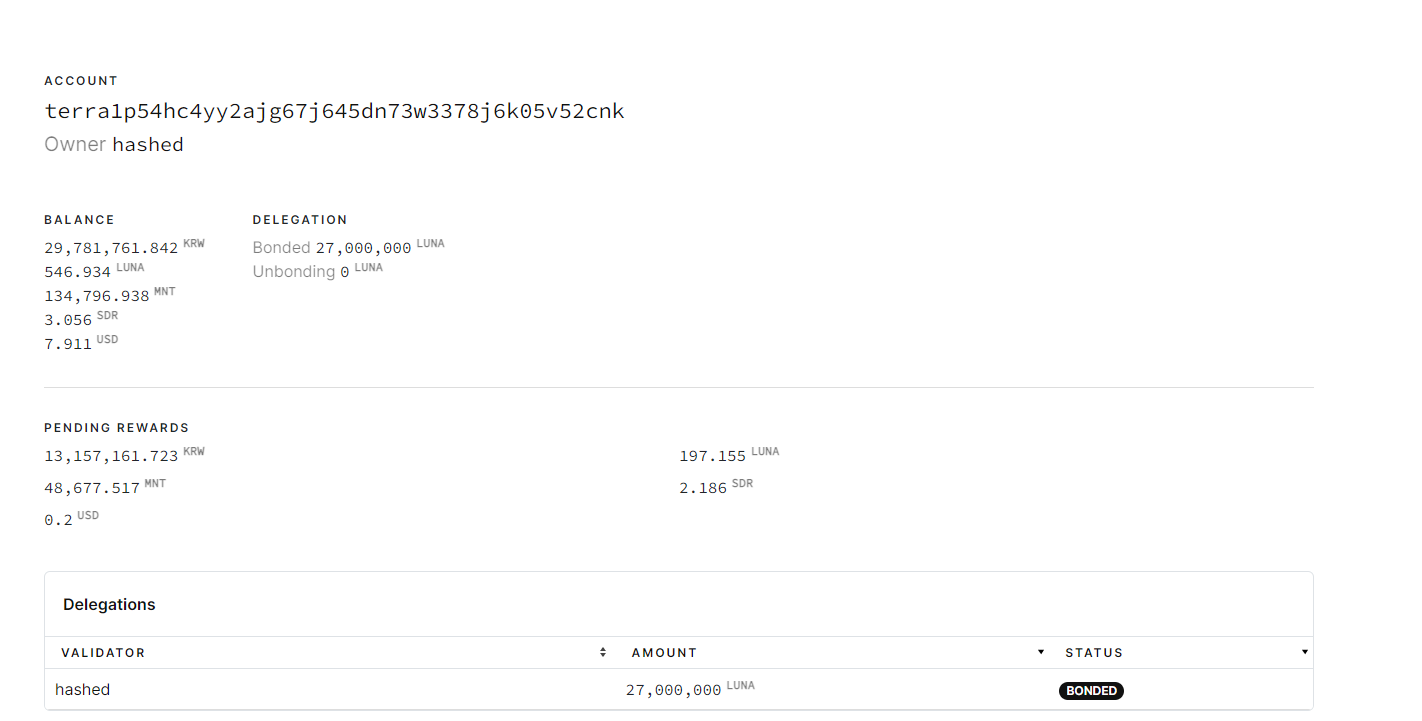
Hashed didn’t immediately respond to a request for comment, but on-chain data shows that the firm had staked over 27 million in LUNA on the Columbus 3 mainnet, 9.7 million in LUNA for the Columbus 4 mainnet and 13.2 million in LUNA on the current Columbus 5 mainnet.

CoinDesk - Unknown

Terra’s blockexporer for the Columbus-3 mainnet shows Hashed had significant holdings of Luna (Hubble blockexplorer)

All in all, Hashed’s losses amount to over $3.5 billion using pricing data from early April.

Local media in South Korea report that more than 200,000 investors in the country hold Terra-related tokens.

[…]

Source: Hashed Wallet Takes $3.5B Hit, Delphi Digital Discloses Loss After Terra’s LUNA Collapse

Melvin Capital shutters down after trying to kill Gamestop

Melvin Capital, once one of Wall Street’s most successful hedge funds which then lost billions in the meme stock saga, will shut down after it was hit again by this year’s market slump.

Gabe Plotkin, widely regarded as one of the industry’s best traders after posting years of double digit returns, told investors that the last 17 months have been “an incredibly trying time.”
Plotkin had been trying to turn around the firm after being caught out in early 2021 betting against retail favorite GameStop (GME) and after being wrong footed again by tumbling markets this year.
“The appropriate next step is to wind down the Funds by fully liquidating the Funds’ assets and accounts and returning cash to all investors,” Plotkin wrote in a letter reviewed by Reuters on Wednesday.
Melvin Capital had $7.8 billion in assets at the end of April. The fund lost 23% in the first four months of 2022, a person familiar with the fund’s finances said.
This year’s losses come on the heels of steep losses in 2021 when Melvin Capital ended the year down 39%. The firm bet that shares of GameStop would tumble but was battered when retail investors took the other side and sent the stock surging.
The firm had $12.5 billion in assets at the start of 2021.
[…]

Apple will allow some apps to automatically charge you higher subscription prices

Apple has announced an update to its subscription policy that’s supposed to make auto-renews seamless but could also lead to surprise charges. Under the old policy, the tech giant will ask users to opt in before they’re charged for a subscription that has recently raised its price. Going forward, however, it will allow developers to automatically charge higher prices, so long as they meet a set of conditions. Apple will notify users of the price increase in advance via email and push notification, but it’s up to them to unsubscribe before they’re charged.

In its announcement, the company said that developers can use the feature if they don’t increase their price more than once a year. Further, the increase must not exceed $5 and 50 percent of the current subscription pricing, or $50 and 50 percent of the current annual subscription price. Presumably, that means users will automatically get charged $15 for a subscription that was formerly $10. However, they’ll have to opt in for a $30 sub that used to cost just $20, because while that’s 50 percent higher than the old price, the increase is also way higher than $5.

[…]

Source: Apple will allow some apps to automatically charge you higher subscription prices | Engadget

Amazon (AMZN) Europe Unit Pays No Taxes on $55 Billion Sales in 2021

Amazon.com Inc.’s main European retail business reported 1.16 billion euros ($1.26 billion) of losses in 2021, which allowed the company to pay no income tax and receive 1 billion euros in tax credits, corporate filings seen by Bloomberg show.

The Luxembourg-based business recorded sales of 51.3 billion euros last year, up 17% from 43.8 billion euros in 2020. The unit, called Amazon EU Sarl, includes revenue generated by its e-commerce activities in the U.K, Germany, France, Italy, Spain, Poland, Sweden and the Netherlands.

Amazon has been a target of European regulators over its tax arrangements. The Seattle-based company won an appeal on a 250 million-euro ($280 million) tax bill imposed after regulators said agreements with Luxembourg dating back to 2003 amounted to illegal state aid. Last year, the European Commission appealed in the European Court of Justice.

An Amazon spokesperson said the company is subject to taxes in all its European branches, and that revenues, profits and taxes are recorded and reported directly to local tax authorities in those countries.

The filings provide a rare regional breakdown into Amazon’s finances. Over 2021 the group posted in global income of $33.36 billion, up from $21.3 billion the year previous. However the company does not break out income and sales from e-commerce in every country in its financial reports.

[…]

Source: Amazon (AMZN) Europe Unit Pays No Taxes on $55 Billion Sales in 2021 – Bloomberg

Pokémon-Like NFT Game Axie Infinity Scammed Out Of $600 Million

Pokémon-style NFT battler Axie Infinity was one of the biggest “success” stories in the world of crypto gaming. Now it’s responsible for one of the biggest thefts in the history of the technology. The gaming-focused blockchain Ronin Network announced earlier today that an Axie Infinity exploit allowed a hacker to “drain” roughly $600 million worth of crypto currency from the network.

“There has been a security breach on the Ronin Network,” the company announced on its Substack. “Earlier today, we discovered that on March 23rd, Sky Mavis’s Ronin validator nodes and Axie DAO validator nodes were compromised resulting in 173,600 Ethereum and 25.5M USDC drained from the Ronin bridge in two transactions.”

The person responsible allegedly used hacked private keys to order the fraudulent withdrawals. How, you ask? According to Ronin, “the attacker found a backdoor through our gas-free RPC node, which they abused to get the signature for the Axie DAO validator.”

Basically, the Ronin “side-chain” for games like Axie Infinity uses “9 validator nodes” to prevent fraudulent transactions. However, in November, due to overwhelming demand by new Axie players, Ronin gave special privileges to Sky Mavis, the company behind the game, so it could sign transactions on its behalf.

[…]

“The Axie DAO allowlisted Sky Mavis to sign various transactions on its behalf,” Ronin writes. “This was discontinued in December 2021, but the allowlist access was not revoked. Once the attacker got access to Sky Mavis systems they were able to get the signature from the Axie DAO validator by using the gas-free RPC.“

Ronin has apparently locked down accounts while it continues its investigation into the hack, meaning no one can get their funds out even as the price of RON, the network’s native token, has reportedly plummeted more than 25%.

[…]

Source: Pokémon-Like NFT Game Axie Infinity Scammed Out Of $600 Million

GameStop, AMC Stocks Halted On NYSE after reaching above $500,- per share

GameStop  (GME) – Get GameStop Corp. Class A Report shares extended declines Tuesday, after being halted by officials on the New York Stock Exchange, in a move that could snap the meme stock’s longest winning streak in more than a decade.

Both GameStop and AMC Entertainment  (AMC) – Get AMC Entertainment Holdings, Inc. Class A Report names that defined last year’s meme-stock phenomenon, were halted in early Tuesday trading amid heighted volatility and larger-than-usual pre-market volumes.

GameStop was last seen trading 6.1% lower on the session at $178.00 each, a move that would still leave the stock up 41% over the past month, while AMC fell as much as 12% before trading 2.1% into the red at $28.80 each.

Last week, Securities and Exchange Commission filings late Tuesday showed that Cohen’s RC Ventures LLC, which has also built stakes in Bed Bath & Beyond BBBY, now owns around 9.1 million GameStop shares representing an 11.9% overall stake in the Grapevine, Texas-based group.

Short interest in the shares remains elevated, however, with data from S3 Partners showing just under $1.2 billion in bets against the group, a figure that represents around 12.66 million shares, or 20.1% of the stock’s outstanding float.

GameStop reported a wider-than-expected loss of $1.86 per share for its fiscal fourth quarter last week, and managed to record negative free cash flow of $131.6 million even as revenues rose 6.2% to $2.25 billion.

Source: GameStop Stock Halted On NYSE, Extends Slide As Trading Resumes – TheStreet

Oddly enough this article talks it down but a quick look at the chart shows astronomic growth on both stocks. Superstonk is going nuts on Reddit.

Post image
Post image
Post image

HP staffer blew $5m on personal expenses with company card

A now-former HP finance planning manager pleaded guilty on Wednesday to charges of wire fraud, money laundering, and filing false tax returns that follow from the misappropriation of company funds.

According to the US Justice Department, Shelbee Szeto, 30, of Fremont, California, worked at HP Inc from August 2017 through June 2021, first as an executive assistant and then as a finance planning manager.

During that time, she was responsible for paying HP vendors

[…]

Szeto was issued multiple PCards and, according to prosecutors, she devised a scheme to make purported vendor payments to financial accounts that she controlled and then used HP’s funds to purchase goods for herself.

“Between approximately April 24, 2018 and April 23, 2021, Szeto knowingly charged approximately $4.8 million dollars in payments from her HP PCards to PayPal, Square, and Stripe merchant accounts under her control and for her personal benefit,” the indictment stated.

To make this spending appear legitimate, Szeto submitted false invoices to HP.

[…]

Szeto managed to make several transactions in the $30,000 to $40,000 range; Square declined to process a payment for $330,000. Asked for supporting paperwork by the payment processor, she is said to have provided false documentation and to have falsely told Square investigators the funds were for marketing work related to a real-estate transaction.

Her bank, First Republic, also questioned the source of her funds, according to the indictment, and the IRS noticed that her 2019 and 2020 tax forms were inaccurate. All told, Szeto is said to have cost HP $5.2m.

The Justice Department said Szeto spent the funds on: a 2020 Tesla sedan; a 2021 Porsche SUV; various bags and purses from Chanel, Dior, Gucci, and Hermes; and an assortment jewelry including necklaces, rings, pendants, and wristwatches from Audemars Piguet, Bulgari, Cartier, and Rolex.

[…]

Source: HP staffer blew $5m on personal expenses with company card • The Register

BitConnect boss accused of $2.4bn fraud has disappeared

Satish Kumbhani, who is accused of scamming people out of $2.4bn in a cryptocurrency Ponzi scheme, has disappeared while evading an American watchdog, a court was told this week.

The BitConnect founder fled his home nation of India and went to ground in another country as the US Securities and Exchange Commission sought to serve a civil fraud lawsuit on him regarding the alleged scam, it is claimed.

“In October 2021, the commission learned that Kumbhani has likely relocated from India to an unknown address in a different foreign country,” Richard Primoff, general attorney at the SEC, said in a letter [PDF] to US federal district Judge John Koeltl on Monday.

[…]

In September, the regulator claimed BitConnect defrauded folks out of billions of dollars by running a Ponzi-like scheme that promised financial returns of up to 40 per cent per month all thanks to its automated crypto-trading bot.

Instead, people’s digital funds were allegedly secretly pocketed by Kumbhani and his associate Glenn Arcaro, who last year pleaded guilty to conspiring to cheat Bitconnect investors. Arcaro faces up to 20 years behind bars. Kumbhani, however, is still at large.

[…]

Source: BitConnect boss accused of $2.4bn fraud has disappeared • The Register

Penguin Random House Demands Removal Of Maus From Digital Library Because The Book Is Popular Again after ban in the US

We’ve said it over and over again, if libraries did not exist today, there is no way publishers would allow them to come into existence. We know this, in part, because of their attempts to stop libraries from lending ebooks, and to price ebooks at ridiculous markups to discourage libraries, and their outright claims that libraries are unfair competition. And we won’t even touch on their lawsuit over digital libraries.

Anyway, in other book news, you may have heard recently about how a Tennessee school board banned Art Spiegelman’s classic graphic novel about the Holocaust, Maus, from being taught in an eighth-grade English class.

[…]

aus is now back atop various best seller lists, as the controversy has driven sales. Spiegelman is giving fun interviews again where he says things like “well, who’s the snowflake now?” And we see op-eds about how the best way get kids not to read books… is to assign it in English class.

But, also, we have publishers getting into the banning business themselves… by trying to capitalize on the sudden new interest in Maus.

Penguin Random House doesn’t want this new interest in Maus to lead to… people taking it out of the library rather than buying a copy. They’re now abusing copyright law to demand the book be removed from the Internet Archive’s lending library, and they flat out admit that they’re doing so for their own bottom line:

A few days ago, Penguin Random House, the publisher of Maus, Art Spiegelman’s Pulitzer Prize-winning graphic novel about the Holocaust, demanded that the Internet Archive remove the book from our lending library. Why? Because, in their words, “consumer interest in ‘Maus’ has soared” as the result of a Tennessee school board’s decision to ban teaching the book. By its own admission, to maximize profits, a Goliath of the publishing industry is forbidding our non-profit library from lending a banned book to our patrons: a real live digital book-burning.

This is just blatant greed laid bare. As the article notes, whatever problems US copyright law has, it has enshrined the concept of libraries, and the right to lend out books as a key element of the public interest. And the publishers — such as giants like Penguin Random House — would do anything possible to stamp that right out.

Source: Penguin Random House Demands Removal Of Maus From Digital Library Because The Book Is Popular Again | Techdirt

Automakers Can’t Give Up The Idea Of Turning Everyday Features Into Subscription Services With Fees

At the same time car companies are fighting the right to repair movement (and the state and federal legislation popping up everywhere), they’re continuing the quest to turn everyday features — like heated seats — into something users have to pay a recurring fee for.

In 2019, BMW had to abandon a plan to charge $80 per year for Apple CarPlay. The company, having learned nothing, began floating the idea of charging a subscription for features back in 2020, when it proposed making heated seats and heated steering wheels something you pay a permanent monthly fee for. Last December, Toyota proposed imposing a monthly fee for customers who wanted to be able to remotely start their vehicles.

Each and every time these proposals come forward the consumer response is swift and overwhelmingly negative. But with $20 billion in annual additional potential revenue on the table between now and 2030, the industry seems poised to ignore consumers:

“Still, automakers see dollar signs. Stellantis (formerly Fiat Chrysler), Ford, and GM each aim to generate at least $20 billion in annual revenue from software services by 2030. Over-the-air capabilities open up huge opportunities for carmakers to introduce new subscription or pay-per use features over time, Wakefield, of AlixPartners, said. Someday, you may be able to fork over extra to make your car more efficient, sportier, or — in an electric vehicle — unlock extra range for road trips.”

Keep in mind these are decisions being made during a pandemic when most households continue to struggle.

This sort of nickel-and-diming works well in the telecom sector where captive subscribers often can’t switch to a different competitor. But in the auto space, companies risk opening the door to competitors gaining inroads by… not being nickel-and-diming assholes. Many companies may also be overestimating their own product quality; one JD Power survey found that 58% of people who use an automaker’s smartphone app wouldn’t be willing to pay for it. At the same time, as with gaming microtransactions, if enough people are willing to pay to make it worth it, it may not matter what the majority of car consumers think.

Source: Automakers Can’t Give Up The Idea Of Turning Everyday Features Into Subscription Services With Fees | Techdirt

Bitcoin a lifeline for sex workers, like ex-nurse making $1.3 million – banks and other payment providers refuse to process them

[…]

Knox describes herself as “one of the most outspoken sex workers, particularly for crypto.” Her interest kicked off in 2014, which is when she says several vendors, including PayPal, Square Cash, and Venmo, shut down her accounts because of red flags related to sex work.

So Knox started accepting cryptocurrencies instead. Her first exchange of bitcoin for content was pretty casual.

It started on a Skype call with a client. “I had a Coinbase account at the time, and he said, ‘Hold your QR code right to this camera here,’ and he sent it through the camera. And I got it,” she explained.

It took 15 minutes, and there were no chargebacks, no website commission fees, and no bank intermediaries to turn down the transaction – all major pluses in her industry. But the biggest attraction was having total and irreversible ownership over the money she had earned.

[…]

“The majority of sex work in the U.S. is legal. It’s not dealt with fairly, but it’s still legal,” explained Kristen DiAngelo, an activist and Sacramento-based sex worker who has spent over four decades in the industry. “Stripping is legal…massage is legal…escorting is legal. The only thing that’s really illegal in the U.S. is the honest exchange of sexual activity for remuneration, for money.”

Some escorts – who charge anywhere from $1,700 an hour to $11,000 for a full 24 hours – now explicitly say in their ads that they prefer to be paid in bitcoin or ethereum.

[…]

Allie Rae is a 37-year-old mother of three boys who says she went from making about $84,000 a year as an ICU nurse in Boston to $1.3 million, thanks to her work on OnlyFans, which has more than 130 million users.

[…]

DiAngelo tells CNBC she will never forget the first time her bank account was closed without warning.

It happened when she was on a trip to Washington, D.C. over a decade ago.

“I had just gone into the bank, made a deposit, and I went to buy lunch in Dupont Circle,” said DiAngelo. “I gave him my card, and it was declined. I gave him my card, and it was declined again. And I gave my card again, and it was declined again. And I was like, ‘No, no, no, no, that can’t be right. There’s something wrong.’”

DiAngelo called Citibank and learned that her account had been frozen and she should tear up her credit card. DiAngelo says the customer service rep told her that they weren’t “at liberty” to tell her why it had happened, and she would have to write a formal letter to request additional details.

They did, however, say that she was still responsible for any money owed.

[…]

So DiAngelo did what other sex workers do: She “platform hopped,” meaning that she brought her money to another bank. When they also flagged and closed her account, she moved on to the next. After being shut out of a third bank, DiAngelo says she turned exclusively to bitcoin for her online banking needs.

Nearly every sex worker interviewed for this story mentioned platform hopping. The government has a set of anti-trafficking guidelines drawn up by the Financial Crimes Enforcement Network, or FinCEN, and the banks and big payment apps keep an eye out for activity deemed suspicious by those guidelines. Those red flags include making cash deposits frequently – a hallmark of the sex work profession.

[…]

In 2014, for example, PayPal booted her because of a payment for her used socks that was large enough to get red-flagged. Knox says neither she nor the buyer were refunded. (PayPal tells CNBC that her account was “closed due to policy violations.”)

Later, in 2016, Coinbase closed her account and blocked her from making others. (Coinbase acknowledged to CNBC that its terms of service prohibit the use of its “commerce or retail services connected to adult content.”)

“We’re the ones being punished – not the traffickers, not those that are actually abusing workers,” said Alana Evans, who has been an adult performer since the late 90′s. Evans is currently president of the Adult Performance Artists Guild, or APAG, a federally recognized union within the adult industry that represents all workers from adult film set actors, to content creators.

“They’ve attacked our banking; our ability to operate like the rest of the world,” explained DiAngelo. “You don’t exist if you can’t use the banking system.”

[…]

One hazard of the trade are chargebacks, in which a transaction is reversed when a consumer claims they have been fraudulently charged for a good or service they did not receive. It is a tool designed to protect consumers, but many sex workers say it is a tool that is abused in their industry by clients who dispute a transaction for a product or service they have already received.

Take OnlyFans. There are some customers who will dispute a transaction once they’ve already received custom video clips, or photos. OnlyFans’ official policy on its website says the creator, not the company, foots the bill for a chargeback. (OnlyFans did not respond to requests for comment.)

Many models have taken to forums like Reddit to share their experiences, in which they say these alleged scammers will sometimes put in for a chargeback six months after receiving pictures or videos.

Transactions in cryptocurrencies are final, rendering chargebacks impossible.

[…]

UK-based escort agency VIP Passion started to accept bitcoin in 2013. Two years later, Backpage made a similar move into bitcoin, litecoin, and dogecoin after Visa and Mastercard refused to process payments for its “adult” section.

Visa said at the time that the company’s rules prohibited the network from “being used for illegal activity” and that Visa had a “long history of working with law enforcement to safeguard the integrity of the payment system.” Mastercard issued a similar statement, saying that the card company has rules prohibiting its cards from “being used for illegal or brand-damaging activities.”

[…]

Stabile warns there are still barriers to mass crypto adoption among sex workers.

For one, there’s a steep learning curve for both workers and customers. Sex workers have written and circulated guides online on how to use crypto, but a sizable knowledge gap remains.

It is also difficult to get some customers to spend their bitcoin on adult content.

“They generally use it as a store of value,” says Stabile. “It’s a speculative currency.”

Knox says often clients choose not to pay her in crypto.

“That’s the hurdle that we’re at right now. We can take it all day long, but until people start using it and start paying us with it, it’s not going to really take off for adoption,” said Knox.

Sex workers who do accept crypto also have to contend with volatile prices, which can cut into their earnings. For instance, bitcoin is down more than 40% from its November all-time high.

[…]

DiAngelo says that in the early days of crypto, she would use bitcoin ATMs at liquor stores and gas stations to deposit cash to buy bitcoin. These machines charge commissions above and beyond the cost of the transaction.

Another major problem relates to the rules that govern cryptocurrency exchanges. Many platforms like Coinbase require know-your-customer, or KYC compliance. In practice, that means having to connect an ID and bank account to the platform – a non-starter for many working in the industry.

Because of this, some workers later find they can’t cash out the crypto they have earned for products or services rendered.

[…]

“For people like me making millions of dollars, a thirty day notice from OnlyFans would be the end of us. Crypto really feels like it’s kinda it, otherwise we’re going to be controlled forever and who knows the kind of content they’re going to continue to ban. They can turn you off tomorrow.”

Source: Bitcoin a lifeline for sex workers, like ex-nurse making $1.3 million

Dutch watchdog fines Apple $5.7 million for 3rd weekly time in App Store dispute

The Dutch antitrust watchdog on Monday fined apple Apple (AAPL.O) 5 million euros ($5.72 million) for a third time for failing to allow software application makers in the Netherlands to use non-Apple payment methods for dating apps listed in the company’s App Store.

The Authority for Consumers and Markets (ACM) has been levying weekly fines of 5 million euros on Apple since the company missed a Jan. 15 deadline to make changes ordered by the watchdog.

Apple, which could not immediately be reached for comment, has twice published information on its own blog about changes it is making to comply with the Dutch order. However, the ACM said on Monday it was not receiving enough information from the U.S. company to assess whether Apple was actually complying.

“ACM is disappointed in Apple’s behaviour and actions,” it said in a statement. It noted that Dutch courts have upheld its decision, which found that Apple’s behaviour violated competition law.

[…]

Source: Dutch watchdog fines Apple $5.7 million again in App Store dispute

Developers react to Apples 27% commission with astonishment, anger

Developers reacted with astonishment and anger at Apple’s 27% commission policy as a minimal form of compliance with a new antitrust law regarding the App Store.

One leading developer described the move as ‘vile,’ while another said Apple is deliberately ensuring it would cost developers more to opt-out of Apple’s payment system than it would to remain within it …


Background

Dutch regulators, like those in South Korea, ordered that Apple allow developers to opt-out of the App Store payment platform. Apple initially said that it would comply, but didn’t give any details.

The company today announced that it would reduce its commission by only three percent for those who chose to do so, and would also impose onerous administrative overheads – such as applying for permission to use a specific API, maintaining a separate version of the app, and filing reports with Apple.

[…]

Marco Arment highlighted the conditions imposed by Apple:

  • Separate app, only available in Netherlands
  • Cannot also support IAP
  • Must display scary sheets before payment
  • Website links are all to a single URL specified in Info.plist with no parameters
  • Must submit monthly report to Apple listing EVERY external transaction

Adding:

And after you pay your ~3% to your payment processor, Apple’s 27% commission takes you right back up to 30%. Glorious. Come on, THIS is comedy. Amazing, ridiculous comedy. I’d be surprised if a single app ever took them up on this. (And that’s exactly by design.)

[…]

Source: Developers react to 27% commission with astonishment, anger – 9to5Mac

Intel’s $1.2bn EU antitrust fine cancelled by court 12 years after Intel didn’t pay up

Intel Corporation no longer has to pay a €1.06bn ($1.2bn, £890m) fine imposed by the European Commission (EC) in 2009 for abusing its dominance of the chip market.

On Wednesday, the General Court of the European Union annulled the EC antitrust penalty [PDF] after previously upholding it in 2014 [PDF].

After rival AMD complained in 2000 and again in 2003 that Intel was engaging in anti-competitive conduct by offering its hardware partners rebates for using Intel’s x86 chips, an EC antitrust investigation that got underway in 2004 and concluded in 2009 with a €1.06 billion penalty against Chipzilla.

The EC at the time found Intel’s conduct between October 2002 and December 2007 to be anti-competitive.

“The evidence gathered by the Commission led to the conclusion that Intel’s conditional rebates and payments induced the loyalty of key OEMs and of a major retailer, the effects of which were complementary in that they significantly diminished competitors’ ability to compete on the merits of their x86 CPUs,” the EC said in its 2009 decision. “Intel’s anti-competitive conduct thereby resulted in a reduction of consumer choice and in lower incentives to innovate.”

[…]

The ruling suggests that EU trustbusters won’t be able to constrain corporate behavior if alleged misconduct fails to fit within the limited definition of competitive abuse under EU law (Article 102 TFEU). According to the Associated Press, EC VP Margrethe Vestager said at a press briefing in Brussels that the EC needs more time to consider what comes next.

[…]

Source: Intel’s $1.2bn EU antitrust fine cancelled by court • The Register

Which begs the question – why is China leading the way in anti-competitive lawmaking?

Robinhood Must Pay User $29,460 Over Meme Stock Trading Halt

In January 2021, stock trading app Robinhood infuriated users when it responded to surging trades of so-called meme stocks, by halting trades—effectively preventing users from selling shares until the prices had collapsed. Congressional hearings, regulatory probes, and a deluge of regulatory complaints and lawsuits ensued, which was at least one cause of its initial public offering’s wretched post-IPO performance. A year later, at least one investor has finally succeeded in forcing Robinhood to pay out for the fiasco.

As Marketwatch first reported, on Jan. 6, an arbitrator for the Financial Industry Regulatory Authority (FINRA) ruled in favor of 27-year-old truck driver Jose Batista’s May 2021 complaint that the restrictions caused him to lose significant amounts of money, finding the stock-trading app owes him nearly $29,500 in restitution. FINRA has previously slapped Robinhood with roughly $70 million in penalties for system outages in March 2020, issuing false and/or misleading information to investors, and failing to abide by rules designed to protect investors; the Securities and Exchange Commission also fined the company $65 million in 2020 on similar grounds. But according to Marketwatch, this is the first time any retail investor complaints specifically related to the 2021 meme stock restrictions have resulted in a monetary judgment.

That’s perhaps because previous attempts to get the company to pay up have relied on elaborate theories Robinhood halted the trades in order to please partner Citadel Securities, its prime market maker. The exact nature of Robinhood’s relationship with Citadel attracted attention from both angry investors and members of Congress. FINRA has previously concluded the accusations of collusion had no merit.

[…]

Batista made a “narrow and specific case” against Robinhood, according to Marketwatch, saying that he focused on how the restrictions made him unable to manage his investments in headphone maker Koss and fast-fashion retailer Express Inc. Shortly before the restrictions went into place, Koss was trading at $58 a share and Express was trading at $9.55; by the time Robinhood lifted them, Koss was down to $35 and Express shares were just $5. (While he had Gamestop stock, he had no intention of selling at that point, he told Marketwatch.)

“My plan was to sell Koss and Express that day,” Batista told the site. “I had a lot, but no one could buy it… They basically left me with no other option. They were saying ‘You’re just stuck. If you want to sell it. Sell it.’”

[…]

Batista made a “narrow and specific case” against Robinhood, according to Marketwatch, saying that he focused on how the restrictions made him unable to manage his investments in headphone maker Koss and fast-fashion retailer Express Inc. Shortly before the restrictions went into place, Koss was trading at $58 a share and Express was trading at $9.55; by the time Robinhood lifted them, Koss was down to $35 and Express shares were just $5. (While he had Gamestop stock, he had no intention of selling at that point, he told Marketwatch.)

“My plan was to sell Koss and Express that day,” Batista told the site. “I had a lot, but no one could buy it… They basically left me with no other option. They were saying ‘You’re just stuck. If you want to sell it. Sell it.’”

[…]

Source: Robinhood Must Pay User $29,460 Over Meme Stock Trading Halt