American Airlines Wins $9.4 Million From ‘Skiplagged’ Site That Exploits Airlines’ Overbooking Business Model

A Texas federal jury has awarded American Airlines a whopping $9.4 million in a lawsuit filed against Skiplagged.com, a website that helps travelers get cheaper flights by booking flights with a connection and then abandoning the connecting flight to the final destination.

The airline industry loathes Skiplagged, even though there’s technically nothing illegal about the practice it’s promoting. Last week, the court awarded $4.7 million from Skiplagged’s revenue based on an estimate of lost fares and another $4.7 million for copyright infringement, as it was scraping American’s flight schedules in violation of the airline’s terms of service.

American also sued over trademark infringement, claiming that Skiplagged was using the American logo on its website to make it appear the site was endorsed by American; the judge disagreed on that one.

As of today, Skiplagged still returns fares and routes from American Airlines. It’s unclear if that will change. We have reached out for comment.

Most airlines expressly prohibit skiplagging—effectively an exploit of the airline business model—and use technology to try and detect when customers are doing it. Travelers have reported being banned from certain airlines for years after being caught.

The concept of skiplagging—and why airlines hate it—is somewhat complicated to understand. Let’s say you want to travel from Boston to San Francisco, and a search on Google Flights returns one-way trips costing $300. You could instead book a flight from Boston to Sacramento with a layover in San Francisco for $199. In essence, what Skiplagged is doing is revealing this “hidden” itinerary that gets you to San Francisco for $100 less. All you do is book the flight to Sacramento, and when you land in San Francisco (your actual intended destination), just leave the airport and abandon the connecting flight.

It seems counterintuitive — why would flying to San Francisco and taking another flight to Sacramento be cheaper than just flying to San Francisco? Essentially, major airlines work on a model in which direct flights between every city would not make sense — how many people really want to fly from Boston to Sacramento? So in the interest of efficiency, the airlines use major cities like San Francisco as central connecting hubs for flights to other destinations with less demand. The airline is charging the passenger based on demand to Sacramento, offering a reduced fare to ensure it fills those seats to Sacramento and generates at least some revenue. Airlines also feel they can charge more for direct flights because of the convenience factor for passengers.

But skiplagging messes with the business model. In the case of skiplagging, airlines use algorithms to estimate how many passengers will miss their flight, and then intentionally overbook the flight to generate extra revenue. The airline gets revenue from the person who missed the flight, and additional revenue from someone else who in turn took that seat. When a passenger makes the first leg of a flight, they have to assume that the passenger will also make their connecting flight and cannot overbook that seat. That’s potential revenue left on the table for American Airlines.

It’s hard to feel sympathy for the airlines in this case. Anyone who travels regularly knows how gate agents constantly plead with passengers to change their flight when a plane has been overbooked and too many people show up. The airlines are playing games to maximize revenue and frustrate customers—skiplagging just turns the tables on them, returning some power back to the customer. But a judge decided that American’s terms of service against unauthorized scraping are clear, and Skiplagged decided to violate them anyway. It’s not dissimilar from the way in which AI companies have decided to ignore terms of service agreements to scrape content sites.

Fortunately, you don’t actually need to use Skiplagged to find these fares. If you’re clever enough, you can do it using any other travel booking site like Google Flights or Expedia. Just don’t do it too frequently on the same airline or you may well get caught. And keep in mind that you cannot travel with checked luggage using this method, as your luggage will be sent to the final destination. Traveling light is better anyway.

Source: American Airlines Wins $9.4 Million From ‘Skiplagged’ Site That Exploits Airlines’ Business Model

This would not have gone this way in the EU – scraping is perfectly legal there.

DOJ Reveals Its Plan for Breaking Up Google’s Search Monopoly

The Department of Justice has laid out its broad-strokes plan for ending Google’s monopoly over internet search after winning its antitrust case against the company in August. The sweeping changes could end Google’s position as the default search engine on billions of devices and require the company to share key information about its search algorithms with competitors.

The regulators’ proposals, laid out Tuesday in a filing with the D.C. federal court where the antitrust case was heard, are aimed not only at rectifying Google’s past anti-competitive practices but also at preventing it from unfairly dominating emerging technologies, particularly internet searches enabled by generative AI tools.

[…]

The first step necessary to unwind Google’s illegal monopoly, according to the DOJ, will likely be to “limit or end” the company’s use of contracts and unfair revenue-sharing agreements that have enshrined Google as the pre-installed search engine on all Android devices and the Chrome browser. It could potentially also include forcing Google’s parent company, Alphabet, to split off the Android and Chrome divisions of its business.

Google’s search tools are powered by the huge amount of data its web crawlers have indexed and the ranking algorithms that prioritize which results users see first. To level the playing field for competitors, the DOJ said it might try to make the company share the indexes, search results, underlying ranking signals, and models used for Google search, including AI-powered search.

“Google’s ability to leverage its monopoly power to feed artificial intelligence features is an emerging barrier to competition and risks further entrenching Google’s dominance,” the DOJ wrote, adding that potential remedies could include prohibiting the company from signing contracts with web publishers that deny rival search engines access to their sites and forcing Google to allow publishers to opt out of having their content scraped and used to generate AI summaries at the top of search results.

The final category of remedies the DOJ proposed would aim to spread the wealth generated by advertisements attached to internet searches by making it easier for smaller competitors to enter markets without being crushed by Google’s economy of scale and by requiring Google to be more transparent with advertisers in its ad auctions.

Source: DOJ Reveals Its Plan for Breaking Up Google’s Search Monopoly

Supreme Court Snubs Martin Shkreli’s Last-Ditch Bid to Avoid $64 Million Fine over hiking unique life saving drug price from $13.50 to $750 a pill

Martin Shkreli has been fighting a $64.6 million fine he acquired in 2022 for blocking affordable alternatives to Daraprim, a lifesaving antiparasitic drug. Shockingly, it turns out nobody on the Supreme Court cares to hear about it.

No justices dissented on Monday when the court said it declined to hear an appeal by representatives of the former pharmaceutical executive. In a last-ditch effort, Shkreli’s lawyers asked the Supreme Court to resolve conflicting rulings after the 2nd U.S. Circuit Court of Appeals upheld the $64.6 million order and a lifetime ban to block Shkreli from working in the drug business. Only, the conflicting rulings didn’t even exist, New York Attorney General Letitia James argued in an August brief. The Supreme Court had nothing to add when it snubbed Shkreli.

The so-called “pharma bro” rose to infamy as the chief of Turing Pharmaceuticals — later called Vyera. In 2015, the startup bought exclusive rights to Daraprim and jacked up its price from $13.50 to $750 a pill. At the time, there were no generic alternatives to the toxoplasmosis medication, which is used to treat a rare condition that affects pregnant people, babies, and people with HIV and cancer.

Shkreli, also temporarily the owner of a secret Wu-Tang Clan album, was convicted of securities fraud and sentenced to seven years in prison in a 2017 case unrelated to Daraprim. In a comment to Gizmodo at the time, Shkreli said he planned to “make paper from inside” while serving time. Two years later, the former executive reportedly faced solitary confinement for trying to run a company with a contraband phone.

Shkreli got out of prison in 2022 and promptly announced a Web3-based drug discovery venture called Druglike. His other recent projects include launching a medical chatbot called Dr. Gupta and taking credit for a cryptocurrency named after former President Donald Trump.

Turing filed for bankruptcy and moved to sell the rights to Daraprim in 2023.

Source: Supreme Court Snubs Martin Shkreli’s Last-Ditch Bid to Avoid $64 Million Fine

Epic judge orders Google to let rivals set up app stores

A US court has ordered Google to refrain from a wide variety of business practices the web giant uses to bolster its Play Store, as a consequence of its December 2023 antitrust defeat against Epic Games.

In that case, Epic argued that Google’s Play Store rules and contractual agreements with developers and partners violated the federal Sherman Act and California’s Unfair Competition Law (UCL). And the jury agreed.

On Monday, US District Court judge James Donato issued a permanent injunction [PDF] that forbids Google from eight behaviors deemed unlawful as a result of the case.

“The jury found that Google’s conduct violated the antitrust laws and substantially harmed competition in the relevant markets, and directly injured Epic,” judge Donato wrote, explaining the injunction. “The jury rejected Google’s proffered procompetitive justifications for its conduct. Consequently, the Court concludes that Epic has prevailed on the UCL claim against Google under the unlawful and unfair prongs.”

Noting that Google had “fired a blunderbuss of comments and complaints that are underdeveloped and consequently unhelpful in deciding the issues,” judge Donato put an end to the extensive input afforded to both sides about the specifics of the injunction that follows from the verdict.

Google, in a blog post, unsurprisingly disagreed – it is appealing the verdict and will ask the courts to pause the injunction until its appeal is heard.

“These Epic-requested changes stem from a decision that is completely contrary to another court’s rejection of similar claims Epic made against Apple – even though, unlike iOS, Android is an open platform that has always allowed for choice and flexibility like multiple app stores and sideloading,” wrote Lee-Anne Mulholland, VP of regulatory affairs at Google.

Mulholland argues that the court-ordered changes would hinder Google’s – and the wider Android ecosystem’s – ability to compete with Apple’s ecosystem.

The injunction is set to take effect starting November 1, 2024, only in the US, for a period of three years. During this time:

  • Google may not share revenue generated by the Google Play Store with any person or entity that distributes Android apps, or has stated that it will launch or is considering launching an Android app distribution platform or store.
  • Google may not condition a payment, revenue share, or access to any Google product or service …
    • on an agreement by an app developer to launch an app first or exclusively in the Google Play Store;
    • on an agreement by an app developer not to launch on a third-party Android app distribution platform or store a version of an app that includes features not available in, or is otherwise different from, the version of the app offered on the Google Play Store;
    • on an agreement with an original equipment manufacturer (OEM) or carrier …
      • to preinstall the Google Play Store on any specific location on an Android device;
      • not to preinstall an Android app distribution platform or store other than the Google Play Store.
  • Google may not …
    • require the use of Google Play Billing in apps distributed on the Google Play Store, or prohibit the use of in-app payment methods other than Google Play Billing;
    • prohibit a developer from communicating with users about the availability of a payment method other than Google Play Billing;
    • require a developer to set a price based on whether Google Play Billing is used;
    • prohibit a developer from …
      • communicating with users about the availability or pricing of an app outside the Google Play Store;
      • providing a link to download the app outside the Google Play Store.
  • Google will permit third-party Android app stores to access the Google Play Store’s catalog of apps so that they may offer the Play Store apps to users. [Along with other distribution fairness requirements, Google has eight-months to implement this, at which point the three-year clock will begin for this provision.]
  • Google may not prohibit the distribution of third-party Android app distribution platforms or stores through the Google Play Store.

The injunction also gives Epic and Google a 30-day deadline to form a three-person Technical Committee, comprising one representative from each party and a mutually agreed upon third member, to resolve disputes over the implementation of the injunction’s provisions.

Epic Games did not immediately respond to a request for comment. ®

Source: Epic judge orders Google to let rivals set up app stores • The Register

Google’s AI enshittifies search summaries with ads

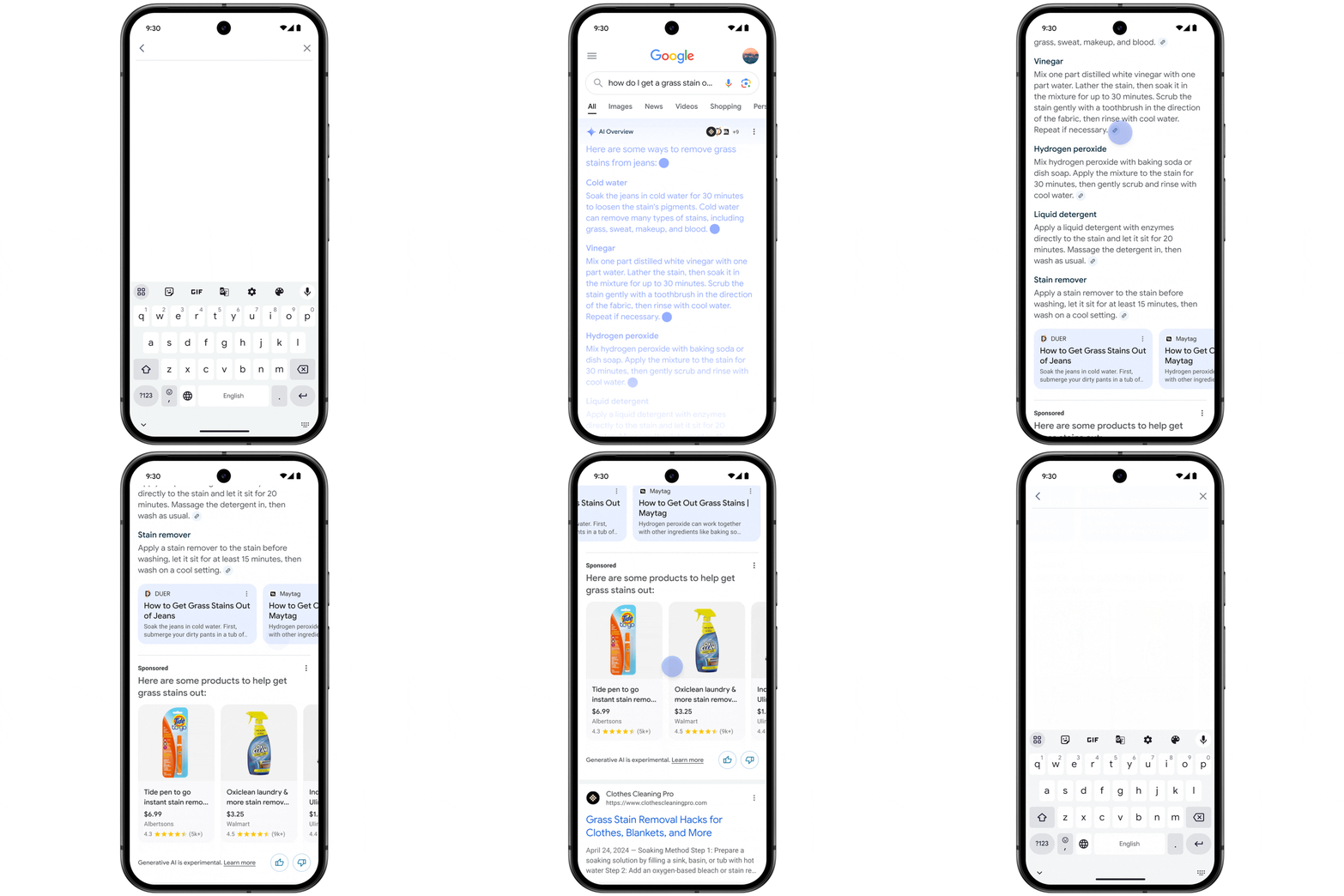
Google is rolling out ads in AI Overviews, which means you’ll now start seeing products in some of the search engine’s AI-generated summaries.

Let’s say you’re searching for ways to get a grass stain out of your pants. If you ask Google, its AI-generated response will offer some tips, along with suggestions for products to purchase that could help you remove the stain. […]

Google’s AI Overviews could contain relevant products.


Source: Google’s AI search summaries officially have ads – The Verge

Juicy licensing deals with AI companies show that publishers don’t really care about creators

One of the many interesting aspects of the current enthusiasm for generative AI is the way that it has electrified the formerly rather sleepy world of copyright. Where before publishers thought they had successfully locked down more or less everything digital with copyright, they now find themselves confronted with deep-pocketed companies – both established ones like Google and Microsoft, and newer ones like OpenAI – that want to overturn the previous norms of using copyright material. In particular, the latter group want to train their AI systems on huge quantities of text, images, videos and sounds.

As Walled Culture has reported, this has led to a spate of lawsuits from the copyright world, desperate to retain their control over digital material. They have framed this as an act of solidarity with the poor exploited creators. It’s a shrewd move, and one that seems to be gaining traction. Lots of writers and artists think they are being robbed of something by Big AI, even though that view is based on a misunderstanding of how generative AI works. However, in the light of stories like one in The Bookseller, they might want to reconsider their views about who exactly is being evil here:

Academic publisher Wiley has revealed it is set to make $44 million (£33 million) from Artificial Intelligence (AI) partnerships that it is not giving authors the opportunity to opt-out from.

As to whether authors would share in that bounty:

A spokesperson confirmed that Wiley authors are set to receive remuneration for the licensing of their work based on their “contractual terms”.

That might mean they get nothing, if there is no explicit clause in their contract about sharing AI licensing income. For example, here’s what is happening with the publisher Taylor & Francis:

In July, authors hit out another academic publisher, Taylor & Francis, the parent company of Routledge, over an AI deal with Microsoft worth $10 million, claiming they were not given the opportunity to opt out and are receiving no extra payment for the use of their research by the tech company. T&F later confirmed it was set to make $75 million from two AI partnership deals.

It’s not just in the world of academic publishing that deals are being struck. Back in July, Forbes reported on a “flurry of AI licensing activity”:

The most active area for individual deals right now by far—judging from publicly known deals—is news and journalism. Over the past year, organizations including Vox Media (parent of New York magazine, The Verge, and Eater), News Corp (Wall Street Journal, New York Post, The Times (London)), Dotdash Meredith (People, Entertainment Weekly, InStyle), Time, The Atlantic, Financial Times, and European giants such as Le Monde of France, Axel Springer of Germany, and Prisa Media of Spain have each made licensing deals with OpenAI.

In the absence of any public promises to pass on some of the money these licensing deals will bring, it is not unreasonable to assume that journalists won’t be seeing much if any of it, just as they aren’t seeing much from the link tax.

The increasing number of such licensing deals between publishers and AI companies shows that the former aren’t really too worried about the latter ingesting huge quantities of material for training their AI systems, provided they get paid. And the fact that there is no sign of this money being passed on in its entirety to the people who actually created that material, also confirms that publishers don’t really care about creators. In other words, it’s pretty much what was the status quo before generative AI came along. For doing nothing, the intermediaries are extracting money from the digital giants by invoking the creators and their copyrights. Those creators do all the work, but once again see little to no benefit from the deals that are being signed behind closed doors.

Source: Juicy licensing deals with AI companies show that publishers don’t really care about creators – Walled Culture

LG Has Started Showing Screensaver Ads on Their Smart TVs | Lifehacker

Like them or not, ads run the world. They’re the reason so much content out there is free of charge—or, at least, less expensive. But while it’s one thing to watch an ad before jumping into a YouTube video, or to see ads surrounding an article, it’s another thing entirely to be forced to see ads even when you’re not engaging with the product.

That, apparently, is what’s going on with LG TVs right now. While anyone with a smart TV may be familiar with seeing more ads throughout their television experience, LG is taking things up a notch” Now, the company is displaying ads during screensavers. I guess leaving your TV idle isn’t “free” anymore.

FlatpanelsHD made the discovery when reviewing LG’s G4 OLED TV. These ads display in full-screen before reverting back to the screensaver you expect to see. FlatpanelsHD saw full-screen ads for LG Channels, LG’s free streaming service that includes ads, but confirmed through LG there can be advertisements from third-party partners as well.

While FlatpanelsHD may have been among the first to see these ads in the wild, they aren’t a secret. In fact, LG Ad Solutions announced the initiative on Sept. 5, in a post titled “Idle Time Isn’t Wasted Time — LG Ad Solutions Finds that Screensaver Ads Are In Fact Effective.” The program even has a name, “Native Screensaver Ads,” and runs across the Home Screen, LG Channels, and Content Store on LG Smart TVs. According to the announcement, Native Screensaver Ads turn “what may be perceived as a period of downtime into a valuable engagement opportunity.” Cool.

[…]

I didn’t buy my LG TV to encourage me to buy stuff: I purposefully watch shows and movies on it (and play the occasional game). It’s insulting to think I want to leave my TV running in the background at all times, and be fine with constant, targeted ads in my space. If you feel the same, the good news is there’s a way to block these ads in the first place.

How to disable LG screensaver ads

If you have an LG smart TV, head to your device’s Settings, then choose Additional Settings. If your TV is affected, you should see a Screen Saver Promotion option. Disable it, and you should be spared from idle encouragements to shop.

Source: LG Has Started Showing Screensaver Ads on Their Smart TVs | Lifehacker

Google’s 2.4 billion euro shopping comparison fine upheld by Europe’s top court

Europe’s top court on Tuesday upheld a 2.4 billion euro ($2.65 billion) fine imposed on Google

for abusing its dominant position by favoring its own shopping comparison service.

[….]

The fine stems from an antitrust investigation by the European Commission, the executive arm of the European Union, which concluded in 2017.

The commission said at the time that Google had favored its own shopping comparison service over those of its rivals.

Google appealed the decision with the General Court, the EU’s second-highest court, which also upheld the fine. Google then brought the case before the European Court of Justice, the EU’s top court.

The ECJ on Tuesday dismissed the appeal and upheld the commission’s fine.

[…]

Source: Google’s 2.4 billion euro fine upheld by Europe’s top court

Apple Ordered to Pay $14 Billion in Back Taxes to EU

Apple will be required to pay $14 billion in back taxes to Ireland after Europe’s top court released a new ruling on Tuesday, according to a report from the Financial Times. Apple CEO Tim Cook has previously called the case “total political crap” but the judgment is final and Apple will not be able to appeal.

The European Commission’s executive vice president, Margrethe Vestager, first brought the case against Apple alleging that Ireland had given the tech company a deal that “constituted illegal State aid,” by waiving so much in taxes. Apple is now on the hook to pay those taxes, which have been sitting in an escrow account for the past six years, according to the Financial Times. Oddly enough, the original €14.3 billion set aside has fallen in value after first being set aside in 2018 because it was invested in European government bonds.

[…]

Source: Apple Ordered to Pay $14 Billion in Back Taxes

Peloton to charge $95 activation fee for used bikes

Peloton on Thursday said it will start charging new subscribers a one-time $95 activation fee if they bought their hardware on the secondary market as more consumers snag lightly used equipment for a fraction of the typical retail price.

[…]

During its fiscal fourth quarter, which ended June 30, Peloton said it saw a “steady stream of paid connected fitness subscribers” who bought hardware on the secondary market. The company said the segment grew 16% year over year.

“We believe a meaningful share of these subscribers are incremental, and they exhibit lower net churn rates than rental subscribers,” the company said in a letter to shareholders.

“It’s also worth highlighting that this activation fee will be a source of incremental revenue and gross profit for us, helping to support our investments in improving the fitness experience for our members,” interim co-CEO Christopher Bruzzo later added on a call with analysts.

[…]

Bruzzo said that those who buy a used Bike or Bike+ have access to a virtual custom fitting ahead of their first ride, as well as a history summary that shows how many rides those bikes had before they were resold.

“We’re also offering these new members discounts on accessories such as bike shoes, bike mats and spare parts,”

[…]

Source: Peloton to charge $95 activation fee for used bikes

corporate greed at its best – notice that what you get for this extra fee is basically nothing or the ability to buy more stuff.

Patreon will have to use Apple’s in-app purchase system or be removed from the App Store. Also only subscriptions now.

Apple takes a lot of strong positions, but their ultimate hill to die on might just be requiring apps to make purchases through the tech giant. The latest example comes from Patreon, which announced that Apple is requiring it to switch over to the iOS in-app purchase system or risk expulsion. Patreon’s entire purpose is to allow creators to offer “patrons” memberships in exchange for content. While some tiers are unpaid, creators offer paid options to make money — something this shift could impact.

Patreon users need to know about two main changes. By this November, all creators can only offer a subscription-based plan on iOS as the app store doesn’t support other formats, such as first-of-the-month or per-creation plans. As a result, Patreon is rolling out a 16-month-long migration process that will shift all memberships to subscriptions by November 2025. At that point, subscription-based plans will be the only option available, unfortunately proving Apple’s far-reaching power.

Apple will also be taking a 30 percent cut on all subscriptions made on the Patreon iOS app after November of this year — something its done for Patreon in-app commerce purchases since early 2024. Patreon has designed a tool that allows creators to increase their prices on the iOS app and leave them as is on the browser site and Android devices. However, creators can turn it off if they’d rather leave their rates as is.

Source: Patreon will have to use Apple’s in-app purchase system or be removed from the App Store

Amazon-Anthropic Investment Investigated by UK Government – is it a stealth merger?

The U.K. government has launched a preliminary investigation into the partnership between Amazon and Anthropic to see if it will significantly lessen competition. This comes days after a similar probe was announced into Alphabet’s collaboration with the AI startup.

In March, Amazon concluded its $4 billion (£3.16 billion) investment in Anthropic, the company behind the Claude LLM family, some of the only viable competitors to OpenAI’s ChatGPT and Google’s Gemini. It was founded by former OpenAI employees, including siblings Daniela and Dario Amodei, who were both execs.

In return for the investment, Anthropic committed to using Amazon Web Services as its primary cloud provider for “mission critical workloads, including safety research and future foundation model development.” It also agreed to use Amazon’s Trainium and Inferentia chips to build, train, and deploy its models and host them on the AI app development platform Amazon Bedrock.

However, the Competition and Markets Authority believes that this partnership could result in a “substantial lessening of competition” within the U.K. tech markets.

[…]

Complete mergers and acquisitions often trigger extensive regulatory scrutiny and potential antitrust actions for this reason, which can delay or block proceedings. To avoid this situation, Big Tech instead makes strategic investments in the most promising startups and hires their top talent, allowing them to gain influence and access to innovative technologies unchecked.

In an April report on how the CMA is looking into AI foundational models, the CMA said, “Without fair, open, and effective competition and strong consumer protection, underpinned by these principles, we see a real risk that the full potential of organisations or individuals to use AI to innovate and disrupt will not be realised, nor its benefits shared widely across society.

[…]

The CMA is looking to identify “relevant merger situation(s)” that allow large tech companies to “shield themselves from competition” in the U.K. It says that “a range of different kinds of transactions and arrangements” could represent a relevant merger with the provisions of the Enterprise Act 2002.

The Digital Markets, Competition, and Consumers Bill that was passed in May also “anticipates new powers for the CMA.” According to the April report, the CMA can “enforce consumer protection law against infringing firms” and apply non-compliance penalties of up to 10% of a firm’s worldwide turnover.

“We are ready to use these new powers to raise standards in the market and, if necessary, to tackle firms that do not play by the rules through enforcement action,” it said.

[…]

Source: Amazon-Anthropic Merger Investigated by UK Government

Apple tries again to make EU officials happy with new fees for in-app purchases

Apple this week revised its alternative contractual terms for devs selling apps in the European Union – a revision that was immediately dismissed by critics as more “malicious compliance.”

[…]

Essentially, Apple has allowed developers in the EU to choose whether they want to use its own In‑App Purchase system for App Store transactions or an alternative payment processor for In-App transactions. EU app developers can also choose to sell their apps through a third-party storefront.

The Alternative Terms contract covers: 1) In‑App Purchase system from the App Store; 2) alternative payment processors; and 3) linking out from apps.

The StoreKit addendum covers just linking out – it “allows the ability to link out for purchases of digital goods or services for apps distributed in the EU and includes new business terms for those transactions.” It’s not for in-app transactions.

The StoreKit contract doesn’t include the Core Technology fee – assessed for devs using the Alternative Terms contract on app installs beyond one million at €0.50 for each app installed.

But it does come with two new fees: a 5 percent “Initial Acquisition Fee” and a 10/20 percent “Store Services Fee.”

On iOS, under the Alternative Terms contract, Apple demands a 17 percent commission for apps sold in EU storefronts of the App Store, or 10 percent for App Store Small Business Program participants. Then there’s the 3 percent payment processing fee, and the Core Technology fee is applicable.

There’s also an Initial acquisition fee of 5 percent “for sales of digital goods and services, made on any platform, that occur within a 12-month period after an initial install.” And there’s a Store services fee of 10 percent “for sales of digital goods and services, made on any platform, that occur within a fixed 12-month period from the date of an install, including app updates and reinstalls.”

Under the StoreKit Contract, the Initial acquisition fee is the same – 5 percent – but the Store service fee is 20 percent. For App Store Small Business Program participants or auto-renewal subscriptions beyond one year, that drops to 7 percent.

Fee calculation is complicated enough that Apple has built a web-based calculator for the task.

In a statement provided to The Register, Spotify said, “We are currently assessing Apple’s deliberately confusing proposal. At first glance, by demanding as much as a 25 percent fee for basic communication with users, Apple once again blatantly disregards the fundamental requirements of the Digital Markets Act (DMA). The European Commission has made it clear that imposing recurring fees on basic elements like pricing and linking is unacceptable. We call on the Commission to expedite its investigation, implement daily fines and enforce the DMA.”

[…]

United Kingdom’s Competition and Markets Authority – as part of its Mobile Browsers and Cloud Gaming Market investigation – is contemplating uncomfortable remedies [PDF] against the fruiterer.

[…]

Among the issues that concern the CMA are: Apple’s requirement that all browsers on its mobile devices use its own WebKit rendering engine; Apple’s and Google’s dominance of browser engines; and Apple’s rules that limit in-app browsers.

Some of the options being considered include: “Requirement for Apple to grant access to alternative browser engines to iOS”; “Requirement for Apple to grant equivalent access to iOS to browsers using alternative browser engines”; and “Requirement for Apple to grant equivalent access to APIs used by WebKit and Safari to browsers using alternative browser engines.”

[…]

Source: Apple tries again to make EU officials happy – with new fees • The Register

Warner Bros. Scrubs Cartoon Network Website, Erasing Years of History

Warners Bros. Discovery has not been having a great time recently, and is going through a wave of increasingly desperate cost-cutting initiatives because of it. Several of those movements have felt particularly targeted at the studio’s animated offerings, from its inability to release finished films to selling off its current, past, and would-be successes to other streamers. Its latest indignity comes at the cost of Cartoon Network’s online presence.

Variety reports that Warner completely wiped the Cartoon Network website—previously home to an archive of clips and full episodes of a wide variety of animated series, including the likes of Steven UniverseTeen Titans Go!, We Bare Bears, Adventure Time, and other past and present CN series—leaving nothing and redirecting visitors to a message encouraging them to instead sign up for Max.

[…]

As well as removing free access to series, the Cartoon Network website also hosted years of beloved flash games relating to its shows. While many have been erased over the years through various site redesigns—and archived elsewhere for nostalgic fans—at least some of the current archives are still accessible via international versions of the Cartoon Network website in regions where Max is currently unavailable.

The news comes after Warner recently announced plans to shutter its dedicated streaming service for classic animation, Boomerang.

[…]

Source: Warner Bros. Scrubs Cartoon Network Website, Erasing Years of History

Only 5 years too late: British regulators to examine Big Tech’s digital wallets – and where is the EU?

British regulators said on Monday they were looking into the soaring use of digital wallets offered by Big Tech firms, including whether there are any competition, consumer protection or market integrity concerns.
The Financial Conduct Authority and Payments Systems Regulator is seeking views on the benefits and risks, and will assess the impact digital wallets, such as Apple Pay, Google Pay and PayPal, have on competition and choice of payment options at checkout, among other things.
Digital wallets are now likely used by more than half of UK adults and have become “an increasingly important touchpoint” between Big Tech companies and UK consumers, they said in a statement.
“Digital wallets are steadily becoming a go-to payment type and while this presents exciting opportunities, there might be risks too,” said David Geale, the PSR’s managing director.
Nikhil Rathi, the FCA’s chief executive, said the growth of digital wallets represented a “seismic shift” in how people pay and regulators wanted to maximise the opportunities while “protecting against any risks this technology may present.”
Regulators and lawmakers in Europe and the United States have been examining the growing role of Big Tech in financial services.
The U.S. consumer watchdog last year proposed regulating payments and smartphone wallets, prompting criticism from the industry.
The British regulators said their review of digital wallets built on their previous work on contactless mobile payments and on the role of Big Tech firms in financial services.
After considering all feedback, the regulators provide an update on Big Tech and digital wallets by the first quarter of 2025.

Source: British regulators to examine Big Tech’s digital wallets | Reuters

Considering that people using the services generally don’t understand that they are giving their payment history to the big tech company that runs it – and is not a bank – this is way way way too late.

Apple settles EU case by opening its iPhone payment system to rivals

The EU on Thursday accepted Apple’s pledge to open its “tap to pay” iPhone payment system to rivals as a way to resolve an antitrust case and head off a potentially hefty fine.

The European Commission, the EU’s executive arm and top antitrust enforcer, said it approved the commitments that Apple offered earlier this year and will make them legally binding.

Regulators had accused Apple in 2022 of abusing its dominant position by limiting access to its mobile payment technology.

Apple responded by proposing in January to allow third-party mobile wallet and payment service providers access to the contactless payment function in its iOS operating system. After Apple tweaked its proposals following testing and feedback, the commission said those “final commitments” would address its competition concerns.

“Today’s commitments end our Apple Pay investigation,” Margrethe Vestager, the commission’s executive vice-president for competition policy, told a press briefing in Brussels. “The commitments bring important changes to how Apple operates in Europe to the benefit of competitors and customers.”

Apple said in a prepared statement that it is “providing developers in the European Economic Area with an option to enable NFC [near-field communication] contactless payments and contactless transactions” for uses like car keys, corporate badges, hotel keys and concert tickets.

[…]

The EU deal promises more choice for Europeans. Vestager said iPhone users will be able to set a default wallet of their choice while mobile wallet developers will be able to use important iPhone verification functions like Face ID.

[…]

Analysts said there would be big financial incentives for companies to use their own wallets rather than letting Apple act as the middleman, resulting in savings that could trickle down to consumers. Apple charges banks 0.15% for each credit card transaction that goes through Apple Pay, according to the justice department’s lawsuit.

Apple must open up its payment system in the EU’s 27 countries plus Iceland, Norway and Liechtenstein by 25 July.

“As of this date, developers will be able to offer a mobile wallet on the iPhone with the same ‘tap-and-go’ experience that so far has been reserved for Apple Pay,” Vestager said. The changes will remain in force for a decade and will be monitored by a trustee.

Breaches of EU competition law can draw fines worth up to 10% of a company’s annual global revenue, which in Apple’s case could have amounted to tens of billions of euros.

“The main advantage to the issuer bank of supporting an alternative to Apple Pay via iPhone is the reduction in fees incurred, which can be substantial,” said Philip Benton, a principal analyst at research and advisory firm Omdia. To encourage iPhone users to switch away from Apple Pay to another mobile wallet, “the fee reduction needs to be partially passed onto the consumer” through benefits like cashback or loyalty rewards, he said.

Banks and consumers could also benefit in other ways.

If companies use their own apps for tap-and-go payments, they would get “full visibility” of their customers’ transactions, said Ben Wood, chief analyst at CCS Insight. That data would allow them to “build brand loyalty and trust and offer more personalised services, rewards and promotions directly to the user”, he said.

Source: Apple settles EU case by opening its iPhone payment system to rivals | Apple | The Guardian

Note: Currently, Apple has this full visibility of your transactions. Are you sure you want to trust a company like that with your financial data?

I wonder how childishly Apple will handle this, considering how it has gone about “opening up” it’s app store and allowing home screen apps (not really at all)

India antitrust probe finds Apple abused position in apps market

NEW DELHI, July 12 (Reuters) – An investigation by India’s antitrust body has found that Apple exploited its dominant position in the market for app stores on its iOS operating system, engaging “in abusive conduct and practices”, a confidential report seen by Reuters showed.
The Competition Commission of India (CCI) has been investigating Apple Inc since 2021 for possibly abusing its dominant position in the apps market by forcing developers to use its proprietary in-app purchase system.

[…]

The CCI’s investigations unit, in its 142-page report which is not public but was seen by Reuters, said Apple wields “significant influence” over how digital products and services reach consumers, especially through its iOS platform and App Store.
“Apple App Store is an unavoidable trading partner for app developers, and resultantly, app developers have no choice but to adhere to Apple’s unfair terms, including the mandatory use of Apple’s proprietary billing and payment system,” the CCI unit said in the June 24 report.
“From the perspective of app developers, Apple iOS ecosystem is indispensable.”
[…]
In June, European Union antitrust regulators said Apple breached the bloc’s tech rules, which could result in a hefty fine for the iPhone maker. The company also faces an investigation into new fees imposed on app developers.
In January, in response to a new EU law called the Digital Markets Act, Apple outlined plans to allow software developers to distribute their apps to users in the European Union outside of Apple’s own App Store.
The CCI report is the most critical stage of the Indian investigation and it will now be reviewed by the watchdog’s senior officials.
[…]
The Indian case was first filed by a little-known, non-profit group called “Together We Fight Society” which argued Apple’s in-app fee of up to 30% hurts competition by raising costs for app developers and customers.
Later, a group of Indian startups, Alliance of Digital India Foundation, and Tinder-owner Match filed similar cases at the CCI against Apple, which were all heard together.
The CCI investigation team said in its report that no third-party payment processor was being permitted by Apple to provide the services for in-app purchases.
It added that in most cases the apps are also not being allowed to include any external links that direct customers to other purchasing mechanisms, violating Indian competition laws.
[…]
In its submissions to the CCI, Apple argued its market share in India is an “insignificant” 0-5%, while Google commands 90-100%. The company also argued that the in-app payment system allowed it to maintain and develop the safety of its App Store.
But the CCI said, “App stores are OS (operating system) specific and Apple’s App store is the sole App store available for reaching iOS users.”
“The payment policy of Apple adversely affects the app developers, users and other payment processors,” it said.
[…]

Source: Exclusive: India antitrust probe finds Apple abused position in apps market | Reuters

European Commission probes Amazon, Temu, Shein over ad recommendation systems

The European Commission has sent a request for information to Amazon on measures taken to comply with a landmark EU law on content moderation, the Digital Services Act (DSA), according to a Friday (5 July) press release.

It’s the latest in a barrage of similar requests, accusations, and fines from the EU executive against big tech platforms under the DSA and the Digital Markets Act (DMA).

Amazon has been requested to provide information on the transparency of its recommendation systems, including data inputs, and opt-out options offered to users who don’t want to be profiled by their algorithms, by 26 July, the press release said.

The e-commerce giant is also requested to answer questions on its Amazon Store Ad Library, including a risk assessment report. The Library provides EU users “with the ability to query data related to advertisements and affiliate marketing content,” according to a company website.

The firm is “reviewing” the request and is working closely with the Commission, an Amazon spokesperson told Euractiv on Friday.

The Commission will assess its next steps based on the company’s replies. Since Amazon is designated a Very Large Online Platform (VLOP), meaning that it counts over 45 million users in Europe, the consequences of which can include fines up to 6% of the company’s global annual turnover. Amazon reported $574.8 billion (€530.8 billion) in net sales in 2023.

Just one week ago, the Commission sent similar requests to e-commerce platforms Temu and Shein.

Amazon had tried to suspend its DSA obligation to make its ads repository publicly available, in the Court of Justice of the EU.  But the court decided against Amazon on 27 March.

Source: European Commission probes Amazon over recommendation systems – Euractiv

Well, it’s not like Amazon hasn’t used their marketplace data to sell their own competing products before:

Amazon knew seller data was used to boost company sales

Bag maker Peak Design calls out Amazon for its copycat ways

European Commission charges Amazon over misuse of seller data to make copy cat products

Amazon Restricts How Rival Device Makers Buy Ads on Its Site

Amazon and Meta to stop using rivals marketplace data to undercut their products.

Amazon offers to share data, boost rivals to dodge EU antitrust fines

The list goes on and on – this is just from 2020 upwards.

Dior Paid a Contractor $57 to Make a Bag That Sold for Nearly $2,800 under really bad working conditions

Italian prosecutors in Milan investigated the LVMH subsidiary Dior’s use of third-party suppliers in recent months. Prosecutors said these companies exploited workers to pump out bags for a small fraction of their store price.

Citing documents examined by authorities, Reuters reported last month that Dior paid a supplier $57 to produce bags that retailed for about $2,780. The costs do not include raw materials such as leather.

The relevant unit of Dior didn’t adopt “appropriate measures to check the actual working conditions or the technical capabilities of the contracting companies,” a prosecution document said, according to Reuters.

In probes through March and April, investigators found evidence that workers were sleeping in the facility so bags could be produced around the clock, Reuters reported. They also tracked electricity-consumption data, which showed work was being carried out during nights and holidays, the report said.

The subcontractors were Chinese-owned firms, prosecutors said. They said most of the workers were from China, with two living in the country illegally and another seven working without required documentation.

The probe also said safety devices on gluing and brushing machines were removed so workers could operate them faster.

[…]

The probe also extended to Giorgio Armani contractors, and the luxury company was accused of not properly overseeing its suppliers.

Armani paid contractors $99 per bag for products that sold for more than $1,900 in stores, according to documents seen by Reuters.

[…]

Judges in Milan have ordered units of both companies to be placed under judicial administration for one year. Reuters reported earlier this year that they’d be allowed to operate during the period.

A regular manufacturing practice

The prosecution said violating labor rules was a common industry practice that luxury giants relied on for higher profits.

“It’s not something sporadic that concerns single production lots, but a generalized and consolidated manufacturing method,” court documents about the decision to place Dior under administration said, according to Reuters.

“The main problem is obviously people being mistreated: applying labor laws, so health and safety, hours, pay,” Fabio Roia, the president of the Milan Court, told Reuters earlier this year. “But there is also another huge problem: the unfair competition that pushes law-abiding firms off the market.”

[…]

Source: Dior Paid a Contractor $57 to Make a Bag That Sold for Nearly $2,800 – Business Insider

Universal income experiment in Denver leads to predictable results – less tax $ spent, less homelessness

An experiment to pay people who were homeless in Denver with no limits on how they could spend the money led to twice as many people in stable housing, according to researchers who released their one-year report Tuesday.

More than 800 people were selected to participate in the Denver Basic Income Project while they were living on the streets, in shelters, on friends’ couches or in vehicles. They were separated into three groups. Group A received $1,000 per month for a year. Group B received $6,500 the first month and $500 for the next 11 months. And group C, the control group, received $50 per month.

About 45% of participants in all three groups were living in a house or apartment that they rented or owned by the study’s 10-month check-in point, according to the research. The number of nights spent in shelters among participants in the first and second groups decreased by half. And participants in those two groups reported an increase in full-time work, while the control group reported decreased full-time employment.

The project also saved tax dollars, according to the report. Researchers tallied an estimated $589,214 in savings on public services, including ambulance rides, visits to hospital emergency departments, jail stays and shelter nights.

[…]

Mark Donovan, founder and executive director of the Denver Basic Income Project, said his goal is to make the project permanent.

“We believe the first year of the program established a sense of stability for participants, and the second year and beyond is when individuals can experience an even more profound transformation,” he said in an emailed news release. “We aim to persuade policymakers to establish permanent funding streams for programs like ours.”

Of the $9.2 million spent on the program in 2023, $7.1 million went to participants. The rest went to delivery and fund-raising costs.

The average age of participants was 44, with the youngest 18 and the oldest 86. About 34% participants were white, 27% were Black, and 7% were Indigenous or Native American.

Source: What happened after homeless people in Denver got paid with no strings attached

Eindhoven 3D printing service Shapeways files for bankruptcy

The 3D printing service Shapeways, originally from Eindhoven, is bankrupt, both in the Netherlands and the US.

Shapeways started in 2007 as a spin-off from Philips. The company let users design and upload their own 3D files, after which Shapeways could print the objects.

The company has been listed on the American stock exchange since 2021. At the time, sales were expected to grow to $250 million by 2024, but that was not achieved. In 2023, the company posted a net loss of $43.9 million, compared to a loss of $20.2 million in 2022.

The company already reported to the US Security and Exchange Commission in May that it did not have sufficient liquid assets .

In the Netherlands, the company was declared bankrupt on July 3 by the court in East Brabant.

Source: The curtain falls for Eindhoven 3D printing service Shapeways – Emerce

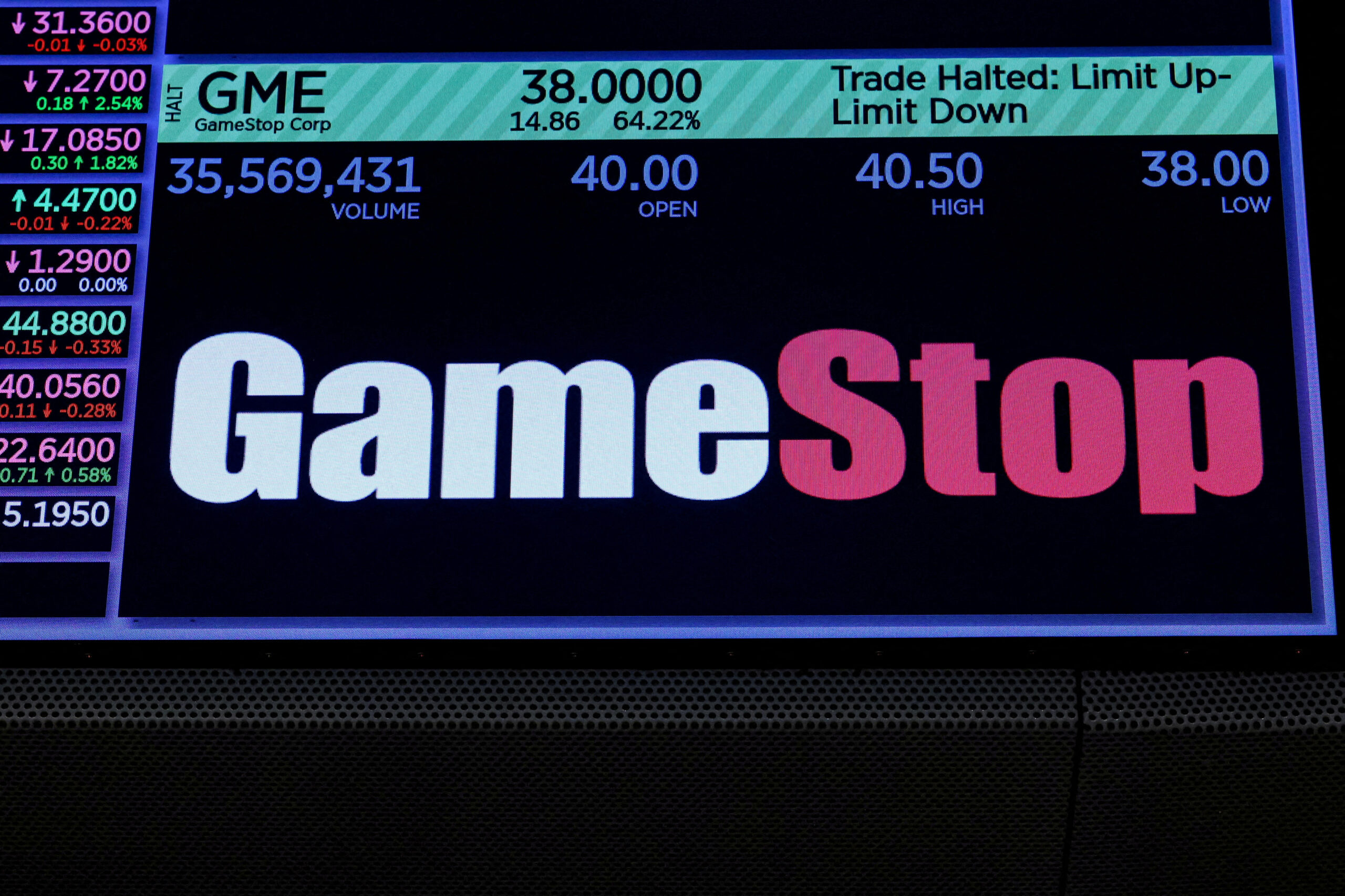
Manipulators of GameStop shares sue ‘Roaring Kitty’ for manipulating GameStop but withdraw lawsuit for now

NEW YORK, July 1 (Reuters) – Investors in GameStop (GME.N)

, opens new tab have for now withdrawn their lawsuit accusing Keith Gill, who is known as “Roaring Kitty” and helped spur the meme stock mania of 2021, of defrauding them through a “pump-and-dump” scheme for the videogame retailer.
A proposed class action accusing Gill of securities fraud was filed on Friday in the Brooklyn, New York, federal court, but voluntarily withdrawn on Monday without explanation. The lawsuit can be refiled
, opens new tab, according to the filing.
Lawyers at the Pomerantz law firm, which represents the investors, did not immediately respond to requests for comment.
Investors led by Martin Radev, who lives in the Las Vegas area, said Gill manipulated GameStop securities between May 13 and June 13 by quietly accumulating large quantities of stock and call options, then dumping some holdings after emerging from a three-year social media hiatus.
They said Gill’s activities caused GameStop’s share price to gyrate wildly, generating “millions of dollars” in profit for him at their expense.
“Defendant still enjoys celebrity status and commands a following of millions through his social media accounts,” the complaint said. “Accordingly, Defendant was well aware of his ability to manipulate the market for GameStop securities, as well as the benefits he could reap.”
Gill did not immediately respond to requests for comment on Monday.
On May 12, he posted a cryptic meme on the social media platform X that was widely seen as a bullish signal for GameStop, whose stock he cheerleaded in 2021.
GameStop’s share price more than tripled over the next two days, then gave back nearly all the gains by May 24.
On June 2, Gill revealed that he owned 5 million GameStop shares and 120,000 call options, and on June 13 revealed he had shed the call options but owned 9 million GameStop shares.
Investors said the truth about Gill’s investing became known on June 3 when the Wall Street Journal wrote about the timing of his options trades and said the online brokerage E*Trade (MS.N)
, opens new tab considered kicking him off its platform.
The meme stock mania was fueled in part by investors stuck at home during the pandemic, and led to a “short squeeze” that caused losses for hedge funds betting stock prices would fall.
On Monday, trading in Chewy (CHWY.N)

, opens new tab shares became volatile after Gill revealed a 6.6% stake in the pet products retailer.

Source: ‘Roaring Kitty’ lawsuit over GameStop is withdrawn for now | Reuters

So the investors starting the sueball were manipulating the stock by repeatedly shorting it, also with stocks that did not exist. Roaring Kitty showed this up a few years ago with the result that people started buying GME and raising the price. The shorters did not like this, as it cost them loads of money and they had to roll over their shorts. They are still clinging on to their shorts (at huge costs) and a bit ago Roaring Kitty broke his silence and posted a picture. That led to a spike in GME, probably at a time where the shorters needed to re-roll their shorts, which is why they are pissed.

Corrupt US supreme court thinks corruption is not corrupt and just basically legalized bribery

[…] if you’re rich enough, says the US supreme court, you can now pay off state and local officials for government acts that fit your policy preferences or advance your interests. You can give them lavish gifts, send them on vacations, or simply cut them checks. You can do all of this so long as the cash, gifts or other “gratuities” are provided after the service, and not before it – and so long as a plausible deniability of the meaning and intent of these “gratuities” is maintained.

That was the ruling authored by Kavanaugh in Snyder v United States, a 6-3 opinion issued on Wednesday, in which the supreme court dealt the latest blow to federal anti-corruption law. In the case, which was divided along ideological lines, the court held that “gratuities” – that is, post-facto gifts and payments – are not technically “bribes”, and therefore not illegal. Bribes are only issued before the desired official act, you see, and their meaning is explicit; a more vague, less vulgarly transactional culture of “gratitude” for official acts, expressed in gifts and payments of great value, is supposed to be something very different. The court has thereby continued its long effort to legalize official corruption, using the flimsiest of pretexts to rob federal anti-corruption statutes of all meaning.

The case concerns James Snyder, who in 2013 was serving as the mayor of small-town Portage, Indiana. Late that year, the city of Portage awarded a contract to Great Lakes Peterbilt, a trucking company, and bought five tow trucks from them; a few weeks later, Snyder asked for and accepted a check for $13,000 from the company. Snyder was found guilty of corruption and sentenced to 21 months in federal prison. He argued that the kickback was not illegal because it came after he awarded a contract to the company that ultimately paid him off, not before.

Absurdly the US supreme court agreed, classifying such payments as mere tokens of appreciation and claiming they are not illegal when they are not the product of an explicit agreement meant to influence official acts in exchange for money.

In so doing, the court has narrowed the scope of anti-corruption law for state and local officials to apply to only those exchanges of money, goods and official favor in which an explicit quid pro quo arrangement can be proved.

[…]

The court’s narrow vision of corruption – one in which only explicit, whispered deals in shadowy, smoke-filled back rooms count as “corruption”, and all other forms of influence and exchange are something other than the genuine article – also fundamentally misunderstands how influence-peddling works. In his controlling opinion, Kavanaugh emphasizes that in order to be an illegal bribe, a gift or payment must be accompanied by “a corrupt state of mind” on behalf of the official or benefactor. But corruption, influence-peddling, and unfair and undue methods of persuasion are more subtle and complicated than this in practice.

For an example, we need look no further than the conservative justices of the supreme court itself, who have become notorious, in recent years, for accepting lavish gifts and chummy intimacy from rightwing billionaires. According to investigative reporting by ProPublica, Clarence Thomas has accepted vacations, real estate purchases, tuition for his young relatives, and seemingly innumerable private jet trips from the billionaire Harlan Crow, as well as financing for an RV from another wealthy patron, Anthony Welters. Thomas has argued that these gifts and favors are merely the “personal hospitality” of “close personal friends”.

[…]

Source: The US supreme court just basically legalized bribery | Moira Donegan | The Guardian

Nordic Online Store Boozt Blocks Thousands of ‘Serial Returners’

Boozt AB, an online Nordic department store, has banned thousands of customers for returning an excessive number of purchased items.

The retailer has blocked about 60,000 of a total 3.5 million customers, in a bid to reduce the significant costs associated with “serial returners,” the company said in a statement. “Their behavior is too expensive for both the company and the environment,” it added.

Returns are costly for retailers both in lost revenue and in the cost of trying to turn around an item to be sold again. In some instances items returned aren’t fit to be sold again, leading to waste. In the UK alone, returns are expected to increase to more than £7 billion ($8.9 billion) by 2027, according to GlobalData. The biggest driver of returns is ill-fitting clothing and footwear.

Boozt’s savings by blocking customers amounts to “many millions,” the retailer said, without specifying an exact figure.

Source: Nordic Online Store Boozt Blocks Thousands of ‘Serial Returners’ – BNN Bloomberg

Makes sense to me

EU Commission accuses Microsoft of breaking antitrust rules with bundled Teams app

The European Commission said in a formal ‘statement of objections’ on Tuesday (25 June) that Microsoft had violated EU antitrust rules by bundling its Teams app with its Office 365 and Microsoft 365 productivity suites.

The statement follows almost a year-long investigation, and the tech giant told Euractiv it would work to “address the Commission’s remaining concerns”.

Teams is a communication and collaboration tool, while Office 365 and Microsoft 365 are comprehensive productivity software suites that include applications like Word, Excel, and Outlook for businesses.

Business software suppliers, like Microsoft, offer software as a service (SaaS) on their own cloud platforms, the Commission wrote in a press release. This allows new companies to provide SaaS solutions and customers to use different software from various providers.

However, Microsoft combines many software types in one package. When Teams was launched, Microsoft included it in their Office 365 and Microsoft 365 business suites, the Commission said.

Margrethe Vestager, the Commission’s executive vice president in charge of competition policy, said the EU executive was concerned that “Microsoft may be giving its own communication product Teams an undue advantage over competitors, by tying it to its popular productivity suites for businesses.”

This might have hindered competition and innovation, harming customers in the European Economic Area, the press release stated.

If confirmed, these practices would violate the Treaty on the Functioning of the European Union (TFEU), which prohibits abuse of a dominant market position.

Brad Smith, vice chair and president of Microsoft, told Euractiv the company was taking the Commission’s assessment seriously:

“Having unbundled Teams and taken initial interoperability steps, we appreciate the additional clarity provided today and will work to find solutions to address the Commission‘s remaining concerns,” he said.

After proceedings began in July 2023, Microsoft made changes to offer some suites without Teams, but the Commission found these changes insufficient and required more action to restore competition.

Statement of Objections

The Commission began its investigation last July, following a complaint from Slack Technologies, now owned by Salesforce. A second complaint from alfaview GmbH raised similar issues about Teams.

Sabastian Niles, president & chief legal officer at Salesforce, told Euractiv they are urging “the Commission to move towards a swift, binding, and effective remedy that restores free and fair choice and promotes competition”.

The Statement of Objections addresses both investigations. This formal step notifies Microsoft of the antitrust concerns, allowing them to review the case documents, respond in writing, and request a hearing to present their defence.

If the Commission finds enough evidence of a violation after reviewing the company’s defence, it can issue a decision to stop the conduct and impose a fine of up to 10% of the company’s global annual revenue.

The Commission can also require the company to take measures to end the infringement. There is no set timeline for completing antitrust investigations, as their duration depends on factors like the case’s complexity, company cooperation, and the defence process.

In March, it was the Commission that violated data protection rules in its use of Microsoft 365, leading to the imposition of corrective measures by the European Data Protection Supervisor (EDPS).

Source: EU Commission accuses Microsoft of breaking antitrust rules with bundled Teams app – Euractiv

The last statement is irrelevant in this context but still something very worrying. Teams should be available as a stand alone product.