Cybereason Introduces: Free Behavioral-Based Ransomware Blocking

Edit: It seems that this system creates a whole load of bogus files and dirs and monitors them, not the whole file system. This pollutes the file system and means that people can quite easily write around it.

Every ransomware program goes over files, chooses the ones that look interesting, encrypts them and destroys the originals. You know what else does this? Compression software, legitimate encryption applications and backup and cloud-sync solutions in addition to many more programs. The same behavior is exhibited even if you manually compress a directory with a password and then delete it. Since ransomware encrypts any file anywhere on a computer, it’s extremely difficult to distinguish a legitimate file activity from a malicious one. While every encrypted file increases the likelihood that the ransomware will be detected, each encrypted file equals another important piece of information lost. Every second counts when ransomware starts encrypting files.

Cybereason RansomFree: Behavior – Based Ransomware Blocking Freeware

Cybereason researched more than 40 ransomware strains, including Locky, Cryptowall, TeslaCrypt, Jigsaw and Cerber and identified the behavioral patterns that distinguish ransomware from legitimate applications. Whether a criminal group or nation created the program, all ransomware functions the same way and encrypts as many files as possible. These programs can’t determine what files are important so they encrypt everything based on file extensions.

RansomFree, Cybereason’s behavioral anti-ransomware free tool, takes all these challenges into consideration. By putting multiple deception methods in place, RansomFree detects ransomware as soon as encryption occurs either on a computer or network drive. Once encryption is detected, RansomFree suspends it, displays a popup that warns users their files are at risk and enables them to stop the attack.

RansomFree protects against local encryption as well as the encryption of files on network or shared drives. The encryption of shared files is among the doomsday scenarios an organization can imagine. It takes only one employee on the network to execute ransomware and affect the entire company.

Source: Cybereason Introduces: Free Behavioral-Based Ransomware Blocking

Interesting. Unfortunately Windows only.
Don’t smile too big to be effective in online marketing ads, study funds

“We found that broad smiles lead people to be perceived as warmer but less competent,” said Jessica Li, a KU assistant professor of marketing in the School of Business. “We ask how that can influence consumer behavior and in what situations might marketers want to smile more broadly.”
[…]
Li said broader smiles that tend to elicit more warmth seem to be more effective in promotional ads for a service that would carry less risk. But photos with a slight smile did better in marketing scenarios where services were higher risk, such as a medical procedure, legal representation or investment in a startup company.

“If I see an ad with a heart surgeon who smiles really broadly at me, I might think she is really warm, but not choose her to be my doctor because she seems less competent than a surgeon with a slight smile,” Li said. “If the risk is really low, such as going to the store to get a new shirt, then the competence of the salesperson isn’t as important and I respond more positively to the broad smile.”

In their analysis of Kickstarter.com, when the page creator’s profile photo exhibited a broad smile that tended to elicit perceptions of warmth, the total amount of money pledged decreased by more than 50 percent, and the average contribution per backer was 30 percent less than when the creator’s photo included only a slight smile.

“Project creators with a slight smile are perceived as more competent,” Li said. “More people wanted to donate to their project because they believe this competent person is able to deliver the product.”

However, a more intense smile does appear to elicit more buzz on social media or other low-cost behaviors. Profile photos with a broader smile received twice as many Facebook shares than someone with a slight smile.

Source: Don’t smile too big to be effective in online marketing ads, study funds

Scientists create first stable semisynthetic organism

Scientists at The Scripps Research Institute (TSRI) have announced the development of the first stable semisynthetic organism. Building on their 2014 study in which they synthesized a DNA base pair, the researchers created a new bacterium that uses the four natural bases (called A, T, C and G), which every living organism possesses, but that also holds as a pair two synthetic bases called X and Y in its genetic code.

TSRI Professor Floyd Romesberg and his colleagues have now shown that their single-celled organism can hold on indefinitely to the synthetic base pair as it divides. Their research was published January 23, 2017, online ahead of print in the journal Proceedings of the National Academy of Sciences.
[…]
First, Zhang and Lamb, co-first authors of the study, optimized a tool called a nucleotide transporter, which brings the materials necessary for the unnatural base pair to be copied across the cell membrane. “The transporter was used in the 2014 study, but it made the semisynthetic organism very sick,” Zhang explained. The researchers discovered a modification to the transporter that alleviated this problem, making it much easier for the organism to grow and divide while holding on to X and Y.

Next, the researchers optimized their previous version of Y. The new Y was a chemically different molecule that could be better recognized by the enzymes that synthesize DNA molecules during DNA replication. This made it easier for cells to copy the synthetic base pair.

A New Use for CRISPR-Cas9

Finally, the researchers set up a “spell check” system for the organism using CRISPR-Cas9, an increasingly popular tool in human genome editing experiments. But instead of editing a genome, the researchers took advantage of CRISPR-Cas9’s original role in bacteria.

The genetic tools in CRISPR-Cas9 (a DNA segment and an enzyme) originated in bacteria as a kind of immune response. When a bacterium encounters a threat, like a virus, it takes fragments of the invader genome and pastes them into its own genome—a bit like posting a “wanted” poster on the off chance it sees the invader again. Later, it can use those pasted genes to direct an enzyme to attack if the invader returns.

Knowing this, the researchers designed their organism to see a genetic sequence without X and Y as a foreign invader. A cell that dropped X and Y would be marked for destruction, leaving the scientists with an organism that could hold on to the new bases. It was like the organism was immune to unnatural base pair loss.
[…]
Romesberg emphasized that this work is only in single cells and is not meant to be used in more complex organisms. He added that the actual applications for this semisynthetic organism are “zero” at this point. So far, scientists can only get the organism to store genetic information.

Source: Scientists create first stable semisynthetic organism

Physicists show that real-time error correction in quantum communications is possible

Now researchers have shown that there is a grey area where Nature cannot tell the difference between the classical and the quantum. This opens the possibility of first performing quantum experiments with a type of classical light called “classically entangled” light.

By preparing and sending a so-called “classically entangled” beam the team could show that this was identical to sending a quantum state. This means that the observed quantum entanglement decay due to noise in the link can be reversed, paving the way for major advances in secure quantum links in fibre and free-space.

“We showed for the first time that classical light can be used to analyse a quantum link, acting as a direct equivalent to the behavior of the quantum state,” says Bienvenu Ndagano, lead author and PhD student at Wits University.

“Not similar, or mimicking, but equivalent. To show this, we exploited a particular type of laser beam, called vector beams, that have the property of being non-separable and sometimes called ‘classically entangled’.”

Ndagano explains that the quintessential property of quantum entanglement is the non-separability of the state, meaning that one part of the system cannot be separated from the other. “But non-separability is not unique to the quantum world: you can find it in weather maps where the locations on the map and the temperatures at those locations can’t be separated.”

More intriguingly, classical vector beams have this property too, which the team calls “classically entangled” light.

Says Forbes, “What we asked was: does this mean that classical light can be used in quantum systems – a grey area between the two worlds that we call classical entanglement?”.

[…]

This work allows for long distance quantum links to be established and tested with classically entangled light: as there is no shortage of photons in the classical light, all the measurements needed to fix the errors in the quantum state can be done in real-time without destroying the quantum information.

Thus, real-time error correction is possible as you can run experiments in the classical world that will tell you how to fix the error in the quantum world.

Source: Physicists show that real-time error correction in quantum communications is possible

Your Android device’s Pattern Lock can be cracked within five attempts

New research from Lancaster University, Northwest University in China, and the University of Bath, which benefitted from funding from the Engineering and Physical Sciences Research Council (EPSRC), shows for the first time that attackers can crack Pattern Lock reliably within five attempts by using video and computer vision algorithm software.

By covertly videoing the owner drawing their Pattern Lock shape to unlock their device, while enjoying a coffee in a busy café for example, the attacker, who is pretending to play with their phone, can then use software to quickly track the owner’s fingertip movements relative to the position of the device. Within seconds the algorithm produces a small number of candidate patterns to access the Android phone or tablet.

The attack works even without the video footage being able to see any of the on-screen content, and regardless of the size of the screen. Results are accurate on video recorded on a mobile phone from up to two and a half metres away – and so attacks are more covert than shoulder-surfing. It also works reliably with footage recorded on a digital SLR camera at distances up to nine metres away.

Researchers evaluated the attack using 120 unique patterns collected from independent users. They were able to crack more than 95 per cent of patterns within five attempts.

Complex patterns, which use more lines between dots, are used by many to make it harder for observers to replicate. However, researchers found that these complex shapes were easier to crack because they help the fingertip algorithm to narrow down the possible options.

During tests, researchers were able to crack all but one of the patterns categorised as complex within the first attempt. They were able to successfully crack 87.5 per cent of median complex patterns and 60 per cent of simple patterns with the first attempt.

Source: Your Android device’s Pattern Lock can be cracked within five attempts

dataviz.tools – a curated guide to the best tools, resources and technologies for data visualization

This site features a curated selection of data visualization tools meant to bridge the gap between programmers/statisticians and the general public by only highlighting free/freemium, responsive and relatively simple-to-learn technologies for displaying both basic and complex, multivariate datasets. It leans heavily toward open-source software and plugins, rather than enterprise, expensive B.I. solutions.
Why?

Well, information visualization, or InfoVis, has for the past three decades been mostly regarded as a specialty skill relegated to the ranks of researchers and scientists. But in recent years, the proliferation of Big Data combined with a surge of new, open-source tools for data display have given rise to the democratization of “data visualization” and “data journalism.” It’s something anyone can do. As such, all resources that may require basic programming knowledge are labeled as such.

As Simon Rogers of The Guardian so artfully stated in 2008, “Anyone can do it. Data journalism is the new punk.”

Source: dataviz.tools

Researchers Uncover Twitter Bot Army That’s 350,000 Strong

Two researchers from University College London claim to have discovered an army of 350,000 such bots hiding in plain sight, distinguished by their affinity for tweeting quotes from Star Wars novels. And, like Aragorn bursting into the throne room at Helm’s Deep to deliver the news of an encroaching orc army, they have come to warn us.

Source: Researchers Uncover Twitter Bot Army That’s 350,000 Strong – D-brief

Galileo satellites experiencing multiple clock failures

The onboard atomic clocks that drive the satellite-navigation signals on Europe’s Galileo network have been failing at an alarming rate.

Across the 18 satellites now in orbit, nine clocks have stopped operating.

Three are traditional rubidium devices; six are the more precise hydrogen maser instruments that were designed to give Galileo superior performance to the American GPS network.

Galileo was declared up and running in December.

However, it is still short of the number of satellites considered to represent a fully functioning constellation, and a decision must now be made about whether to suspend the launch of further spacecraft while the issue is investigated.

Source: Galileo satellites experiencing multiple clock failures – BBC News

CMU AI Is Tough Poker Player

As the “Brains vs. Artificial Intelligence: Upping the Ante” poker competition nears its halfway point, Carnegie Mellon University’s AI program, Libratus, is opening a lead over its human opponents — four of the world’s best professional poker players.One of the pros, Jimmy Chou, said he and his colleagues initially underestimated Libratus, but have come to regard it as one tough player.”The bot gets better and better every day,” Chou said. “It’s like a tougher version of us.”
[…]
In the first Brains vs. AI contest in 2015, four leading pros amassed more chips than the AI, called Claudico. But in the latest contest, Libratus had amassed a lead of $459,154 in chips in the 49,240 hands played by the end of Day Nine.

“I’m feeling good,” Sandholm said of Libratus’ chances as the competition proceeds. “The algorithms are performing great. They’re better at solving strategy ahead of time, better at driving strategy during play and better at improving strategy on the fly.”

Source: CMU AI Is Tough Poker Player | Carnegie Mellon School of Computer Science

CIA FOIA Electronic Reading Room releases 12m new documents

Welcome to the Central Intelligence Agency’s Freedom of Information Act Electronic Reading Room. Do UFOs fascinate you? Are you a history buff who wants to learn more about the Bay of Pigs, Vietnam or the A-12 Oxcart? Have stories about spies always fascinated you? You can find information about all of these topics and more in the Central Intelligence Agency (CIA) Freedom of Information Act (FOIA) Electronic Reading Room.

Source: Freedom of Information Act Electronic Reading Room | CIA FOIA (foia.cia.gov)

Apparently the CIA has just released 12m documents into this

The CIA Just Dumped 12 Million Declassified Documents Online

Does More Money Change What We Value at Work? – Glassdoor Economic Research

For employers, this research bolsters the idea that pay and benefits—while important—are only one factor when it comes to keeping employees engaged over the long term.

As pay rises, compensation and benefits become less important as drivers of employee satisfaction. Instead, other workplace factors play a more important role. Regardless of income level, we find three factors are the most important drivers of job satisfaction: culture and values, senior leadership, and career opportunities.

For job seekers, this suggests that finding satisfaction at work has less to do with pay, and more to do with broader workplace factors. Although pay is important, it is not among the main drivers of workplace happiness. Instead, the big drivers of job satisfaction are working in a company that shares your cultural values, that offers a meaningful career arc, and that has senior leaders you support and believe in.

When it comes to finding satisfaction at work, these are the key factors that matter most—regardless of income level.

Source: Does More Money Change What We Value at Work? – Glassdoor Economic Research

People who swear are deemed more honest

In three studies, we explored the relationship between profanity and honesty. We examined profanity and honesty first with profanity behavior and lying on a scale in the lab (Study 1; N = 276), then with a linguistic analysis of real-life social interactions on Facebook (Study 2; N = 73,789), and finally with profanity and integrity indexes for the aggregate level of U.S. states (Study 3; N = 50 states). We found a consistent positive relationship between profanity and honesty; profanity was associated with less lying and deception at the individual level and with higher integrity at the society level.

Source: Frankly, We Do Give a Damn – Jan 15, 2017

U.S. government begins asking foreign travelers about social media

NEW YORK — The U.S. government quietly began requesting that select foreign visitors provide their Facebook, Twitter and other social media accounts upon arriving in the country
[…]
Since Tuesday, foreign travelers arriving in the United States on the visa waiver program have been presented with an “optional” request to “enter information associated with your online presence,” a government official confirmed Thursday. The prompt includes a drop-down menu that lists platforms including Facebook, Google+, Instagram, LinkedIn and YouTube, as well as a space for users to input their account names on those sites.
[…]
“There are very few rules about how that information is being collected, maintained [and] disseminated to other agencies, and there are no guidelines about limiting the government’s use of that information,” said Michael W. Macleod-Ball, chief of staff for the American Civil Liberties Union’s Washington office.
“The choice to hand over this information is technically voluntary,” he said. “But the process to enter the U.S. is confusing, and it’s likely that most visitors will fill out the card completely rather than risk additional questions from intimidating, uniformed officers — the same officers who will decide which of your jokes are funny and which ones make you a security risk.”

Opponents also worry that the U.S. change will spark similar moves by other countries.

“Democratic and non-democratic countries — including those without the United States’ due process protections — will now believe they are more warranted in demanding social media information from visitors that could jeopardize visitors’ safety,” said Internet Association general counsel Abigail Slater. ”The nature of the DHS’ requests delves into personal information, creating an information dragnet.”

Source: U.S. government begins asking foreign travelers about social media

The 4th Reich in action again.

It’s not just your browser: Your machine can be fingerprinted easily

The group – Yinzhi Cao and Song Li of from Lehigh University in Pennsylvania, and Erik Wijmans from Washington University in St. Louis – have worked out how to access various operating system and hardware-level features that can fingerprint an individual machine, regardless of browser.

These include screen resolution with zoom; CPU virtual cores; installed fonts and writing scripts; the AudioContext call; GPU features such as line and curve rendering, anti-aliasing, shading, and transparency; and more.

The researchers reckon they can fingerprint a machine with 99.24 per cent accuracy (compared to under 91 per cent for browser fingerprinting).

Cao and friends say there’s one browser that defeats the worst of their attacks: the Tor browser.

Source: It’s not just your browser: Your machine can be fingerprinted easily

MongoDB hackers now sacking ElasticSearch

Some 35,000 mostly Amazon Web Services ElasticSearch servers are open to the internet and to ransoming criminals, Shodan boss John Matherly says.

So far more than 360 instances have had data copied and erased, held to ransom using the same techniques that blitzed tens of thousands of MongoDB servers this week.

Affected ElasticSearch administrators are greeted in one actor’s attacks with a message reading:

“Send 0.2 bitcoins to this wallet: 1DAsGY4Kt1a4LCTPMH5vm5PqX32eZmot4r if you want recover (sic) your database! Send to this email your service IP after sending the bitcoins p14t0s@sigaint.org (sic).”

Source: MongoDB hackers now sacking ElasticSearch

NL MoD plans for flexible defence

Minister Jeanine Hennis-Plasschaert van Defensie heeft vandaag een brief naar Tweede Kamer gestuurd over de invoering van het Total Force Concept. In Nederland ‘de Adaptieve Krijgsmacht’ genoemd. Hierin presenteert de bewindsvrouw hoe zij de krijgsmacht nog flexibeler en duurzamer wil laten samenwerken met bedrijven en organisaties. De krijgsmacht heeft bijvoorbeeld niet meer alles zelf op de plank, maar kan over mens en materieel beschikken waar en wanneer dat nodig is.

Source: Defensie flexibeler met de Adaptieve Krijgsmacht | Nieuwsbericht | Defensie.nl

hier de kamerbrief

By employing personnel outside of defence and subcontracting jobs, they will work up to a more flexible model in 2020 in a “Total Force Concept”

WhatsApp backdoor allows snooping on encrypted messages

WhatsApp’s end-to-end encryption relies on the generation of unique security keys, using the acclaimed Signal protocol, developed by Open Whisper Systems, that are traded and verified between users to guarantee communications are secure and cannot be intercepted by a middleman. However, WhatsApp has the ability to force the generation of new encryption keys for offline users, unbeknown to the sender and recipient of the messages, and to make the sender re-encrypt messages with new keys and send them again for any messages that have not been marked as delivered.

The recipient is not made aware of this change in encryption, while the sender is only notified if they have opted-in to encryption warnings in settings, and only after the messages have been re-sent. This re-encryption and rebroadcasting effectively allows WhatsApp to intercept and read users’ messages.

The security backdoor was discovered by Tobias Boelter, a cryptography and security researcher at the University of California, Berkeley. He told the Guardian: “If WhatsApp is asked by a government agency to disclose its messaging records, it can effectively grant access due to the change in keys.”

The backdoor is not inherent to the Signal protocol. Open Whisper Systems’ messaging app, Signal, the app used and recommended by whistleblower Edward Snowden, does not suffer from the same vulnerability. If a recipient changes the security key while offline, for instance, a sent message will fail to be delivered and the sender will be notified of the change in security keys without automatically resending the message.

WhatsApp’s implementation automatically resends an undelivered message with a new key without warning the user in advance or giving them the ability to prevent it.

Source: WhatsApp backdoor allows snooping on encrypted messages | Technology | The Guardian

Way More People Will Now Have Access to the NSA’s Raw, Unfiltered Data

Previously, when the NSA passed data it collected through its secretive, advanced, and sometimes illegal methods, an NSA analyst would strip the data that pertained to innocent people, and would only pass on what they deemed necessary. Now, when the NSA shares information with another intelligence agency, it will pass on the raw data, with no redactions. This means that employees and analysts at the 16 other federal intelligence agencies will now see raw, unfiltered data collected by the NSA.

The New York Times neatly summed up the changes: “Essentially, the government is reducing the risk that the N.S.A. will fail to recognize that a piece of information would be valuable to another agency, but increasing the risk that officials will see private information about innocent people.”
Setup Timeout Error: Setup took longer than 30 seconds to complete.

Patrick Toomey, a staff attorney at the American Civil Liberties national security project, slammed the sharing of raw data between agencies, noting that it’s all collected without a warrant.

Source: Way More People Will Now Have Access to the NSA’s Raw, Unfiltered Data

New Android-infecting malware brew hijacks devices and then attacks your wifi router

Hackers have brewed up a strain of Android malware that uses compromised smartphones as conduits to attack routers.The Switcher trojan does not attack Android device users directly. Instead, the malware uses compromised smartphones and tablets as tools to attack any wireless networks they connect to.Switcher brute-forces access to the network’s router and then changes its DNS settings to redirect traffic from devices connected to the network to a rogue DNS server, security researchers at Kaspersky Lab report.This server fools the devices into communicating with websites controlled by the attackers, leaving users wide open to either phishing or further malware-based attacks.The attackers claim to have successfully infiltrated 1,280 wireless networks so far, mainly in China.

Source: New Android-infecting malware brew hijacks devices. Why, you ask? Your router • The Register

Why China especially? Because Google is forbidden there, so Chinese Android users are forced to use different app market places than the Play store.

KLIC-WIN shows the underground infrastructure of your neigbourhood – in NL

De graafsector heeft het initiatief genomen voor het programma KLIC-WIN. Dit programma moderniseert de uitwisseling van kabel- en leidinginformatie volgens de WION en sluit systemen en processen beter aan op de Europese richtlijn INSPIRE. Op deze manier bereiden de graafsector en het Kadaster zich voor op de toekomst.

De naam KLIC-WIN is een samenvoeging van de WION (de Nederlandse Wet informatie-uitwisseling ondergrondse netten) en INSPIRE (de Europese richtlijn Infrastructure for Spatial Information in the European Community).

Source: KLIC-WIN

‘Tooth repair drug’ may replace fillings

The team at King’s College London showed that a chemical could encourage cells in the dental pulp to heal small holes in mice teeth.

A biodegradable sponge was soaked in the drug and then put inside the cavity.

The study, published in Scientific Reports, showed it led to “complete, effective natural repair”.
[…]
They discovered that a drug called Tideglusib heightened the activity of stem cells in the dental pulp so they could repair 0.13mm holes in the teeth of mice.

A drug-soaked sponge was placed in the hole and then a protective coating was applied over the top.

Prof Paul Sharpe, one of the researchers, told the BBC News website: “The sponge is biodegradable, that’s the key thing.

“The space occupied by the sponge becomes full of minerals as the dentine regenerates so you don’t have anything in there to fail in the future.”

The team at King’s is now investigating whether the approach can repair larger holes.

Prof Sharpe said a new treatment could be available soon: “I don’t think it’s massively long term, it’s quite low-hanging fruit in regenerative medicine and hopeful in a three-to-five year period this would be commercially available.”

Source: ‘Tooth repair drug’ may replace fillings – BBC News

MIT Unveils New Material That’s Strongest and Lightest On Earth

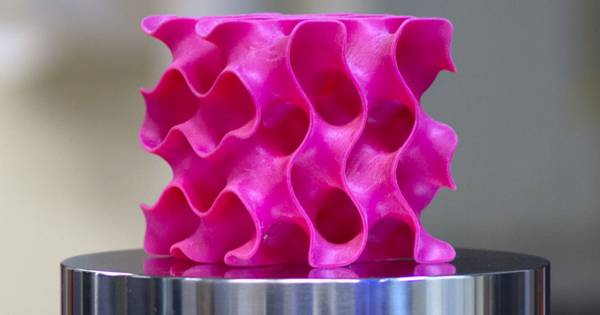
Graphene, which was heretofore, the strongest material known to man, is made from an extremely thin sheet of carbon atoms arranged in two dimensions. But there’s one drawback: while notable for its thinness and unique electrical properties, it’s very difficult to create useful, three-dimensional materials out of graphene.

Now, a team of MIT researchers discovered that taking small flakes of graphene and fusing them following a mesh-like structure not only retains the material’s strength, but the graphene also remains porous. Based on experiments conducted on 3D printed models, researchers have determined that this new material, with its distinct geometry, is actually stronger than graphene – making it 10 times stronger than steel, with only five percent of its density.

Source: MIT Unveils New Material That’s Strongest and Lightest On Earth