Former Lottery Security Director hacked random-number generator to rig lotteries, investigators say

For several years, Eddie Tipton, the former security director of the US Multi-State Lottery Association, installed software code that allowed him to predict winning numbers on specific days of the year, investigators allege. The random-number generators had been erased, but new forensic evidence has revealed how the hack was apparently done.

[…]

The number generator had apparently been hacked to produce predictable numbers on three days of the year, after the machine had gone through a security audit.

All six prizes linked to Tipton were drawn between 2005 and 2011 on either 23 November or 29 December.

Investigators were able to recreate the draws and produce “the very same ‘winning numbers’ from the program that was supposed to produce random numbers,” said the Iowa Division of Criminal Investigation agent Don Smith.

Evidence mounting that DNA matching is more of an art than a science due partly to proprietary algorhythms

Dror and Hampikian gave the DNA evidence to 17 lab technicians for examination, withholding context about the case to ensure unbiased results. All of the techs were experienced, with an average of nine years in the field. Dror and Hampikian asked them to determine whether the mixture included DNA from the defendant. In 2011, the results of the experiment were made public: Only one of the 17 lab technicians concurred that the defendant could not be excluded as a contributor. Twelve told Dror and Hampikian that the DNA was exclusionary, and four said that it was inconclusive. In other words, had any one of those 16 scientists been responsible for the original DNA analysis, the rape trial could have played out in a radically different way. Toward the end of the study, Dror and Hampikian quote the early DNA-testing pioneer Peter Gill, who once noted, “If you show 10 colleagues a mixture, you will probably end up with 10 different answers” as to the identity of the contributor. (The study findings are now at the center of the defendant’s motion for a new trial.)

[…]

The case against Anderson started when police matched biological matter found under Kumra’s fingernails to Anderson’s DNA in a database. Anderson was held in jail for five months before his lawyer was able to produce records showing that Anderson had been in detox at a local hospital at the time of the killing; it turned out that the same paramedics who responded to the distress call from Kumra’s mansion had treated Anderson earlier that night, and inadvertently transferred his DNA to the crime scene via an oxygen-monitoring device placed on Kumra’s hand

[…]

DNA transfer—the migration of cells from person to person, and between people and objects—is inevitable when we touch, speak, do the laundry. A 1996 study showed that sperm cells from a single stain on one item of clothing made their way onto every other item of clothing in the washer. And because we all shed different amounts of cells, the strongest DNA profile on an object doesn’t always correspond to the person who most recently touched it. I could pick up a knife at 10 in the morning, but an analyst testing the handle that day might find a stronger and more complete DNA profile from my wife, who was using it four nights earlier. Or the analyst might find a profile of someone who never touched the knife at all. One recent study asked participants to shake hands with a partner for two minutes and then hold a knife; when the DNA on the knives was analyzed, the partner was identified as a contributor in 85 percent of cases, and in 20 percent as the main or sole contributor.

[…]

In 2011, Legal Aid requested a hearing to question whether the software met the Frye standard of acceptance by the larger scientific community. To Goldthwaite and her team, it seemed at least plausible that a relatively untested tool, especially in analyzing very small and degraded samples (the FST, like TrueAllele, is sometimes used to analyze low-copy-number evidence), could be turning up allele matches where there were none, or missing others that might have led technicians to an entirely different conclusion. And because the source code was kept secret, jurors couldn’t know the actual likelihood of a false match.

At the hearing, bolstered by a range of expert testimony, Goldthwaite and her colleagues argued that the FST, far from being established science, was an unknown quantity. (The medical examiner’s office refused to provide Legal Aid with the details of its code; in the end, the team was compelled to reverse-engineer the algorithm to show its flaws.)

[…]

In 2012, shortly after Legal Aid filed its challenge to the FST, two developers in the Netherlands, Hinda Haned and Jeroen de Jong, released LRmix Studio, free and open-source DNA-profiling software—the code is publicly available for other users to explore and improve.

Erin Murphy, of NYU, has argued that if probabilistic DNA typing is to be widely accepted by the legal community—and she believes that one day it should be—it will need to move in this direction: toward transparency.

Foscam, QNAP, Swann send data to iotcplatform.com and others without knowledge or consent

Imagine buying an internet-enabled surveillance camera, network attached storage device, or home automation gizmo, only to find that it secretly and constantly phones home to a vast peer-to-peer (P2P) network run by the Chinese manufacturer of the hardware. Now imagine that the geek gear you bought doesn’t actually let you block this P2P communication without some serious networking expertise or hardware surgery that few users would attempt.

The FI9286P, a Foscam camera that includes P2P communication by default.

This is the nightmare “Internet of Things” (IoT) scenario for any system administrator: The IP cameras that you bought to secure your physical space suddenly turn into a vast cloud network designed to share your pictures and videos far and wide. The best part? It’s all plug-and-play, no configuration necessary!

Eyefi To Brick Its Older Wi-Fi Cards, And Photographers Aren’t Happy

If you’re a photographer shooting with Eyefi’s older generation Wi-Fi memory cards, here’s something you should know: your card will soon become more or less useless.

Just days after announcing that it had sold its cloud services to Ricoh, Eyefi sent out an email to customers this week, informing them that older X1 and X2 cards — everything prior to the new Mobi line — now have an “End of Life” date of September 16th, 2016.

Source: Eyefi To Brick Its Older Wi-Fi Cards, And Photographers Aren’t Happy

So even hardware is suspect to the whims of the manufacturer. Having a kill switch on stuff you buy sucks.

Intel based PCs with BIOS vuln

Is it a bug or is it a backdoor?

is exposed to a UEFI bug that can be exploited to disable firmware write-protection.

If the claims made by Dmytro Oleksiuk at Github are correct, an attacker can “disable flash write protection and infect platform firmware, disable Secure Boot, [and] bypass Virtual Secure Mode (Credential Guard, etc.) on Windows 10 Enterprise.”

The reason Oleksiuk believes other vendors are also vulnerable is that the buggy code is inherited from Intel. He writes that the SystemSmmRuntimeRt was copied from Intel reference code.

Source: Lenovo scrambling to get a fix for BIOS vuln

Also confirmed on HP pavilions

You can now browse through 427 million stolen MySpace passwords

An anonymous hacker managed to obtain an enormous number of user credentials in June 2013 from fallen social networking giant MySpace — some 427 million passwords, belonging to approx. 360 million users. In May 2016, a person started selling that database of passwords on the dark web. Now, the entire database is available online for free.

Source: You can now browse through 427 million stolen MySpace passwords

The password for the file is KLub8pT&iU$8oBY(*$NOiu

Acer leaks payment cards in e-store hack

The PC maker has started writing to customers [PDF] warning that their personal records were siphoned off from its online store by crooks between May 12, 2015 and April 28, 2016.

Acer did not say how many customers had their details swiped.

The lost data includes customer names, addresses, card numbers, and three-digit security verification codes on the backs of the cards. Acer says that no passwords or social security numbers were obtained by the thieves, which will be of no comfort whatsoever to the victims.

Source: You Acer holes! PC maker leaks payment cards in e-store hack

Oh dear, why were they keeping all that information in a database anyway?!

Buy one of 70K hacked servers from $6, get control kit with it

Researchers have uncovered an underground marketplace selling information on over 70,000 compromised servers based around the globe.

Russia-based Kaspersky Lab has revealed today that the online forum, named xDedic, seems to be operated by a Russian-speaking organisation and allows hackers to pay for undetectable access to a wide range of servers, including those owned by government, corporate and academic groups in more than 170 countries. XDedic takes a 5% fee for all funds placed into its trading accounts.

Access to a compromised server can be bought for as little as $6 (approx. £4). The kit comes with relevant software to instruct on launching denial-of-service attacks and spam campaigns on the targeted network, as well as allowing criminals to illegally produce bitcoin and breach online systems, such as retail payment platforms.

With an upgrade to $7 cybercriminals can gain access to government-based servers, including systems in interior and foreign ministries, commerce departments and local councils. Paying up to $15, can allow a hacker access to high-capacity network connections, explained Costin Raiu, director of Kaspersky’s research and analysis unit

Source: Online marketplace sells hackers access to breached servers

BadTunnel Bug Hijacks All Network Traffic, for All Windows Versions

The research of Yang Yu, founder of Tencent’s Xuanwu Lab, has helped Microsoft patch a severe security issue in its implementation of the NetBIOS protocol that affected all Windows versions ever released.

Yu says an attacker could leverage this vulnerability to pass as a WPAD or ISATAP server and redirect all the victim’s network traffic through a point controlled by the attacker.

By network traffic, Yu refers to all traffic, not just Web HTTP and HTTPS. This includes OS updates, software upgrades, Certificate Revocation List updates via Microsoft’s Crypto API, and other OS maintenance operations.

Source: BadTunnel Bug Hijacks Network Traffic, Affects All Windows Versions

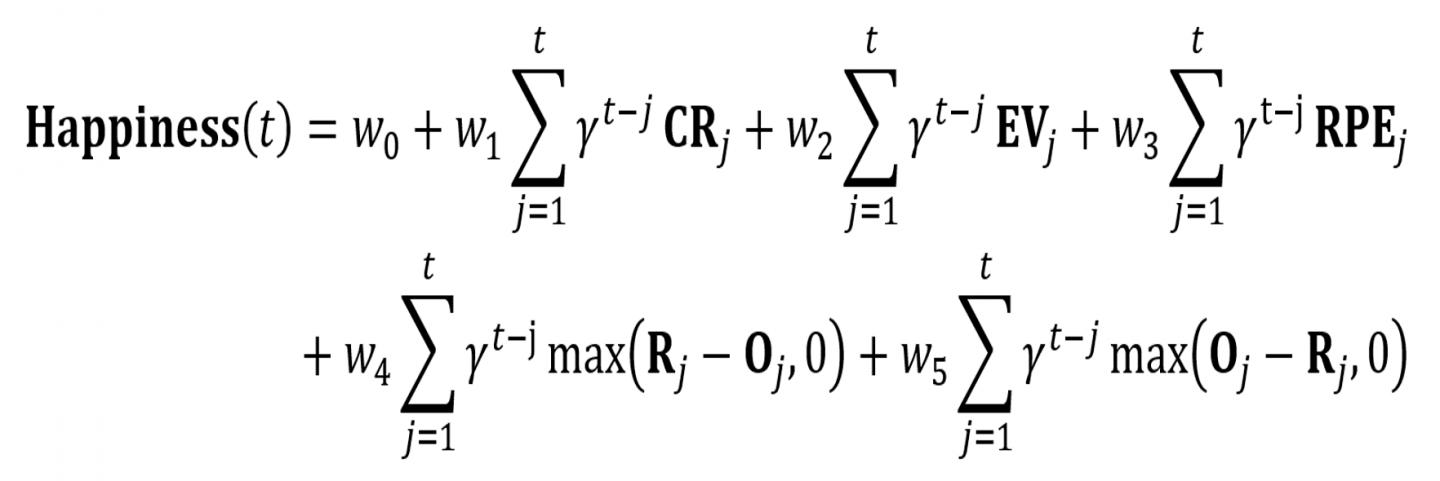
Happiness equation: New equation reveals how other people’s fortunes affect our happiness

A new equation, showing how our happiness depends not only on what happens to us but also how this compares to other people, has been developed by UCL researchers funded by Wellcome.

The team developed an equation to predict happiness in 2014, highlighting the importance of expectations, and the new updated equation also takes into account other people’s fortunes.

The study, published in Nature Communications, found that inequality reduced happiness on average. This was true whether people were doing better or worse than another person they had just met. The subjects played gambles to try to win money and saw whether another person won or lost the same gambles. On average, when someone won a gamble they were happier when their partner also won the same gamble compared to when their partner lost. This difference could be attributed to guilt. Similarly, when people lost a gamble they were happier when their partner also lost compared to when their partner won, a difference that could be attributed to envy.

“Our equation can predict exactly how happy people will be based not only on what happens to them but also what happens to the people around them,” explains one of the study’s co-lead authors, Dr Robb Rutledge (UCL Institute of Neurology and Max Planck UCL Centre for Computational Psychiatry and Ageing Research). “On average we are less happy if others get more or less than us, but this varies a lot from person to person. Interestingly, the equation allows us to predict how generous an individual will be in a separate scenario when they are asked how they would like to split a small amount of money with another person. Based on exactly how inequality affects their happiness, we can predict which individuals will be altruistic.”

Source: Happiness equation: New equation reveals how other people’s fortunes affect our happiness

TeLeScope can decrypt your TLS traffic realtime if on a hypervised machine (which most people are nowadays)

Bitdefender vulnerability researcher Radu Caragea presented today at the Hack In The Box Amsterdam conference a novel way to extract TLS keys from virtual machines, using an out-of-guest approach. The new technique works to detect the creation of TLS session keys in memory as the virtual machine is running.
The presentation covers a novel technique that not only works for virtualized machines but is also OS-agnostic and crypto-library-agnostic. With a minimal overhead both in terms of speed and in terms of setup, this new technique offers insight into dynamic malware analysis of infected machines.

Source: TeLeScope unveiled at Hack In the Box | Bitdefender Labs

Citigroup Is Suing AT&T For Using the Word ‘Thanks’ Because Citi Trademarked Thankyou

Back in 2010, the US Patent and Trademark Office granted Citigroup a trademark for “thankyou,” which the company uses for credit card services. Today the company is suing AT&T over its own use of the terms “thanks” and “thanks AT&T.” Check the date, because this isn’t April Fool’s.

Source: Citigroup Is Suing AT&T For Using the Word ‘Thanks’ Because Citi Trademarked It

Uhm… some dick in a patent office decided to trademark a well known phrase because they dropped the space – and now they are using it as ammunition to go after people using a well used word? There is something rotten in the state of trademark.

Gawker Ordered To Pay Hulk Hogan $115 Million In Sex Tape Lawsuit – wait, how much?

In a closely watched trial by the media community, shortly after 7pm on Friday night, and less than six hours after starting deliberations, the jury sided with ex-pro wrestler Hulk Hogan and awarded him $115 million in his sex tape lawsuit against Gawker Media. The trial lasted two weeks. The award consists of $55 million for economic injuries, and $60 million for emotional distress. It may also mean the end of Gawker.

Source: Gawker Ordered To Pay Hulk Hogan $115 Million In Sex Tape Lawsuit

How on earth did they come up with this astronomical figure? There is no way the Hulk could have sold it himself for anything like $55m and the distress charges are crazy!

Have Your iPhone 6 Repaired, Only To Get It Bricked By Apple

In case you had a problem with the fingerprint sensor or some other small defect on your iPhone 6 and had it repaired by a non-official (read: cheaper) shop, you may be in for a nasty surprise: error 53. What happens is that during an OS update or re-install the software checks the internal hardware and if it detects a non-Apple component, it will display an error 53 and brick your phone. Any photos or other data held on the handset is lost – and irretrievable.

Source: Have Your iPhone 6 Repaired, Only To Get It Bricked By Apple – Slashdot

Wow, how evil is that?! Is it even legal? I mean, you bought the device, how do they justify sabotaging someone else’s property?

Hundreds of VerticalScope forums hacked, leaking 45 million user accounts

the database shows email addresses, passwords that were hashed and salted passwords with MD5 (an algorithm that nowadays is easy to crack), as well as a user’s IP address (which in some cases can determine location), and the site that the record was taken from.

Source: Exclusive: Hundreds of forums hacked, leaking millions of users’ data

You can search the database on leakedsource

Chinese loan sharks seek salacious selfies as collateral

The selfies are accepted as collateral for loans up to 15,000 yuan – about US$2,200 – on a whopping 30 per cent rate of interest per week. That may, however, have to do with translation: China Daily says the interest rate is 30 per cent per year.

As well as the selfies, borrowers had to provide other forms of identity such as their student cards, and contact details for family members.

With the issue going public, PDO reports that lenders have been sending messages via Tencent’s QQ telling readers they’re no longer accepting nude photos.

Source: Chinese loan sharks seek salacious selfies as collateral

Tesla Suspension Breakage: It’s Not The Crime, It’s The Coverup – Slashdot

You find a fault in a Tesla. You ask for repairs. Tesla comes back offering 50% of the repair price, but only if you promise to not tell anyone about the problem you found!

This offer, to repair a defective part in exchange for a non-disclosure agreement, is unheard of in the auto industry. More troublingly, it represents a potential assault by Tesla Motors on the right of vehicle owners to report defects to the National Highway Traffic Safety Administration’s complaint database, the auto safety regulators sole means of discovering defects independent of the automakers they regulate.

Source: Tesla Suspension Breakage: It’s Not The Crime, It’s The Coverup – Slashdot

Ouch!

Humanity will only buy 47 smartphones per SECOND in 2016

Last year we bought 44 per second, but growth has slowed so its frowning time […] Prognostication-producers Gartner reckon the disappointing start to 2016 will continue for smartphone makers, with the year to end a mere seven per cent ahead of 2015.

If it’s accurate, that would translate to 1.5 billion units for the year – a little over 47 units per second, up from 44 units per second for 2015 (1.4 billion devices).

Source: Humanity will only buy 47 smartphones per SECOND in 2016

Again – there is something seriously wrong with people frowning about these figures because growth is low (*cough 7.5%!*). Total business size is absolutely stupendous!

Boffins shake up smartphone with motion-sensor as microphone

because nobody regards the vibration sensor as sensitive, smartphones typically leave it with wide-open permissions.

What Nirupam Roy and Romit Roy Choudhury did was to hack an Android phone so its vibration sensor acted as a microphone. Well: a vibration sensor is half-way to being a microphone anyhow, in terms of its basic function.

As they note in this paper, “any vibrating object should respond to air vibrations”. What makes a microphone different is that the diaphragm is very light, and therefore responds well to quiet sounds and high frequencies. The vibration sensor, on the other hand, doesn’t respond much to either.

As the pair says in their paper, “VibraPhone is attempting a different problem altogether – instead of learning a motion signature, it attempts to reconstruct the inherent speech content from the low bandwidth, highly distorted output of the vibra-motor.”

Source: Boffins shake up smartphone with motion-sensor as microphone