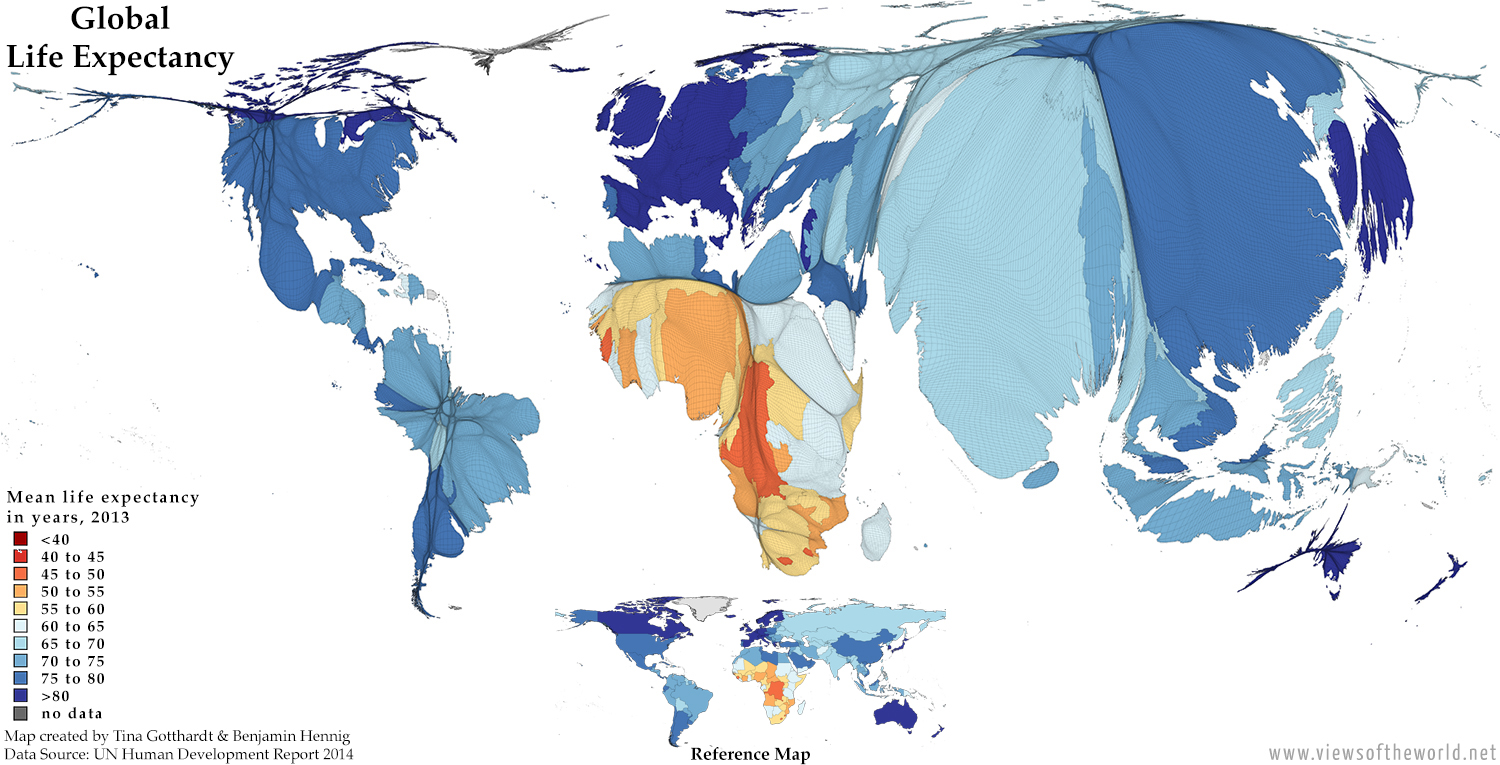
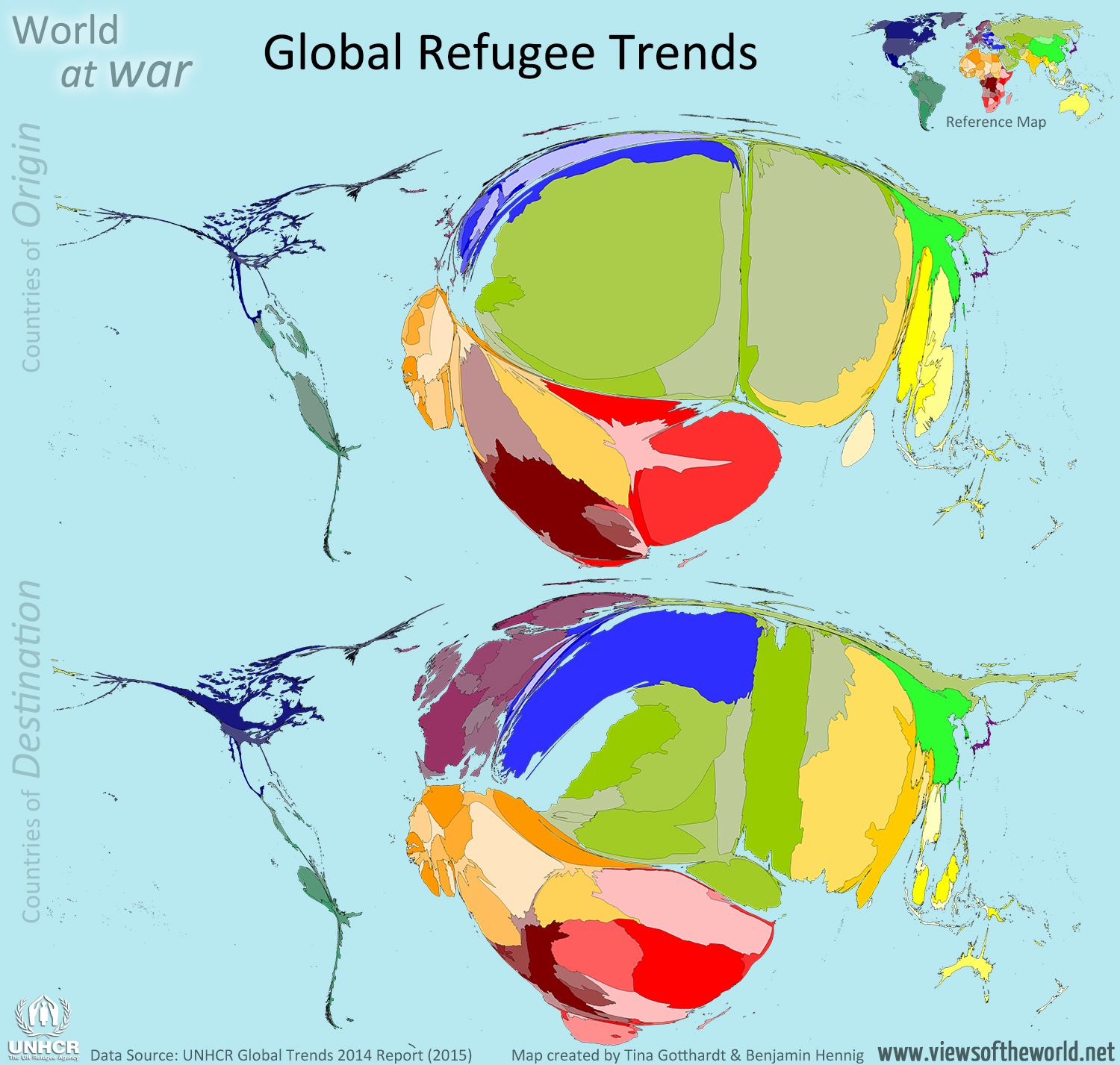
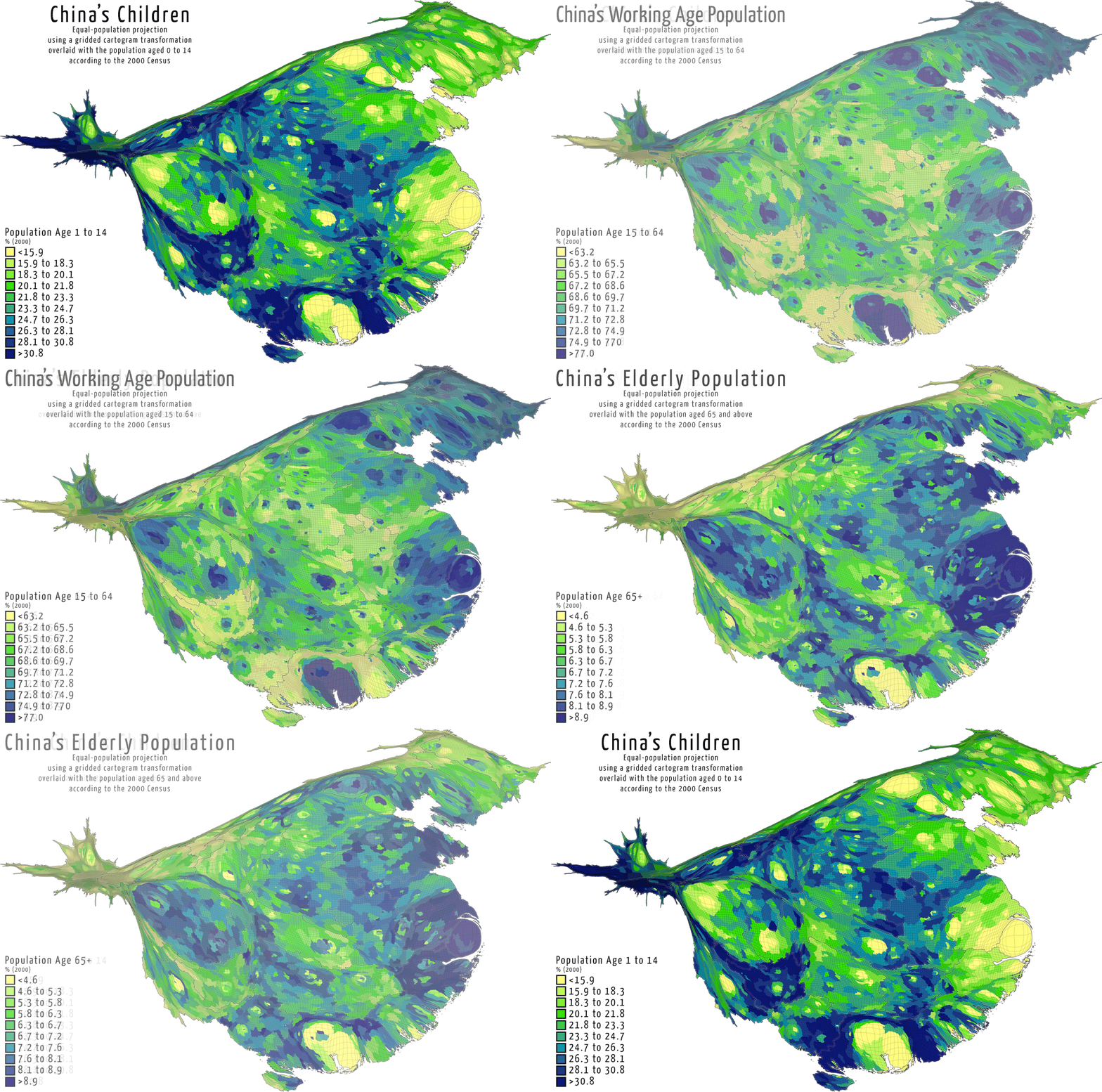
The maps and cartograms here are pretty spectacular!

Source: Views of the World – worldmapping beyond mere description
Another nice site to visit is ICA Commission on Mapdesign

The maps and cartograms here are pretty spectacular!
Source: Views of the World – worldmapping beyond mere description
Another nice site to visit is ICA Commission on Mapdesign
Few, if any, companies or government agencies store more sensitive personal information than the IRS, and consumers have virtually no insight into how that data is used and secured. But, as the results of a recent Justice Department investigation show, when you start poking around in those dark corners, you sometimes find very ugly things.
Beginning in 2008, a small group of people–including an IRS employee who worked in the Taxpayer Advocate Service section–worked a simple and effective scam that involved fake tax returns, phony refunds, dozens of pre-loaded debit cards, and a web of lies. The scheme relied upon one key ingredient for its success: access to taxpayers’ personal information. And it brought the alleged perpetrators more than $1 million.
The scam’s particulars are not unique. There have been a variety of similar operations that have come to light over the last few years, with IRS employees improperly accessing taxpayer records as part of a financial fraud or out of curiosity over what an athlete or actor makes. What sets this case apart is that the accused IRS employee, Nakeisha Hall, was tasked specifically with helping people who had been affected by some kind of tax-related identity theft or fraud.
From that position, Hall allegedly tapped in to the personal files of an untold number of taxpayers and used the data she found there to file false tax returns in those victims’ names. The returns would be set up in such a way that the “taxpayers” would be due refunds. Hall typically would request that refunds be put on debit cards issued by Bancorp Bank or another bank, according to an indictment issued by the Department of Justice in December. The debit cards would be mailed to addresses that Hall had access to, and then Hall’s alleged co-conspirators Jimmie Goodman and Abdullah Coleman would pick up the cards.
Source: How an IRS Employee Allegedly Stole $1 Million from Taxpayers | On the Wire
The HTTPS Bicycle attack can result in the length of personal and secret data being exposed from a packet capture of a user’s HTTPS traffic. For example, the length of passwords and other data (such as GPS co-ordinates) can be determined simply by analysing the lengths of the encrypted traffic.Some of the key observations of this attack are as below: Requires a packet capture containing HTTPS (TLS) traffic from a browser to a website The TLS traffic must use a stream-based cipher Can reveal the lengths of unknown data as long as the length of the rest of the data is known – this includes passwords, GPS data and IP addresses Packet captures from several years ago could be vulnerable to this attack, with no mitigation possible The real world impact is unknown, as there are several prerequisites that may be hard to fulfill.This leads us into interesting discussions on the resilience of passwords as a form of authentication method.
Source: HTTPS Bicycle Attack – Obtaining Passwords From TLS Encrypted Browser Requests | Websense
In a paper [PDF] published in time for a cryptography conference in Silicon Valley this week, the authors from French research institute INRIA note that while MD5 (and its successor SHA1) are being phased out, they continue to be used in “mainstream protocols” like TLS, IKE, and SSH.
This is not exactly news, but the assumption has always been that its continued use doesn’t compromise security due to “pre-image resistance,” meaning it would require far too much computational power to crack. The paper argues this isn’t true and you could crack a code in an hour (given a powerful server) and use it to impersonate an end user – i.e., break into a system.
Source: The sloth is coming! Quick, get MD5 out of our internet protocols
SentinelOne director of mobile research Tim Strazzere said he found an open socket—shell@blackphone:/dev/socket $ ls l at_pal srwrwrw radio system 20150731 17:51 at_pal—accessible on the phone that the agps_daemon, a system-level shell is able to communicate with. The vulnerability, CVE-2015-6841, is specific to the modem used by the Blackphone, the Icera modem developed by nVidia. The manufacturer announced in May it was discontinuing its Icera softmodem business.
Strazzere said that an attacker could use a malicious app, or chain together a Stagefright-type exploit with this vulnerability, to send commands to the phone’s radio.
The result poses a number of privacy and security woes for victims; an attacker could enable call forwarding, mute the phone, or send and read SMS messages all without leaving a trace on the device.
Source: Silent Circle Blackphone Icera Modem Security Patch | Threatpost | The first stop for security news
Time Warner Cable Inc said on Wednesday up to 320,000 customers may have had their email passwords stolen.
The company said email and password details were likely gathered either through malware downloaded during phishing attacks or indirectly through data breaches of other companies that stored Time Warner Cable’s customer information, including email addresses.
Source: Time Warner Cable says up to 320,000 customers’ data may have been stolen
Source: IOActive Labs Research: Drupal – Insecure Update Process
Issue #1: Whenever the Drupal update process fails, Drupal states that everything is up to date instead of giving a warning.
Issue #2: An attacker may force an admin to check for updates due to a CSRF vulnerability on the update functionality
Issue #3: Drupal security updates are transferred unencrypted without checking the authenticity, which could lead to code execution and database access.
The Israel-based duo pried apart and compromised KVMs (keyboard video mouse) units such that they could download malware and compromise attached computers.
The attack, demonstrated at the Chaos Communications Congress in Hamburg last month is notable because KVMs are used to control multiple machines. A compromised unit would not be immediately suspicious to most admins and could compromise all computers that attach to it, using those with internet links to stay updated and exfiltrate data.
The KVM would download malware from an internet-connected machine and pass it into the unit’s memory.
Source: Checkpoint chap’s hack whacks air-gaps flat
Per 1 januari is de naam van het College bescherming persoonsgegevens (CBP) veranderd in Autoriteit Persoonsgegevens. Voortaan kan de Autoriteit Persoonsgegevens boetes opleggen en zijn organisaties verplicht ernstige datalekken direct te melden aan de toezichthouder. Onvoldoende zorgvuldige omgang met persoonsgegevens levert voortaan dus zowel een boete als reputatieschade op. De maximale boete is 820.000 euro.
Source: Nieuwe taken voor Autoriteit Persoonsgegevens – Emerce
Graphical slider bars like this – used for setting audio volume, fill color, or the zoom scale of a document – have been around since the dawn of the mouse because it’s obviously the most efficient way of adjustment. But in 2007 Microsoft was granted design patent D554,140 [PDF], giving it rights to the concept.
On December 18, Microsoft cited the design patent, along with eight others, in a lawsuit against Corel (remember them?) for copying the design style of Redmond’s Office suite in the Canadian firm’s Home Office software.
Source: What did we learn today? Microsoft has patented the slider bar
Patents and copyright are stupid and should never last for more than 5 years.
NSA under President Obama targeted Israeli Prime Minister Benjamin Netanyahu and his top aides for surveillance. In the process, the agency ended up eavesdropping on “the contents of some of their private conversations with U.S. lawmakers and American-Jewish groups” about how to sabotage the Iran Deal. All sorts of people who spent many years cheering for and defending the NSA and its programs of mass surveillance are suddenly indignant now that they know the eavesdropping included them and their American
Oh dear, so you’re all for spying on people unless it’s suddenly yourself?
Microsoft Corp (MSFT.O) experts concluded several years ago that Chinese authorities had hacked into more than a thousand Hotmail email accounts, targeting international leaders of China’s Tibetan and Uighur minorities in particular – but it decided not to tell the victims, allowing the hackers to continue their campaign, according to former employees of the company.
Source: Microsoft failed to warn victims of Chinese email hack: former employees
This poor policy is what you get when there is no legal framework requiring disclosure.
The all-new Axis VIDIUS Drone is the World’s Smallest First Person View Drone™, capable of flying up to 100 feet away, performing 360 degree flips and rolls all while streaming and recording live video! You can control the VIDIUS from your Android or Apple device or the included 2.4 gHz controller. The live video feed is transmitted to your device through a wifi connection and can be recorded and shared right from the free VIDIUS Drone App to social media, blogs, messaging, email and more!
FEATURES:
World’s Smallest FPV Drone™ – 4.3cm x 4.3cm x 2.5cm
Live First Person View Video Camera Puts You in The Pilots Seat!
Control Flight with Included 2.4 gHz Controller, Smartphone or Tablet
Stream and Record Live Video & Still Images in 420p During Flight!
5-7 Minute Flight Time per 20 Minute Charge via USB Cable; 150 mAh Battery
3-Speeds Pre-programmed for Desired Level of Flight Sensitivity
6-Axis Gyro Stabilization Keeps Drone Stable and Centered
360 Degree Rotational Yaw Allows Users to Seamlessly Adjust Orientation
Pre-Programmed “Trick Mode” Algorithm Provides Amazing Flips and Rolls!
Bright LED Colored Lights for Night Flight and Drone Orientation
Super small and lightweight, NO FAA Registration Required!
Source: Axis VIDIUS ™ – The World’s Smallest FPV Drone™
Because ceramics cannot be cast or machined easily, three-dimensional (3D) printing enables a big leap in geometrical flexibility. We report preceramic monomers that are cured with ultraviolet light in a stereolithography 3D printer or through a patterned mask, forming 3D polymer structures that can have complex shape and cellular architecture. These polymer structures can be pyrolyzed to a ceramic with uniform shrinkage and virtually no porosity. Silicon oxycarbide microlattice and honeycomb cellular materials fabricated with this approach exhibit higher strength than ceramic foams of similar density. Additive manufacturing of such materials is of interest for propulsion components, thermal protection systems, porous burners, microelectromechanical systems, and electronic device packaging.
Source: Additive manufacturing of polymer-derived ceramics
They also withstand hugely high temperatures
Around the same time the first database was discovered a second, smaller database was also found by researcher Chris Vickery. This second database contains voter profiles similar to those previously discovered, however, it also includes records that hold targeted demographic information.
MORE ON CSO:Lost in the clouds: Your private data has been indexed by GoogleWhile the overall total of records is lower (56,722,986 compared to 191 million) it’s still a concerning figure, but this discovery took a steep downturn when more than 18 million records containing targeted profile information were added to the mix.
This second database has voter information from states that began with the letters A-I, but excluding Illinois and Iowa. The scattered information suggests the data was being added in stages, and the exposed database wasn’t intended for public disclosure.
What’s in the database?The second database contains the general voter profile, which includes a voter’s name, address, phone number, date of birth, voting record, etc. In fact, comparing records from both databases confirmed they are essentially the same, but the dates on the second database are newer (April 2015) and some of the field names are different – suggesting the core data came from the same source file.
This source file has been previously identified by political experts as Nation Builder Election Center data. This is further supported by the existence of an nbec_precinct_code and a voter ID code consisting of 32 letters and numbers separated by dashes.
As mentioned in the first story, Nation Builder is under no obligation to identify customers, and once the data has been obtained, they cannot control what happens to it.
While the previously discovered voter database contained more records, this second database, though smaller, contains more information. The standout issue is that these additional data points are targeted towards building an issues-based profile of the voter. While that might be fine for any number of election campaigns, having this data exposed to the public is a goldmine for criminals.
The second database contains several fields for custom text. Depending on the record some of them have answers, while others do not. There’s also fields that flag the profile as being copied from another data source, and those that determine if the voter has been contacted. In addition, there are fields for determining of the voter is active and if they’re a donor.
Other fields include email address, something that wasn’t part of the larger voter database covered last week; as well as records focused on health issues, gun ownership, household values (e.g., religion / social issues), fishing and hunting interests, auto racing interests, longitude and latitude of the voter, income level, and occupation.
When it comes to overlap and additions to the basic voter file, the additional fields in this second database look at gender identification, political party affiliation, political contributions, religious affiliation and if they’re a religious donor, a field denoting bible lifestyle, as well as how many robocall (auto dialed) campaigns they’ve been part of.
Source: 18 million targeted voter records exposed by database error
A government position paper, published by the Ministry of Security and Justice on Monday and signed by the security and business ministers, concludes that “the government believes that it is currently not appropriate to adopt restrictive legal measures against the development, availability and use of encryption within the Netherlands.”
The conclusion comes at the end of a five-page run-through of the arguments for greater encryption and the counter-arguments for allowing the authorities access to the information.
“By introducing a technical input into an encryption product that would give the authorities access would also make encrypted files vulnerable to criminals, terrorists and foreign intelligence services,” the paper noted. “This could have undesirable consequences for the security of information communicated and stored, and the integrity of ICT systems, which are increasingly of importance for the functioning of the society.”
The formal position comes just months after the Dutch government approved a €500,000 ($540,000) grant to OpenSSL, the project developing the widely used open-source encryption software library
Source: Dutch govt says no to backdoors, slides $540k into OpenSSL without breaking eye contact
Source: OpenDNSSEC » About
This might seem like a slightly strange statistic for Microsoft to keep track of, but the company knows how long, collectively, Windows 10 has been running on computers around the world. To have reached this figure (11 billion hours in December, apparently) Microsoft must have been logging individuals’ usage times
Source: Why is Microsoft monitoring how long you use Windows 10?