Python creator Guido van Rossum sys.exit()s as language overlord

Guido van Rossum – who created the Python programming language in 1989, was jokingly styled as its “benevolent dictator for life”, and ushered it to global ubiquity – has stepped down, and won’t appoint a successor.

In a mailing list post on Thursday titled, “Transfer of Power,” he wrote: “Now that PEP 572 is done, I don’t ever want to have to fight so hard for a PEP and find that so many people despise my decisions.”

A PEP is a Python Enhancement Proposal, and it’s the process by which Python evolves with new features or adjacent standards.

In his friendly dictatorial role, Van Rossum signed off on each of proposal personally, an approach that contrasts strongly with comparable projects, such as PHP, that put such matters to a vote.

[…]

“I’ll still be there for a while as an ordinary core dev, and I’ll still be available to mentor people – possibly more available,” he added. “But I’m basically giving myself a permanent vacation from being BDFL, and you all will be on your own.”

He’s left behind no governing principles or a successor, but said a debate on those issues was coming anyway, citing the potential for him to be hit by a bus and the fact that “I’m not getting younger… (I’ll spare you the list of medical issues.)”

“So what are you all going to do?” he asked the python-committers mailing list. “Create a democracy? Anarchy? A dictatorship? A federation? We may be able to write up processes for these things as PEPs (maybe those PEPs will form a kind of constitution). But here’s the catch. I’m going to try and let you all (the current committers) figure it out for yourselves.

“I’ll still be here, but I’m trying to let you all figure something out for yourselves.”

Van Rossum’s achievements are hard to overstate: Python is among the most-used languages in the world. It’s advanced as an ideal beginners’ language, and has also been used in heavyweight enterprise apps. The likes of YouTube, Instagram, and Dropbox (van Rossum’s day job) all use it.

CodingDojo recently rated it the second-most-in-demand skill in job ads for developers. Stack Overflow’s 2018 developer survey ranked Python as the seventh-most popular “Programming, Scripting, and Markup Language”, ahead of C#, Ruby and PHP.

Source: Python creator Guido van Rossum sys.exit()s as language overlord • The Register

Newly Discovered ‘Asteroid’ Is actually two orbiting around each other

Near-Earth object 2017 YE5 was first spotted by astronomers at the Oukaïmeden Observatory in Morocco in December of last year, but virtually nothing about it, beyond its presence, was known. In June, the object made the closest approach it will make to Earth for the next 170 years, allowing scientists to take a closer look. What was initially assessed as a single asteroid turned out to be two objects in orbit around each other: a double asteroid.

Yep, there’s two of ‘em.
Image: Arecibo/GBO/NSF/NASA/JPL-Caltech

Normally we’d say this is no biggie; around 15 percent of all known asteroids larger than 650 feet (200 meters) in diameter are binaries. But 2017 YE5 is special because it’s an “equal mass” binary, in which the two objects are roughly the same mass. The vast majority of binaries involve an unequal pair, in which one asteroid is significantly larger than the other. Astronomers have documented tens of thousands of asteroids in the Solar System, yet this is just the fourth known equal mass binary. The latest observations are now offering the most detailed images ever taken of this exceptionally rare phenomenon.

Source: Newly Discovered ‘Asteroid’ Is Far Freakier Than Astronomers Expected

Two Cancer Drugs Found to Boost Aging Immune Systems 

A new clinical trial published Wednesday in Science Translational Medicine has found evidence that low doses of two existing drugs can boost the immune system of an elderly person, helping it fight common deadly infections, including the flu, with seemingly little to no side effects.

The trial, run by scientists at the pharmaceutical company Novartis, involved more than 250 relatively healthy people over the age of 65 and was conducted from 2013 to 2015. The volunteers were randomly divided into five groups. Two groups received different doses of the approved chemotherapy and immunosuppressant drug everolimus; one received a dose of the experimental chemotherapy drug dactolisib; and one received a dose of everolimus and dactolisib combined (both drugs were developed by Novartis). The fifth group was simply given a placebo. The groups took the drugs or placebo daily for six weeks, then got the 2014 seasonal flu shot two weeks later. For the next nine months, their health was meticulously tracked though diaries and blood tests.

By the end of the year, all of the drug groups reported fewer infections than the placebo group. But the difference was largest among the people who took both drugs at once: They reported an average of 1.49 infections during the year, compared to the 2.41 infections reported by the placebo group. They were also the only treatment group whose blood showed a significantly better immune response to the flu vaccine to the placebo group, indicating they were more protected.

[…]

These drugs inhibit the production of mTOR, an enzyme that help cells produce other substances. For decades, though, scientists have suspected that mTOR plays a role in aging. Experiments in mice and other animals have shown that knocking out mTOR incidentally extends their lives. There are two major cellular pathways that mTOR is involved in, though, TORC1 and TORC2, and it’s only knocking out TORC1 that has been associated with anti-aging effects. In the low doses used by the researchers, the drugs only inhibit TORC1.

The effects of improved immunity seem to come without any major side effects. None of the treatment groups had a higher rate of side effects than the placebo group, and no single reported side effect, such as diarrhea, was directly attributed to the drugs. There was even evidence that these drugs lowered the risk of high blood sugar and cholesterol as well as improved immune function.

[…]

“More studies to query the benefits of mTOR antagonists in ‘healthy older persons’ are needed… and the sooner the better,” he added.

That said, some caution is warranted. The study was only a Phase 2a clinical trial, which is used to figure out the best dosage of an experimental treatment. The next step is to suss out just how effective these drugs can be with a larger group of volunteers, and whether they can work better for vulnerable groups, such as the especially elderly (over age 85), who are at higher risk of dying from respiratory infections.

“Our clinical trial is a first step in determining if mTOR inhibitors can be used to promote healthy aging in humans,” study author Joan Mannick told Gizmodo. “However we still have a lot to learn, and the results need to be reproduced and validated in additional clinical trials.”

Source: Two Cancer Drugs Found to Boost Aging Immune Systems 

Roku releases speakers that turn volume down for loud ads and up for soft programmes. Unfortunately, only for Roku TVs.

While the tech specs of the speakers haven’t been released yet, we know how they’ll connect to and work with Roku TVs. The speaker set pairs wirelessly with Roku TVs via Roku Connect, and, thanks to built-in software that works with Roku OS, the speakers will sync up with whatever you’re watching on the smart TV. Roku told Ars in a briefing that the speakers will play optimized audio from anything connected to the paired Roku TV, including cable boxes, antennas, and even Bluetooth devices like your smartphone.

“Optimized” in this sense refers to the software-improved audio quality: automatic volume leveling will boost lower audio in quiet scenes and lower audio in loud scenes (and in booming commercials), and dialogue enhancement will improve speech intelligibility.

Source: Roku wants to grab audiophiles with its new wireless speakers for Roku TVs | Ars Technica

What a brilliant idea, and why can’t we all get it?!

‘007’ code helps stop Spectre exploits before they exist

At arXiv, Singaporean and US researchers have published work, appropriately dubbed “007”, which checks code to see if it’s trying to exploit Spectre; and at Virus Bulletin, Fortinet’s Axelle Apvrille takes a look at the bug from an Android point of view.

Apvrille’s work backs up what we’ve heard from other researchers: so far, Spectre exploitation is theoretical, with no exploits in the wild. She wrote that while there was a flurry of “Spectre exploit” stories based on AV-Test sample collection, it turned out that all of the reported samples were proofs-of-concept rather than genuine malware.

She adds: “there is a significant difference between a PoC of Spectre and a piece of malware using Spectre. Turning a PoC into a malicious executable is far from a trivial process.”

That doesn’t make this kind of work pointless, though, since it’s a good thing to stay ahead of whatever nasties black hats might devise.

In developing a detection technique, Apvrille’s second conclusion was also good news: an attack against Spectre, she found, seems relatively easy to detect.

She wrote that “we had expected several false positives with this signature, but that was not the case: this imperfect signature turns out to be quite good in practice.”

The signature Apvrille searched for (using the in-practice impracticably-slow technique of searching whole binaries) was to identify “Flush+Reload cache attacks in ELF x86-64 executables”.

Source: ‘007’ code helps stop Spectre exploits before they exist • The Register

Carlsberg: AI beer taster can now tell the difference between lager and pilsner

Denmark-based brewing giant Carlsberg has reported good progress in its attempts to turn Microsoft’s Azure AI into a robot beer sniffer.

The project, which kicked off earlier this year, was aimed at cutting the time a beer spends in research and development by one-third, thus getting fresh brews into the hands of drinkers faster … and their beer tokens into the pockets of Carlsberg.

The director and professor of yeast and fermentation for Carlsberg, Joch Förster, has been tasked with the seemingly enviable job of tasting a lot of beer as the brewer tries out new flavours. In reality, however, ploughing through hundreds of samples isn’t really practical. Hence Förster and his team have turned to sensors and AI to predict what a beer will taste like.

Source: Carlsberg: AI beer taster can now tell the difference between lager and pilsner • The Register

Astronomers discover 12 new moons orbiting Jupiter – one on collision course with the others

One of a dozen new moons discovered around Jupiter is circling the planet on a suicide orbit that will inevitably lead to its violent destruction, astronomers say.

Researchers in the US stumbled upon the new moons while hunting for a mysterious ninth planet that is postulated to lurk far beyond the orbit of Neptune, the most distant planet in the solar system.

The team first glimpsed the moons in March last year from the Cerro Tololo Inter-American Observatory in Chile, but needed more than a year to confirm that the bodies were locked in orbit around the gas giant. “It was a long process,” said Scott Sheppard, who led the effort at the Carnegie Institution for Science in Washington DC.

Jupiter, the largest planet in the solar system, was hardly short of moons before the latest findings. The fresh haul of natural satellites brings the total number of Jovian moons to 79, more than are known to circle any other planet in our cosmic neighbourhood.

Astronomers have discovered twelve new moons orbiting Jupiter, bringing the total number of Jovian moons to 79.
Pinterest
Astronomers have discovered twelve new moons orbiting Jupiter, bringing the total number of Jovian moons to 79. Photograph: Carnegie Institution for Science

Nine of the new moons belong to an outer group that orbit Jupiter in retrograde, meaning they travel in the opposite direction to the planet’s spin. They are thought to be the remnants of larger parent bodies that were broken apart in collisions with asteroids, comets and other moons. Each takes about two years to circle the planet.

Two more of the moons are in a group that circle much closer to the planet in prograde orbits which travel in the same direction as Jupiter’s spin. Most likely to be pieces of a once larger moon that was broken up in orbit, they take nearly a year to complete a lap around Jupiter. Which direction the moons swing around the planet depends on how they were first captured by Jupiter’s gravitational field.

Astronomers describe the twelfth new Jovian moon as an “oddball”. Less than a kilometre wide, the tiny body circles Jupiter on a prograde orbit but at a distance that means it crosses the path of other moons hurtling towards it. Scientists have named the new moon Valetudo after the Roman god Jupiter’s great-granddaughter, the goddess of health and hygiene. But given the impending violence, it may be more than coincidence that Vale Tudo, which translates from Portuguese as “anything goes”, is an early form of full-contact mixed martial arts.

“Valetudo is like driving down the highway on the wrong side of the road,” said Sheppard. “It is moving prograde while all the other objects at a similar distance from Jupiter are moving retrograde. Thus head-on collisions are likely.”

Source: Astronomers discover 12 new moons orbiting Jupiter – one on collision course with the others | Science | The Guardian

Chinese mobile phone cameras are not-so-secretly recording users’ activities

It has been widely reported that software and web applications made in China are often built with a “backdoor” feature, allowing the manufacturer or the government to monitor and collect data from the user’s device.

But how exactly does the backdoor feature work? Recent discussion among mobile phone users in mainland China has shed some light on the question.

Last month, users of Vivo NEX, a Chinese Android phone, found that when they opened certain applications on the phone, including Chinese internet giant QQ browser and travel booking app Ctrip, the mobile device’s camera would self-activate.

Different from most mobile phones, where a camera can be activated without giving the user any signal, the Vivo NEX has a tiny retractable camera that physically pops out from the top of the device when it is turned on.

Vivo NEX retractable camera. Photo by Vivo NEX, via We Chaat.

Though perhaps unintentionally, this design feature has given Chinese mobile users a tangible sense of exactly when and how they are being monitored.

One Weibo user observed that the retractable camera self-activates whenever he opens a new chat on Telegram, a messaging application designed for secured and encrypted communication.

While Telegram reacted quickly to reports of the issue and fixed the camera bug, Chinese internet giant Tencent instead defended the feature, arguing that its QQ browser needs the camera activated to prepare for scanning QR codes and insisted that the camera would not take photos or audio recordings unless the user told it to do so.

This explanation was not reassuring for users, as it only revealed the degree to which the QQ browser could record users’ activities.

After the news of the self-activated camera bug spread, users started testing the issue on other applications and found that Baidu’s voice input application has access to both the camera and voice recording function, which can be launched without users’ authorization.

A Vivo NEX user found that once she had installed Baidu’s voice input system, it would activate the phone’s camera and sound recording function whenever the user opened any application — including chat apps, browsers — that allows the user to input text.

Baidu says that the self-activated recording is not a backdoor but a “frontdoor” application that allows the company collect and adjust to background noise so as to prepare for and optimize its voice input function. This was not reassuring for users — any microphone collecting background noise would also unquestionably capture the voices and conversations of a user and whomever she speaks with face-to-face.

How does camera snooping affect people outside China?

These snooping features have not just affected people from mainland China, but all of those from outside the country who want to communicate with friends in China.

As the Chinese government has blocked most leading foreign social media technologies, anyone who wants to communicate with people in China has little choice but to install applications made in China, such as WeChat.

One strategy for increasing one’s mobile privacy when using Chinese-made applications is to keep all insecure applications on one device and assume that these communications will be recorded or spied upon, and to keep a second device for more secure or “clean” applications. When using an encrypted communication application like Telegram to communicate with friends in China, one also has to make sure that their friends’ mobile devices are clean.

Baidu has been notorious for snooping into users’ private data and activities. In January 2018, a government-affiliated consumer association in Jiangsu province filed a lawsuit against Baidu’s search application and mobile browser for snooping on users’ phone conversations and accessing their geo-location data without user consent. But the case was dropped in March after Baidu updated its applications by securing users’ consent for control over their mobile camera, voice recording, geo-location data, even though these controls are not essential to the application’s functionality.

In response to public concern about these backdoor features, Baidu and other Chinese internet giants may defend themselves simply by arguing that users have consented to having their cameras activated. But given the monopolistic nature of Chinese Internet giants in the country, do ordinary users have the power — or the choice — to say no?

Source: Chinese mobile phone cameras are not-so-secretly recording users’ activities – Global Voices Advox

First 3D colour X-ray of a human using CERN technology

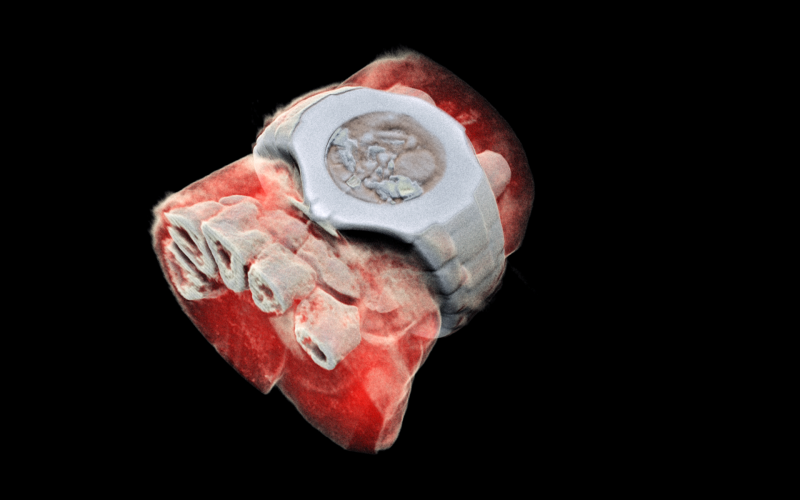
What if, instead of a black and white X-ray picture, a doctor of a cancer patient had access to colour images identifying the tissues being scanned? This colour X-ray imaging technique could produce clearer and more accurate pictures and help doctors give their patients more accurate diagnoses.

This is now a reality, thanks to a New-Zealand company that scanned, for the first time, a human body using a breakthrough colour medical scanner based on the Medipix3 technology developed at CERN.

[…]

Medipix is a family of read-out chips for particle imaging and detection. The original concept of Medipix is that it works like a camera, detecting and counting each individual particle hitting the pixels when its electronic shutter is open. This enables high-resolution, high-contrast, very reliable images, making it unique for imaging applications in particular in the medical field.

[…]

MARS Bioimaging Ltd, which is commercialising the 3D scanner, is linked to the Universities of Otago and Canterbury.

[…]

MARS’ solution couples the spectroscopic information generated by the Medipix3 enabled detector with powerful algorithms to generate 3D images. The colours represent different energy levels of the X-ray photons as recorded by the detector and hence identifying different components of body parts such as fat, water, calcium, and disease markers.

A 3D image of a wrist with a watch showing part of the finger bones in white and soft tissue in red. (Image: MARS Bioimaging Ltd)

So far, researchers have been using a small version of the MARS scanner to study cancer, bone and joint health, and vascular diseases that cause heart attacks and strokes. “In all of these studies, promising early results suggest that when spectral imaging is routinely used in clinics it will enable more accurate diagnosis and personalisation of treatment,” Professor Anthony Butler says.

Source: First 3D colour X-ray of a human using CERN technology | CERN