The Linkielist

Linking ideas with the world

The Linkielist

China’s first fully driverless robotaxis hit the streets of Shenzhen

Fully driverless robotaxis are now a practical reality on Chinese roads. AutoX has become the first company to put a fleet of the completely driver-free vehicles on the country’s streets, with the cars now roaming Shenzhen. They’re not yet available to the public, a spokesperson told TechCrunch, but it’s still a significant move.

AutoX claims this is possible thanks to a “5th generation” autonomous driving system that includes a pair of LiDAR sensors on the sides, “4D” radar sensors and thorough blind spot sensing. The robotaxis can react to even the smaller objects around them, and the company is touting a battle-tested platform that knows how to navigate everything from illegally-parked cars through to unprotected U-turns.

The firm’s machines have been in testing in other places, including California, but a “much larger number of road users” in China helped it rapidly refine its technology.

Self-driving taxis are still far from becoming ubiquitous. Regulations in the US and many other parts of the world have yet to adapt, and the cars themselves are unsurprisingly using exotic, expensive hardware. AutoX’s rollout is a large step forward, though, and it might just be a question of when you hop into an unoccupied taxi rather than “if.”

Source: China’s first fully driverless robotaxis hit the streets of Shenzhen | Engadget

The first phone with an under-display camera goes on sale December 21st

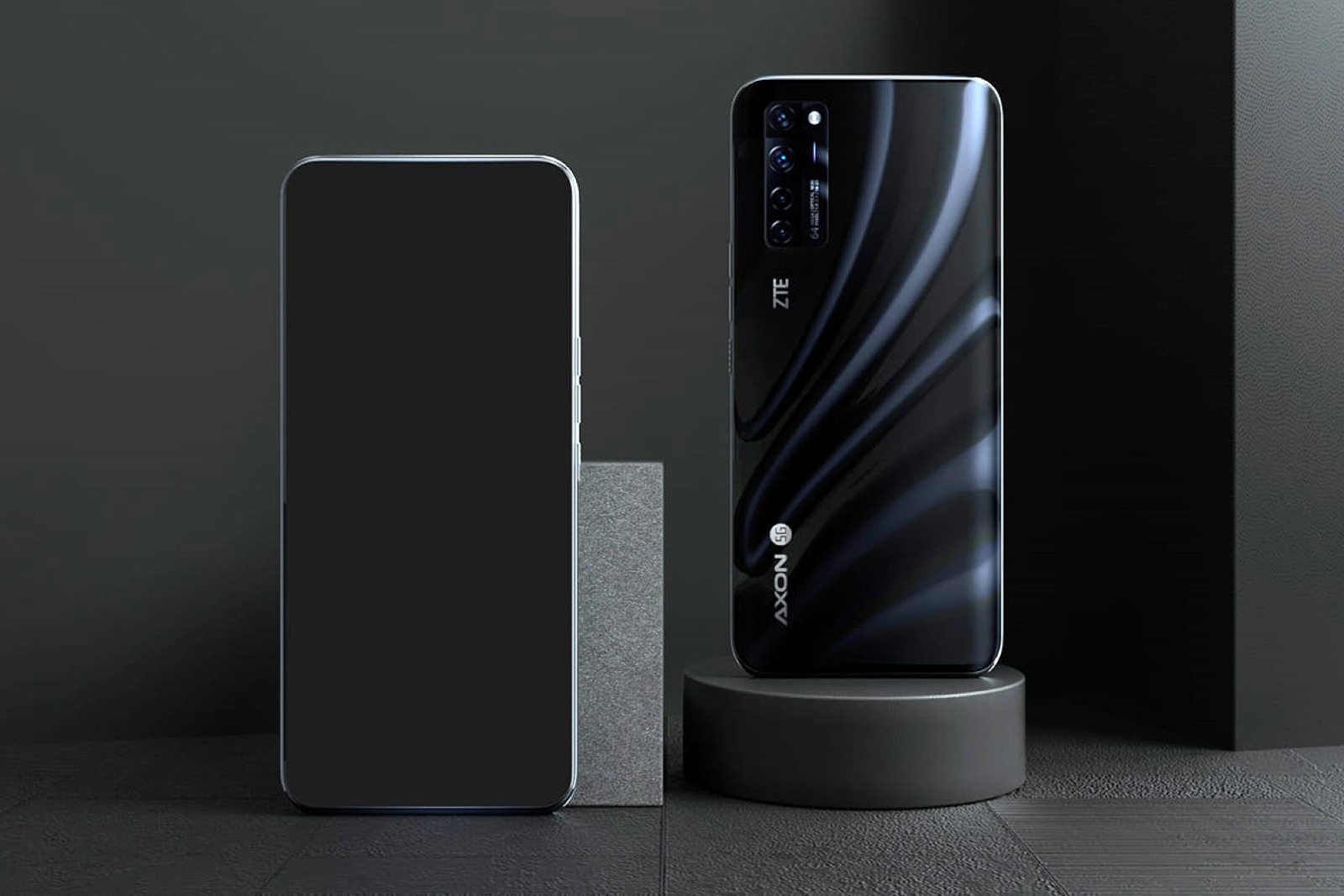
You won’t have to wait much longer to buy the first phone with an under-display camera — if you live in the right country. ZTE now plans to release the Axon 20 5G in 11 countries and regions on December 21st, including the UK, European Union, Japan and South Korea. The company didn’t reveal pricing, but said it would be available “soon.”

The centerpiece remains an uninterrupted 6.92-inch FHD+ OLED screen that uses a combination of materials, display syncing and a “special matrix” to hide a 32-megapixel selfie camera. You won’t find a cutout or notch here. It’s a thoroughly mid-range phone beyond that, though. The Axon 20 5G runs on a Snapdragon 765G chip with 8GB of RAM, and its stand-out features beyond the front camera include a 90Hz refresh rate and DTS:X Ultra 3D sound.

You can expect a 64MP main rear camera, an 8MP ultra-wide, a 2MP macro cam and a 2MP depth sensor. The 4,220mAh battery is also unspectacular given the size and 5G, although 30W fast charging should help it top up quickly.

5G, although 30W fast charging should help it top up quickly.

Source: The first phone with an under-display camera goes on sale December 21st | Engadget

Good stuff! I absolutely hate the cut out notch!

As if Productivity Score wasn’t creepy enough, Microsoft has patented tech for ‘meeting quality monitoring devices’ – PS is being defanged though

The slightly creepy “Productivity Score” may not be all that’s in store for Microsoft 365 users, judging by a trawl of Redmond’s patents.

One that has popped up recently concerns a “Meeting Insight Computing System“, spotted first by GeekWire, created to give meetings a quality score with a view to improving upcoming get-togethers.

It all sounds innocent enough until you read about the requirement for “quality parameters” to be collected from “meeting quality monitoring devices”, which might give some pause for thought.

Productivity Score relies on metrics captured within Microsoft 365 to assess how productive a company and its workers are. Metrics include the take-up of messaging platforms versus email. And though Microsoft has been quick to insist the motives behind the tech are pure, others have cast more of a jaundiced eye over the technology.

[…]

Meeting Insights would take things further by plugging data from a variety of devices into an algorithm in order to score the meeting. Sampling of environmental data such as air quality and the like is all well and good, but proposed sensors such as “a microphone that may, for instance, detect speech patterns consistent with boredom, fatigue, etc” as well as measuring other metrics, such as how long a person spends speaking, could also provide data to be stirred into the mix.

And if that doesn’t worry attendees, how about some more metrics to measure how focused a person is? Are they taking care of emails, messaging or enjoying a surf of the internet when they should be paying attention to the speaker? Heck, if one is taking data from a user’s computer, one could even consider the physical location of the device.

[…]

Talking to The Reg, one privacy campaigner who asked to remain anonymous said of tools such as Productivity Score and the Meeting Insight Computing System patent: “There is a simple dictum in privacy: you cannot lose data you don’t have. In other words, if you collect it you have to protect it, and that sort of data is risky to start with.

“Who do you trust? The correct answer is ‘no one’.”

Source: As if Productivity Score wasn’t creepy enough, Microsoft has patented tech for ‘meeting quality monitoring devices’ • The Register

Since then, Microsoft will remove user names from ‘Productivity Score’ feature after privacy backlash ( Geekwire )

Microsoft says it will make changes in its new Productivity Score feature, including removing the ability for companies to see data about individual users, to address concerns from privacy experts that the tech giant had effectively rolled out a new tool for snooping on workers.

“Going forward, the communications, meetings, content collaboration, teamwork, and mobility measures in Productivity Score will only aggregate data at the organization level—providing a clear measure of organization-level adoption of key features,” wrote Jared Spataro, Microsoft 365 corporate vice president, in a post this morning. “No one in the organization will be able to use Productivity Score to access data about how an individual user is using apps and services in Microsoft 365.”

The company rolled out its new “Productivity Score” feature as part of Microsoft 365 in late October. It gives companies data to understand how workers are using and adopting different forms of technology. It made headlines over the past week as reports surfaced that the tool lets managers see individual user data by default.

As originally rolled out, Productivity Score turned Microsoft 365 into a “full-fledged workplace surveillance tool,” wrote Wolfie Christl of the independent Cracked Labs digital research institute in Vienna, Austria. “Employers/managers can analyze employee activities at the individual level (!), for example, the number of days an employee has been sending emails, using the chat, using ‘mentions’ in emails etc.”

The initial version of the Productivity Score tool allowed companies to see individual user data. (Screenshot via YouTube)

Spataro wrote this morning, “We appreciate the feedback we’ve heard over the last few days and are moving quickly to respond by removing user names entirely from the product. This change will ensure that Productivity Score can’t be used to monitor individual employees.”

DeepMind’s A.I. can now predict protein shapes from their DNA sequences | Fortune

Researchers have made a major breakthrough using artificial intelligence that could revolutionize the hunt for new medicines.

The scientists have created A.I. software that uses a protein’s DNA sequence to predict its three-dimensional structure to within an atom’s width of accuracy.

The achievement, which solves a 50-year-old challenge in molecular biology, was accomplished by a team from DeepMind, the London-based artificial intelligence company that is part of Google parent Alphabet.

[…]

Across more than 100 proteins, DeepMind’s A.I. software, which it called AlphaFold 2, was able to predict the structure to within about an atom’s width of accuracy in two-thirds of cases and was highly accurate in most of the remaining one-third of cases, according to John Moult, a molecular biologist at the University of Maryland who is director of the competition, called the Critical Assessment of Structure Prediction, or CASP. It was far better than any other method in the competition, he said.

[…]

DeepMind had not yet determined how it would provide academic researchers with access to the protein structure prediction software or whether it would seek commercial collaborations with pharmaceutical and biotechnology firms. He said the company would announce “further details on how we’re going to be able to give access to the system in a scalable way” sometime next year.

“This computational work represents a stunning advance on the protein-folding problem,” Venki Ramakrishnan, a Nobel Prize–winning structural biologist who is also the outgoing president of the Royal Society, Britain’s most prestigious scientific body, said of AlphaFold 2.

Janet Thornton, an expert in protein structure and former director of the European Molecular Biology Laboratory’s European Bioinformatics Institute, said that DeepMind’s breakthrough opened up the way to mapping the entire “human proteome”—the set of all proteins found within the human body. Currently, only about a quarter of human proteins have been used as targets for medicines, she said. Now, many more proteins could be targeted, creating a huge opportunity to invent new medicines.

[…]

As part of CASP’s efforts to verify the capabilities of DeepMind’s system, Lupas used the predictions from AlphaFold 2 to see if it could solve the final portion of a protein’s structure that he had been unable to complete using X-ray crystallography for more than a decade. With the predictions generated by AlphaFold 2, Lupas said he was able to determine the shape of the final protein segment in just half an hour.

AlphaFold 2 has also already been used to accurately predict the structure of a protein called ORF3a that is found in SARS-CoV-2, the virus that causes COVID-19, which scientists might be able to use as a target for future treatments.

Lupas said he thought the A.I. software would “change the game entirely” for those who work on proteins. Currently, DNA sequences are known for about 200 million proteins, and tens of millions more are being discovered every year. But 3D structures have been mapped for less than 200,000 of them.

AlphaFold 2 was only trained to predict the structure of single proteins. But in nature, proteins are often present in complex arrangements with other proteins. Jumper said the next step was to develop an A.I. system that could predict complicated dynamics between proteins—such as how two proteins will bind to one another or the way that proteins in close proximity morph one another’s shapes.

[…]

Source: DeepMind’s A.I. can now predict protein shapes from their DNA sequences | Fortune

How use science to fight back against anti-maskers, climate deniers and anti-vaxxers? Let people read their research

[..]

The shift to online science communication from conventional news platforms has been going on for a while. There is a need for credible and accurate reporting because the miscommunication of science in the media is causing lasting damage to the public’s understanding of science.

Misinformation has consequences, as seen during the ongoing COVID-19 pandemic. Ignoring public health advice to wear masks and physically distance has cost thousands of lives and livelihoods in countries such as the United States, Brazil and Russia. Yet, resources in science journalism are dwindling. Budget cuts have slashed the number of journalists in conventional news outlets; this often affects specialized reporters like science journalists.

We need to equip scientists with science journalism skills. At Concordia University,

[…]

This withdrawal of conventional news outlets from conducting science journalism and the increasing role of universities and scientists doing so introduce new challenges.

[…]

Because there are fewer science journalists in conventional news outlets, the public is less able to access the scientific information they need to make informed decisions. This is further exacerbated by the flaws of the existing model.

Currently, scientists communicate their research via private publishing groups. Due to paywalls, this research is very hard to access by the taxpayers who fund that research. Meanwhile, research funded by industry is freely accessible to the public via the publication of patents

Open access is often discussed as a way to ease public access to scientific findings. However, some publishing groups lobby against possible open access government regulation.

But scientists are fighting back. Psychologist Tal Yarkoni, who has been an outspoken critic of the academic publishing model, and other researchers are boycotting journals that engage in this lobbying. In January 2019, the entire editorial board at Elsevier’s Journal of Infometrics resigned in protest of commercial control of scholarly work.

[…]

When it comes to communicating research, there is an inherent conflict of interest between scientists and the universities that employ them.

That’s not to say that universities have sinister intentions. Universities are heavily invested in enhancing their reputations, which is closely tied to their success in raising funds through student recruitment, government grants and philanthropic endowments.

Universities view science communication as a fundraising activity, directed at funding sources, rather than the general public.

[…]

Universities should equip scientists with the knowledge-translation skills necessary to communicate their own science critically and credibly

[…]

Universities should also find a way to engage students in scientific communication. For example, there should be funding for internships for communications students, where those hired can manage Twitter accounts and blogs for research labs, update websites and write research publications in a more compelling, accessible and critical way

[…]

Source: Here’s how to fight back against anti-maskers, climate deniers and anti-vaxxers, according to scientists

Defeat COVID-19: put positive spin to a grim 2020 by showing global covid recoveries on screen

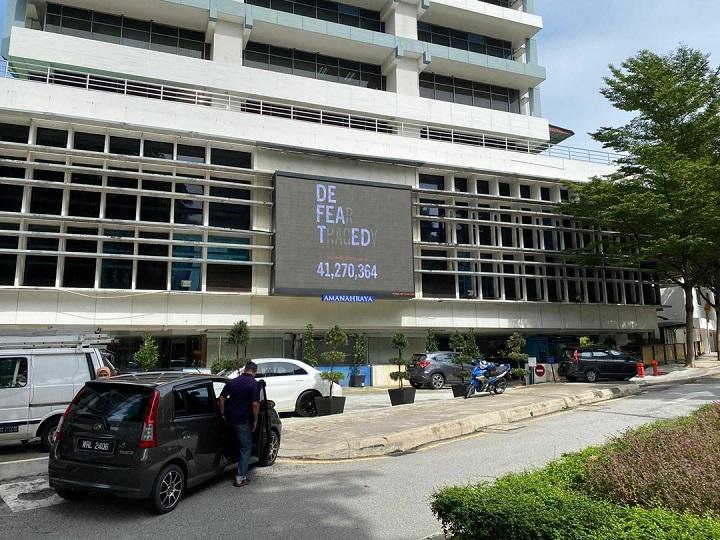
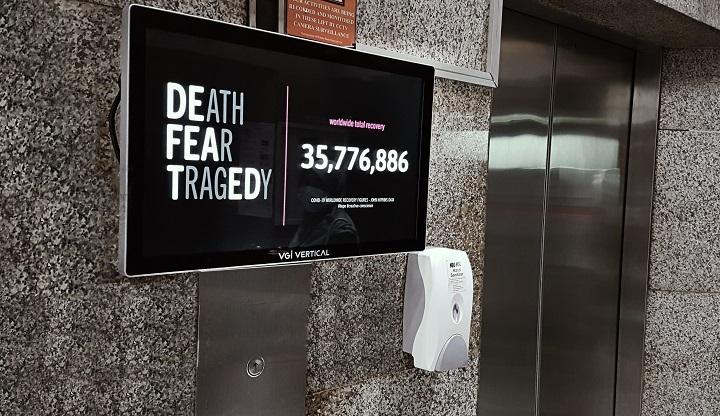
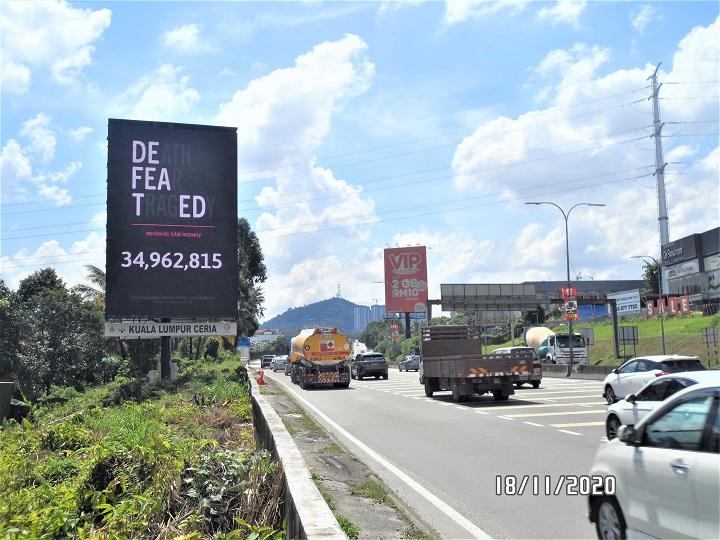
The campaign was conceived by DOOH firm Orb Screen, produced by Creative Conscience and L&CO, developed by Voodooh and Nicole Yershon, and designed by advertising graduate Megan Williams. It has now made its way to Asia, with Location Media Xchange (LMX), the supply-focused arm of Moving Walls Group, amplifying the creatives on partner screens across Singapore, Malaysia, Indonesia, Philippines and India.

The displays run a tally of individuals known to have recovered from COVID-19 worldwide, while showcasing inspiring messages of how survivors have defeated it by refocusing some of the grim language often associated with the pandemic. A+M has reached out to Moving Walls for comment.

image 7.0 jalan maluri by spectrum outdoorimage 7.0 jalan maluri by spectrum outdoorimage 7.0 jalan maluri by spectrum outdoorimage 7.0 jalan maluri by spectrum outdoor

Among the list of media owners in Asia Pacific that ran the dynamic creatives include Dana Intelek, VGI Global Media Malaysia, Visual Retale, Vestigia Malaysia, LOOKhere Network, Titanium Compass, Spectrum Outdoor Marketing, 3thirds Inc, LEDtronics Media, Danendra Abyudaya Adika, KALMS, Pitchworks Incorporated Philippines and Nexyite Entertainment.

Source: Defeat COVID-19: APAC OOH firms put positive spin to a grim 2020

The data comes from John Hopkins University and apparently you can find a PDF brief from Orbscreen containing HTML code.