Apple has been hit with a lawsuit alleging that its media services terms and conditions, which permit the company to terminate an Apple ID, are “unlawful” and “unconscionable.”
The complaint, filed on Tuesday in the U.S. District Court for the Northern District of California, goes after an Apple services clause that states a user with a terminated Apple ID cannot access media content that they’ve purchased.
Through its terms and conditions, Apple retains the right to terminate an Apple ID. More than that, the lawsuit claims that Apple can terminate an account based on mere suspicion.
“Apple’s unlawful and unconscionable clause as a prohibited de facto liquidated damages provision which is triggered when Apple suspects its customers have breached its Terms and Conditions,” the lawsuit reads.
[…]
The plaintiff in the case, Matthew Price, reportedly spent nearly $25,000 on content attached to an Apple ID. When Apple terminated Price’s Apple ID for an alleged violation of its terms and conditions, Price lost access to all of that content.
Web sites for customers of agricultural equipment maker John Deere contained vulnerabilities that could have allowed a remote attacker to harvest sensitive information on the company’s customers including their names, physical addresses and information on the Deere equipment they own and operate.
The researcher known as “Sick Codes” (@sickcodes) published two advisories on Thursday warning about the flaws in the myjohndeere.com web site and the John Deere Operations Center web site and mobile applications. In a conversation with Security Ledger, the researcher said that a he was able to use VINs (vehicle identification numbers) taken from a farm equipment auction site to identify the name and physical address of the owner. Furthermore, a flaw in the myjohndeere.com website could allow an unauthenticated user to carry out automated attacks against the site, possibly revealing all the user accounts for that site.
Sick Codes disclosed both flaws to John Deere and also to the U.S. Government’s Cybersecurity and Infrastructure Security Agency (CISA), which monitors food and agriculture as a critical infrastructure sector. As of publication, the flaws discovered in the Operations Center have been addressed while the status of the myjohndeere.com flaws is not known.
[…]
the national security consequences of the company’s leaky website could be far greater. Details on what model combines and other equipment is in use on what farm could be of very high value to an attacker, including nation-states interested in disrupting U.S. agricultural production at key junctures, such as during planting or harvest time.
The consolidated nature of U.S. farming means that an attacker with knowledge of specific, Internet connected machinery in use by a small number of large-scale farming operations in the midwestern United States could launch targeted attacks on that equipment that could disrupt the entire U.S. food supply chain.
Despite creating millions of lines of software to run its sophisticated agricultural machinery, Deere has not registered so much as a single vulnerability with the Government’s CVE database, which tracks software flaws.
[…]
“Unlike many industries, there is extreme seasonality in the way John Deere’s implements are used,” Jahn told Security Ledger. “We can easily imagine timed interference with planting or harvest that could be devastating. And it wouldn’t have to persist for very long at the right time of year or during a natural disaster – a compound event.”
Federal police in Turkey are investigating Thodex, a cryptocurrency trading platform that handles hundred of millions of dollars in trades every day, after users complained they’d been locked out of their accounts, according to new reports from Reuters and Turkey’s TRT World news service. CEO Faruk Fatih Ozer reportedly fled Turkey on Tuesday and 62 people connected to Thodex have reportedly been detained.
Investigators raided Thodex’s headquarters in Istanbul on Thursday after
“thousands” of people in Turkey filed criminal complaints, according to TRT World. Users have been unable to access money in their accounts over the past three days and federal authorities have issued at least 78 arrest warrants, according to Reuters.
[…]
There have been thousands of criminal complaints made in many places around Turkey,” he told Reuters, adding that the platform had 400,000 users, 391,000 of whom were active.
While Reuters reports the CEO had fled to the city of Tirana, Albanian, apparently people at Thodex insist he will be returning to Turkey soon. He’s going to be returning to a lot of pissed off people.
Apple’s AirDrop feature is a convenient way to share files between the company’s devices, but security researchers from Technische Universitat Darmstadt in Germany are warning that you might be sharing way more than just a file.
According to the researchers, it’s possible for strangers to discover the phone number and email of any nearby AirDrop user. All a bad actor needs is a device with wifi and to be physically close by. They can then simply open up the AirDrop sharing pane on an iOS or macOS device. If you have the feature enabled, it doesn’t even require you to initiate or engage with any sharing to be at risk, according to their findings.
The problem is rooted in AirDrop’s “Contacts Only” option. The researchers say that in order to suss out whether an AirDrop user is in your contacts, it uses a “mutual authentication mechanism” to cross-reference that user’s phone number and email with another’s contacts list. Now, Apple isn’t just doing that willy nilly. It does use encryption for this exchange. The problem is that the hash Apple uses is apparently easily cracked using “simple techniques such as brute-force attacks.” It is not clear from the research what level of computing power would be necessary to brute-force the hashes Apple uses.
Well, if you have an iPhone, now you can turn practically anything into a unique, one-of-a-kind digital token. A new app is out that, by its own admission, lets you turn “every idea” into an NFT. It’s called S!NG, and it is the first and only free iOS app designed to let you create as many NFTs as you want. Where previously you would have had to pay a crypto exchange to get your asset minted, S!NG does all the minting for you, free of charge.
Founded by ex-Apple executive Geoff Osler, the company has sought to make its product really easy to use, too: it has a point-and-click function—so it’s basically as simple as taking a picture or making a recording on your phone to create them. You can also upload files.
[…]
As the name of the app might suggest, it’s being marketed to artists and musicians. A video on the company’s website claims that S!NG wants to use NFTs to protect creators from intellectual property theft—which is an interesting idea. The thinking here seems to be that because the non-fungibles designate specific ownership over a unique digital asset, they can preclude you from getting your song lyrics or digital recording copied and legally foisted away from you. Thus, the website claims S!NG is the “easiest way to put a stamp on an idea, label it as your own, convert to an NFT and stored in a centralized portfolio,” also adding that the app is a space where ideas can be shared “confidently and hesitation free, without having to lawyer up.” In other words, it’s like that old trick of sending yourself a certified letter to copyright text or song lyrics: it works, but only barely.
While this all sounds pretty good, the flip side is that it makes S!NG sound almost like a notepad app, where every note becomes an NFT. When you consider the ecological toll that NFTs purportedly are wreaking on the world, maybe it’s not a great idea to make every thought you jot down a non-fungible? Then again, people are apparently working on this problem, so maybe we can assume it’ll be a short-lived issue.
Jaguar Land Rover (JLR) is shutting its two main car factories temporarily due to a shortage of computer chips.
The difficulties at Britain’s biggest carmaker echo similar problems at other manufacturers, including Ford, who have been hit by a global shortage of chips.
JLR said there would be a “limited period” of closure at its Halewood and Castle Bromwich sites from Monday.
A mixture of strong demand and Covid shutdowns at chipmakers has also hit phone, TV and video games companies.
Passwordstate, the enterprise password manager offered by Australian software developer Click Studios, was hacked earlier this week, exposing the passwords of an undisclosed number of its clients for approximately 28 hours. The hack was carried out through an upgrade feature for the password manager and potentially harvested the passwords of those who carried out upgrades.
On Friday, Click Studios issued an incident management advisory about the hack. It explained that the initial vulnerability was related to its upgrade director—which points the in-place update to the appropriate version of the software on the company’s content distribution network—on its website. When customers performed in-place upgrades on Tuesday and Wednesday, they potentially downloaded a malicious file, titled “moserware.secretsplitter.dll,” from a download network not controlled by Click Studios.
Once the malicious file was loaded, it set off a process that extracted information about the computer system as well as data stored in Passwordstate, including URLs, usernames and passwords. The information was then posted to the hackers’ content distribution network.
According to the company, the vulnerability has been addressed and eliminated. Click Studios said that only customers who performed in-place updates between Tuesday, April 20 at 4:33 p.m. ET and Thursday, April 22 at 8:30 p.m. ET are believed to be affected. Customers who carried out manual upgrades of Passwordstate are not compromised.
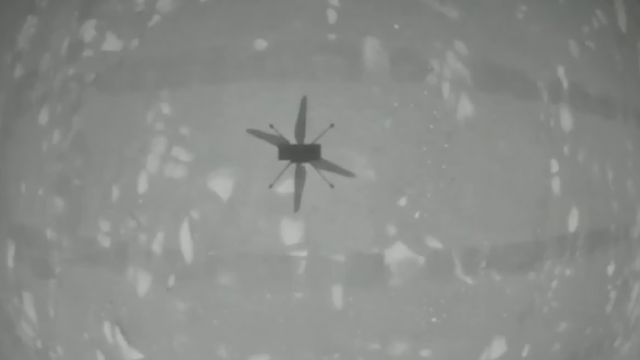
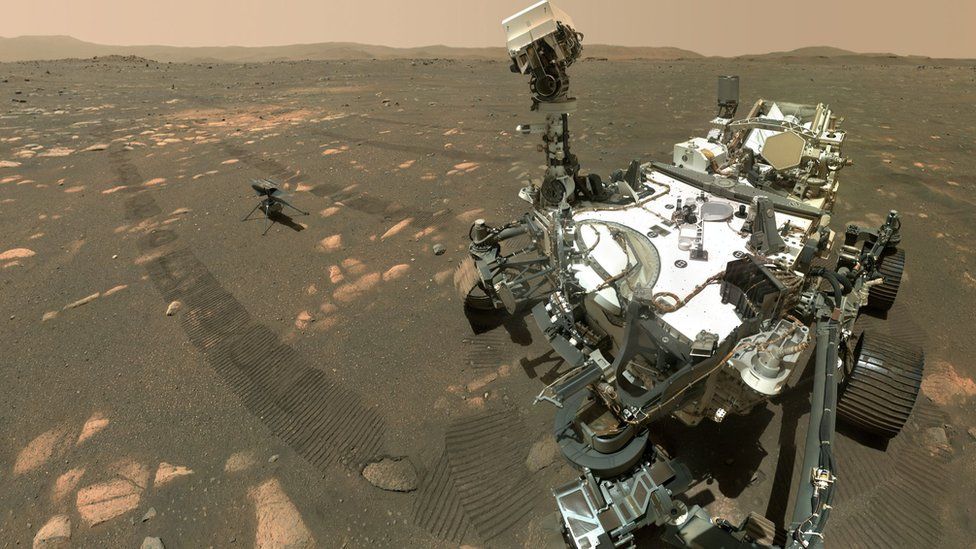
In recent days, NASA published three aerial photos taken by Ingenuity. These aren’t the first photos taken by the rover. It has previously sent back images of its shadows taken with its downward-facing navigation camera. And let’s not forget its watchful and proud surrogate parent, the Perseverance rover, which snaps magnificent photos of the helicopter in action. However, this latest set of images is special because they’re the first color photos of Mars taken by an aerial vehicle while it’s in the air.
Ingenuity’s First Aerial Color Image of Mars
At the time of this image, Ingenuity was 17 feet (5.2 meters) above the surface and pitching (moving the camera’s field of view upward) so the helicopter could begin its 7-foot (2-meter) translation to the west.
This is the first color image taken by Ingenuity, which is equipped with a high-resolution color camera that contains a 4208 x 3120-pixel sensor, on its April 22 test flight. According to NASA, Ingenuity was 17 feet (5.2 meters) above the surface. It was also moving its field of view upward as it prepared to move sideways for its 51.9-second flight.
“The image, as well as the inset showing a closeup of a portion of the tracks [of] the Perseverance Mars rover and Mars surface features, demonstrates the utility of scouting Martian terrain from an aerial perspective,” NASA explained in the photo’s description.
Speaking of Perseverance, you can check out the six-wheeled rover’s tracks in the winding parallel discolorations on the surface. Apparently, Perseverance itself isn’t too far away, but rather top center and unfortunately out of frame.
“Wright Brothers Field,” which is what NASA has named Ingenuity’s official launch zone, is in the vicinity of the helicopter’s shadow at the bottom center, the space agency said, and its point of takeoff is just below the image. Meanwhile, the black objects on the sides of the photo are Ingenuity’s landing pads. And in case this photo couldn’t get any better, you can see a small part of the horizon on the upper left and right corners.
Ingenuity’s Second Aerial Color Image of Mars
This is the second color image taken by NASA’s Ingenuity helicopter.
Besides stating that this photo was also taken at an altitude of 17 feet (5.2 meters), NASA didn’t have much to say. Nonetheless, the space agency noted that you could see tracks made by Perseverance here as well.
Ingenuity’s Third Aerial Color Image of Mars
This is the third color image taken by NASA’s Ingenuity helicopter.
NASA was short on words for this photo, too, but helpfully reminded us that Perseverance’s tracks can be seen in this case if you’re looking. (I was). I see the tracks at the bottom of the photo, but the rest of the picture is a lot more captivating to me.
I didn’t expect it to be that quick. While I was on a Google Hangouts call with a colleague, the hacker sent me screenshots of my Bumble and Postmates accounts, which he had broken into. Then he showed he had received texts that were meant for me that he had intercepted. Later he took over my WhatsApp account, too, and texted a friend pretending to be me.
[…]
I hadn’t been SIM swapped, where hackers trick or bribe telecom employees to port a target’s phone number to their own SIM card. Instead, the hacker used a service by a company called Sakari, which helps businesses do SMS marketing and mass messaging, to reroute my messages to him
[…]
“Welcome to create an account if you want to mess with it, literally anyone can sign up,”
[…]
This also doesn’t rely on SS7 exploitation, where more sophisticated attackers tap into the telecom industry’s backbone to intercept messages on the fly. What Lucky225 did with Sakari is easier to pull off and requires less technical skill or knowledge. Unlike SIM jacking, where a victim loses cell service entirely, my phone seemed normal. Except I never received the messages intended for me, but he did.
[…]
“I used a prepaid card to buy their $16 per month plan and then after that was done it let me steal numbers just by filling out LOA info with fake info,” Lucky225 added, referring to a Letter of Authorization, a document saying that the signer has authority to switch telephone numbers. (Cyber security company Okey Systems, where Lucky225 is Director of Information, has released a tool that companies and consumers can use to detect this attack and other types of phone number takeovers).
[…]
“Sakari is a business text messaging service that allows businesses to send SMS reminders, alerts, confirmations and marketing campaigns,” the company’s website reads.
For businesses, sending text messages to hundreds, thousands, or perhaps millions of customers can be a laborious task. Sakari streamlines that process by letting business customers import their own number. A wide ecosystem of these companies exist, each advertising their own ability to run text messaging for other businesses. Some firms say they only allow customers to reroute messages for business landlines or VoIP phones, while others allow mobile numbers too.
Sakari offers a free trial to anyone wishing to see what the company’s dashboard looks like. The cheapest plan, which allows customers to add a phone number they want to send and receive texts as, is where the $16 goes. Lucky225 provided Motherboard with screenshots of Sakari’s interface, which show a red “+” symbol where users can add a number.
While adding a number, Sakari provides the Letter of Authorization for the user to sign. Sakari’s LOA says that the user should not conduct any unlawful, harassing, or inappropriate behaviour with the text messaging service and phone number.
But as Lucky225 showed, a user can just sign up with someone else’s number and receive their text messages instead.
[…]
In Sakari’s case, it receives the capability to control the rerouting of text messages from another firm called Bandwidth, according to a copy of Sakari’s LOA obtained by Motherboard. Bandwidth told Motherboard that it helps manage number assignment and traffic routing through its relationship with another company called NetNumber. NetNumber owns and operates the proprietary, centralized database that the industry uses for text message routing, the Override Service Registry (OSR), Bandwidth said.
Pew Research Center reports that “91% of adults agree or strongly agree that consumers have lost control of how personal information is collected.”
That incredibly-high statistic must describe victims under authoritarian governments like China, Russia, or North Korea, right?
Wrong.
That study was about US citizens. You know, the land of the free.
91%
That’s the percentage of adults living in the US who agree that consumers have lost control of how personal information is collected and used by companies.
The sad truth is that governments of every shape and size are ramping up mass surveillance with little-to-no objection.
We live on the internet. But does that interconnection work in their favor, providing more opportunities to pierce our online privacy?
The simplest way to settle that score is to compare how the espionage efforts of the United States and their allies compare to other oppressive regimes.
the draft “Regulation On A European Approach For Artificial Intelligence” leaked earlier this week, it made quite the splash – and not just because it’s the size of a novella. It goes to town on AI just as fiercely as GDPR did on data, proposing chains of responsibility, defining “high risk AI” that gets the full force of the regs, proposing multi-million euro fines for non-compliance, and defining a whole set of harmful behaviours and limits to what AI can do with individuals and in general.
What it does not do is define AI, saying that the technology is changing so rapidly it makes sense only to regulate what it does, not what it is. So yes, chatbots are included, even though you can write a simple one in a few lines of ZX Spectrum BASIC. In general, if it’s sold as AI, it’s going to get treated like AI. That’ll make marketing think twice.
[…]
A regulated market puts responsibilities on your suppliers that will limit your own liabilities: a well-regulated market can enable as much as it moderates. And if AI doesn’t go wrong, well, the regulator leaves you alone. Your toy Spectrum chatbot sold as an entertainment won’t hurt anyone: chatbots let loose on social media to learn via AI what humans do and then amplify hate speech? Doubtless there are “free speech for hatebots” groups out there: not on my continent, thanks.
It also means that countries with less-well regulated markets can’t take advantage. China has a history of aggressive AI development to monitor and control its population, and there are certainly ways to turn a buck or yuan by tightly controlling your consumers. But nobody could make a euro at it, as it wouldn’t be allowed to exist within, or offer services to, the EU. Regulations that are primarily protectionist for economic reasons are problematic, but ones that say you can’t sell cut-price poison in a medicine bottle tend to do good.
[…]
There will be regulation. There will be costs. There will be things you can’t do then that you can now. But there will be things you can do that you couldn’t do otherwise, and while the level playing field of the regulators’ dreams is never quite as smooth for the small company as the big, there’ll be much less snake oil to slip on.
It may be an artificial approach to running a market, but it is intelligent.
They classify high risk AIs and require them to be registered and monitored and there to be contact people for them as well as give insight into how they work. They also want a pan EU dataset for AIs to train on. There’s a lot of really good stuff in there.
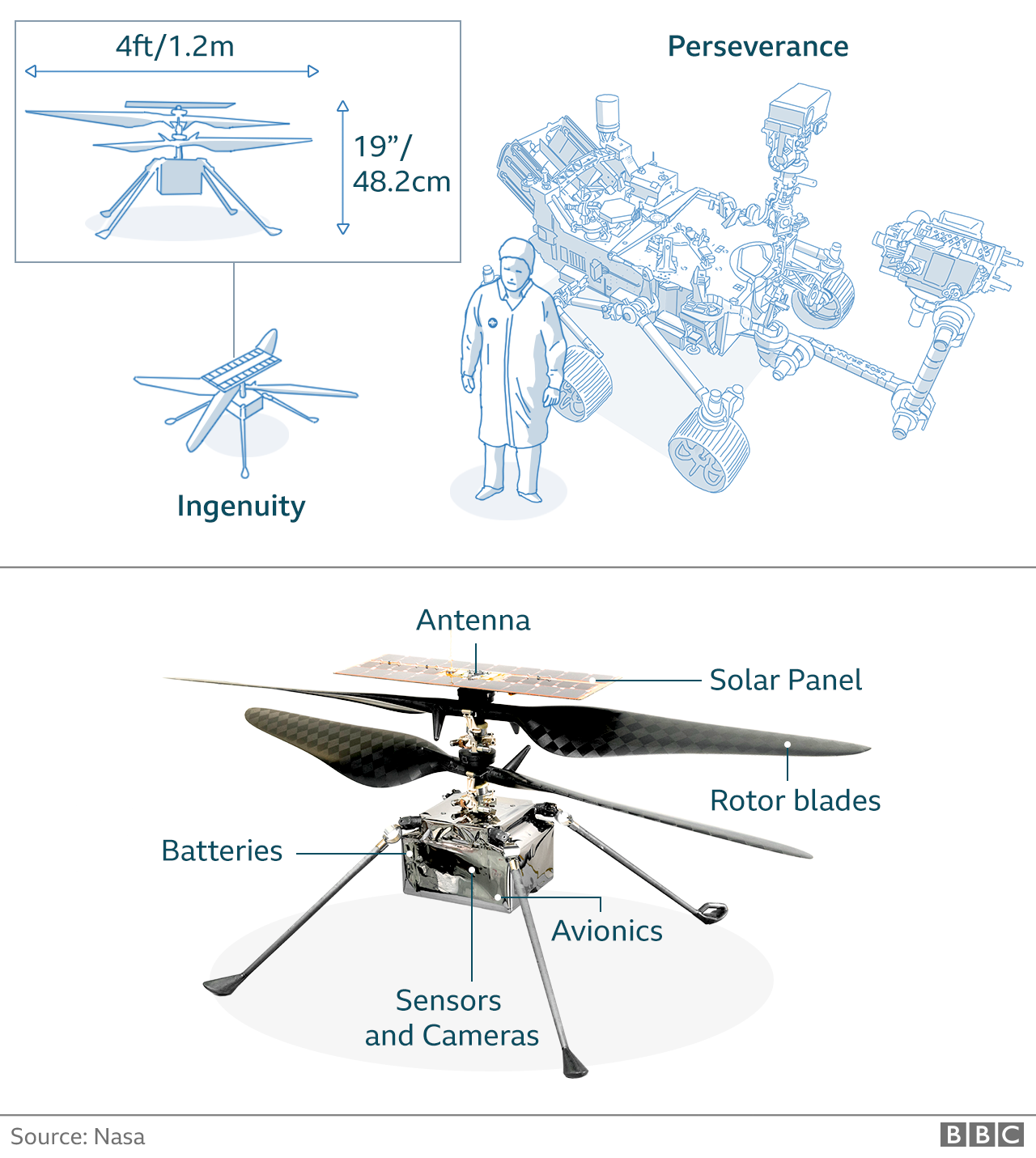
The drone, called Ingenuity, was airborne for less than a minute, but Nasa is celebrating what represents the first powered, controlled flight by an aircraft on another world.
Confirmation came via a satellite at Mars which relayed the chopper’s data back to Earth.
The space agency is promising more adventurous flights in the days ahead.
Ingenuity will be commanded to fly higher and further as engineers seek to test the limits of the technology.
The rotorcraft was carried to Mars in the belly of Nasa’s Perseverance Rover, which touched down in Jezero Crater on the Red Planet in February.
“We can now say that human beings have flown a rotorcraft on another planet,” said a delighted MiMi Aung, project manager for Ingenuity at Nasa’s Jet Propulsion Laboratory (JPL) in Pasadena, California.
[…]
Ingenuity even carries a small swatch of fabric from one of the wings of Flyer 1, the aircraft that made that historic flight at Kitty Hawk, North Carolina, more than 117 years ago.
image copyrightNASA/JPL-CALTECH
image captionThe chopper took this image of its own shadow on the ground
[…]
The demonstration saw the Mars-copter rise to about 3m, hover, swivel and then land. In all, it managed almost 40 seconds of flight, from take-off to landing.
Getting airborne on the Red Planet is not easy. The atmosphere is very thin, just 1% of the density here at Earth. This gives the blades on a rotorcraft very little to bite into to gain lift.
There’s help from the lower gravity at Mars, but still – it takes a lot of work to get up off the ground
Ingenuity was therefore made extremely light and given the power (a peak power of 350 watts) to turn those blades extremely fast – at over 2,500 revolutions per minute for this particular flight.
Control was autonomous. The distance to Mars – currently just under 300 million km – means radio signals take minutes to traverse the intervening space. Flying by joystick is simply out of the question.
[…]
Ingenuity has two cameras onboard. A black-and-white camera that points down to the ground, which is used for navigation, and a high-resolution colour camera that looks out to the horizon.
A sample navigation image sent back to Earth revealed the helicopter’s shadow on the floor of the crater as it came back in to land. Satellites will send home more pictures of the flight over the next day. There was only sufficient bandwidth in the orbiters’ first overflight to return a short snatch of video from Perseverance, which was watching and snapping away from a distance of 65m. Longer sequences should become available in due course.
image copyrightNasa
image captionA selfie of the Ingenuity helicopter and the Perseverance rover
Nasa has announced that the “airstrip” in Jezero where Perseverance dropped off Ingenuity for its demonstration will henceforth be known as the “Wright Brothers Field”.
The International Civil Aviation Organization (ICAO) – the United Nations’ civil aviation agency – has also presented the Nasa and the US Federal Aviation Administration with an official ICAO designator: IGY, call-sign INGENUITY.
A successful maiden outing means that a further four flights will be attempted over the coming days, each one taking the helicopter further afield.
In October 2018, Winamp relaunched a leaked version of the updated code as version 5.8. As a longtime winamp user, I was excited – I have many mp3’s which are not available on streaming services and also find that when I search for stuff on Spotify they give me the royalty free Filipino girl band cover version instead of the version I’m looking for.
I’ve been fairly happy with the 5.8 version but it did drop support for eg adding ID3 tags automatically and a few other things. Not being a huge user of the music library I don’t know how that went, but I was happy that they had Milkdrop visualiser support.
Today I came upon the following post on Reddit: Winamp visualizer ported in webgl, like back in the days. You can import your own songs in it. and in the comments found a project called WACUP. It turns out that one of the prolific plug in writers, who was also contracted to work in Winamp itself, DrO has been using the 5.666 version to build a huge slew of updates on and it’s still in development.
So, I’m uninstalling 5.8 and going to have a look at WACUP. I’m looking forward to continuing kicking the Llama’s ass!
A recent breach has prompted fears of another SolarWinds-style hack that could have ramifications for numerous large companies. Reutersreports that federal officials are investigating a hack at Codecov, a code testing firm with 29,000 customers that include Proctor & Gamble, the Washington Post and tech companies like Atlassian and GoDaddy. The intrusion appears to have lasted for months, putting clients at risk.
Codecov said that attackers exploited a flaw in a Docker image creation process to make “periodic, unauthorized” changes to the company’s Bash Uploader script starting on January 31st. The modifications gave the hackers power to export customer info and send it to an outside server. However, Codecov only learned of the incident on April 1st.
Our investigation has determined that beginning January 31, 2021, there were periodic, unauthorized alterations of our Bash Uploader script by a third party, which enabled them to potentially export information stored in our users’ continuous integration (CI) environments. This information was then sent to a third-party server outside of Codecov’s infrastructure.
Two satellites from the fast-growing constellations of OneWeb and SpaceX’s Starlink dodged a dangerously close approach with one another in orbit last weekend, representatives from the US Space Force and OneWeb said. It’s the first known collision avoidance event for the two rival companies as they race to expand their new broadband-beaming networks in space.
On March 30th, five days after OneWeb launched its latest batch of 36 satellites from Russia, the company received several “red alerts” from the US Space Force’s 18th Space Control Squadron warning of a possible collision with a Starlink satellite. Because OneWeb’s constellation operates in higher orbits around Earth, the company’s satellites must pass through SpaceX’s mesh of Starlink satellites, which orbit at an altitude of roughly 550 km.
One Space Force alert indicated a collision probability of 1.3 percent, with the two satellites coming as close as 190 feet — a dangerously close proximity for satellites in orbit. If satellites collide in orbit, it could cause a cascading disaster that could generate hundreds of pieces of debris and send them on crash courses with other satellites nearby.
Currently, there’s no national or global authority that would force satellite operators to take action on predicted collisions. Space Force’s urgent alerts sent OneWeb engineers scrambling to email SpaceX’s Starlink team to coordinate maneuvers that would put the two satellites at safer distances from one another.
While coordinating with OneWeb, SpaceX disabled its automated AI-powered collision avoidance system to allow OneWeb to steer its satellite out of the way, according to OneWeb’s government affairs chief Chris McLaughlin. It was unclear why exactly SpaceX disabled the system. SpaceX, which rarely responds to reporters, did not return multiple requests for comment for this story, nor did David Goldman, the company’s director of satellite policy.
SpaceX’s automated system for avoiding satellite collisions has sparked controversy, raising concerns from other satellite operators who say they have no way of knowing which way the system will move a Starlink satellite in the event of a close approach. “Coordination is the issue,” McLaughlin says. “It is not sufficient to say ‘I’ve got an automated system,’ because the other guy may not have, and won’t understand what yours is trying to do.”
[…]
the sharp increase of satellites in orbit, mainly driven by SpaceX’s Starlink venture, has moved faster than any authority can regulate the industry for safety. McKissock says SpaceX has made efforts to increase its transparency in orbit; the company currently provides location data of its satellites to other operators. But its automated system for avoiding collisions is a closed book where openness and coordination are needed the most, analysts and operators say.
“What is the point of having it if you have to turn it off when there’s going to be a potential collision?” Victoria Samson of the Secure World Foundation says, adding that the void of any clear international framework for managing active objects in space makes it largely unclear who would be held responsible if a collision actually occurred.
Debian Project Secretary Kurt Roeckx has announced the results of a closely-watched vote on what statement would be made about Richard Stallman’s readmission to the Free Software Foundation’s board.
Seven options were considered, with the Debian project’s 420 voting developers also asked to rank their preferred outcomes:
Option 1: “Call for the FSF board removal, as in rms-open-letter.github.io”
Option 2: “Call for Stallman’s resignation from all FSF bodies”
Option 3: “Discourage collaboration with the FSF while Stallman is in a leading position”
Option 4: “Call on the FSF to further its governance processes”
Option 5: “Support Stallman’s reinstatement, as in rms-support-letter.github.io”
Option 6: “Denounce the witch-hunt against RMS and the FSF”
Option 7: “Debian will not issue a public statement on this issue”
While all seven options achieved a quorum of votes, two failed to achieve a majority — options 5 and 6. (“Support Stallman’s reinstatement” and “Denounce the witch-hunt…”) The option receiving the most votes was #7 (not issuing a public statement) — but it wasn’t that simple. The vote’s final outcome was determined by comparing every possible pair of options to determine which option would still be preferred by a majority of voters in each possible comparision.
In this case, that winner was still the option which had also received the most votes:
Debian will not issue a public statement on this issue. The Debian Project will not issue a public statement on whether Richard Stallman should be removed from leadership positions or not.
Any individual (including Debian members) wishing to (co-)sign any of the open letters on this subject is invited to do this in a personal capacity.
The results are captured in an elaborate graph. Numbers inside the ovals show the final ratio of yes to no votes (so a number higher than 1.00 indicates a majority, with much higher numbers indicating much larger majorities). Numbers outside the ovals (along the lines) indicate the number of voters who’d preferred the winning choice over the losing choice (toward which the arrow is pointing).
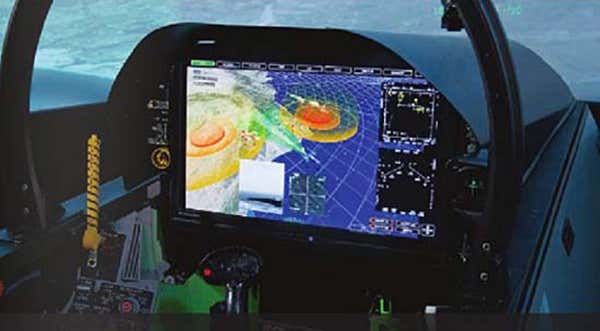
The U.S. Air Force has, for the first time, live-streamed data directly from the F-35A stealth fighter and onto a commercial computer tablet in the cockpit, during ground tests at Nellis Air Force Base in Nevada. The March 31 trial, part of the Fighter Optimization eXperiment, or FoX, demonstrated that data from the jet could be used to communicate with mobile apps running on the tablet and there are hopes that the same concept could be used in the future on other manned fighters, as well as drones.
In the initial trial, the flight test instrumentation system was streamed from the F-35’s onboard systems and onto the tablet, on which apps were running. The first two such apps, developed under Project FoX, are designed to help the pilot of the stealth jet negotiate hostile air defense systems, and to use artificial intelligence (AI) to combat the same types of threat.
U.S. Marine Corps
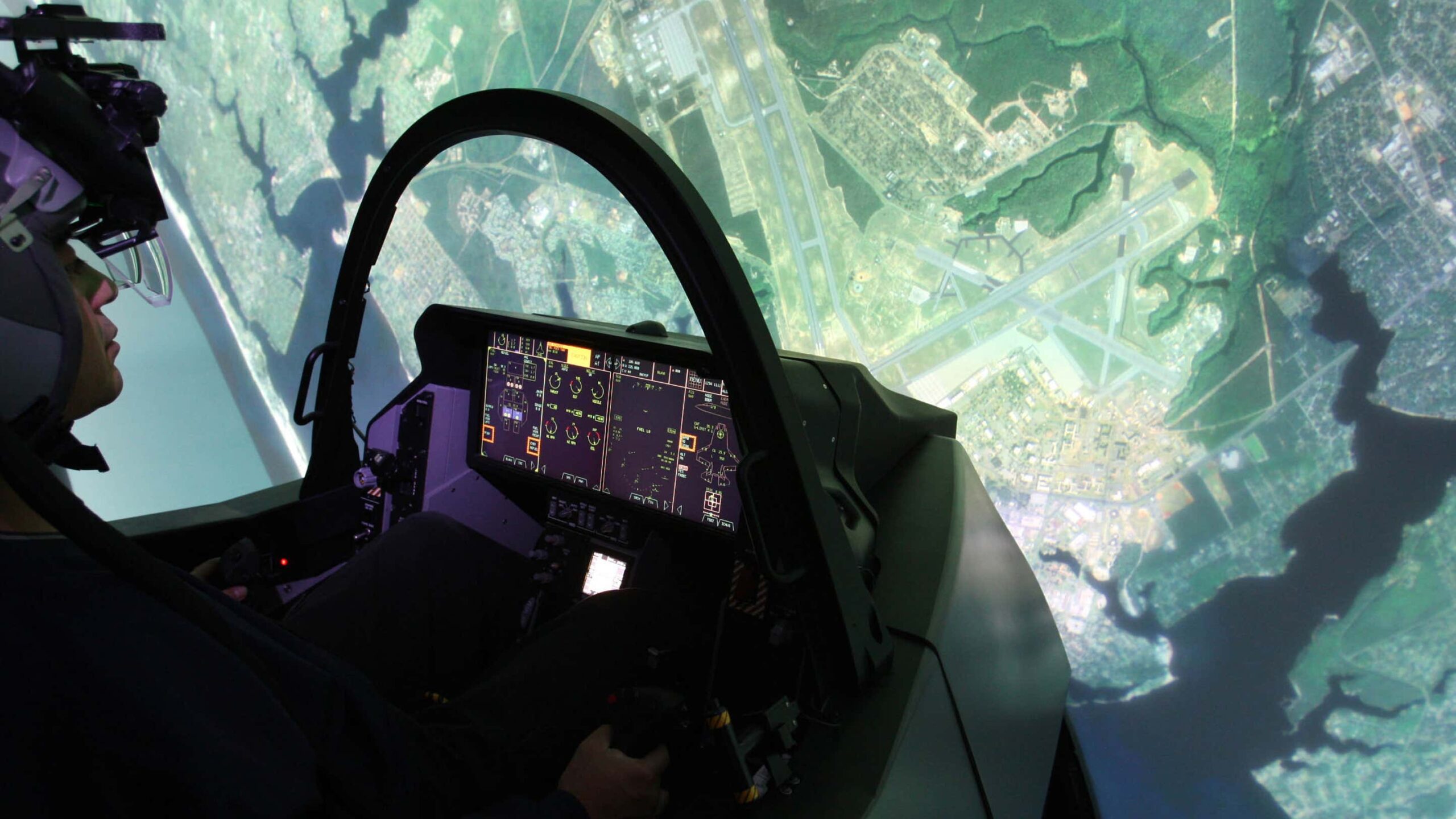
A pilot at Eglin Air Force Base, Florida, using an F-35 Full Mission Simulator.
Until now, although F-35 pilots regularly fly with a tablet on their knee, these haven’t been fully integrated with the cockpit and were not able to be physically plugged into the jet and receive real-time data from its own mission computers and its hugely powerful sensor suite. Now, as well as at Nellis, F-35s at Edwards Air Force Base and at Naval Air Weapons Station China Lake, both in California, are also trialing the FoX Tablet interface. So far, the work had only been conducted with the jets on the ground but, once safety and security aspects are addressed, they will be used in the air, too.
[…]
Previously, this type of information would be presented to the F-35 pilot on the all-glass touchscreen display, which can be customized to present different data, and via the helmet-mounted sight. Both have been the subject of various criticisms in the past, with pilots, for example, pointing to the apparent high degree of latency in information reaching the helmet, which has also been compared unfavorably to a traditional head-up display. The touchscreen doesn’t have any tactile feel or feedback, which can make tapping-in commands a bit challenging during certain environmental and combat conditions.
Even with these existing cockpit interfaces working seamlessly, there is still an argument to be made for having an additional source of situational awareness (SA), especially for the demanding SEAD mission, or other highly complex roles that the F-35 is increasingly finding itself used for, in the form of a tablet. A tablet is portable and, thanks to apps, can present a different tactical picture, or data set, than the other displays. Indeed, tablets are now a frequent fixture in the cockpits of — typically older-generation aircraft — to provide, for example, a means of displaying targeting pod data, or datalink-provided tactical and SA information, as well as flight manual and procedural info.
[…]
“There is no reason why I can’t test the same capability and app on F-18 before F-35 or risk reduce software on F-35 for use by unpiloted aircraft,” LeClair explained. “By connecting a tablet to an aircraft’s data bus, the warfighter and tester will be able to utilize an entire DoD Combat App store of tools, customized to help solve tactical problems in real time.”
[…]
As to how pilots will adapt to the FoX Tablet, LeClair said that “They want this, and they want it yesterday,” noting the “tremendous support from combat aviators.” LeClair likened the tablet concept to an electronic flight bag, the electronic information management device that has replaced the paperwork previously used for flight management tasks. In this way, the FoX Tablet would likely include flight maps, operating manuals, and perhaps even aircraft diagnostic data, as well as a range of apps optimized for different missions or test programs.
The tablet could also allow data to be displayed differently than what an aircraft’s cockpit displays will allow. For instance, 3D situational awareness display rendering, where threats and other situational and navigational information are displayed in a spatially volumetric form, can provide a huge advantage for aircrews trying to survive in a very dynamic and hostile environment. Some of the latest aircraft have wide area displays and graphics capabilities to do this. As far as we know, the F-35, whose systems are based on nearly 20-year-old tech today, is not capable of being able to generate this type of visual interface. But a tablet could be able to without upgrading the entire cockpit and its backend computing systems that drive its visual interfaces.
Boeing
The Super Hornet Block III’s wide-area display and powerful display processing technology can show a 3D instead of a 2D render of the situation around the aircraft at any given time.
After the FoX Tablet comes the FoX BoX, which should optimize its utility in the cockpit. This is being developed at NAWS China Lake, home to ongoing F/A-18E/F Super Hornet mission systems test work. It aims to use a cyber-secure chipset to run “high-level, AI-capable computer processors that will serve as an operating system to communicate to aircraft, allowing the FoX Tablet to function mainly as a visual interface for aircrew.“
Meanwhile, ground tests of the tablet will continue on the F-35, before moving to the F/A-18, F-16, and the F-22. A first test flight — aboard an as yet unconfirmed platform — should take place later this year.
NASA has chosen Elon Musk‘s SpaceX to build the spacecraft that take the first woman and next man to the moon.
The American space agency made the official announcement Friday, which includes SpaceX’s $2.9 billion contract to build the lunar lander that is reportedly much lower than what competitors bid.
The Washington Post shared the news hours before saying the Musk-owned firm beat out Jeff Bezos’ Blue Origin and Dynetics.
Bezos owns the Post, which branded Musk’s win a ‘stunning victory’ over his Amazon tycoon’s rival effort.
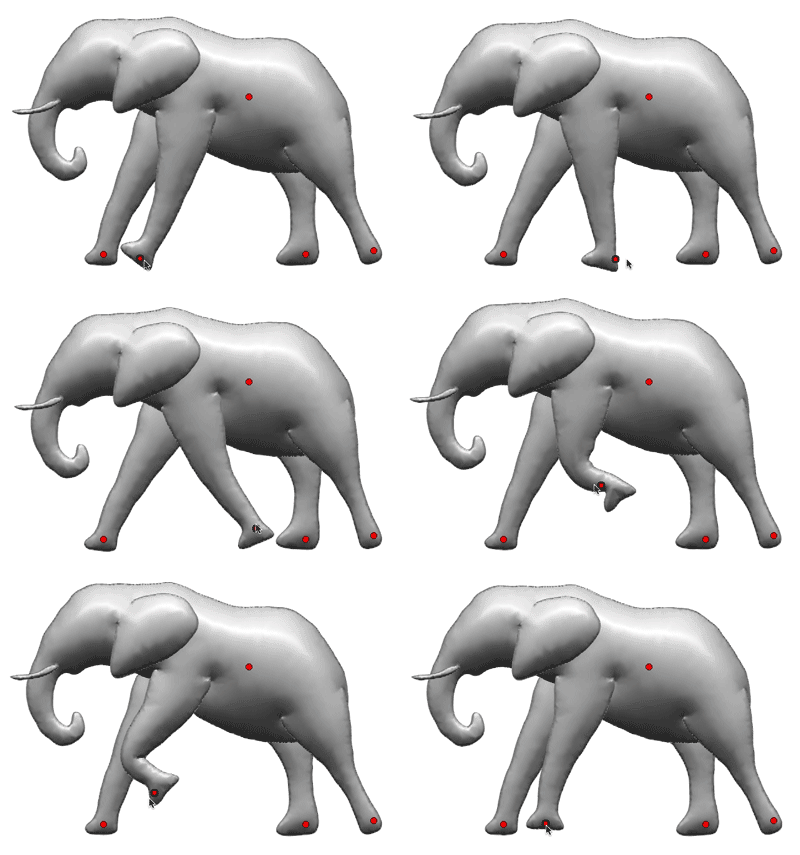
Monster Mash, an open source tool presented at SIGGRAPH Asia 2020 that allows experts and amateurs alike to create rich, expressive, deformable 3D models from scratch — and to animate them — all in a casual mode, without ever having to leave the 2D plane. With Monster Mash, the user sketches out a character, and the software automatically converts it to a soft, deformable 3D model that the user can immediately animate by grabbing parts of it and moving them around in real time. There is also an online demo, where you can try it out for yourself.
Creating a walk cycle using Monster Mash. Step 1: Draw a character. Step 2: Animate it.
Creating a 2D Sketch The insight that makes this casual sketching approach possible is that many 3D models, particularly those of organic forms, can be described by an ordered set of overlapping 2D regions. This abstraction makes the complex task of 3D modeling much easier: the user creates 2D regions by drawing their outlines, then the algorithm creates a 3D model by stitching the regions together and inflating them. The result is a simple and intuitive user interface for sketching 3D figures.
For example, suppose the user wants to create a 3D model of an elephant. The first step is to draw the body as a closed stroke (a). Then the user adds strokes to depict other body parts such as legs (b). Drawing those additional strokes as open curves provides a hint to the system that they are meant to be smoothly connected with the regions they overlap. The user can also specify that some new parts should go behind the existing ones by drawing them with the right mouse button (c), and mark other parts as symmetrical by double-clicking on them (d). The result is an ordered list of 2D regions.
Steps in creating a 2D sketch of an elephant.
Stitching and Inflation To understand how a 3D model is created from these 2D regions, let’s look more closely at one part of the elephant. First, the system identifies where the leg must be connected to the body (a) by finding the segment (red) that completes the open curve. The system cuts the body’s front surface along that segment, and then stitches the front of the leg together with the body (b). It then inflates the model into 3D by solving a modified form of Poisson’s equation to produce a surface with a rounded cross-section (c). The resulting model (d) is smooth and well-shaped, but because all of the 3D parts are rooted in the drawing plane, they may intersect each other, resulting in a somewhat odd-looking “elephant”. These intersections will be resolved by the deformation system.
Illustration of the details of the stitching and inflation process. The schematic illustrations (b, c) are cross-sections viewed from the elephant’s front.
Layered Deformation At this point we just have a static model — we need to give the user an easy way to pose the model, and also separate the intersecting parts somehow. Monster Mash’s layered deformation system, based on the well-known smooth deformation method as-rigid-as-possible (ARAP), solves both of these problems at once. What’s novel about our layered “ARAP-L” approach is that it combines deformation and other constraints into a single optimization framework, allowing these processes to run in parallel at interactive speed, so that the user can manipulate the model in real time.
The framework incorporates a set of layering and equality constraints, which move body parts along the z axis to prevent them from visibly intersecting each other. These constraints are applied only at the silhouettes of overlapping parts, and are dynamically updated each frame.
In steps (d) through (h) above, ARAP-L transforms a model from one with intersecting 3D parts to one with the depth ordering specified by the user. The layering constraints force the leg’s silhouette to stay in front of the body (green), and the body’s silhouette to stay behind the leg (yellow). Equality constraints (red) seal together the loose boundaries between the leg and the body.
Meanwhile, in a separate thread of the framework, we satisfy point constraints to make the model follow user-defined control points (described in the section below) in the xy-plane. This ARAP-L method allows us to combine modeling, rigging, deformation, and animation all into a single process that is much more approachable to the non-specialist user.
The model deforms to match the point constraints (red dots) while the layering constraints prevent the parts from visibly intersecting.
Animation To pose the model, the user can create control points anywhere on the model’s surface and move them. The deformation system converges over multiple frames, which gives the model’s movement a soft and floppy quality, allowing the user to intuitively grasp its dynamic properties — an essential prerequisite for kinesthetic learning.
Because the effect of deformations converges over multiple frames, our system lends 3D models a soft and dynamic quality.
To create animation, the system records the user’s movements in real time. The user can animate one control point, then play back that movement while recording additional control points. In this way, the user can build up a complex action like a walk by layering animation, one body part at a time. At every stage of the animation process, the only task required of the user is to move points around in 2D, a low-risk workflow meant to encourage experimentation and play.
Conclusion We believe this new way of creating animation is intuitive and can thus help democratize the field of computer animation, encouraging novices who would normally be unable to try it on their own as well as experts who often require fast iteration under tight deadlines. Here you can see a few of the animated characters that have been created using Monster Mash. Most of these were created in a matter of minutes.
A selection of animated characters created using Monster Mash. The original hand-drawn outline used to create each 3D model is visible as an inset above each character.
All of the code for Monster Mash is available as open source, and you can watch our presentation and read our paper from SIGGRAPH Asia 2020 to learn more. We hope this software will make creating 3D animations more broadly accessible. Try out the online demo and see for yourself!
Note: This table shows the number of URLs that were accepted and rejected for European and Russian requests received between July 1 and December 31, 2020 that were processed as of February 15, 2021. The number of URLs accepted and rejected may not reflect requests still pending review as of February 15, 2021. For example, processing delays may result if more information is needed to complete the review on a request.
Cumulative “Right to be forgotten” requests, May 2014 – December 2020
Requests received and processed
URLs requested
URLs accepted
URLs rejected
Percentage of URLs accepted
Total
41,613
133,972
62,373
71,562
47%
Note: This table shows the number of URLs that were accepted and rejected for European and Russian requests received between May 2014 and December 31, 2020 that were processed as of February 15, 2021. The number of URLs accepted and rejected may not reflect requests still pending review as of February 15, 2021. For example, processing delays may result if more information is needed to complete the review on a request.
As an intellectual property company itself, Microsoft encourages respect for intellectual property, including copyrights. We also are committed to freedom of expression and the rights of users to engage in uses that may be permissible under applicable copyright laws. Links to webpages containing material that infringes on the rights of copyright owners may be removed from our search results provided we receive a legally sufficient notice of infringement from an owner or an authorized agent acting on that owner’s behalf. The following numbers relate to requests to remove links to webpages from our Bing search engine results.
Copyright removal requests, July to December 2020
Requests
URLs requested
URLs accepted
URLs rejected
Percentage of URLs accepted
17,006,978
59,222,175
58,965,071
257,104
99.57%
Note: The data above details compliant removal requests received by Bing for removal of algorithmic search results. The report does not include: (1) copyright removal requests from the Bing image or video index, (2) from Bing Ads, or (3) removal requests for other online services, such as Outlook and Skype requests, or (4) requests initially deemed non-compliant during preliminary reviews conducted prior to entry of the request into our standard tracking tools. The data includes more than 95% of the copyright removal requests for Bing for the six-month reporting period. Removal requests for Bing represent about 99% of all copyright removal requests received.
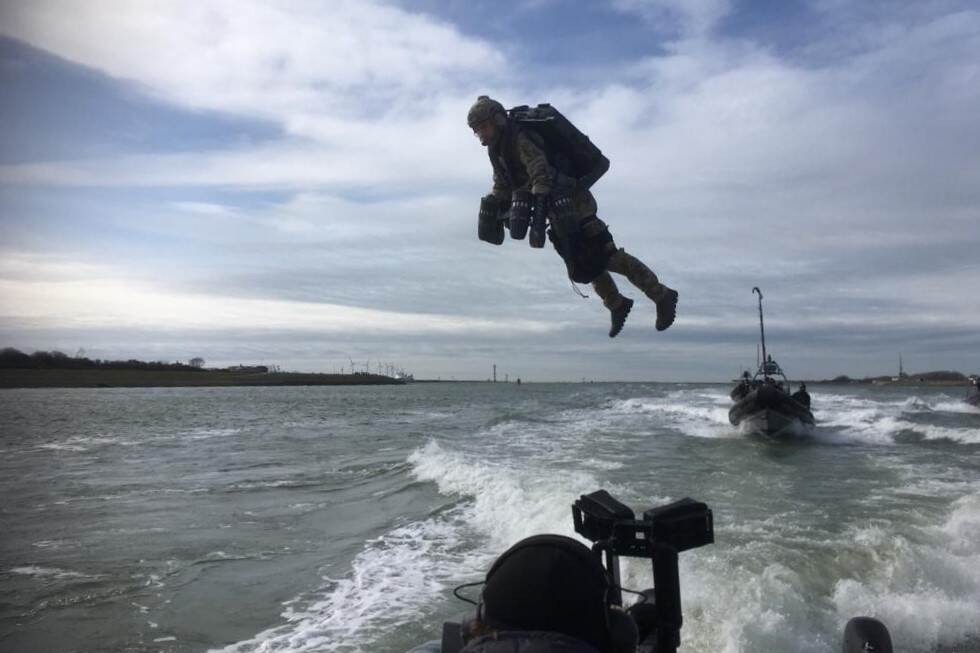
The Marine Corps has been working on a futuristic experiment recently. In collaboration with innovation centre MIND, the GRAVITY Fly Suit has been tested. This makes it easier for special forces to overcome vertical obstacles.
In the flight suit, a person can move through the air in a harness with jet engines. The suit has been tested in various situations, for example when boarding ships. It has also been tested in a built environment.
Thanks to the Fly Suit, the soldiers can get to places that were previously virtually unreachable. As a result, the suit gives new options for tactical deployment. It can also offer civil emergency services new opportunities. The experiment stemmed from a desire for new ways of boarding operations.
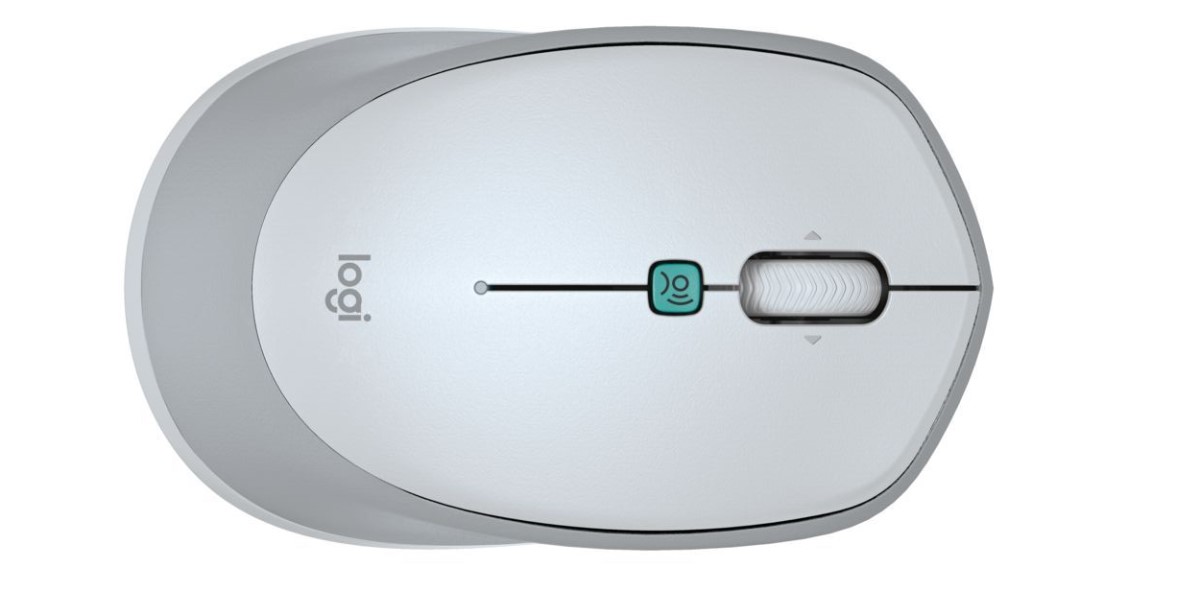
The Logitech Voice M380 wireless mouse looks and acts like a regular mouse but with a special button to initiate voice dictation. Baidu claimed recognition facilitates content creation at two to three times the speed of what one can type.
The device supports dictation in Chinese, English, and Japanese, and can translate content to English, Japanese, Korean, French, Spanish, and Thai. However, as of this month, you can only pick it up in China. There’s no word on when or if it will be available elsewhere.
The Logitech M380 Baidu voice mouse. Click to enlarge
The mouse uses Baidu’s AI open platform Baidu Brain speech technology. The Chinese tech company said of the platform:
As of September 2020, Baidu Brain has developed more than 270 core AI capabilities and created over 310,000 models for developers.
Baidu Brain is made of a security module and four components: a foundation layer (uses open-source Chinese deep learning platform Paddle Paddle, Kunlun AI processors, and databases); the so-called “perception” layer (aggregates the company’s algorithm in voice technology, computer vision and AR/VR); a cognition layer (integrates new information); and a platform layer.
[…]
The mouse comes in three colours, graphite, rose, and off-white, and costs around $30 (£22, €25).
Australian security firm Azimuth has been identified as the experts who managed to crack a mass shooter’s iPhone that was at the center of an encryption standoff between the FBI and Apple.
Until this week it had largely been assumed that Israeli outfit Cellebrite was hired to forcibly unlock an encrypted iPhone 5C used by Syed Farook – who in 2015 shot and killed colleagues at a work event in San Bernardino, California, claiming inspiration from ISIS.
Efforts by law enforcement to unlock and pore over Farook’s phone were unsuccessful, leading to the FBI taking Apple to court to force it to crack its own software to reveal the device’s contents. The Feds got an order from a judge instructing Apple to effectively break its own security to give agents access to the locked and encrypted handset.
But Apple heavily and publicly resisted, leading to a legal showdown that resulted in increasing alarm in the technology industry. Before the courts were forced to resolve the issue of access to encrypted data, however, the FBI announced it had found a way into the phone and dropped the case.
It later emerged the Feds had paid $900,000 to get into the phone… which had nothing of value on it. That isn’t too surprising since it was Farook’s work phone, after all.
Amazon reportedly pressured smart-thermostat maker Ecobee to fork over data from its voice-enabled devices even when customers weren’t actively using them. When Ecobee pushed back, the e-commerce giant threatened to box the company out of high-profile selling events like Prime Day or refuse Alexa certification for future devices, according to a Wall Street Journal report this week.
Last year, Amazon approached Ecobee among other Alexa-enabled device sellers about sharing “proactive state” data from customers, several company executives confirmed to the Journal. With this data, Amazon would receive updates about the device’s status at all times even when customers weren’t using them, such as the temperature of their home or whether their doors are locked, among other examples.
[…]
However, when Ecobee initially refused to provide users’ proactive state data, Amazon warned that a refusal might bar the company from major selling events like Prime Day or prevent its future devices from receiving Alexa certification, said one of the people the Journal spoke with. Given that Amazon controls a huge chunk of the global e-commerce market (nearly 40% in the U.S. alone), that kind of move can bankrupt smaller companies like Ecobee.
[…]
In addition to stealing designs from other companies for its AmazonBasics line, Amazon also purportedly pressures industry partners to use its logistics arm, Fulfillment by Amazon, by threatening to make it more difficult to sell products on its marketplace, according to the Journal. Amazon even reportedly competes with the companies it invests in, of which Ecobee is one, using its position as a shareholder to access confidential information and develop similar products.
Last October, a House Judiciary antitrust subcommittee concluded what we all already knew: That Amazon and other tech giants have “monopoly power” in their respective markets and “abuse their power by charging exorbitant fees, imposing oppressive contract terms, and extracting valuable data from the people who rely on them.”