How “ugly” labels on imperfect food can increase purchase of unattractive produce

[…]

According to a recent report by the National Academies of Science, Engineering and Medicine (2020), each year in the U.S. farmers throw away up to 30% of their crops, equal to 66.5 million tons of edible produce, due to cosmetic imperfections.

[…]

They discover that consumers expect unattractive produce to be less tasty and, to a smaller extent, less healthy than attractive produce, which leads to its rejection. They also find that emphasizing aesthetic flaws via ‘ugly’ labeling (e.g., “Ugly Cucumbers”) can increase the purchase of unattractive produce. This is because ‘ugly’ labeling points out the aesthetic flaw in the produce, making it clear to consumers that there are no other deficiencies in the produce other than attractiveness. Consumers may also reevaluate their reliance on visual appearance as a basis for judging the tastiness and healthiness of produce; ‘ugly’ labeling makes them aware of the limited nature of their spontaneous objection to unattractive produce.

[…]

“We sold both unattractive and attractive produce at a farmer’s market and find that consumers were more likely to purchase unattractive produce over attractive produce when the unattractive produce was labeled ‘ugly’ compared to when unattractive produce was not labeled in any specific way. ‘Ugly’ labeling also generated greater profit margins relative to when unattractive produce was not labeled in any specific way—a great solution for sellers to make a profit while reducing food waste.” In the second study, participants were told that they could win a lottery worth $30, and could keep all the cash or allocate some of the lottery earnings to purchase either a box of attractive produce or unattractive produce. ‘Ugly’ labeling increased the likelihood that consumers would use their lottery earnings to purchase a box of unattractive rather than attractive produce.

In Studies 3 and 4, ‘ugly’ labeling positively impacts taste and health expectations, which led to higher choice likelihood of unattractive produce over attractive produce. Study 5 considers how ‘ugly’ labeling might alter the effectiveness of price discounts. Typically, when retailers sell unattractive produce, they offer a discount of 20%-50%. Cornil says that “We show that ‘ugly’ labeling works best for moderate price discounts (i.e., 20%) rather than steep price discounts (i.e., 60%) because a large discount signals low quality, which nullifies the positive effect of the ‘ugly’ label.” This suggests that by simply adding the ‘ugly’ label, retailers selling unattractive produce can reduce those discounts and increase profitability.

The last two studies demonstrate that ‘ugly’ labeling is more effective than another popular label, ‘imperfect.’

[…]

Importantly, these findings largely contrast with managers’ beliefs. “While grocery store managers believed in either not labeling unattractive produce in any specific way or using ‘imperfect’ labeling, we show that ‘ugly’ labeling is far more effective,” says Hoegg

[…]

Source: How “ugly” labels can increase purchase of unattractive produce
Are we working more than ever? – Our World in Data

Working hours for the average worker have decreased dramatically over the last 150 years.

Why should we care?

The evidence presented here comes from decades of work from economic historians and other researchers. Of course, the data is not perfect — as we explain in a forthcoming post, measuring working hours with accuracy is difficult, and surveys and historical records have limitations, so estimates of working hours spanning centuries necessarily come with a margin of error. But for any given country, the changes across time are much larger than the error margins at any point in time: The average worker in a rich country today really does work many fewer hours than the average worker 150 years ago.

As the economists Diane Coyle and Leonard Nakamura explain, the study of working hours is crucial not only to measure macroeconomic productivity, but also to measure economic well-being beyond economic output. A more holistic framework for measuring ‘progress’ needs to consider changes in how people are allowed to allocate their time over multiple activities, among which paid work is only one.

The available evidence shows that, rather than working more than ever, workers in many countries today work much less than in the past 150 years. There are huge inequalities within and across countries, but substantial progress has been made.

Source: Are we working more than ever? – Our World in Data

Daycares in Finland Built a ‘Forest Floor’, And It Changed Children’s Immune Systems

Playing through the greenery and litter of a mini forest’s undergrowth for just one month may be enough to change a child’s immune system, according to a small new experiment.

When daycare workers in Finland rolled out a lawn, planted forest undergrowth such as dwarf heather and blueberries, and allowed children to care for crops in planter boxes, the diversity of microbes in the guts and on the skin of young kids appeared healthier in a very short space of time.

Compared to other city kids who play in standard urban daycares with yards of pavement, tile and gravel, 3-, 4-, and 5-year-olds at these greened-up daycare centres in Finland showed increased T-cells and other important immune markers in their blood within 28 days.

“We also found that the intestinal microbiota of children who received greenery was similar to the intestinal microbiota of children visiting the forest every day,” says environmental scientist Marja Roslund from the University of Helsinki.

paivakodin pihatOne daycare before (left) and after introducing grass and planters (right). (University of Helsinki)


Prior research has shown early exposure to green space is somehow linked to a well-functioning immune system, but it’s still not clear whether that relationship is causal or not.

The experiment in Finland is the first to explicitly manipulate a child’s urban environment and then test for changes in their micriobiome and, in turn, a child’s immune system.

[…]

The results aren’t conclusive and they will need to be verified among larger studies around the world. Still, the benefits of green spaces appear to go beyond our immune systems.

Research shows getting outside is also good for a child’s eyesight, and being in nature as a kid is linked to better mental health. Some recent studies have even shown green spaces are linked to structural changes in the brains of children.

What’s driving these incredible results is not yet clear. It could be linked to changes to the immune system, or something about breathing healthy air, soaking in the sun, exercising more or having greater peace of mind.

Given the complexities of the real world, it’s really hard to control for all the environmental factors that impact our health in studies.

While rural children tend to have fewer cases of asthma and allergies, the available literature on the link between green spaces and these immune disorders is inconsistent.

The current research has a small sample size, only found a correlation, and can’t account for what children were doing outside daycare hours, but the positive changes seen are enough for scientists in Finland to offer some advice.

[…]

Bonding with nature as a kid is also good for the future of our planet’s ecosystems. Studies show kids who spend time outdoors are more likely to want to become environmentalists as adults, and in a rapidly changing world, that’s more important than ever.

Just make sure everyone’s up to date on their tetanus vaccinations, Sinkkonen advises.

The study was published in the Science Advances.

Source: Daycares in Finland Built a ‘Forest Floor’, And It Changed Children’s Immune Systems

Do algorithms make us even more radical? Filter bubbles and echo chambers

‘Technology ensures that we’re all served our own personalised news cycle. As a result, we only get to hear the opinions that correspond to our own. The result is polarisation’. Or so the oft-heard theory goes. But in practice, it seems this isn’t really true, or at least not for the average Dutch person. However, according to communication scientist Judith Möller, the influence of filter bubbles, as they are known, could indeed be stronger when it comes to groups with radical opinions.

Judith Möller: ‘My theory is that filter bubbles do indeed exist, but that we’re looking for them in the wrong place.’

First of all, we need to differentiate between the so-called echo chamber and the filter bubble. As an individual, you voluntarily take your place in an echo chamber (such as in the form of a forum, or a Facebook or WhatsApp group), meaning you surround yourself with people who tend towards the same opinion as yourself. ‘Call it the modern form of compartmentalisation’, says communication scientist Judith Möller, who recently received a Veni grant for her research. ‘People have always had the tendency to surround themselves with like-minded people, and that’s no different on social media.’

Various news sources in parallel prevent a filter bubble

In the filter bubble, you are presented only with news and opinions that match you as an individual, on the basis of algorithms and without you being aware of this process. It’s said that this bubble is leading to the polarisation of society. Everyone is constantly exposed to ‘their own truth’, while other news gets filtered out. But Möller says that there is no evidence to support this, at least in the Netherlands. ‘We use various news sources in parallel – meaning not only Facebook and Twitter, but also radio, television and newspapers, so we run little risk of ending up in a filter bubble. Besides that: the amount of “news” on an average Facebook timeline is less than 5%. Moreover, it turns out that many people on social media are actually more likely to encounter news that they normally wouldn’t read or search out, so that’s almost a bubble in reverse.’

Bubbles at the fringes of the opinion spectrum

Nonetheless, a great deal of money is being invested in the use of algorithms and artificial intelligence, such as during election periods. Möller: ‘So there must be something in it. My theory is that filter bubbles do indeed exist, but that we’re looking for them in the wrong place. We shouldn’t look at the mainstream, but at groups with radical and/or divergent opinions who don’t fit into the “centre”. This is where we see the formation of ‘fringe bubbles’, as I call them – filters at the edges of the opinion spectrum.’

People with fringe opinions can suddenly become very visible

From spiral of silence to spiral of noise

As one example, the researcher cites the anti-vaccination movement. ‘Previously, this group was confronted with the ‘spiral of silence’: if you said in public, for instance to friends or family, that you were sceptical about vaccination, you wouldn’t get a positive response. And so, you’d keep quiet about it. But this group found each other on social media, and as a consequence of filter technology, the proponents of this view encountered the ‘spiral of noise’: suddenly it seems as if a huge number of people agree with you.’

The news value of radical and divergent opinions

And so, it can happen that people with fringe, radical or divergent opinions suddenly become very vocal and visible. ‘Then they become newsworthy, they appear in normal news media and hence are able to address a wider public. The fringe bubble shifts towards the centre. This has been the case with the anti-vaccination movement, the climate sceptics and the yellow vests, but it also happened with the group who opposed the Dutch Intelligence and Security Services Act – no-one was interested initially, but in the end, it became major news and it even resulted in a referendum.’

Consequences can be both positive and negative

‘In my research I aim to go in search of divergent opinions like these, and then I’ll try to determine how algorithms influence radical groups, to what extent filter bubbles exist and why groups with radical opinions ultimately manage, or don’t manage, to appear in news media.’
The consequences of these processes can be both positive and negative, believes Möller. ‘Some people claim that this attention leads people from the “centre” to feel attracted to the fringe areas of society, in turn leading to more extreme opinions and a reduction in social cohesion, which is certainly possible. On the other hand, this process also brings advantages: after all, in a democracy we also need to listen to minority opinions.’

Source: Do algorithms make us even more radical? – University of Amsterdam

To find out how researchers track the filter bubble, read about fbtrex here (pdf)

Personalisation algorithms and elections: Breaking free of the filter bubble

In recent years, we have been witnessing a fundamental shift in the form how news and current affairs are disseminated and mediated. Due to the exponential increase in available content online and technological development in the field of recommendation systems, more and more citizens are informing themselves through customized and curated sources, while turning away from mass-mediated information sources like TV news and newspapers. Algorithmic recommendation systems provide news users with tools to navigate the information overload and identify important and relevant information. They do so by performing a task that was once a key part of the journalistic profession: keeping the gates. In a way, news recommendation algorithm can create highly individualized gates, through which only information and news fit that serves the user best. In theory, this is a great achievement that can make news exposure more efficient and interesting. In practice, there are many pitfalls when the power to select what we hear from the news shifts from professional editorial boards that select the news according to professional standards to opaque algorithms who are reigned by their own logic, the logic of advertisers or consumes personal preferences.

Beyond the filter bubble: Concepts, myths, evidence and issues for future debates

Filter bubbles in the Netherlands?

Some fear that personalised communication can lead to information cocoons or filter bubbles. For instance, a personalised news website could give more prominence to conservative or liberal media items, based on the (assumed) political interests of the user. As a result, users may encounter only a limited range of political ideas. We synthesise empirical research on the extent and effects of self-selected personalisation, where people actively choose which content they receive, and pre-selected personalisation, where algorithms personalise content for users without any deliberate user choice. We conclude that at present there is little empirical evidence that warrants any worries about filter bubbles.

Should We Worry about Filter Bubbles?

Pop the filter bubble: Exposure Diversity as a Design Principle for Search and Social Media

Michael Bang Peterson and a few others from the US have some interesting counterpoints to this.

Source: New Research Shows Social Media Doesn’t Turn People Into Assholes (They Already Were), And Everyone’s Wrong About Echo Chambers

Formula 1 drivers told they cannot wear slogans or messages in post-race duties

Formula 1 drivers have been told they cannot wear clothing bearing any slogans or messages while doing official duties after grands prix.

The move is a reaction to Mercedes’ Lewis Hamilton wearing a T-shirt at the last race in Tuscany referencing the case of a woman killed by US police.

The FIA said podium finishers “must remain attired only in their driving suits done up to the neck”.

This must be the case throughout the podium ceremony and interviews.

The requirements include a “medical face mask or team-branded face mask”.

The move had been expected after talks between the FIA, Mercedes and Hamilton’s representatives before this weekend’s Russian Grand Prix.

At Mugello, Hamilton wore a T-shirt saying: “Arrest the cops who killed Breonna Taylor” at the official pre-race anti-racism demonstration and on the podium and during the post-race interviews.

He had previously worn a Black Lives Matter T-shirt for the demonstration, but not after the race, while other drivers wore the FIA official “End Racism” T-shirts.

The FIA looked into whether they should investigate Hamilton on the grounds of breaking any rules, but decided against it.

Political messages have long been banned on the podium in F1.

Hamilton said at the Russian Grand Prix: “I did something that has never really happened in F1 and obviously they will stop it from happening moving forwards.”

[…]

Source: Formula 1 drivers told they cannot wear slogans or messages in post-race duties – BBC Sport

U.S. Concentration Camp in Georgia Sent Women to Be Sterilized

Why are the terms “Nazi Germany” and “Mengele” become trending topics on Twitter? The words dominated the social media platform on Monday after it was revealed that a whistleblower has alleged “high numbers” of immigrant women at a U.S. concentration camp in Georgia were sent to be given unnecessary hysterectomies. Many of the women reportedly didn’t know why they were being sent to have the surgery and were all sent to the same doctor, according to the complaint, with one woman describing the facility as an “experimental concentration camp.”

Twitter users made several analogies to various Nazi atrocities on Monday, like the sadistic medical experiments performed on Jews by Josef Mengele during the Holocaust in the 1930s and ‘40s. And while U.S. concentration camps aren’t currently operating as anything close to the European death camps of the Holocaust, there’s still reasonable concern about what the fuck is happening in the U.S. right now under the Trump regime.

The whistleblower, a nurse named Dawn Wooten, worked full time at a concentration camp run by Immigration and Customs Enforcement called the Irwin County Detention Center, until her work hours were cut in July, a result of alleged retaliation for speaking up internally about health and sanitary conditions in the prison. The facility is technically owned by a private company called LaSalle Corrections, much like several other ICE and CBP concentration camps across the U.S. that currently house tens of thousands of detainees under a for-profit model.\

[…]

the most shocking revelations involve many women who were sent to have hysterectomies—a medical procedure to remove the uterus, rendering the women unable to become pregnant and have children—without getting a clear answer on why they were having the surgeries done.

From the complaint to the OIG, which is available online:

One woman told Project South in 2019 that Irwin sends many women to see a particular gynecologist outside the facility but that some women did not trust him. She also stated that “a lot of women here go through a hysterectomy” at ICDC. More recently, a detained immigrant told Project South that she talked to five different women detained at ICDC between October and December 2019 who had a hysterectomy done. When she talked to them about the surgery, the women “reacted confused when explaining why they had one done.” The woman told Project South that it was as though the women were “trying to tell themselves it’s going to be OK.” She further said: “When I met all these women who had had surgeries, I thought this was like an experimental concentration camp. It was like they’re experimenting with our bodies.”

The whistleblower, nurse Wooten, explained in her own words how one unnamed doctor was allegedly carrying out this mass sterilization effort on immigrant women. Wooten even called the doctor a “uterus collector”:

Everybody he sees has a hysterectomy—just about everybody. He’s even taken out the wrong ovary on a young lady [detained immigrant woman]. She was supposed to get her left ovary removed because it had a cyst on the left ovary; he took out the right one. She was upset. She had to go back to take out the left and she wound up with a total hysterectomy. She still wanted children—so she has to go back home now and tell her husband that she can’t bear kids… she said she was not all the way out under anesthesia and heard him [doctor] tell the nurse that he took the wrong ovary.

[…]

We’ve questioned among ourselves like goodness he’s taking everybody’s stuff out…That’s his specialty, he’s the uterus collector. I know that’s ugly…is he collecting these things or something…Everybody he sees, he’s taking all their uteruses out or he’s taken their tubes out. What in the world.

The complaint also alleges that the women in custody aren’t getting clear communication about what procedure is about to be done on them, with some medical staff in the facility allegedly using Google to translate things from English to Spanish before surgery. Some women were told conflicting things about why they needed to have hysterectomies, like one woman who was given three very different reasons

[…]

ICE did not immediately respond to a request for comment on Tuesday morning, but sent out a statement to several news outlets insisting that, “in general, anonymous, unproven allegations, made without any fact-checkable specifics, should be treated with the appropriate skepticism they deserve.” Notably, that’s not a flat denial of the allegations. And DHS restricts access to the facilities to such a degree that journalists have previously tried to use drones just to get a look inside. Even members of Congress have struggled to get an unfiltered look at what’s happening in these facilities.

ICE and its parent agency, the U.S. Department of Homeland Security, have a history of outright lies and running interference for objectively racist policies. The former head of DHS, Kirstjen Nielsen, lied to Congress on multiple occasions, claiming that the Trump regime did not have a policy of separating families at the U.S.-Mexico border. That was flatly wrong and Nielsen has never been held accountable for the lies, let alone the atrocities she committed against countless asylum seekers. The current head of DHS, Acting Secretary Chad Wolf, has never been confirmed by the Senate and the nonpartisan Government Accountability Office found last month that he was illegally appointed to his position in late 2019. Wolf is still the head of DHS.

[…]

Source: U.S. Concentration Camp in Georgia Sent Women to Be Sterilized

Who Emerges into Virtual Team Leadership Roles? Different people from face to face leadership

It turns out that where in traditional face to face leadership, people prefer leaders who are vocal, charming, friendly (ascription qualities). In virtual leadership, people prefer leaders who facilitate, are organised and actually do stuff (achievement factors).

 In two independent samples—a laboratory experiment involving 86 teams (n = 340; sample one) and a semester long project involving 134 teams (n = 430; sample two)—we found that in low virtuality contexts, ascription factors accounted for incremental variance over achievement factors in predicting leadership emergence, and had larger relative importance. Conversely, in high virtuality contexts, achievement factors accounted for incremental variance over ascription factors in predicting leadership emergence, and had larger relative importance.

Source: Who Emerges into Virtual Team Leadership Roles? The Role of Achievement and Ascription Antecedents for Leadership Emergence Across the Virtuality Spectrum | SpringerLink

This seed of professional vexation has borne fruit, with new data showing that the confidence, intelligence and extroversion that have long propelled ambitious workers into the executive suite are not enough online, because they simply don’t translate into virtual leadership. Instead, workers who are organised, dependable and productive take the reins of virtual teams. Finally, doers lead the pack – at least remotely.

The study shows that, instead of those with the most dynamic voices in the room, virtual teams informally anoint leaders who actually do the work of getting projects done. “They are the individuals who help other team members with tasks, and keep the team on schedule and focused on goals,” says lead author Radostina Purvanova, an associate professor of management and leadership at Drake University in the US state of Iowa.

Source: The surprising traits of good remote leaders

‘Linusgate’: Namby pamby doesn’t like Linus calling FSF names at debconf, feels cancel cultury about it.

253 emails have been leaked from private (high-level) mailing lists of Debian, in which its representatives vocally complain about the talk Linus Torvalds gave at the most recent DebConf conference. Some people insist that he should be permanently banned from future conferences because the language he uses is inappropriate and infringes on the project’s Code of Conduct. This could set a very bad precedent for the open source community, which has recently seen an influx of various CoC policies applied to a number of high-profile projects mostly after very vocal concerns from the people who barely participate in the open source community. Some observers believe that it’s a plot by Microsoft to destroy the open source movement from the inside.

Source: ‘Linusgate’: Debian Project Leaders Want To Ban Linus Torvalds For His Manners – Slashdot

test detects cancer four years before conventional diagnosis using a blood test

Early detection has the potential to reduce cancer mortality, but an effective screening test must demonstrate asymptomatic cancer detection years before conventional diagnosis in a longitudinal study. In the Taizhou Longitudinal Study (TZL), 123,115 healthy subjects provided plasma samples for long-term storage and were then monitored for cancer occurrence. Here we report the preliminary results of PanSeer, a noninvasive blood test based on circulating tumor DNA methylation, on TZL plasma samples from 605 asymptomatic individuals, 191 of whom were later diagnosed with stomach, esophageal, colorectal, lung or liver cancer within four years of blood draw. We also assay plasma samples from an additional 223 cancer patients, plus 200 primary tumor and normal tissues. We show that PanSeer detects five common types of cancer in 88% (95% CI: 80–93%) of post-diagnosis patients with a specificity of 96% (95% CI: 93–98%), We also demonstrate that PanSeer detects cancer in 95% (95% CI: 89–98%) of asymptomatic individuals who were later diagnosed, though future longitudinal studies are required to confirm this result. These results demonstrate that cancer can be non-invasively detected up to four years before current standard of care.

Source: Non-invasive early detection of cancer four years before conventional diagnosis using a blood test | Nature Communications

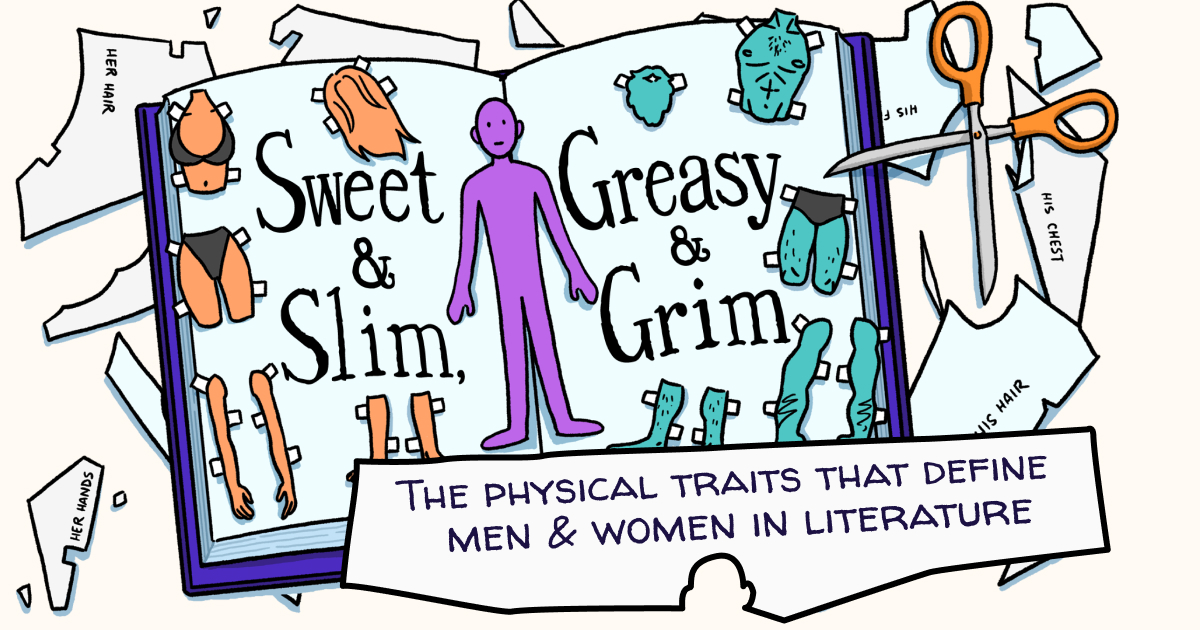
The Physical Traits that Define Men and Women in Literature

After slogging through that book, I began paying attention to similarly stereotyped descriptions of bodies in other books. Women are all soft thighs and red lips. Men, strong muscles and rough hands.

I was frustrated by this lazy writing. I want to read books that explore the full humanity of their characters, not stories that reduce both men and women to weak stereotypes of their gender.

Before getting too upset, I wanted to see if this approach to writing was as widespread as it seemed, or if I was succumbing to selective reading. Do authors really mention particular body parts

more for men than for women? Are women’s bodies described using different adjectives than those attributed to men?

[…]

It’s easy to dismiss or overlook the differences in the way men’s and women’s bodies are depicted because they can be subtle and hard to discern in one particular book—one or two extra mentions of “his bushy hair” may not register over 300 pages.

But when you zoom out and look at thousands of books, the patterns are clear.

In real life, women are obviously more dimensional than soft, sexual objects. Men are more complex than muscular lunkheads. We should expect that same nuance of the characters in the books we read.

Instead of focusing on her perfect hair and soft hips and wet eyes, tell me about her strong legs

that carry her through the world, or her capable hands that do her life’s work. Don’t reduce him to his muscular forearms and rough knuckles and chiseled jaw. I want to read about his silly smile for his family or his soft heart for animals.


Source: The Physical Traits that Define Men and Women in Literature

Whiteboard coding interviews are ‘anti-women psychological stress examinations’

People applying for software engineering positions at companies are often asked to solve problems on a whiteboard, under the watchful eye of an interviewer, as a way to assess technical problem solving skills.

But recent research suggests that whiteboard technical tests – so daunting to job seekers that there are books on how to deal with them – often fail to assess technical skill, according to new research. Instead, they’re all about pressure.

In a paper [PDF] to be presented later this year at the ACM Joint European Software Engineering Conference and Symposium on the Foundations of Software Engineering, researchers from North Carolina State University (NCSU) and Microsoft in the US argue that whiteboard sessions test for stage fright rather than, y’know, coding competency.

The title of the paper hints at its conclusion: “Does Stress Impact Technical Interview Performance?” NCSU authors Mahnaz Behroozi, Shivani Shirolkar, and Chris Parnin, with Titus Barik from Microsoft, say it most certainly does.

“Through a happy accident, the software industry has seemingly reinvented a crude yet effective instrument for reliably introducing stress in subjects, which typically manifests as performance anxiety,” the paper explains.

“A technical interview has an uncanny resemblance to the Trier Social Stress Test, a procedure used for decades by psychologists and is the best known ‘gold standard’ procedure for the sole purpose of reliably inducing stress.”

As a consequence, whiteboard interviews may fail to assess coder competency. Rather, the researchers argue, they measure how well job candidates handle anxiety.

Using 48 graduate and undergraduate students with programming experience, the researchers conducted a randomized controlled trial to compare the traditional technical interview (done while being watched) with a private session evaluation (done without being observed). The experiment was designed to measure cognitive load and stress through the collection of eye tracking metrics, specifically fixation duration and pupil dilation.

The researchers found that stress hinders interview performance, with participants in the traditional technical interview exhibiting higher cognitive load, lower scores, and higher stress levels. In essence, social anxiety took otherwise qualified job candidates out of the running because of the circumstances of the interview.

Further flaws

What’s more, whiteboard technical interviews appear to favor men over women.

“We also observed that no women successfully solved the problem in the public setting, whereas all women solved it correctly in the private setting,” the paper says.

In a phone interview with The Register, Christopher Parnin, assistant professor at NC State University and one of the paper’s co-authors, said he doesn’t have a conclusive reason why this might be the case. He said there’s some support in academic literature to indicate the women have more performance anxiety than men, but he stressed that’s a gross oversimplification because men experience performance anxiety too.

For Parnin, the problem is whiteboard tests themselves. “It all comes down to the fact that the test is designed to make almost anyone fail,” he said. “You’re basically having to interview tons of people just to find those who can pass it.”

Parnin took issue with the way the industry has dealt with the difficulty of its tests. Rather than coming up with a fair way to evaluate software engineers, companies like Google advise at least 40 practice sessions – a time commitment that’s not an option for everyone. This amounts to stress inoculation training and it does help people pass whiteboard tests, he said, but it doesn’t make the tests an effective skill assessment tool.

As an alternative, the paper points to the way devops biz Honeycomb (Hound Technology) – overseen by a female CEO, CTO, CMO and VP of engineering – approaches hiring. The company provides interview questions in advance so it’s not a Trier Social Stress Test.

As the company explains on its website, its goal is to avoid surprises. “The research is clear: unknowns cause anxiety, and people don’t perform well when they’re anxious,” the company says.

“The big picture is to provide more accessible alternatives,” said Parnin. “There are a lot of ways to test for the same thing without putting all this pressure on people.”

Source: You’re testing them wrong: Whiteboard coding interviews are ‘anti-women psychological stress examinations’ • The Register

What Parnin forgets, is that pressure is actually a great part of a software developers’ life and so a very valid thing to test for.

JK Rowling joins 150 public figures warning over free speech and instant judgement

They say they applaud a recent “needed reckoning” on racial justice, but argue it has fuelled stifling of open debate.

The letter denounces “a vogue for public shaming and ostracism” and “a blinding moral certainty”.

Several signatories have been attacked for comments that caused offence.

“The free exchange of information and ideas, the lifeblood of a liberal society, is daily becoming more constricted,” says the letter.

US intellectual Noam Chomsky, eminent feminist Gloria Steinem, Russian chess grandmaster Garry Kasparov and author Malcolm Gladwell also put their names to the letter, which was published on Tuesday in Harper’s Magazine.

The appearance of Harry Potter author Rowling’s name among signatories comes after she recently found herself under attack online for comments that offended transgender people.

Her fellow British writer, Martin Amis, also signed the letter.

It also says: “We uphold the value of robust and even caustic counter-speech from all quarters.

“But it is now all too common to hear calls for swift and severe retribution in response to perceived transgressions of speech and thought.”

The letter condemns “disproportionate punishments” meted out by institutional leaders conducting “panicked damage control”.

Media captionWatch former US President Obama talk about “woke” culture

It continues: “Editors are fired for running controversial pieces; books are withdrawn for alleged inauthenticity; journalists are barred from writing on certain topics; professors are investigated for quoting works of literature in class; a researcher is fired for circulating a peer-reviewed academic study; and the heads of organizations are ousted for what are sometimes just clumsy mistakes.”

It was signed by New York Times op-ed contributors David Brooks and Bari Weiss. The newspaper’s editorial page editor was recently removed amid uproar after publishing an opinion piece by Republican Senator Tom Cotton.

Media captionWhat it’s like to be “cancelled”?

“We are already paying the price in greater risk aversion among writers, artists, and journalists who fear for their livelihoods if they depart from the consensus, or even lack sufficient zeal in agreement,” the letter says.

It adds: “We need to preserve the possibility of good-faith disagreement without dire professional consequences.”

Media captionPresident Trump: “Angry mobs are trying to tear down statues of our founders.”

One signatory – Matthew Yglesias, co-founder of liberal news analysis website Vox – was rebuked by a colleague on Tuesday for putting his name to the letter.

Vox critic at large Emily VanDerWerff, a trans woman, tweeted that she had written a letter to the publication’s editors to say that Yglesias signing the letter “makes me feel less safe at Vox”.

But VanDerWerff said she did not want Yglesias to be fired or apologise because it would only convince him he was being “martyred”.

One signatory recanted within hours of the letter being published.

Jennifer Finney Boylan, a US author and transgender activist, tweeted: “I did not know who else had signed that letter.

“I thought I was endorsing a well-meaning, if vague, message against internet shaming.”

She added: “I am so sorry.”

Source: JK Rowling joins 150 public figures warning over free speech – BBC News

This is part of a weaponisation of offensive feelings where moralistic high horse people feels that saying that they’re offended by something allows them to transgress the bounds of normal behaviour.

Facebook Bans Sale of Historical Artifacts Due to Rampant Black Market Trade also from within conflict zones by terrorists

Facebook has finally said it would now prohibit the sale of all historical artifacts due to rampant black market trade in looted antiquitieson the site, per the New York Times—a problem the social media company has known about for years.

The new rules ban any “attempts to buy, sell or trade in historical artifacts,” defined as “rare items of significant historical, cultural or scientific value,” on Facebook or Instagram. It also comes after years of Facebook doing very little to restrict trade in those same objects.

Reporting last month in the Times found at least 90 Facebook groups, mostly written in Arabic, with tens of thousands of members that were “connected to the illegal trade in Middle Eastern antiquities.” In those groups, salespeople would post images or descriptions of objects and often then direct interested buyers to contact them via chat or other services to arrange payment or meetings in person; in some cases, the buyers simply posted that they were interested in acquiring a specific type of artifact. Some of the groups also trafficked in do-it-yourself guides on how others could get into the black market antiquities trade.

Some of the items may have been originally acquired by Islamic State terrorists, who in addition to destroying thousands of years’ worth of artifacts and archaeological sites in regions under their control in Iraq, Syria, and Libya, looted those sites and other cultural institutions like museums for profit. Armed groups affiliated or working with other extremist groups and criminal organizations have participated as well. A United Nations Security Council report in January 2020 noted evidence of numerous excavations by Islamic State or al-Qaeda affiliates and concluded that social media groups “dedicated to antiquities trafficking continue to be created, while the area of origin of trafficked artefacts increases, continuously revealing a web of interconnectivity among antiquities traffickers.”

While in some cases looters and buyers used coded language to discuss the deals, Antiquities Trafficking and Heritage Anthropology Research Project (ATHAR) co-directors Katie Paul told the Times, in other instances it was all playing out in the open, right down to photos and videos of the objects being stolen to prove they were genuine. Paul told Artnet News that the countries of origin are “places where no legal trade exists,” making the sales uniformly illegal.

The total number of groups identified by researchers and activists is at least 200, according to the Times, and those are just the ones that they have caught onto. ATHAR released a report in 2019 finding “488 individual admins managing a collective 1,947,195 members across 95 Facebook Groups” comprised of a “mix of average citizens, middlemen, and violent extremists,” with what appeared to be a high degree of coordination between the admins of those groups:

Group members include a mix of average citizens, middlemen, and violent extremists. Violent extremists currently include individuals associated with Syrian-based groups like Hay’at Tahrir Al Sham (HTS), Hurras Al-Din, the Zinki Brigade and other non-Syrian based Al-Qaeda or Islamic State in Iraq and Syria (ISIS) affiliates. All of these groups are using Facebook as a platform for antiquities trafficking, whether through direct interaction with buyers and sellers or through the use of middlemen who straddle transactions between the general public and terrorist groups.

Administrators usually demanded that the black market traders cough up fees from any sales related to their membership in groups, according to the report. Around 36 percent of the sellers in an ATHAR case study of Syrian groups were actually located in conflict zones, while another 44 percent were in countries bordering conflict zones.

ATHAR co-director and Shawnee State University professor Amr Al-Azm, who had previously worked in Syria as an antiquities official, told the Times artifacts were also flowing from Yemen, Egypt, and Tunisia and that Facebook could have taken action as early as 2014, when deleting the groups would have had a bigger impact. He added it was a “supply and demand issue” and that deleting Facebook pages instead of archiving evidence destroys “a huge corpus of evidence” that might later be used to track down artifacts.

A Facebook report released on Tuesday acknowledged the issue, conceding significant pitfalls in policies that allowed trade in historical artifacts except where “it is clear that the artifacts have been looted.” Key findings included there is a “good chance that historical artifacts traded online are either illegal or fake, as an estimated 80% of antiquities have ‘sketchy provenances,’” as well as that there “is criticism that Facebook’s policy has led the platform to become a digital black market where users buy and sell illicit antiquities originating from conflict zones.”

Greg Mandel, a spokesperson for Facebook, told the Times that trade in “stolen artifacts” was already prohibited by site rules. (Paul and Al-Azm have disagreed that Facebook was actively enforcing those policies in the past, writing in 2018 that “Facebook does not currently enforce an explicit ban on transactions involving illicit cultural property.”)

“To keep these artifacts and our users safe, we’ve been working to expand our rules, and starting today, we now prohibit the exchange, sale or purchase of all historical artifacts on Facebook and Instagram,” Mandel added.

Paul told the Times the new policy is “an important shift in [Facebook’s] position on the trade in cultural heritage” and demonstrates they are aware of “illegal and harmful activity” on the site. But the policy is “only as good as its enforcement,” she added.

Source: Facebook Bans Sale of Historical Artifacts Due to Rampant Black Market Trade

Polish President Says LGBT ‘Ideology’ Worse Than Communism

Polish President Andrzej Duda accused the LGBT rights movement Saturday of promoting a viewpoint more harmful than communism and said he agreed with another conservative politician who stated that “LGBT is not people, it’s an ideology.”

Duda made his comments in the small southwestern town of Brzeg as he campaigns for reelection in Poland, a predominantly Catholic nation that spent more than four decades under communist governments.

Gay rights is emerging as a key campaign theme in the presidential election as the race grows close between Duda, backed by the nationalist conservative ruling party, and Warsaw Mayor Rafal Trzaskowski, who has called for tolerance for gays and lesbians.

Duda, who is 48, told his supporters that his parents’ generation did not struggle to cast off communism only to now accept “an ideology” that he thinks “is even more destructive to the human being.”

The president said that during Poland’s communist era, regimes ensured survival by indoctrinating the youngest generation.

“That was Bolshevism. It was the ideologizing of children,” he said. “Today, there are also attempts to push an ideology on us and our children, but different. It’s totally new, but it is also neo-Bolshevism.”

Earlier in the week, Duda signed a declaration drafted for the stated purpose of helping families that included language on “protecting children from LGBT ideology” with a ban on “propagating LGBT ideology in public institutions.”

Many conservative politicians in Poland say they are not against gay men and lesbians as individuals, but insist they oppose the goals of a civil rights movement they claim is imported from abroad and threatens to sexualize young people.

But gay and lesbian Poles and liberal Poles say government officials are adopting a language of dehumanization. They believe Duda and others are targeting homosexuals to curry favor with the powerful Catholic church — which faces allegations of covering up clerical abuse — and shore up support among conservative voters ahead of the election.

Some analysts also suspect that Duda and the governing Law and Justice party are making a bid for far-right voters who will mostly support the candidate of a smaller party, Confederation, in the election’s first round but whose votes will be up for grabs in a runoff.

Source: Polish President Says LGBT ‘Ideology’ Worse Than Communism | Time

Breathing Habits Are Related To Physical and Mental Health

Breathing is a missing pillar of health, and our attention to it is long overdue. Most of us misunderstand breathing. We see it as passive, something that we just do. Breathe, live; stop breathing, die. But breathing is not that simple and binary. How we breathe matters, too. Inside the breath you just took, there are more molecules of air than there are grains of sand on all the world’s beaches. We each inhale and exhale some 30 pounds of these molecules every day — far more than we eat or drink. The way that we take in that air and expel it is as important as what we eat, how much we exercise and the genes we’ve inherited. This idea may sound nuts, I realize. It certainly sounded that way to me when I first heard it several years ago while interviewing neurologists, rhinologists and pulmonologists at Stanford, Harvard and other institutions. What they’d found is that breathing habits were directly related to physical and mental health.

Today, doctors who study breathing say that the vast majority of Americans do it inadequately. […] But it’s not all bad news. Unlike problems with other parts of the body, such as the liver or kidneys, we can improve the airways in our too-small mouths and reverse the entropy in our lungs at any age. We can do this by breathing properly. […] [T]he first step in healthy breathing: extending breaths to make them a little deeper, a little longer. Try it. For the next several minutes, inhale gently through your nose to a count of about five and then exhale, again through your nose, at the same rate or a little more slowly if you can. This works out to about six breaths a minute. When we breathe like this we can better protect the lungs from irritation and infection while boosting circulation to the brain and body. Stress on the heart relaxes; the respiratory and nervous systems enter a state of coherence where everything functions at peak efficiency. Just a few minutes of inhaling and exhaling at this pace can drop blood pressure by 10, even 15 points. […] [T]he second step in healthy breathing: Breathe through your nose. Nasal breathing not only helps with snoring and some mild cases of sleep apnea, it also can allow us to absorb around 18% more oxygen than breathing through our mouths. It reduces the risk of dental cavities and respiratory problems and likely boosts sexual performance. The list goes on.

Source: Breathing Habits Are Related To Physical and Mental Health – Slashdot

Researchers Control Monkeys’ Decisions With Bursts of Ultrasonic Waves

New research published today in Science Advances suggests pulses of ultrasonic waves can be used to partially control decision-making in rhesus macaque monkeys. Specifically, the ultrasound treatments were shown to influence their decision to look either left or right at a target presented on a screen, despite prior training to prefer one target over the other.

The new study, co-authored by neuroscientist Jan Kubanek from the University of Utah, highlights the potential use of this non-invasive technique for treating certain disorders in humans, like addictions, without the need for surgery or medication. The procedure is also completely painless.

Scientists had previously shown that ultrasound can stimulate neurons in the brains of mice, including tightly packed neurons deep in the brain. By modulating neuronal activity in mice, researchers could trigger various muscle movements across their bodies. That said, other research has been less conclusive about this and whether high-frequency sound waves can trigger neuromodulatory effects in larger animals.

The new research suggests they can, at least in a pair of macaque monkeys.

Source: Researchers Control Monkeys’ Decisions With Bursts of Ultrasonic Waves

Why smartphones are digital truth serum

Do smartphones alter what people are willing to disclose about themselves to others? A new study in the Journal of Marketing suggests that they might. The research indicates that people are more willing to reveal about themselves online using their smartphones compared to desktop computers. For example, Tweets and reviews composed on smartphones are more likely to be written from the perspective of the first person, to disclose negative emotions, and to discuss the writer’s private family and personal friends. Likewise, when consumers receive an online ad that requests personal information (such as and income), they are more likely to provide it when the request is received on their smartphone compared to their desktop or laptop computer.

Why do smartphones have this effect on behavior? Melumad explains that “Writing on one’s smartphone often lowers the barriers to revealing certain types of sensitive information for two reasons; one stemming from the unique form characteristics of phones and the second from the emotional associations that consumers tend to hold with their device.” First, one of the most distinguishing features of phones is the small size; something that makes viewing and creating content generally more difficult compared with desktop computers. Because of this difficulty, when writing or responding on a smartphone, a person tends to narrowly focus on completing the task and become less cognizant of external factors that would normally inhibit self-disclosure, such as concerns about what others would do with the information. Smartphone users know this effect well—when using their phones in public places, they often fixate so intently on its content that they become oblivious to what is going on around them.

The second reason people tend to be more self-disclosing on their phones lies in the feelings of comfort and familiarity people associate with their phones. Melumad adds, “Because our smartphones are with us all of the time and perform so many vital functions in our lives, they often serve as ‘adult pacifiers’ that bring feelings of comfort to their owners.” The downstream effect of those feelings shows itself when people are more willing to disclose feelings to a close friend compared to a stranger or open up to a therapist in a comfortable rather than uncomfortable setting. As Meyer says, “Similarly, when writing on our phones, we tend to feel that we are in a comfortable ‘safe zone.’ As a consequence, we are more willing to open up about ourselves.”

The data to support these ideas is far-ranging and includes analyses of thousands of social media posts and online reviews, responses to web ads, and controlled laboratory studies. For example, initial evidence comes from analyses of the depth of self-disclosure revealed in 369,161 Tweets and 10,185 restaurant reviews posted on TripAdvisor.com, with some posted on PCs and some on smartphones.? Using both automated natural-language processing tools and human judgements of self-disclosure, the researchers find robust evidence that -generated content is indeed more self-disclosing. Perhaps even more compelling is evidence from an analysis of 19,962 “call to action” web ads, where consumers are asked to provide private information.

Consistent with the tendency for smartphones to facilitate greater self-disclosure, compliance was systematically higher for ads targeted at smartphones versus PCs.

The findings have clear and significant implications for firms and consumers. One is that if a firm wishes to gain a deeper understanding of the real preferences and needs of consumers, it may obtain better insights by tracking what they say and do on their smartphones than on their desktops. Likewise, because more self-disclosing content is often perceived to be more honest, firms might encourage consumers to post reviews from their personal devices. But therein lies a potential caution for —these findings suggest that the device people use to communicate can affect what they communicate. This should be kept in mind when thinking about the device one is using when interacting with firms and others.

Source: Why smartphones are digital truth serum

LA Teen Who Died of Covid-19 Was Denied Treatment Because He Didn’t Have Health Insurance. The US looks like a banana republic.

A 17-year-old boy in Los Angeles County who became the first teen believed to have died from complications with covid-19 in the U.S. was denied treatment at an urgent care clinic because he didn’t have health insurance, according to R. Rex Parris, the mayor of Lancaster, California. Roughly 27.5 million Americans—8.5 percent of the population—don’t have health insurance based on the latest government figures.

“He didn’t have insurance, so they did not treat him,” Parris said in a video posted to YouTube. The staff at the urgent care facility told the teen to try the emergency room at Antelope Valley (AV) Hospital, a public hospital in the area, according to the mayor.

“En route to AV Hospital, he went into cardiac arrest, when he got to AV hospital they were able to revive him and keep him alive for about six hours,” Parris said. “But by the time he got there, it was too late.”

The name of the urgent care clinic that refused to treat the teen has not been released. Mayor Parris explained in his YouTube video that the 17-year-old is believed to have had no underlying conditions that may have contributed to his death.

“He had been sick for a few days, he had no previous health conditions. On the Friday before he died, he was healthy, he was socializing with his friends,” the mayor explained.

Source: Teen Who Died of Covid-19 Was Denied Treatment Because He Didn’t Have Health Insurance

Avoid taking ibuprofen for COVID-19 symptoms: WHO

The World Health Organization recommended Tuesday that people suffering COVID-19 symptoms avoid taking ibuprofen, after French officials warned that anti-inflammatory drugs could worsen effects of the virus.

The warning by French Health Minister Olivier Veran followed a recent study in The Lancet medical journal that hypothesised that an enzyme boosted by anti-inflammatory drugs such as ibuprofen could facilitate and worsen COVID-19 infections.

Asked about the study, WHO spokesman Christian Lindmeier told reporters in Geneva the UN health agency’s experts were “looking into this to give further guidance.”

“In the meantime, we recommend using rather paracetamol, and do not use ibuprofen as a self-medication. That’s important,” he said.

Source: Avoid taking ibuprofen for COVID-19 symptoms: WHO

Virus Travel Bans Threaten Labor for Global Food Harvests

Across the globe, governments are imposing travel limits in a bid to stem the spread of coronavirus. The unintended consequence is a squeeze on migrant labor that’s a cornerstone of food production.

American produce growers preparing to harvest crops are warning of a devastating impact on fruit and vegetables after the U.S. Embassy in Mexico announced a halt to visa interviews for seasonal farm workers. Slaughterhouses also may face labor shortages.

In Australia, growers say the country may face shortages of some fruits and vegetables because of travel curbs, with the nation traditionally using overseas workers for one third of seasonal farming jobs. Kiwifruit pickers are in short supply in New Zealand. And in Canada, travel limits threaten meat processors that rely on temporary foreign workers to fill chronic labor shortages.

“There won’t be anyone to harvest the crops,” said Robert Guenther, senior vice president for public policy for the United Fresh Produce Association, which represents U.S. growers, distributors, wholesalers and retailers. “It will be devastating to growers and ultimately to the supply chain and consumers. They won’t have the food.”

Vulnerable supply chains

Expectations for a labor crunch reveal how interconnected the world of global agriculture has become, and expose the strains of production and areas of vulnerability to the supply chain. In many key food-making nations, the industry relies heavily on migrant and immigrant workers to fill jobs that middle-class citizens shun. Think of the back-breaking work of tomato pickers, the dangerous conditions at slaughter houses and what many would consider the unpalatable environment of large livestock-feed operations.

The timing for the disruptions in some ways couldn’t be worse. In the Northern Hemisphere, farmers are gearing up for their peak spring and summer growing seasons. Ranchers also tend to sell more animals to slaughter at this time of year.

Source: Virus Travel Bans Threaten Labor for Global Food Harvests | Time

Scientists have discovered the origins of the building blocks of life

Rutgers researchers have discovered the origins of the protein structures responsible for metabolism: simple molecules that powered early life on Earth and serve as chemical signals that NASA could use to search for life on other planets.

Their study, which predicts what the earliest proteins looked like 3.5 billion to 2.5 billion years ago, is published in the journal Proceedings of the National Academy of Sciences.

The scientists retraced, like a many thousand piece puzzle, the evolution of enzymes (proteins) from the present to the deep past. The solution to the puzzle required two missing pieces, and life on Earth could not exist without them. By constructing a network connected by their roles in metabolism, this team discovered the missing pieces.

“We know very little about how life started on our planet. This work allowed us to glimpse deep in time and propose the earliest metabolic proteins,” said co-author Vikas Nanda, a professor of Biochemistry and Molecular Biology at Rutgers Robert Wood Johnson Medical School and a resident faculty member at the Center for Advanced Biotechnology and Medicine. “Our predictions will be tested in the laboratory to better understand the origins of life on Earth and to inform how life may originate elsewhere. We are building models of proteins in the lab and testing whether they can trigger reactions critical for early metabolism.”

[…]

“We think we have found the building blocks of life—the Lego set that led, ultimately, to the evolution of cells, animals and plants.”

The Rutgers team focused on two “folds” that are likely the first structures in early metabolism. They are a ferredoxin fold that binds iron-sulfur compounds, and a “Rossmann” fold, which binds nucleotides (the building blocks of DNA and RNA). These are two pieces of the puzzle that must fit in the evolution of life.

[…]

There is evidence the two folds may have shared a common ancestor and, if true, the ancestor may have been the first metabolic enzyme of life.


Explore further

Scientists identify protein that may have existed when life began


More information: Hagai Raanan el al., “Small protein folds at the root of an ancient metabolic network,” PNAS (2020). www.pnas.org/cgi/doi/10.1073/pnas.1914982117

Source: Scientists have discovered the origins of the building blocks of life

Nanostructured rubber-like material with optimal properties could replace human tissue

Researchers from Chalmers University of Technology, Sweden, have created a new, rubber-like material with a unique set of properties that could act as a replacement for human tissue in medical procedures. The material has the potential to make a big difference to many people’s lives. The research was recently published in the highly regarded scientific journal ACS Nano.

In the development of medical technology products, there is a great demand for new naturalistic materials suitable for integration with the body. Introducing materials into the body comes with many risks, such as serious infections, among other things. Many of the substances used today, such as Botox, are very toxic. There is a need for new, more adaptable materials.

In the new study, the Chalmers researchers developed a material consisting solely of components that have already been shown to work well in the body.

The foundation of the material is the same as plexiglass, a material used in many medical technology applications. By redesigning its makeup, and through a process called nanostructuring, the researchers gave the material a unique combination of properties. Their initial intention was to produce a hard, bone-like material, but they had unexpected results.

“We were really surprised that the material turned out to be very soft, flexible and extremely elastic. It would not work as a bone replacement material, we concluded. But the new and unexpected properties made our discovery just as exciting,” says Anand Kumar Rajasekharan, Ph.D. in Materials Science and one of the researchers behind the study.

The results showed that the new rubber-like material may be appropriate for many applications that require an uncommon combination of properties—high elasticity, easy processability, and suitability for medical uses.

“The first application we are looking at now is urinary catheters. The material can be constructed in such a way that prevents bacteria from growing on the surface, meaning it is very well suited for medical uses,” says Martin Andersson, research leader for the study and Professor of Chemistry at Chalmers.

The structure of the new nano-rubber material allows its surface to be treated so that it becomes antibacterial, in a natural, non-toxic way. This is achieved by sticking antimicrobial peptides—small proteins that are part of the innate immune system—onto its surface. This can reduce the need for antibiotics, an important contribution to the fight against growing antibiotic resistance.

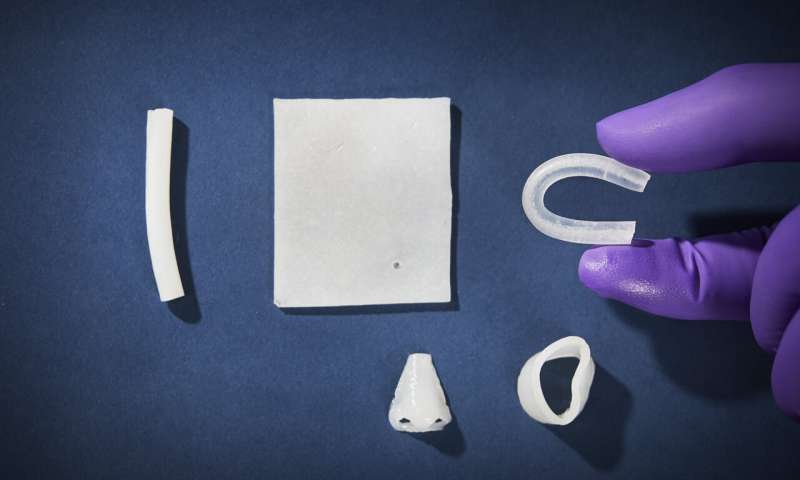
The foundation of the material is the same as plexiglass, a material which is common in medical technology applications. Through redesigning its makeup, and through a process called nanostructuring, they gave the newly patented material a unique combination of properties, incuding high elasticity, as demonstrated in the image. Credit: Anna Lena Lundqvist/Chalmers

Because the new material can be injected and inserted via keyhole surgery, it can also help reduce the need for drastic surgery and operations to rebuild parts of the body. The material can be injected via a standard cannula as a viscous fluid, so that it forms its own elastic structures within the body. Or the material can also be 3-D printed into specific structures as required.

“There are many diseases where the cartilage breaks down and friction results between bones, causing great pain for the affected person. This material could potentially act as a replacement in those cases,” Martin Andersson continues.

A further advantage of the material is that it contains three-dimensionally ordered nanopores. This means it can be loaded with medicine for various therapeutic purposes such as improving healing and reducing inflammation. This allows for localized treatment, avoiding, for example, having to treat the entire with drugs, something that could help reduce problems associated with side effects. Since it is non-toxic, it also works well as a filler—the researchers see plastic surgery therefore as another very interesting potential area of application for the new material.

“I am now working full time with our newly founded company, Amferia, to get the research out to industry. I have been pleased to see a lot of real interest in our material. It’s promising in terms of achieving our goal, which is to provide real societal benefit,” Anand concludes.

Source: Nanostructured rubber-like material with optimal properties could replace human tissue

World Chess Champion Plays Recklessly Online Using a Pseudonym

World Chess Champion Magnus Carlsen has been sneaking onto online chess sites using stupid pseudonyms and taunting his opponents by using pointless maneuvers with names like “the Bongcloud.” One YouTube commenter calls it “a revolution in the history of chess.”

Slate documents the antics in an article titled “DrDrunkenstein’s Reign of Terror.” “DrDrunkenstein” is one of many aliases Magnus Carlsen has played under during the past two years, when he went on a killing spree across the speed chess tournaments of the internet. Since winter 2017, Carlsen has taken to livestreaming his games on a variety of platforms, which has provided a surprisingly entertaining window into the mind of an all-time great.

Lichess.org is a free, ad-less web platform for chess players, a favorite in the online chess community… Carlsen appeared incognito as “DannyTheDonkey” and won, donating his small prize money back to the website. Carlsen’s first showing as DrDrunkenstein was in Lichess’ second Titled Arena the following month… Carlsen streamed the games on Twitch, where he lived up to his username, pounding Coronas while bantering in Norwegian with his friends. Chess fans were astonished. There’s something hypnotizing about watching a guy known as “the Mozart of chess” — a player who is quantifiably better than Bobby Fischer — taking a big gulp of beer, announcing his position as “completely winning,” then singing along to Dr. Dre saying “motherfuck the police” while coasting into another quick checkmate…

In an interview with a Norwegian newspaper in October, Carlsen admits he quit drinking for his health. “I wouldn’t say I was an alcoholic exactly,” he said, “but I found out this year, if I’m going to travel and play a lot… I need to prioritize differently….” On the eve of his world championship defense, Carlsen appeared in the next tournament as “manwithavan,” playing a large chunk of his games on a phone from a minivan, where the touch screen presented a massive handicap. He again earned the adoration of spectators, this time for riskily walking his king into the center of the board against one of the most dangerous players in the tournament. He came in third… As DrNykterstein, he alternated between two ways of wasting his early, important opening moves. Sometimes, he’d take his queen on a four-move tour of the board before swapping her home square with the king’s, letting his opponent develop their pieces while he showboated… Other times, he’d fidget his knights back and forth from their starting squares, offering his challenger a six-move time advantage. In this tournament he filled with gags, he came in first again…

One of the sweetest benefits of watching these matches is enjoying Carlsen’s dry, self-deprecating sense of humor — something no chess prodigy has any right to have.
In December, Magnus also reached the #1 spot, beating seven million other players, on a fantasy football table.

Source: World Chess Champion Plays Recklessly Online Using a Pseudonym – Slashdot