The Linkielist

Linking ideas with the world

The Linkielist

Open-source projects glibc and gnulib look to sever copyright ties with Free Software Foundation

The GNU C Library (glibc) and GNU Portability Library (gnulib) are laying the groundwork to divorce themselves from the troubled Free Software Foundation by removing the requirement for copyright assignment.

This move follows in the footsteps of the same shift by the GNU Compiler Collection (GCC) on 2 June.

Like many projects under the GNU umbrella, glibc and gnulib – the GNU Project’s C standard library and a collection of subroutines designed to ease cross-platform porting respectively – allow anyone to contribute code. Those doing so are asked to assign copyright to the Free Software Foundation – for now, at least.

[…]

“The changes to accept patches with or without FSF copyright assignment would be effective on August 2nd, and would apply to all open branches.”

[…]

Andrew Katz, managing partner and head of tech and IP at Moorcrofts Corporate Law, said of the move: “My view is that the GPL is sufficient in itself. For GPL, licence in = licence out seems to be the fairest approach from both the developers’ and the project’s perspective, and it means that, ultimately, the developers remain in control of their code.

“Recent questions about governance of the FSF (specifically, concerning RMS’s departure and reinstatement) may cause people to be concerned about the quality of that governance as regards licensing decisions. Assigning copyright to an organisation requires a significant amount of trust, and developers may understandably be concerned that trusting a third party (whether a business or a not-for-profit) presents a greater risk than retaining their own rights in the code.”

Source: Open-source projects glibc and gnulib look to sever copyright ties with Free Software Foundation • The Register

Ukraine police collar six Clop ransomware gang suspects in joint raids with South Korean cops

Ukrainian police have arrested six people, alleged to be members of the notorious Clop* ransomware gang, seizing cash, cars – and a number of Apple Mac laptops and desktops.

“It was established that six defendants carried out attacks of malicious software such as ‘ransomware’ on the servers of American and [South] Korean companies,” alleged Ukraine’s national police force in a statement published at lunchtime today.

Handout from Ukrainian Police boasting of seized cash from Clop ransomware gang

Ukrainian Police’s stash of seized cash from Clop ransomware gang Pic via: Ukraine police

While the gang is notorious in the West for indiscriminately targeting well-off companies and extorting ransoms in exchange for decryption keys, its most shocking moment was when a poorly secured Accellion file transfer appliance gave the criminals access to defence contractor Bombardier. There the criminals were able to copy blueprints for an airborne early warning radar fitted to the company’s flagship AWACS-style military jet.

The six suspects were arrested in joint raids carried out with South Korean law enforcement authorities earlier today, cops in Ukraine said.

Back in December, Clop had targeted a South Korean retailer, E-Land, reportedly stealing two million credit card details over a 12-month period. Cops in South Korea apparently identified the Clop suspects soon after.

[…]

Source: Cuffed: Ukraine police collar six Clop ransomware gang suspects in joint raids with South Korean cops • The Register

Alibaba suffers billion-item data leak including usernames and mobile numbers

Alibaba’s Chinese shopping operation Taobao has suffered a data breach of over a billion data points including usernames and mobile phone numbers. The info was lifted from the site by a crawler developed by an affiliate marketer.

Chinese outlet 163.com reported the case last week and today it was picked up by the Wall Street Journal.

Both reports state that a developer created a crawler that was able to reach beneath information available to the human eye on Taobao, and that the crawler operated for several months before Alibaba noticed the effort.

163.com suggests the source of the crawler was a company that makes money from affiliate referrals to Taobao, and that the site was scraped from November 2019 until Alibaba noticed the activity in July 2020. Alibaba notified authorities, an investigation commenced, and the matter landed in the People’s Court of Suiyang District — which in May convicted a developer and his employer of lifting the data.

Both were sentenced to three years inside.

Thankfully, the perps appear not to have shared the data, instead hoarding it for their own purposes.

[…]

Source: Alibaba suffers billion-item data leak of usernames and mobile numbers • The Register

Finding next-gen space tech: DASA launches the Space to Innovate Campaign

[..]

To promote space resilience and operational effectiveness, the Defence and Security Accelerator (DASA) is pleased to announce that we have teamed up with the Defence Science and Technology Laboratory (Dstl) Space Programme to launch the Space to Innovate Campaign.

[…]

The first challenge drop, called the “Alpha challenge drop” in the Space to Innovate Campaign is now open for proposals! This challenge drop focuses on two challenges:

  • Challenge 1: Visualisation tools to enable space operators to exploit information gathered from multiple data sources
  • Challenge 2: Novel methods for characterising objects in space and their intent

Think you have the solution?

Check out the full competition document and submit your idea.

When does the Alpha challenge drop begin and how much funding is available?

The Alpha challenge drop is now open and closes for proposals on 4 August 2021. The value of individual contracts offered throughout the entire Space to Innovate Campaign will be from £125k to £400k, with durations of the contracts expected to be from 6 months to 18 months. The amount of funding available for the entire Space to Innovate Campaign is expected to be £2m, with the campaign ending on 31 March 2023.

The second Bravo challenge drop will address challenges focusing on ISR (Intelligence, Surveillance, and Reconnaissance) and SSA (Space Situational Awareness).

[…]

Alpha drop challenges

Challenge 1: Visualisation tools to enable space operators to exploit information gathered from multiple data sources

For challenge 1, DASA is looking for novel solutions that could help to address issues such as:

  • enhancing the situational awareness around an object
  • understanding and monitoring manoeuvres and changes of objects in orbit
  • streamlining ingestion issues with multiple data sources and different naming conventions
  • using machine learning to enhance our understanding and interrogation of the data presented & make sense of results
  • visualising uncertainty in data

Challenge 2: Novel methods for characterising objects in space and their intent

For challenge 2, DASA is looking for novel solutions that could help to address issues such as:

  • detecting changes of state and predicting future changes
  • exploiting non-traditional sensor configurations including bi- or multi-static configurations and the repurposing of existing facilities
  • technologies that allow resolution of individual features on an observed satellite, inferring information regarding payloads
  • observing the interaction and cooperation between satellites in formation in low Earth orbit (LEO) or geostationary Earth orbit (GEO)
  • satellite overflight warning of Earth observation missions primarily in LEO
  • asset protection for high value satellites operating in GEO

Source: Finding next-gen space tech: DASA launches the Space to Innovate Campaign – GOV.UK

Tracking China’s Sudden Airpower Expansion Along Its Western Border

[…]

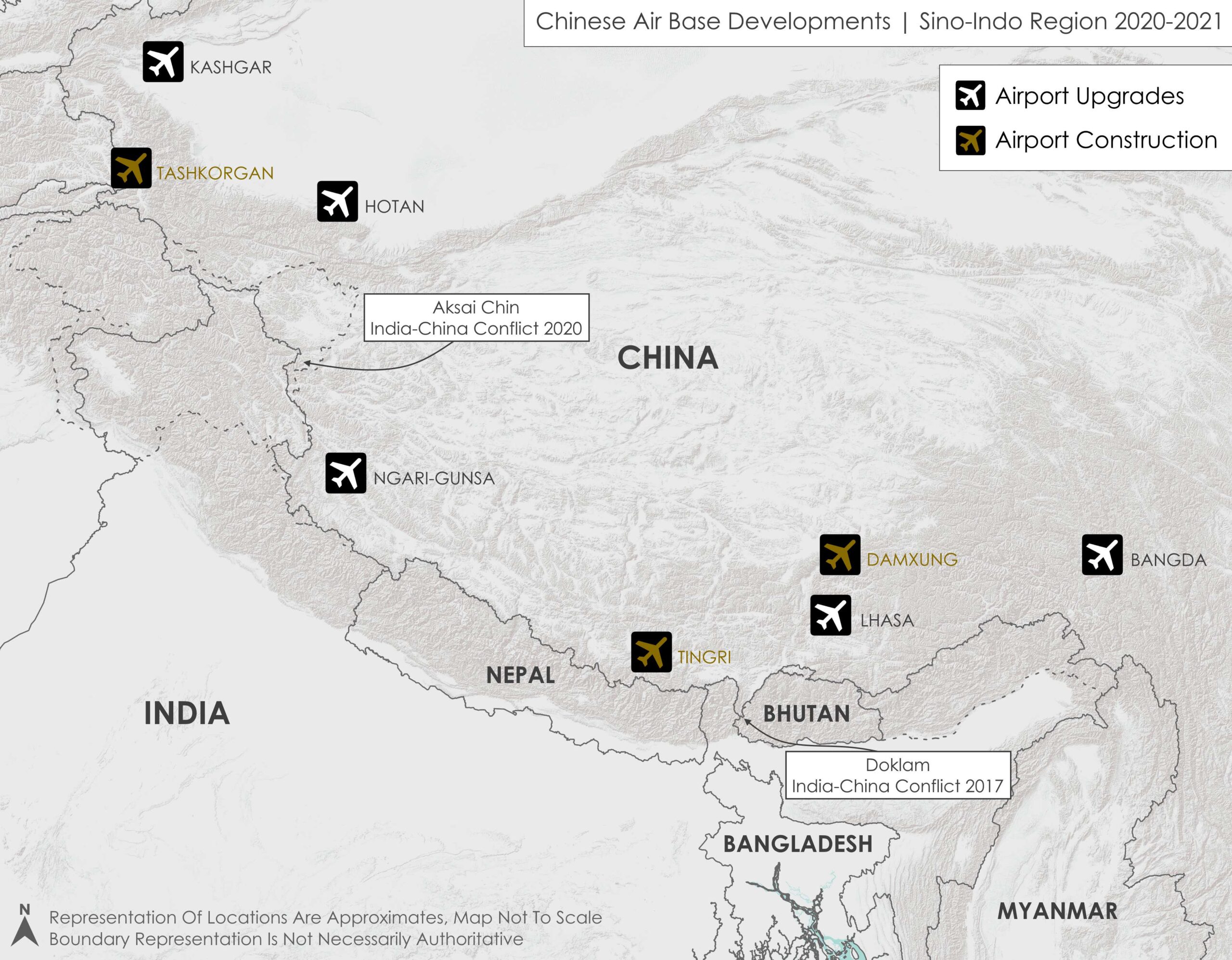
China’s heavy investment in airpower-related facilities in the region is already being leveraged by the Chinese People’s Liberation Army Air Force (PLAAF), as evidenced by an unprecedented level of activity along the Sino-Indian border as of late. This is in addition to massive growth in ground-based air defenses, as well as the construction of new fortifications, heliports, and rail lines into the area. As such, there is more going on here than just some defensive upgrades and the strategic implications are potentially severe.

With that in mind, The War Zone brought in some of the best satellite image analysts we know, virtually a who’s-who of the strongest voices in Twitter’s open-source intelligence community who also specialize in develpments in Asia. We want to actually show you via satellite imagery exactly what we mean when we say China is massively expanding its air combat capability footprint in the far western areas of the country, as well as what it all means.

[…]

Source: Tracking China’s Sudden Airpower Expansion Along Its Western Border

Use of PFAS in cosmetics ‘widespread,’ new study finds – not a good thing

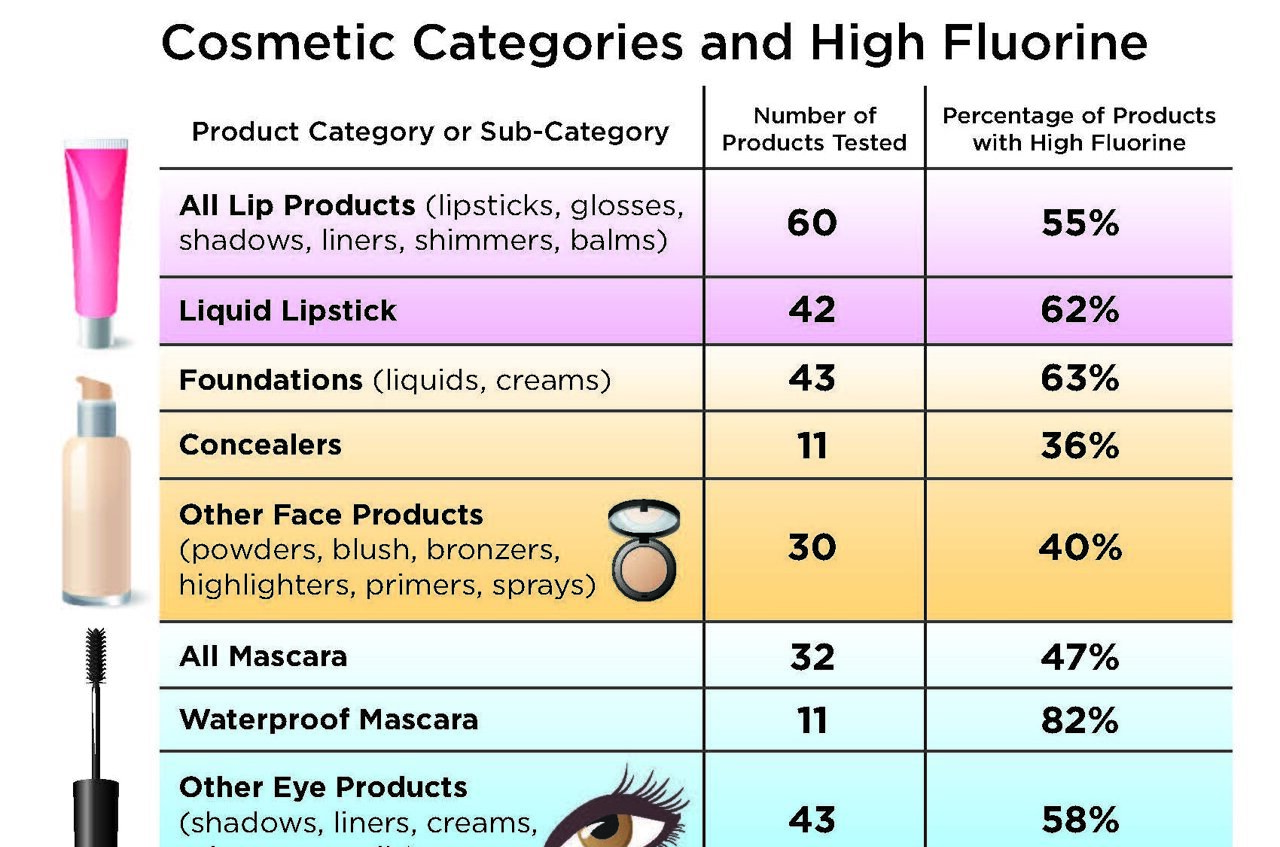
According to the study, 56% of foundations and eye products, 48% of lip products and 47% of mascaras tested were found to contain high levels of fluorine, which is an indicator of PFAS use in the product. . Credit: University of Notre Dame

Many cosmetics sold in the United States and Canada likely contain high levels of per- and polyfluoroalkyl substances (PFAS), a potentially toxic class of chemicals linked to a number of serious health conditions, according to new research from the University of Notre Dame.

Scientists tested more than 200 cosmetics including concealers, foundations, eye and eyebrow products and various lip products. According to the study, 56 percent of foundations and eye products, 48 percent of lip products and 47 percent of mascaras tested were found to contain high levels of fluorine, which is an indicator of PFAS use in the product. The study was recently published in the journal of Environmental Science and Technology Letters.

“These results are particularly concerning when you consider the risk of exposure to the consumer combined with the size and scale of a multibillion-dollar industry that provides these products to millions of consumers daily,” Graham Peaslee, professor of physics at Notre Dame and principal investigator of the study, said. “There’s the individual risk—these are products that are applied around the eyes and mouth with the potential for absorption through the skin or at the tear duct, as well as possible inhalation or ingestion. PFAS is a persistent —when it gets into the bloodstream, it stays there and accumulates. There’s also the additional risk of environmental contamination associated with the manufacture and disposal of these products, which could affect many more people.”

Previously found in nonstick cookware, treated fabrics, fast food wrappers and, most recently, the used by firefighters across the country, PFAS are known as “forever chemicals,” because the chemical compounds don’t naturally degrade—which means they end up contaminating groundwater for decades after their release into the environment. Use of PFAS in foam fire suppressants has been linked to contaminated drinking , prompting the Department of Defense to switch to environmentally safer alternatives, for example.

Studies have linked certain PFAS to , testicular cancer, hypertension, thyroid disease, and immunotoxicity in children.

Peaslee and the research team tested products purchased at retail locations in the United States as well as products purchased online in Canada. The study found high levels of fluorine in liquid lipsticks, waterproof mascaras and foundations often advertised as “long-lasting” and “wear-resistant.” Peaslee said this not entirely surprising, given PFAS are often used for their water resistance and film-forming properties.

What is more concerning is that 29 products with high fluorine concentrations were tested further and found to contain between four and 13 specific PFAS, only one of these items tested listed PFAS as an ingredient on the product label.

“This is a red flag,” Peaslee said. “Our measurements indicate widespread use of PFAS in these products—but it’s important to note that the full extent of use of fluorinated chemicals in cosmetics is hard to estimate due to lack of strict labeling requirements in both countries.”

Peaslee’s novel method of detecting PFAS in a wide variety of materials has helped reduce the use of “forever chemicals” in consumer and industrial products.

Following a study from his lab in 2017, fast food chains that discovered their wrappers contained PFAS switched to alternative options. Peaslee continues to receive samples of firefighter turnout gear from fire departments around the world to test for PFAS, and his research has spurred conversations within the firefighter community to eliminate use of “forever chemicals” in various articles of personal protective equipment.

Source: Use of PFAS in cosmetics ‘widespread,’ new study finds

Scientists Create Enzyme That Can Destroy Plastic Within Days, Not Years

[…]

it looks like researchers have developed the perfect thing to combat this problem. They’ve developed a cocktail of plastic-eating enzymes which can actually degrade plastic in a matter of days — something that normally takes hundreds of years to degrade.

The enzyme cocktail includes PETase and MHETase. These are produced by a type of bacteria that feeds on PET plastic (often found in plastic bottles) dubbed Ideonella Sakaiensis.

Professor John McGeehan from the University of Portsmouth, said in a statement to news agency PA, “Currently, we get those building blocks from fossil resources such as oil and gas, which is really unsustainable. But if we can add enzymes to the waste plastic, we can start to break it down in a matter of days.”

plastic eating enzyme Reuters

In 2018, McGeehan was the one who accidentally developed the first enzyme that feasted on plastic. However, the original enzyme was still slower in its process. Researchers from the team were working on different ways they could speed up the process and one such method was fusing a combination of enzymes, making a cocktail of sorts.

McGeehan explains, “PETase attacks the surface of the plastics and MHETase chops things up further, so it seemed natural to see if we could use them together, mimicking what happens in nature. Our first experiments showed that they did indeed work better together, so we decided to try to physically link them.”

He added, “It took a great deal of work on both sides of the Atlantic, but it was worth the effort – we were delighted to see that our new chimeric enzyme is up to three times faster than the naturally evolved separate enzymes, opening new avenues for further improvements.”

plastic waste Reuters

Apart from PET, the enzyme can also help in degrading PEF or polyethene furoate that are found in beer bottles. Sadly these are the only two kinds of plastic it can degrade. However, McGeehan claims that they’re working on trying combinations with other enzymes to bridge this gap.

Source: Scientists Create Enzyme That Can Destroy Plastic Within Days, Not Years

It doesn’t say what the broken down plastic turns into though

House introduces five antitrust bills targeting Apple, Google, Facebook and Amazon

Lawmakers in the House have introduced five new bills that would place significant limits on major tech companies, including Apple, Google, Facebook and Amazon.The proposed legislation is part of a broader effort to step up antitrust enforcement against tech giants.The bills would place new limits on the companies’ ability to acquire new business and change how they treat their own services compared with competitors.

“From Amazon and Facebook to Google and Apple, it is clear that these unregulated tech giants have become too big to care and too powerful to ever put people over profit,” Rep. Pramila Jayapal said in a statement. “By reasserting the power of Congress, our landmark bipartisan bills rein in anti-competitive behavior, prevent monopolistic practices, and restore fairness and competition while finally leveling the playing field and allowing innovation to thrive.”

The bills include:

Notably, the bills have bipartisan support, as limiting the power of big tech platforms has been a rare source of bipartisan agreement in Congress. Though the bills don’t name individual companies, the legislation could have a significant impact on Facebook, Google, Amazon and Apple, which have faced increasing scrutiny from Congress over their business practices and market dominance.

Source: House introduces five antitrust bills targeting Apple, Google, Facebook and Amazon | Engadget

New Quantum Microscope Can See Tiny Structures in Living Cells

A team of researchers in Germany and Australia recently used a new microscopy technique to image nano-scale biological structures at a previously unmanageable resolution, without destroying the living cell. The technique, which employs laser light many millions of times brighter than the Sun, has implications for biomedical and navigation technologies.

The quantum optical microscope is an example of how the strange principle of quantum entanglement can feature in real-world applications. Two particles are entangled when their properties are interdependent—by measuring one of them, you can also know the properties of the other.

The sensor in the team’s microscope, described in a paper published today in Science, hinges on quantum light—entangled pairs of photons—to see better-resolved structures without damaging them.

“The key question we answer is whether quantum light can allow performance in microscopes that goes beyond the limits of what is possible using conventional techniques,” said Warwick Bowen, a quantum physicist at the University of Queensland in Australia and co-author of the new study, in an email. Bowen’s team found that, in fact, it can. “We demonstrate [that] for the first time, showing that quantum correlations can allow performance (improved contrast/clarity) beyond the limit due to photodamage in regular microscopes.” By photodamage, Bowen is referring to the way a laser bombardment of photons can degrade or destroy a microscope’s target, similar to the way ants will get crispy under a magnifying glass.

[…]

“Technical hurdles … will need to be overcome before the technology becomes commercial, but this experiment is a proof-of-principle that quantum techniques developed decades ago can and will be deployed to great advantage in the life sciences.”

While other microscopes operating with such intense light end up sizzling holes in what they’re trying to study, the team’s method didn’t. The researchers chemically fingerprinted a yeast cell using Raman scattering, which observes how some photons scatter off a given molecule to understand that molecule’s vibrational signature. Raman microscopes are often used for this sort of fingerprinting, but the whole destroying-the-thing-we’re-trying-to-observe has long vexed researchers trying to see in higher resolutions. In this case, the team could see the cell’s lipid concentrations by using correlated photon pairs to get a great view of the cell without increasing the intensity of the microscope’s laser beam.

[…]

Source: New Quantum Microscope Can See Tiny Structures in Living Cells

Risk and reward: Nefilim ransomware gang mainly targets fewer, richer companies and that strategy is paying off, warns Trend Micro

The Nefilim ransomware gang might not be the best known or most prolific online extortion crew but their penchant for attacking small numbers of $1bn+ turnover firms is paying off, according to some latest research.

The crew has made comparatively fewer headlines next to better-known criminals such as Darkside, perpetrators of the infamous US Colonial Pipeline attack, but analysis from security shop Trend Micro has shown the crooks appear to be going for big companies in the hope of extracting correspondingly big payouts.

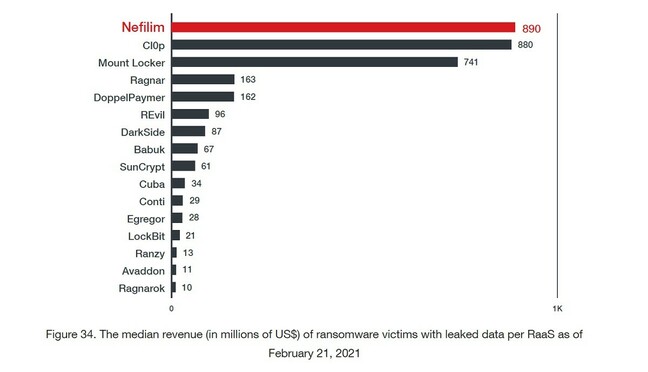
“Of the 16 ransomware groups studied from March 2020 to January 2021, Conti, Doppelpaymer, Egregor and REvil led the way in terms of number of victims exposed – and Cl0p had the most stolen data hosted online at 5TB. However, with its ruthless focus on organizations posting more than $1bn in revenue, Nefilim extorted the highest median revenue,” said Trend Micro in a report released on Tuesday.

The information will be of little comfort to any of the western world’s growing number of ransomware victims, including the Irish Health Service Executive and the US Colonial Pipeline Company.

While those attacks were very high profile because of their wider impact on critical national infrastructure, other ransomware operators are still engaging in the good old-fashioned pursuit of money, and lots of it.

Nefilim is, according to Trend, a ransomware gang that was first observed in late 2019, with actual attacks being seen in March 2020 – just as the COVID-19 pandemic drove the entire world online and to remote working.

Trend Micro analysis of the Nefilim ransomware gang's targets by revenue, based on identifiable leaked files

Trend Micro analysis of the Nefilim ransomware gang’s targets by revenue, based on identifiable leaked files. Click to enlarge

Despite targeting big businesses, Nefilim’s access methods were just the same as the ones constantly warned about by the infosec industry, said Trend Micro, explaining: “In the case of Nefilim ransomware attacks, our investigations uncovered the use of exposed RDP services and publicly available exploits to gain initial access — namely, a vulnerability in the Citrix Application Delivery Controller [CVE-2019-19781].”

Trend also referred to previous research from Digital Shadows on so-called initial access brokers, essential actors in the ransomware business chain who make the first break into a target’s networks before selling that illicit access to other criminal organisations.

“The price for access varies greatly — it can range from tens of dollars for a random victim asset, to several hundreds or even thousands of dollars for a categorized asset; access to the infrastructure of a large organization can cost five to six figures,” the report states.

Trend Micro research veep Bharat Mistry told The Register that ransomware gangs’ business models are just as developed as anything in the western IT market with different elements of attacks being carried out by different groups of criminals.

“There is a full partner model that goes with it. So you know, the ransomware as a service operators, they get around 20 to 30 per cent of the profit that comes out of it, and the rest of it goes to the partner. So you can see it’s margin-rich for the affiliates.”

Criminal gangs were also said to make “widespread use of legitimate tools such as AdFind, Cobalt Strike, Mimikatz, Process Hacker, PsExec, and MegaSync, to help ransomware attackers achieve their end goal while staying hidden.” Similarly, some in the infosec world call legitimate tools turned around and used against their owners LoLBins – living off the land binaries. In other words, tools such as PowerShell, which are in common use on corporate networks but can be harnessed as part of an attack on that same network.

While nothing about Nefilim’s operations are shockingly unique, that in itself ought to be a lesson for corporate infosec bods: it’s not the big scary vulns that let miscreants rampage through your employer’s network, it’s the ones everyone’s been warning about which you haven’t got round to patching for whatever reason.

Source: Risk and reward: Nefilim ransomware gang mainly targets fewer, richer companies and that strategy is paying off, warns Trend Micro • The Register

DOJ Vows to Hunt Down Whoever Let the Public Know How Little Billionaires Pay in Taxes

This week, ProPublica released a massive scoop—a treasure trove of financial records showing how some of the U.S.’s wealthiest billionaires scamper off with virtually no tax burden. And the U.S. government knows exactly what to do in response: find whoever released those embarrassing records and incarcerate the shit out of them.

Priorities, people!

ProPublica obtained official Internal Revenue Service documents that were, admittedly, not supposed to be public knowledge and released key details about just how well various tax tricks used by the ultra-wealthy are working out for them. For example, compared to Forbes estimates, the country’s 25 richest people saw a net growth of $401 billion in wealth from 2014 to 2018 but paid just $13.6 billion in federal income tax—an effective rate of 3.4%. Berkshire Hathaway investment titan Warren Buffet saw his net worth rise by $24.3 billion over that period, paying just $23.7 million in tax. Amazon CEO Jeff Bezos saw his net worth rise by $99 billion, paying just $973 million in tax. Former New York City Mayor Michael Bloomberg’s ratio was $22.5 billion in net worth gains to $292 million in tax, while Tesla/SpaceX CEO Elon Musk was $13.9 billion to $455 million.

Morally obscene display of inequality and impunity as this is, the U.S. government has far more pressing concerns, such as punishing whoever squealed. Attorney General Merrick Garland assured lawmakers on Wednesday that one of his most immediate focuses will be plugging the leak, wherever or whoever it might be.

[…]

Source: Elon Musk, Jeff Bezos Tax Leak: DOJ Vows to Hunt Down Leaker

Crypto Miners Overrun Docker Hub’s Autobuild, so they have to close free version

This week, Docker announced some changes to Docker Hub Autobuilds — the primary one of interest being that autobuilds would no longer be available to free tier users — and much of the internet let out a collective groan to the tune of “this is why we can’t have nice things!”


So, if you happen to be looking for yet another reason to immediately cringe and discard anyone who comes up to you crowing about the benefits of cryptocurrencies, Docker getting rid of its autobuild feature on Docker Hub can be added to your arsenal.

“As many of you are aware, it has been a difficult period for companies offering free cloud compute,” wrote Shaun Mulligan, principal product manager at Docker in the company’s blog post, citing an article that explores how crypto-mining gangs are running amok on free cloud computing platforms. Mulligan goes on to explain that Docker has “seen a massive growth in the number of bad actors,” noting that it not only costs them money, but also degrades performance for their paying customers.

And so, after seven years of free access to their autobuild feature, wherein even all of you non-paying Docker users could set up continuous integration for your containerized projects, gratis, the end is nigh. Like, really, really nigh, as in next week — June 18.

While Docker offered that they already tried to correct the issue by removing around 10,000 accounts, they say that the miners returned the next week in droves, and so they “made the hard choice to remove Autobuilds.”

[…]

Source: This Week in Programming: Crypto Miners Overrun Docker Hub’s Autobuild – The New Stack

Apple and Microsoft Say They Had No Idea Trump-Era DOJ Requested Data on Political Rivals

Apple didn’t know the Department of Justice was requesting metadata of Democratic lawmakers when it complied with a subpoena during a Trump-era leak investigation, CNBC reports. And it wasn’t the only tech giant tapped in these probes: Microsoft confirmed Friday it received a similar subpoena for a congressional staffer’s personal email account. Both companies were under DOJ gag orders preventing them from notifying the affected users for years.

These instances are part of a growing list of questionable shit the DOJ carried out under former President Donald Trump amid his crusade to crack down on government leakers. The agency also quietly went after phone and email records of journalists at the Washington Post, CNN, and the New York Times to uncover their sources, none of whom were notified until last month.

On Thursday, a New York Times report revealed that a Trump-led DOJ seized records from two Democrats on the House Intelligence Committee who were frequently targeted in the president’s tantrums: California Representatives Eric Swalwell and Adam Schiff (Schiff now chairs the committee). The subpoena extended to at least a dozen people connected to them, including aides, family members, and one minor, in an attempt to identify sources related to news reports on Trump’s contacts with Russia. All told, prosecutors found zero evidence in this seized data, but their efforts have prompted the Justice Department’s inspector general to launch an inquiry into the agency’s handling of leak investigations during the Trump administration.

[…]

Source: Apple and Microsoft Say They Had No Idea Trump-Era DOJ Requested Data on Political Rivals

Facebook AI Can Now Copy Text Style in Images Using Just a Single Word

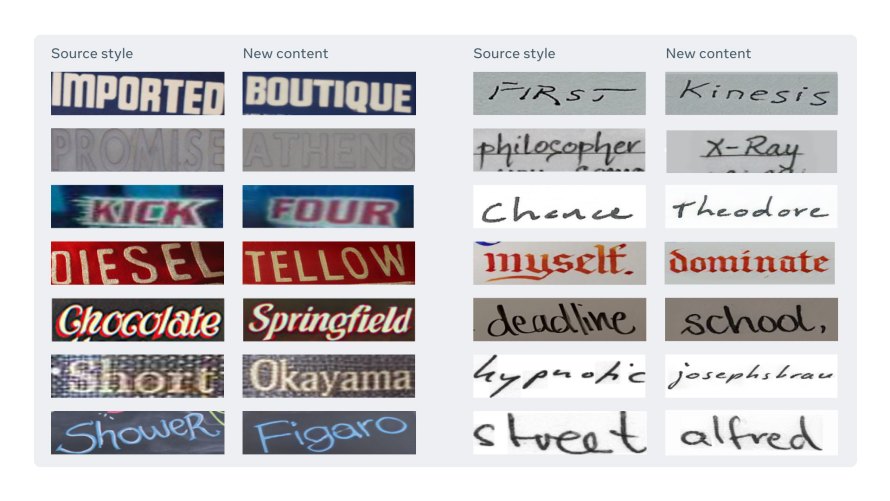
  • We’re introducing TextStyleBrush, an AI research project that can copy the style of text in a photo using just a single word. With this AI model, you can edit and replace text in images.
  • Unlike most AI systems that can do this for well-defined, specialized tasks, TextStyleBrush is the first self-supervised AI model that replaces text in images of both handwriting and scenes — in one shot — using a single example word.
  • Although this is a research project, it could one day unlock new potential for creative self-expression like personalized messaging and captions, and lays the groundwork for future innovations like photo-realistic translation of languages in augmented reality (AR).
  • By publishing the capabilities, methods, and results of this research, we hope to spur dialogue and research into detecting potential misuse of this type of technology, such as deepfake text attacks — a critical, emerging challenge in the AI field.

[…]

Source: AI Can Now Copy Text Style in Images Using Just a Single Word – About Facebook

The Elephant Ethogram – Google Translate for Animals

The Elephant Ethogram is a uniquely detailed catalogue, or library, of the behavior and communication of African savanna elephants (Loxodonta africana). It is based on decades of ElephantVoices behavioral studies, photographs, and audio and video recordings, the referenced research of other elephant biologists, as well as professional and amateur footage made available to ElephantVoices. You can read more about how elephants communicate within this section of elephantvoices.org.

The Elephant Ethogram consists of written and referenced descriptions, video examples, photographic illustrations and, where relevant, audio recordings, of 404 Behaviors, 109 Behavioral Constellations and 23 Behavioral Contexts. There are close to 3,000 media files in the fully searchable Elephant Ethogram including approximately 2,400 video clips (May 2021).

[…]

African savanna elephants are among the most socially complex non-human species on our planet, but their lives and behavior are increasingly impacted by humans. The Elephant Ethogram aims to document the rich behavior and communication of this species, including rare, novel and idiosyncratic behavior, and those acquired, through social learning, in response to rapidly increasing anthropogenic threats. We intend The Elephant Ethogram to be a repository for scientific study and comparison, and to inspire broader interest in elephant behavior, conservation and welfare.

[…]

Source: The Elephant Ethogram

Internal data + games source code from breach CD Projekt Cyberpunk 2077 circulating online

Internal company data leaked during a February security breach is now being circulated on the internet, Polish video games maker CD Projekt (CDR.WA) said in a statement published on Thursday.

The attack, which compromised some of its internal systems including the source code to its much-hyped game Cyberpunk 2077, dealt another blow to the Warsaw-based business after the game’s launch was beset by glitches.

“We are not yet able to confirm the exact contents of the data in question, though we believe it may include current/former employee and contractor details in addition to data related to our games,” the statement said.

[…]

Source: Internal data from breach circulating online -CD Projekt | Reuters

Volkswagen says a vendor’s security lapse exposed 3.3 million drivers’ details

Volkswagen says more than 3.3 million customers had their information exposed after one of its vendors left a cache of customer data unsecured on the internet.

The car maker said in a letter that the vendor, used by Volkswagen, its subsidiary Audi and authorized dealers in the U.S. and Canada, left the customer data spanning 2014 to 2019 unprotected over a two-year window between August 2019 and May 2021.

The data, which Volkswagen said was gathered for sales and marketing, contained personal information about customers and prospective buyers, including their name, postal and email addresses, and phone number.

But more than 90,000 customers across the U.S. and Canada also had more sensitive data exposed, including information relating to loan eligibility. The letter said most of the sensitive data was driver’s license numbers, but that a “small” number of records also included a customer’s date of birth and Social Security numbers.

Volkswagen would not name the vendor, when asked. “We have also informed the appropriate authorities, including law enforcement and regulators, and are working with external cybersecurity experts and the vendor to assess and respond to this situation,” said a spokesperson, via a crisis communications firm.

It’s the latest security incident involving driver license numbers in recent months. Insurance giants Metromile and Geico admitted earlier this year that their quote forms had been abused by scammers trying to obtain driver license numbers. Several other car insurance companies have also reported similar incidents involving the theft of driver license numbers. Geico said it was likely an effort by scammers to file and cash fraudulent unemployment benefits in another person’s name.

[…]

Source: Volkswagen says a vendor’s security lapse exposed 3.3 million drivers’ details | TechCrunch

McDonald’s Hit by Data Breach – WSJ

McDonald’s Corp. said hackers stole some data from its systems in markets including the U.S., South Korea and Taiwan, in another example of cybercriminals infiltrating high-profile global companies.

The burger chain said Friday that it recently hired external consultants to investigate unauthorized activity on an internal security system, prompted by a specific incident in which the unauthorized access was cut off a week after it was identified, McDonald’s said. The investigators discovered that company data had been breached in markets including the U.S., South Korea and Taiwan, the company said.

In a message to U.S. employees, McDonald’s said the breach disclosed some business contact information for U.S. employees and franchisees, along with some information about restaurants such as seating capacity and the square footage of play areas. The company said no customer data was breached in the U.S., and that the employee data exposed wasn’t sensitive or personal. The company advised employees and franchisees to watch for phishing emails and to use discretion when asked for information.

McDonald’s said attackers stole customer emails, phone numbers and addresses for delivery customers in South Korea and Taiwan. In Taiwan, hackers also stole employee information including names and contact information, McDonald’s said. The company said the number of files exposed was small without disclosing the number of people affected. The breach didn’t include customer payment information, McDonald’s said.

[…]

Source: McDonald’s Hit by Data Breach – WSJ

Also Russia and South Africa may have been hit

How Hackers Used Slack to Break into EA Games

The group of hackers who stole a wealth of data from game publishing giant Electronic Arts broke into the company in part by tricking an employee over Slack to provide a login token, Motherboard has learned.

The group stole the source code for FIFA 21 and related matchmaking tools, as well as the source code for the Frostbite engine that powers games like Battlefield and other internal game development tools. In all, the hackers claim they have 780GB of data, and are advertising it for sale on various underground forums. EA previously confirmed the data impacted in the breach to Motherboard.

A representative for the hackers told Motherboard in an online chat that the process started by purchasing stolen cookies being sold online for $10 and using those to gain access to a Slack channel used by EA. Cookies can save the login details of particular users, and potentially let hackers log into services as that person. In this case, the hackers were able to get into EA’s Slack using the stolen cookie. (Although not necessarily connected, in February 2020 Motherboard reported that a group of researchers discovered an ex-engineer had left a list of the names of EA Slack channels in a public facing code repository).

“Once inside the chat, we messaged a IT Support members we explain to them we lost our phone at a party last night,” the representative said.

The hackers then requested a multifactor authentication token from EA IT support to gain access to EA’s corporate network. The representative said this was successful two times.

Once inside EA’s network, the hackers found a service for EA developers for compiling games. They successfully logged in and created a virtual machine giving them more visibility into the network, and then accessed one more service and downloaded game source code.

The representative for the hackers provided screenshots to help corroborate the various steps of the hack, including the Slack chats themselves. EA then confirmed to Motherboard the contours of the description of the breach given by the hackers.

[…]

Source: How Hackers Used Slack to Break into EA Games

Engineers at MIT Have Created Actual Programmable Fibers – chip clothing

Featured in Nature Communications, this new research could result in the development of wearable tech that could sense, store, analyze, and infer the activity(s) of its wearers in real-time. The senior author of the study, Yeol Fink, believes that digital fibers like those developed in this study could help expand the possibilities for fabrics to “uncover the context of hidden patterns in the human body that could be used for physical performance monitoring, medical inference, and early disease detection.”

Applications for the technology could even expand into other areas of our lives like, for example, storing wedding music within the bride’s gown.

This study is important as, up to now, most electronic fibers have been analog. This means that they carry a continuous electronic signal rather than a purely digital one.

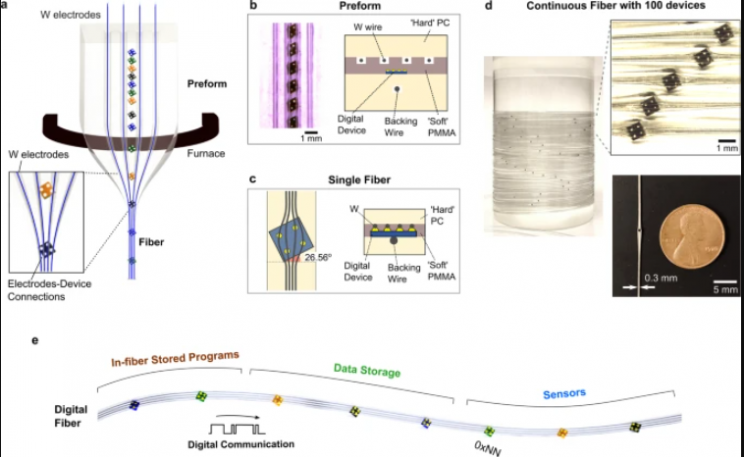
programmable fibers schematic
Source: MIT/Nature Communications

“This work presents the first realization of a fabric with the ability to store and process data digitally, adding a new information content dimension to textiles and allowing fabrics to be programmed literally,” explained Fink.

The fibers are made from chains of hundreds of tiny silicon chips

The fibers were created by chaining hundreds of microscale silicon digital chips into a preform to make a new “smart” polymer fiber. By using precision control, the authors of the study were able to create fibers with the continuous electrical connection between each chip of tens of meters.

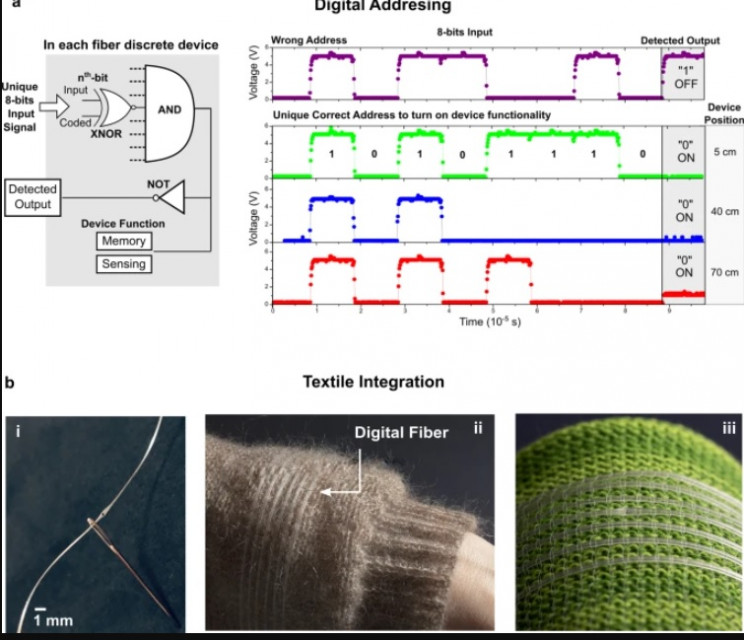
These fibers are thin and flexible and can even be passed through the eye of a needle. This would mean they could be seamlessly (pun intended) woven into existing fabrics, and can even withstand being washed at least ten times without degrading.

This would mean this wearable tech could be retrofitted to existing clothing and you wouldn’t even know it’s there.

[…]

The fiber also has a pretty decent storage capacity too — all things considered. During the research, it was found to be possible to write, store, and recall 767-kilobit full-color short movie files and a 0.48-megabyte music file. The files can be stored for two months without power.

MIT programmable fibers fig 3
Source: MIT/Nature Communications

The fibers have also been outfitted with their own neural network

The fibers also integrate a neural network with thousands of connections. This was used to monitor and analyze the surface body temperature of a test subject after being woven into the armpit of the shirt.

By training the neural network with 270-minutes of data the team got it to predict the minute-by-minute activity of the shirt’s wearer with 96% accuracy.

“This type of fabric could give quantity and quality open-source data for extracting out new body patterns that we did not know about before,” Loke added.

With their analytical capabilities, such fibers could, conceivably, provide real-time alerts about a person’s health (like respiratory or heart problems). It could even be used to help deliver muscle activation signals or heart rate data for athletes.

The fibers are also controlled using a small external device that could have microcontrollers added to it in the future.

[…]

Source: Engineers at MIT Have Created Actual Programmable Fibers | IE

One Fastly customer triggered internet meltdown by changing a setting

A major internet blackout that hit many high-profile websites on Tuesday has been blamed on a software bug.

Fastly, the cloud-computing company responsible for the issues, said the bug had been triggered when one of its customers had changed their settings.

The outage has raised questions about relying on a handful of companies to run the vast infrastructure that underpins the internet.

Fastly apologised and said the problem should have been anticipated.

The outage, which lasted about an hour, hit some popular websites such as Amazon, Reddit, the Guardian and the New York Times.

[…]

But a customer quite legitimately changing their settings had exposed a bug in a software update issued to customers in mid-May, causing “85% of our network to return errors”, it said.

Engineers had worked out the cause of the problem about 40 minutes after websites had gone offline at about 11:00 BST, Fastly said.

“Within 49 minutes, 95% of our network was operating as normal,” it said.

The company has deployed a bug fix across its network and promised a “post mortem of the processes and practices we followed during this incident” and to “figure out why we didn’t detect the bug during our software quality assurance and testing processes”.

Source: One Fastly customer triggered internet meltdown – BBC News

FBI paid renegade developer $180k for backdoored AN0M chat app that brought down drug underworld

The FBI has revealed how it managed to hoodwink the criminal underworld with its secretly backdoored AN0M encrypted chat app, leading to hundreds of arrests, the seizure of 32 tons of drugs, 250 firearms, 55 luxury cars, more than $148M, and even cocaine-filled pineapples.

About 12,000 smartphones with AN0M installed were sold into organized crime rings: the devices were touted as pure encrypted messaging tools — no GPS, email or web browsing, and certainly no voice calls, cameras, and microphones. They were “designed by criminals, for criminals exclusively,” one defendant told investigators, Randy Grossman, Acting US Attorney for the Southern District of California, told a press conference on Tuesday.

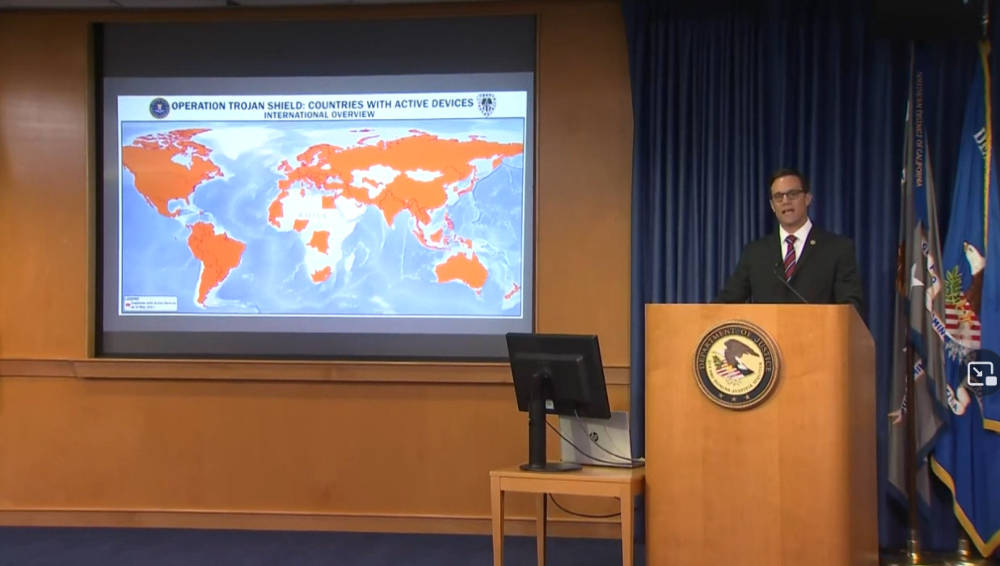
However, AN0M was forged in a joint operation by Australian and US federal law enforcement, and was deliberately and surreptitiously engineered so that agents could peer into the encrypted conversations and read crooks’ messages. After Australia’s police broke the news that the messaging app had recorded everything from drug deals to murder plots — leading to hundreds of arrests — now the FBI has spilled its side of the story, revealing a complex sting dubbed Operation Trojan Shield.

DoJ's Randy Grossman

The Dept of Justice’s Randy Grossman walks through journalists through Operation Trojan Shield at a press conference on Tuesday

“For the first time the FBI developed and operated its own hardened encrypted device company, called AN0M,” Grossman said.

“Criminal organizations and the individual defendants we have charged purchased and distributed AN0M devices in an effort to secretly plan and execute their crimes. But the devices were actually operated by the FBI.”

Playing the long game

According to court documents [PDF] this all came about after the shutdown of Phantom Secure, a Canadian biz selling Blackberry phones customized for encrypted chat to the criminal community. CEO Vincent Ramos pleaded guilty in 2018 to conspiring with drug traffickers and was sentenced to nine years behind bars and had $80M in assets seized.

The closure of Phantom Secure put the staff working there on the FBI’s radar. The bureau’s San Diego office recruited a developer at the company as a confidential human source (CHS), court documents state. This source had previously been sentenced to six years in the clink for importing illegal drugs, and agreed to cooperate with the Feds to reduce any future punishment potentially coming their way.

Crucially, not only had this programmer worked on the Phantom Secure’s encrypted messaging software, but they were also doing work on rival encrypted comms service Sky Global — which also sold modified handsets with secure messaging features — as well as developing their own secure customized phone called AN0M.

“The CHS … had invested a substantial amount of money into the development of a new hardened encrypted device,” the indictment by FBI Special Agent Nicholas Cheviron reads.

“The CHS offered this next generation device, named ‘AN0M,’ to the FBI to use in ongoing and new investigations. The CHS also agreed to offer to distribute AN0M devices to some of the CHS’s existing network of distributors of encrypted communications devices.”

And so, in October 2018, the three-year sting operation began.

The CHS — who was paid $120,000 plus $59,000 in living and travel expenses by the authorities — worked with the FBI and the Australian Federal Police to hide a master decryption key into the AN0M app. Messages sent by the software’s users were quietly copied and sent off to servers controlled by law enforcement, who were able to use the key to decrypt the texts.

[…]

In this beta test, 50 handsets were passed out Down Under, and this phase of the operation was successful; two of the country’s biggest criminal gangs were successfully penetrated and the message copying system worked perfectly. Aussie police reviewing the texts said they found 100 per cent were related to crime. Everyone who used the app was assigned a unique ID, and these handles were known to the police.

Let’s go global

In the next phase, the CHS expanded the distribution network beyond Australia, and the FBI found itself in a position to collect the data. After negotiations with an unnamed third country, a message-relaying iBot server was set up in that nation to collect the BCC’d conversations, and on October 21, 2019, it began beaming copies of crooks’ chats from AN0M handhelds to an FBI-owned system every Monday, Wednesday, and Friday. The third country’s officials had secured a court order for the surveillance, and the FBI used a Mutual Legal Assistance Treaty, also known as an MLAT, to obtain the decrypted material.

Sales of AN0M grew steadily, and got a boost when French and Dutch police took down the EncroChat encrypted service in 2020. When a similar swoop shuttered Sky Global in 2021, demand skyrocketed. After the latter take-down, AN0M sales tripled to more than 9000 handsets, each costing $1700 with a six-month subscription to the AN0M encrypted messaging network, Grossman said.

The data haul from the application was immense: more than 27 million messages from 100 countries, and between 300 criminal gangs. This included more than 400,000 photos, typically of drugs or guns and, crucially, shipment plans.

[…]

Police around the world have made 800 arrests from AN0M-gathered intelligence, including cuffing six US law enforcement officers. Of all of those detained, they primarily face charges of drug trafficking, money laundering, gun violations, and violent crime.

Grossman also announced Uncle Sam had indicted 17 suspects on RICO charges relating to the use and marketing of the AN0M handsets. Most of these people are said to be distributors, though the prosecutor said three were administrators who helped run the service. Eight of those RICO suspects have already been collared and detained.

[…]

Source: FBI paid renegade developer $180k for backdoored AN0M chat app that brought down drug underworld • The Register

US super-rich ‘pay almost no income tax’

ProPublica says it has seen the tax returns of some of the world’s richest people, including Jeff Bezos, Elon Musk and Warren Buffett.

The website alleges Amazon’s Mr Bezos paid no tax in 2007 and 2011, while Tesla’s Mr Musk paid nothing in 2018.

A White House spokeswoman called the leak “illegal”, and the FBI and tax authorities are investigating.

ProPublica said it was analysing what it called a “vast trove of Internal Revenue Service data” on the taxes of the billionaires, and would release further details over coming weeks.

While the BBC has not been able to confirm the claims, the alleged leak comes at a time of growing debate about the amount of tax paid by the wealthy and widening inequality.

media captionG7 global tax ‘levels the playing field’

ProPublica said the richest 25 Americans pay less in tax – an average of 15.8% of adjusted gross income – than most mainstream US workers.

Jesse Eisinger, senior reporter and editor at ProPublica, told the Today Programme: “We were pretty astonished that you could get [tax] down to zero if you were a multi-billionaire. Actually paying zero in tax really floored us. Ultra-wealthy people can sidestep the system in an entirely legal way.”

“They have enormous ability to find deductions, find credits and exploit loopholes in the system,” he said.

So while the value of their wealth grows enormously through their ownership of shares in their company, that’s not recorded as income.

But there’s more than that, he said: “They also take aggressive tax deductions, often because they have borrowed to fund their lifestyle.”

He said US billionaires buy an asset, build one or inherit a fortune, and then borrow against their wealth.

Because they don’t realise any gains or sell any stock, they’re not taking any income, which could be taxed.

“They then borrow from a bank at a relatively low interest rate, live off that and can use the interest expenses as deductions on their income,” he said.

Biden plans

The website said that “using perfectly legal tax strategies, many of the uber-rich are able to shrink their federal tax bills to nothing or close to it” even as their wealth soared over the past few years.

The wealthy, as with many ordinary citizens, are able to reduce their income tax bills via such things as charitable donations and drawing money from investment income rather than wage income.

ProPublica, using data collected by Forbes magazine, said the wealth of the 25 richest Americans collectively jumped by $401bn from 2014 to 2018 – but they paid $13.6bn in income tax over those years.

President Joe Biden has vowed to increase tax on the richest Americans as part of a mission to improve equality and raise money for his massive infrastructure investment programme.

He wants to raise the top rate of tax, double the tax on what high earners make from investments, and change inheritance tax.

However, ProPublica’s analysis concluded: “While some wealthy Americans, such as hedge fund managers, would pay more taxes under the current Biden administration proposals, the vast majority of the top 25 would see little change.”

[…]

Source: US super-rich ‘pay almost no income tax’ – BBC News

DOJ Recovers Most of Colonial Pipeline Hack Ransom

(WASHINGTON) — The Justice Department has recovered most of a multimillion-dollar ransom payment made to hackers after a cyberattack that caused the operator of the nation’s largest fuel pipeline to halt its operations last month, officials said Monday.

The operation to seize cryptocurrency paid to the Russia-based hacker group is the first of its kind to be undertaken by a specialized ransomware task force created by the Biden administration Justice Department.

[…]

Colonial officials have said they took their pipeline system offline before the attack could spread to its operating system, and decided soon after to pay ransom of 75 bitcoin — then valued at roughly $4.4 million — in hopes of bringing itself back online as soon as it could. The company’s president and chief executive, Joseph Blount, is set to testify before congressional panels this week.

[…]

The Bitcoin amount seized — 63.7, currently valued at $2.3 million after the price of Bitcoin tumbled— amounted to 85% of the total ransom paid, which is the exact amount that the cryptocurrency-tracking firm Elliptic says it believes was the take of the affiliate who carried out the attack. The ransomware software provider, DarkSide, would have gotten the other 15%.

“The extortionists will never see this money,” said Stephanie Hinds, the acting U.S. attorney for the Northern District of California, where a judge earlier Monday authorized the seizure warrant.

[…]

Source: DOJ Recovers Most of Colonial Pipeline Hack Ransom | Time

[…]

Despite paying for the ransom, the encryption tools handed over did not work or help the company’s efforts to restore its systems.   

The Justice Department obtained a warrant from a California district court on Monday in order to seize the money. 

“Following the money remains one of the most basic, yet powerful tools we have,” Monaco said. “Today’s announcements also demonstrate the value of early notification to law enforcement; we thank Colonial Pipeline for quickly notifying the FBI when they learned that they were targeted by DarkSide.”

[…]

Colonial Pipeline faced significant backlash for paying the ransom but the FBI and Justice Department said they were able to use the Bitcoin public ledger to trace the payments back to “a specific address, for which the FBI has the ‘private key,’ or the rough equivalent of a password needed to access assets accessible from the specific Bitcoin address.”

[…]

“We cannot guarantee and we may not be able to do this in every instance.”

Source: ‘Majority’ of ransom paid by Colonial Pipeline seized and returned by DOJ | ZDNet

European Commission Betrays Internet Users By Cravenly Introducing Huge Loophole For Copyright Companies In Upload Filter Guidance

As a recent Techdirt article noted, the European Commission was obliged to issue “guidance” on how to implement the infamous Article 17 upload filters required by the EU’s Copyright Directive. It delayed doing so, evidently hoping that the adviser to the EU’s top court, the Court of Justice of the European Union (CJEU), would release his opinion on Poland’s attempt to get Article 17 struck down before the European Commission revealed its one-sided advice. That little gambit failed when the Advocate General announced that he would publish his opinion after the deadline for the release of the guidance. The European Commission has finally provided its advisory document on Article 17 and, as expected, it contains a real stinker of an idea. The best analysis of what the Commission has done, and why it is so disgraceful comes from Julia Reda and Paul Keller on the Kluwer Copyright Blog. Although Article 17 effectively made upload filters mandatory, it also included some (weak) protections for users, to allow people to upload copyright material for legal uses such as memes, parody, criticism etc. without being blocked. The copyright industry naturally hates any protections for users, and has persuaded the European Commission to eviscerate them:

According to the final guidance, rightholders can easily circumvent the principle that automatic blocking should be limited to manifestly infringing uses by “earmarking” content the “unauthorised online availability of which could cause significant economic harm to them” when requesting the blocking of those works. Uploads that include protected content thus “earmarked” do not benefit from the ex-ante protections for likely legitimate uses. The guidance does not establish any qualitative or quantitative requirements for rightholders to earmark their content. The mechanism is not limited to specific types of works, categories of rightholders, release windows, or any other objective criteria that could limit the application of this loophole.

The requirements that copyright companies must meet are so weak that it is probably inevitable that they will claim most uploads “could cause significant economic harm”, and should therefore be earmarked. Here’s what happens then: before it can be posted online, every earmarked upload requires a “rapid” human review of whether it is infringing or not. Leaving aside the fact that it is very hard for legal judgements to be both “rapid” and correct, there’s also the problem that copyright companies will earmark millions of uploads (just look at DMCA notices), making it infeasible to carry out proper review. But the European Commission also says that if online platforms fail to carry out a human review of everything that is earmarked, and allow some unchecked items to be posted, they will lose their liability protection:

this means that service providers face the risk of losing the liability protections afforded to them by art. 17(4) unless they apply ex-ante human review to all uploads earmarked by rightholders as merely having the potential to “cause significant economic harm”. This imposes a heavy burden on platform operators. Under these conditions rational service providers will have to revert to automatically blocking all uploads containing earmarked content at upload. The scenario described in the guidance is therefore identical to an implementation without safeguards: Platforms have no other choice but to block every upload that contains parts of a work that rightholders have told them is highly valuable.

Thus the already unsatisfactory user rights contained in Article 17 are rendered null and void because of the impossibility of following the European Commission’s new guidance. That’s evidently the result of recent lobbying from the copyright companies, since none of this was present in previous drafts of the guidance. Not content with making obligatory the upload filters that they swore would not be required, copyright maximalists now want to take away what few protections remain for users, thus ensuring that practically all legal uses of copyright material — including memes — are likely to be automatically blocked.

The Kluwer Copyright blog post points out that this approach was not at all necessary. As Techdirt reported a couple of weeks ago, Germany has managed to come up with an implementation of Article 17 that preserves most user rights, even if it is by no means perfect. The European Commission, by contrast, has cravenly given what the copyright industry has demanded, and effectively stripped out those rights. But this cowardly move may backfire. Reda and Keller explain:

the Commission does not provide any justification or rationale why users’ fundamental rights do not apply in situations where rightholders claim that there is the potential for them to suffer significant economic harm. It’s hard to imagine that the CJEU will consider that the version of the guidance published today provides meaningful protection for users’ rights when it has to determine the compliance of the directive with fundamental rights [in the case brought by Poland]. The Commission appears to be acutely aware of this as well and so it has wisely included the following disclaimer in the introductory section of the guidance (emphasis ours):

“The judgment of the Court of Justice of the European Union in the case C-401/192 will have implications for the implementation by the Member States of Article 17 and for the guidance. The guidance may need to be reviewed following that judgment“.

In the end this may turn out to be the most meaningful sentence in the entire guidance.

It would be a fitting punishment for betraying the 450 million citizens the European Commission is supposed to serve, but rarely does, if this final overreach causes upload filters to be thrown out completely.

Source: European Commission Betrays Internet Users By Cravenly Introducing Huge Loophole For Copyright Companies In Upload Filter Guidance | Techdirt