Nutrition for toddlers is different
Reply



The Guggenheim Museum has established a tradition of building structures to house and display art that are themselves works of art. Following the lead of the original Guggenheim in New York designed by Frank Lloyd Wright and the stunning Bilbao, Spain building by Frank Gehry, this latest design is no exception. Created by 2004 Pritzker prize-winning architect Zaha Hadid, this gorgeous metallic aircraft-like structure with crazy-shaped windows will be the new Guggenheim Hermitage Museum in Vilnius, Lithuania.
If that exterior isn’t mind-bending enough, the inside promises to be equally innovative. The architect says the interior is a “canyon-like air space,” with areas designed for people to congregate, with the structure allowing for “architecturally refined communication and circulation spaces.” This is what Hadid calls a “future architectural language,” and his her words are speaking to us with profound fluency.
So this is the kind of mind-boggling work it takes to win a Pritzker. This new museum and cultural center might open as soon as 2011.

The three 29m-diameter turbine blades on Bahrain’s iconic landmark are the first in the world to be integrated on such a scale into a commercial development and are forecast to provide the equivalent of 11-15% of the power for the two towers when fully operational. The successful rotation of the blades involved collaboration between Atkins architects and engineers and turbine specialists Norwin, who were in Bahrain for the milestone event. “Having all three turbines spinning simultaneously represents an historic achievement for this landmark project and Atkins is excited to have been a major player in turning the original idea into reality” says Simha LytheRao Senior Project Manager for Atkins in Bahrain.” The use of established technologies, including type-tested turbines with minimal modifications, ensured that the additional cost incurred by incorporating turbines into the project was reduced to around 3.5% of the overall project value, making it not only an environmentally responsible but also a financially viable venture.” The BWTC design blends maritime aesthetics with the functionality of traditional wind-towers. The visually striking sail-shaped towers form a commanding silhouette on the skyline of Manama, and serve to channel the strong on-shore winds directly onto the three spinning blades. .,….
Nice funny way of describing the new computing technologies scientists are concentrating on
1. Optical computing
2. Quantum computing
3. DNA computing
4. Reversible computing
5. Billiard Ball computing
6. Neuronal computing
…
Iomega has dumped its Chinese fiancé and is running away with the richest man in the room. Yes, it’s EMC, which last month interrupted Iomega’s plans to marry a subsidiary of Great Wall Technology, with an unasked for and spurned offer of $178m.
EMC returned a few days later with more dough, about $213m cash, or $3.85 a share. All in all, not a bad price for a company that pulled in net income of just $10.1m in 2007. The upside for EMC is Iomega’s net revenues of $336.6m and more than $60m cash in hand.
So, Iomega knows how to sell but appears to have forgotten how to make money when selling. This is not a problem that EMC is familiar with. We suspect a lot of cost-saving “synergies” will be found.
Anyhow, offer no.2 was enough to get Iomega’s board talking. And today they said yes to the deal, which will see the company metamorphose into the bedrock of EMC’s new consumer/small business product division.
So what does EMC get for its money? A live consumer brand, yes, retail and small biz channels to market, yes, revenues, yes. Technology? We doubt that EMC’s particularly interested in Iomega’s technology – here is a company after all that is still best known for the Zip external drive (when did you last see one of those.) But Iomega is known at least for something. And it is interested enough in EMC technology to have bundled its partner’s backup software with all external hard drives since 2004.
Iomega shareholders should get their cash tender offers in two weeks or so. EMC says the deal will have no material impact for the full fiscal year, which just goes to show how bloody big it is. Iomega is paying off ExcelStor Great Wall Technology Limited with a $7.5m termination fee. The two had agreed to merge last December.
The acquisition is expected to close in June. In the meantime you can peek at the EMC victory statement.

We had some hints that this would happen soon and now WoW Insider has confirmed through anonymous sources that the next expansion, Wrath of the Lich King, is in closed alpha status, and that various players are being invited to check it out, under a strict NDA.
Alpha is part of the software release life cycle — a software product in development goes from alpha status to beta status (sometimes including a “closed beta,” where a limited few are invited to preview and test the software, and an “open beta,”, where anyone can download and try out the beta), to “release candidates” and then “gold” (the final version, used to print the media to be available for sale). This doesn’t tell us anything about the timing of the expansion’s release (especially since Blizzard historically takes their time going through this cycle), but it does tell us that Wrath’s content is in a playable and mostly completed form — quests, game mechanics, and items are in, even if specific flavor text, names, and even textures are not.
We’ll keep an eye, as usual, on any other news we see coming out of Blizzard, through official or unofficial channels. Wrath of the Lich King, the second expansion of World of Warcraft, is in alpha testing. The journey to Northrend has begun.
Update: A word to the wise: this is not an open beta, and any email or site that tells you to sign up for one is still scamming you. When open beta comes down, we’ll hear about it on Blizzard’s official site. This is just news that the next expansion has moved up a notch in its development, and that we’re one step closer to an official open beta.
Ground-crawling US war robots armed with machine guns, deployed to fight in Iraq last year, reportedly turned on their fleshy masters almost at once. The rebellious machine warriors have been retired from combat pending upgrades.
The revelations were made by Kevin Fahey, US Army program executive officer for ground forces, at the recent RoboBusiness conference in America.
Speaking to Popular Mechanics, Fahey said there had been chilling incidents in which the SWORDS* combat bot had swivelled round and apparently attempted to train its 5.56mm M249 light machine-gun on its human comrades.
“The gun started moving when it was not intended to move,” he said.
Apparently, alert American troops managed to quell the traitorous would-be droid assassins before the inevitable orgy of mechanised slaughter began. Fahey didn’t say just how, but conceivably the rogue robots may have been suppressed with help from more trustworthy airborne kill machines, or perhaps prototype electropulse zap bombs.
No humans were hurt, but it seems that the struggle was sufficiently terrifying that it may be some time before American troops are ready to fight alongside robots again.
As Fahey pointed out, “once you’ve done something that’s really bad, it can take 10 or 20 years to try it again”. That said, it seems he expects to deploy a new and more trustworthy armed ground automaton within a year – perhaps the MAARS**, an upgraded SWORDS packing a heavier 7.62mm machine-gun and featuring improved safety features.
MAARS is also said by its makers to have “Transformer-like” abilities akin to those of Optimus Prime. Rather than being able to disguise itself as, say, a mobility scooter or a dessert trolley, the MAARS is actually only able to transform – with help from human allies – into a slightly different robot.
The Pop Mech analysts consider that the rattled GIs in Iraq are just being silly.
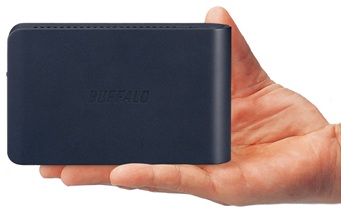
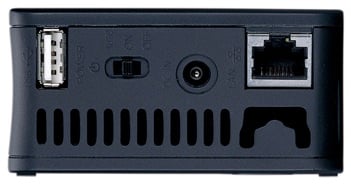
NAS boxes generally too bulky for you? Then how about Buffalo’s new LinkStation Mini? Announced yesterday, the compact server packs in 1TB of storage capacity using a pair of RAID-configured 2.5in hard drives.
The 13.3 x 8.1 x 3.9cm device has a Gigabit Ethernet port on the back for network connectivity, and a USB port to allow users to hook up extra storage or a shared printer.
The $699 unit supports the usual SMB and FTP protocols for making files available to all or a select few, and HTTP and HTTPS for serving data in a web-wise way.

Filed under: Displays 3D baby, that’s what we want. Now it’s yours… if you live in Japan anyway. Introducing the world’s first 46-inch 3D stereoscopic television. Built by Hyundai, the 1,920 x 1,080 set is capable of grabbing BS11 3D broadcasts pumped by Nippon BS in Japan. The ¥498,000 (about $4,857) LCD brings 2x HDMI and 3x composite inputs (to name a few) and apparently works fine for traditional 2D broadcasts. Unfortunately, you’ll have to wear what appears to be 2-foot long, 3D glasses judging by the image provided above. Perhaps they’re meant as a radiation shield since the set is also the world’s first TV with built-in “nuclear reactor” according to the machine translated text. Be careful out there kids, it’s just television.[Via Impress] Read | Permalink | Email this | Linking Blogs | Comments

The T-1000 is a cellphone jammer that looks like an old-school cellphone. Much like how the T-1000 from Terminator 2 obliterated the Governator, the T-1000 cellphone jammer will obliterate cellphone signals. The T-1000 can block phone communication within a 3- to 10-foot area of effect. It’ll keep blocking up to 60 minutes per charge and it’s effective against a host of cellphone technologies: AMPS, CDMA, TDMA, PCS, GSM, DCS, Nextel, iDEN and 3G voice.
Now you can enjoy watching movies in silence with this little dandy in your pocket. If you want to be really obnoxious, pretend to talk on the phone while you’re using it, watching everyone around you shaking their phones and yelling, “Hello? HELLLLO?!”. It’s available for $240, but buy at your own risk because there’s a good chance using it would be totally illegal.
JOHANNESBURG, South Africa (AP) — A U.S.-based human rights group said China dramatically boosted small-arms sales to Sudan as violence escalated in Darfur. Beijing denied the group’s report on Friday.
The report released Thursday by Human Rights First said China is the biggest supplier of small arms to Sudan. It provided 90 percent of all the African nation’s small arms acquisitions between 2004 and 2006, totaling more than $50 million.
China ramped up its small-arms supply to Sudan almost fivefold in 2004 as others cut back to comply with a U.N. arms embargo, according to data Sudan provided to the United Nations.
Small arms such as assault rifles are the most common weapon used in Darfur, where more than 200,000 people have been killed and about 2.5 million people displaced in five years of fighting between African rebels and government troops allied with Arab militia known as janjaweed.
EARTHWORMS WERE pushed into the firing line last week after a resumption of the testing of depleted uranium shells at Dundrennan.
Significant levels of radioactive uranium isotopes were found in the flesh of worms at the Ministry of Defence’s Dumfries weapons range last year. Despite concerns from environmentalists and the international community, the MoD last week started a series of tests of depleted uranium (DU) shells, supposed “safety checks”.
A report published in the Journal of Environmental Monitoring found that worms in the Dumfries testing ground had significant traces of poisonous uranium isotopes in their bodies.
“Since 1830, the House has met behind closed doors only three times,”according to the Congressional Research Service: “in 1979 to discussthe Panama Canal, in 1980 to discuss Central American assistance, andin 1983 to discuss U.S. support for paramilitary operations inNicaragua.”
On March 13, the House went into secret session once more to considerclassified matters concerning the Foreign Intelligence SurveillanceAct. After some extended discussion of the unusual practice, followedby a security check, public access to the proceedings was barred.
When the nation’s intelligence agencies wanted a computer network to better share information about everything from al Qaeda to North Korea, they turned to a big name in the technology industry to supply some of the equipment: Google Inc.
The Mountain View company sold the agencies servers for searching documents, marking a small victory for the company and its little-known effort to do business with the government.
“We are a very small group, and even a lot of people in the federal government don’t know that we exist,” said Mike Bradshaw, who leads Google’s federal government sales team and its 18 employees.
Thirty pages into a memorandum discussing the legal boundaries of military interrogations in 2003, senior Justice Department lawyer John C. Yoo tackled a question not often asked by American policymakers: Could the president, if he desired, have a prisoner’s eyes poked out?
We made a very significant announcement last week, of a collaboration with one of the most (if not the most) security sensitive institutions on earth, the United States government’s National Security Agency. They’ve joined the burgeoning OpenSolaris community, to collaborate with Sun and other community members on the future of ultra-secure operating systems.
Official Jonathan Schwartz’s Blog
Arms Dealing Company Was Listed As ‘Minority-Owned’
Questions grow about how a tiny Miami Beach firm became major supplier to Afghan army and police.
Efraim Diveroli, seen here on his MySpace page, is an ex-yeshiva student who “knows everything about weaponry,” says his grandfather. Diveroli is the president of AEY Inc., subject of a New York Times probe into arms trafficking.
read on: Offial Story Link

In Cern, Zwitserland, zijn ze goed bezig. Ooit werd daar de basis gelegd voor het WWW, HTML, XML en meer protocollen voor ons huidige internet. Nieuw -en direct klaar voor verfilming- is: The Grid.
The Grid? Een initiatief van Cern(waar ook het W3C.org huist) met onder andere professor Tony Doyle die het project technisch leidt. The Grid? Heel simpel het initiatief om het huidige internet 10.000 maal sneller te maken dan de huidige verbindingen.
Hoe?
Er wordt beter gebruik gemaakt van fibre(glasvezel)-verbindingen. Op dit moment zijn er zo een 55.000 servers verbonden met dedicated fibre. Dit zou de komende jaren tot 200.000 moeten uitgroeien. Deze zomer moet het snelle netwerk -dat in principe evenwijdig ligt aan het huidige ‘trage’ internet- een boost krijgen.
Het parallele internetnetwerk loopt van Cern naar elf knooppunten VS, Canada, Azie, Europa en wat verspreiding over de wereld.
Een probleem kan zijn de enorme stijging in energieverbruik.
Many of you have heard of the Viera Link, AQUOS (Sharp), and REGZA (Toshiba) system that allows you to control any of these devices with one remote…
Things are a little different today as these manufacturers understand the importance of being open. Behold the very first fully compatible Viera Link (or AQUOS/REGZA equivalent) Onkyo AV amplifier on the market!
Our AV amplifier is of course compatible with Dolby NRs True HD and DTS-HD Master Audio, supports x.v.Color, has a 1.3a HDMI port, and offers a generous 185Wx7ch at 6Ω.
Did it take you more than 20 minutes to finish Mario Galaxy? Was it difficult getting through Halo 3’s first level? Relax, the Japanese company Cyber Gadget has the pill for you, the “Game Suppli” vitamin suppliment! If you require endurance for long gaming periods try Blueberry, for extreme concentration drop a DHA.
I almost forgot… These are some of the same nutrients Grandma grew in her garden for years… But hey… Now you can buy them as pills!
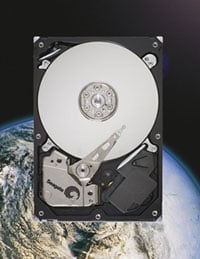
Seagate drive in orbit, why not?
Seagate has begun shipping what it says is the world’s first 1TB SAS hard drives, as well as the first self-encrypting enterprise-oriented hard drives.
The 3.5-inch Barracuda ES.2 HDD series now comes in a serial-attached SCSI interface and 1TB capacity. Seagate estimates the speedier SAS data transfer rate offers an average 135 per cent performance boost over the SATA interface. The 1TB SATA version of Barracuda began shipping last year.
Today’s “official” introduction of 1TB SAS hard drives should offer a tempting combination of capacity and performance for high-end storage operators armed with an enlarged coin purse. Seagate is pitching the whole ordeal as a value from a cost-per-GB basis.
The Barracuda ES.2 series of SAS drives spin at 7200 rpm, and advertise a 1.2 million hours mean time between failure. The drive uses a 16MB cache and has an average latency of 4.16ms. Average random seek time is 8.5ms and random write speed is 9.5ms. Models are also available in 500GB and 750GB capacity with both SAS and SATA interfaces.
Seagate doesn’t list a price for the 1TB whopper, although our internet window shopping suggests around $350 per drive. That’s about a $50 premium over the similar SATA model.
Seagate has also announced a new version of its Cheetah HDD lineup for data centers that features automatic encryption technology baked into the drive’s controller.
The 3.5-inch Cheetah 15k.6 FDE (Full Disk Encryption) comes in 450GB, 300GB, and 147GB flavors with both SAS and Fibre Channel interfaces.
Earlier this year, the company began putting automatic data encryption into laptop drives. Seagate has stated it expects the technology to become standard for all hard drives.
The drives will ship to OEM suppliers this quarter. They should start popping up in vendor arrays later this year. ®
